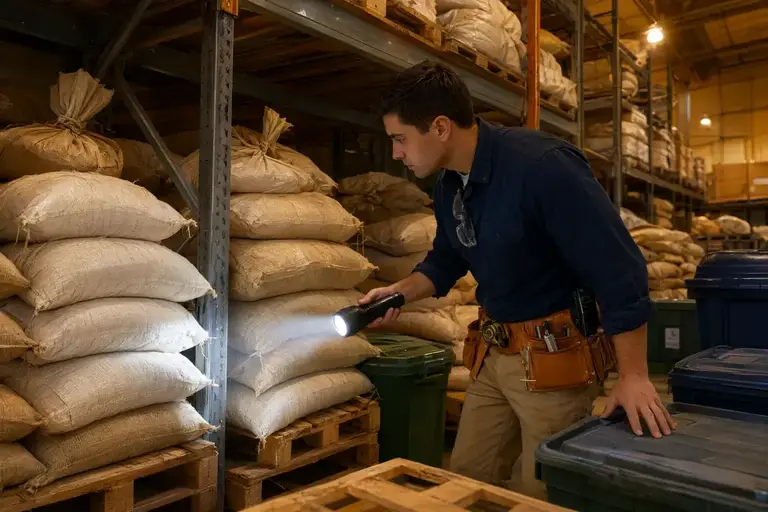
Stored product pest control protects your pantry, warehouse, or food storage facility from insects that infest dry goods like flour, grains, cereals, and dried fruit. These pests contaminate food, trigger health concerns, and can spread quickly through commercial and residential properties across Australia.
What Stored Product Pest Control Protects You From
Stored product pests including weevils, moths, beetles, and borers attack dried food products in homes, restaurants, warehouses, and retail premises. Once established, they breed rapidly and contaminate far more food than they consume, rendering stock unsaleable and creating potential health risks for consumers.
The financial impact extends beyond replacing contaminated goods. Businesses face potential regulatory action, reputational damage, and customer complaints, while homeowners may unknowingly consume contaminated products or face recurring infestations that spread through pantries and storage areas.
- Contamination of food products with insects, larvae, webbing, and droppings
- Health risks from consuming infested products or allergic reactions to insect fragments
- Financial loss from discarded stock, especially in commercial food operations
- Regulatory non-compliance for food businesses under Australian food safety standards
- Rapid spread to unaffected areas as pests move through packaging and storage spaces
- Damage to business reputation and customer confidence in food safety practices
How We Treat It
- Inspect: Our licensed technicians conduct a thorough inspection of all storage areas, shelving, packaging, and surrounding spaces to identify pest species, infestation extent, and contributing conditions such as moisture or poor stock rotation.
- Identify: We determine the specific pest species involved, as different stored product pests require different treatment approaches. Correct identification ensures targeted applications are effective and appropriate.
- Treat: We apply professional-grade products to affected areas, focusing on harbourage sites, cracks, crevices, and storage infrastructure. All treatments use licensed methods approved for use in Australian food storage environments.
- Exclude and proof: We provide practical recommendations to prevent re-infestation, including improved storage practices, sealing entry points, stock rotation procedures, and environmental modifications that make your property less attractive to pests.
- Follow-up: We schedule follow-up inspections to confirm treatment effectiveness and address any residual activity. Ongoing monitoring programs are available for commercial clients requiring continuous protection.
What’s Included
- Comprehensive inspection of all storage areas, shelving, and food handling zones
- Identification of pest species and assessment of infestation severity
- Targeted applications of professional treatments to affected and at-risk areas
- Written treatment report detailing work completed and products used
- Practical recommendations for storage improvements and prevention measures
- Follow-up inspection to confirm eradication and provide ongoing advice
Aussie Pest Strike vs Other Operators
Choosing the right pest control provider ensures effective treatment and long-term protection for your property and stock.
| Aussie Pest Strike | Typical operators | |
|---|---|---|
| Licensing & insurance | Fully licensed and insured | Often unlicensed or underinsured |
| Warranty | Service warranty included | Limited or no warranty |
| Written documentation | Detailed treatment reports | Verbal advice only |
| Follow-up | Scheduled follow-up visits | One-off treatment approach |
| Local knowledge | Australia-wide local expertise | Limited regional experience |
| Response time | Prompt booking and service | Delayed or unreliable scheduling |
What It Costs
Pricing for stored product pest control varies depending on property size, infestation severity, and whether the site is residential or commercial. The table below provides typical ranges for common service types.
| Service | Typical range (AUD) |
|---|---|
| Residential pantry inspection and treatment | $180 – $320 |
| Small commercial premises treatment | $350 – $650 |
| Large warehouse or storage facility treatment | $800 – $2,000+ |
| Ongoing commercial monitoring program | $150 – $400 per visit |
Exact pricing follows a detailed inspection of your property. We provide transparent quotes with no hidden fees, and all treatments include our service warranty and written documentation.
Related: Pest Control Sydney: The Complete Local Guide, Pest Control Melbourne: The Complete Local Guide, Pest Control Brisbane: The Complete Local Guide, Dead Animal Removal.
FAQs
How do I know if I need stored product pest control?
Common signs include small insects or larvae in packaged foods, webbing in pantry corners, holes in packaging, or a musty odour in storage areas. If you notice any of these indicators, contact Aussie Pest Strike for a professional inspection to confirm whether stored product pest control is required.
Is stored product pest control safe for food areas?
Yes. Our licensed technicians use professional-grade products approved for use in Australian food storage and handling environments. We follow strict application protocols to ensure treatments are effective against pests while maintaining safety for occupants and compliance with food safety regulations.
How quickly can stored product pest control eliminate an infestation?
Most infestations are controlled within one to two treatments, though severe or widespread infestations may require additional follow-up visits. Our technicians will provide a clear treatment plan and timeline after inspecting your property and identifying the pest species involved.
How do I get rid of weevils in the pantry?
Discard infested packets, vacuum shelves (including cracks and peg holes), and store dry goods in sealed containers. For persistent problems we treat the voids and shelving with targeted residuals — then weevils, flour moths and beetles can’t re-establish.
What are stored product pests?
They’re insects that breed in stored food: weevils, Indian meal moths, flour beetles and grain borers. In homes they hit pantries; in food businesses they threaten stock — we service both, with monitoring programs for commercial sites.