Rat Lungworm inAustralia: WhatYou Should Know
Rat lungworm in Australia is rare but serious. Learn how rats and snails spread it, the symptoms to watch, and how rodent control protects your family.
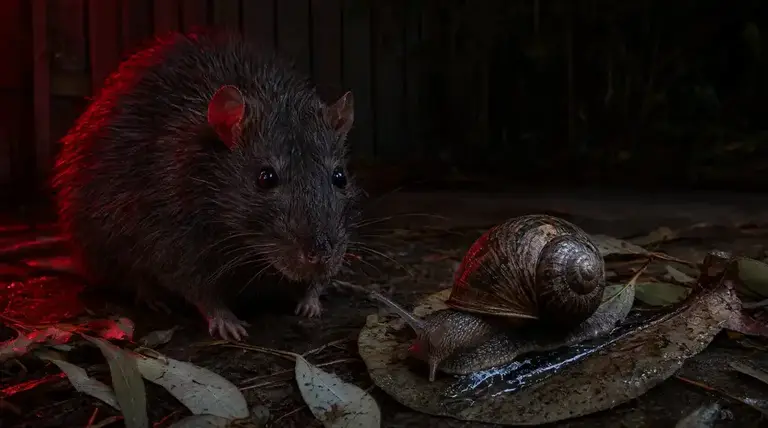
Rat lungworm in Australia is a rare but potentially serious parasitic infection, and the single best defence is a rigorous rodent control programme combined with careful food hygiene. The parasite (Angiostrongylus cantonensis) cycles between rats and the slugs and snails they contaminate, and humans become accidental hosts when they swallow an infected mollusc or larvae left in slime on unwashed produce.
Human infection is uncommon, yet documented cases along the east coast — particularly in Sydney and Brisbane — make rat lungworm worth understanding for any Australian household dealing with rats in the roof void or snails in the veggie patch. This guide covers how the parasite works, who is most at risk, what prevention costs, and when to call a licensed technician.
- Rat lungworm is a parasitic worm spread between rats, slugs and snails; humans are accidental hosts and infection can cause a form of meningitis.
- Exposure usually comes from eating raw or hidden slugs and snails, or unwashed leafy greens carrying slime trails.
- Breaking the rat side of the lifecycle is the most effective long-term prevention — professional rodent management is the real fix.
- Typical 2025–26 rodent control programmes in Australia range from roughly $250 to $900 AUD depending on property size and severity.
- Children, pregnant women and people with chronic illness should take extra care with garden produce and rodent activity around the home.
Why Rat Lungworm Matters in Australia
Rat lungworm matters in Australia because the parasite is established in local rat populations along the eastern seaboard, and our climate and housing styles give both rats and molluscs ideal conditions to overlap. Warm, wet summers from Queensland down through New South Wales drive explosions in slug and snail numbers at exactly the time roof rats are breeding hardest.
Housing type plays a role too. Older Queenslanders on stumps create cool, damp subfloor spaces where rats nest beside garden beds full of snails. Post-war brick veneer homes often have weep holes and roof-line gaps that let rodents move between the ceiling void and the yard. Even modern slab homes aren’t immune — compost bins, fruit trees and pet food bowls left outdoors draw rats to the same sheltered, moist corners that slugs and snails favour. Where those two populations meet, the parasite’s lifecycle can complete, and a household risk emerges. For the broader context, see our overview of diseases pests carry in Australia, which places rat lungworm alongside leptospirosis, salmonella and other rodent-linked illnesses.
Put simply: rat lungworm is a parasite whose lifecycle depends on rats and molluscs, so any property with an unmanaged rodent problem plus a damp, snail-friendly garden sits in the risk zone.
Warning Signs a Property May Be at Risk
The clearest warning sign is an active rat or mouse population combined with visible slug and snail activity near food-growing areas. Because the parasite itself is invisible, you manage the carriers — and these are the signs to look for.
- Droppings in the roof void, shed or pantry — rat droppings (12–18 mm, spindle-shaped) confirm a host population for the parasite.
- Gnaw marks on fruit, pet food bags or wiring — rodents feeding where produce is grown or stored creates contamination overlap.
- Slime trails on lettuce, herbs or pavers — larvae can survive in slug and snail mucus, so trails on edibles are a direct hygiene concern.
- Snails clustered under pots, timber or dense ground cover — high mollusc numbers beside the veggie patch raise exposure odds.
- Compost bins or fallen fruit left unmanaged — these feed rats and shelter molluscs at the same time.
- Gaps of 12 mm or larger around doors, pipes and eaves — mice need only 6 mm, so any visible gap is an entry point.
- Pets showing interest in snails — dogs are also accidental hosts and can become seriously ill.
DIY vs Professional Rodent Control
Because the goal is to break the parasite’s lifecycle at the rat stage, half-measures matter. DIY exclusion and garden hygiene are worthwhile first steps, but established rat infestations — especially in roof voids and subfloors — usually need a licensed technician with commercial bait stations, monitoring and a structured programme. Chemical rodenticides should always be applied by licensed pest control professionals in line with APVMA label directions, particularly in homes with children or pets.
| Factor | DIY approach | Professional programme |
|---|---|---|
| Effectiveness | Good for prevention and very light activity; often fails against established colonies | Systematic baiting, trapping and exclusion designed to eliminate the population |
| Safety | Risk of misuse of store-bought baits around kids and pets | Tamper-resistant stations placed by licensed technicians to label requirements |
| Coverage | Limited to what you can see and reach | Roof voids, subfloors, wall cavities and perimeter all inspected |
| Long-term protection | No monitoring; reinfestation common | Scheduled follow-ups and entry-point sealing advice |
| Best for | Garden hygiene, food storage, minor proofing | Active infestations and high-risk households |
Households with heightened vulnerability should lean professional sooner. If you’re expecting, our Pest Control During Pregnancy: Safety Guide explains which treatment methods suit that situation, and families managing respiratory conditions should read Pest Control With Asthma and Allergies in the Family before booking any chemical treatment.
What Rodent and Mollusc Control Costs in Australia
Across the Australian pest control industry, a structured rodent control programme generally costs between $250 and $900 AUD in 2025–26, with the figure driven by property size, construction type and infestation severity. These are typical market rates — what operators across the country generally charge — not quotes from any single provider. The ranges below are industry benchmarks only; a proper inspection is what sets the final price on any job.
| Service | Typical market rate (AUD) | What the industry generally includes |
|---|---|---|
| Rodent inspection and assessment | $0–$150 | Often free with a booked treatment; identifies entry points and activity zones |
| Single rodent treatment (standard home) | $250–$450 | Bait stations, roof void and subfloor treatment, basic proofing advice |
| Severe or large-property programme | $500–$900 | Multiple visits over 4–8 weeks, heavier baiting, exclusion work |
| Ongoing monitoring plan | $60–$120 per visit | Quarterly station checks; suits homes backing onto bush or waterways |
| Garden snail/slug management advice | Usually bundled | Habitat reduction guidance included with rodent programmes |
Sensitive facilities face higher stakes. Kitchens and gardens in aged care and medical settings, where residents may be immunocompromised, warrant specialist Aged Care & Healthcare Pest Control programmes with documented monitoring and low-disruption treatment methods.
One point worth knowing before you budget against these figures: they reflect what the industry generally charges, and Aussie Pest Strike typically comes in well under these market rates. For an exact quote tailored to your property, call [aps_phone] and we’ll assess the job properly.
Seasonal Activity Across the Year
Rat lungworm risk peaks in the warm, wet months when slug and snail numbers surge and rats breed most actively — roughly October through April in most of eastern Australia. Winter brings lower mollusc activity, but rats move indoors seeking warmth, so vigilance shouldn’t drop to zero.
Jan
Feb
Mar
Apr
May
Jun
Jul
Aug
Sep
Oct
Nov
Dec
Indicative relative risk based on combined rat breeding activity and slug/snail abundance across eastern Australia. Summer rain and humidity push mollusc numbers up, while cooler months see rodents shift indoors.
Most homeowners focus on the snails they can see in the garden, but the real fix is always the rats. Get rid of the rodent reservoir — seal the entry points, bait the roof void properly, clean up the fallen fruit — and the parasite’s cycle collapses. Everything else is hygiene on top of that foundation.
If you have rats or mice on the property plus a veggie garden with slug and snail activity, book a professional rodent inspection now rather than waiting. Combine the treatment with simple habits: wash all produce under running water, store pet food in sealed containers, never leave bowls out overnight, and teach children not to handle snails. That combination removes both halves of the parasite’s lifecycle.
Symptoms, and When to Seek Medical Help
In the small number of human cases, symptoms of eosinophilic meningitis appear one to three weeks after exposure: severe headache, neck stiffness, nausea, tingling or painful skin, and sometimes fever. Most cases resolve, but severe infections — especially in children who swallow a snail — can be life-threatening.
Anyone with these symptoms and a possible exposure should see a doctor promptly and mention any contact with rats, slugs or snails. Dogs can also be affected, so speak to your vet if a pet becomes unwell after eating molluscs.
Frequently Asked Questions
What is rat lungworm and how do humans catch it in Australia?
Rat lungworm is a parasitic worm (Angiostrongylus cantonensis) that cycles between rats and slugs or snails. Humans become accidental hosts when they swallow an infected mollusc, or larvae left in slime on unwashed produce such as leafy greens.
What are the symptoms of rat lungworm infection and when should I see a doctor?
Symptoms of eosinophilic meningitis typically appear one to three weeks after exposure and can include severe headache, neck stiffness, nausea, tingling or painful skin, and sometimes fever. Most cases resolve, but severe infections, especially in children who swallow a snail, can be life-threatening. Anyone with these symptoms and possible exposure to rats, slugs or snails should see a doctor promptly and mention that contact.
How does the rat lungworm parasite lifecycle work?
The parasite completes its lifecycle between rats and molluscs. Rats pass larvae in their droppings, which slugs and snails then ingest, and the larvae develop inside those molluscs. Rats become reinfected by eating infected slugs and snails, keeping the cycle going. Humans and dogs are accidental hosts who fall ill after swallowing an infected mollusc or larvae in slime trails on produce. Breaking the rat side collapses the cycle.
Which Australian homes and regions face the highest rat lungworm risk?
Risk is highest where rat populations overlap with abundant slugs and snails. Warm, wet summers from Queensland down through New South Wales drive mollusc surges while roof rats breed hardest, so the eastern seaboard carries most documented cases. Older Queenslanders on stumps offer damp subfloors beside snail-filled gardens, post-war brick veneer homes have weep holes and roof-line gaps, and even slab homes with compost bins, fruit trees or outdoor pet bowls can host both populations.
What warning signs suggest my property is at risk of rat lungworm?
Key signs include rat droppings (12–18 mm, spindle-shaped) in the roof void, shed or pantry; gnaw marks on fruit, pet food bags or wiring; slime trails on lettuce, herbs or pavers; snails clustered under pots, timber or dense ground cover near veggie patches; unmanaged compost bins or fallen fruit; gaps of 12 mm or larger around doors, pipes and eaves; and pets showing interest in snails.
Can I prevent rat lungworm myself, or do I need professional rodent control?
DIY exclusion and garden hygiene help with prevention and very light activity, but established rat infestations in roof voids and subfloors usually need a licensed technician using commercial bait stations, monitoring and a structured programme. Rodenticides should be applied by licensed professionals following APVMA label directions, particularly around children and pets. Professional programmes also cover areas you cannot see or reach, with scheduled follow-ups and entry-point sealing advice.
When is rat lungworm risk highest during the year?
Risk peaks in the warm, wet months from roughly October through April across most of eastern Australia, when summer rain and humidity push slug and snail numbers up at the same time rats breed most actively. Winter brings lower mollusc activity, but rodents move indoors seeking warmth, so vigilance should not drop to zero. Managing the rodent reservoir year-round remains the foundation of prevention.
What everyday habits reduce my household's exposure to rat lungworm?
Wash all produce under running water before eating, especially leafy greens that may carry slime trails. Store pet food in sealed containers and never leave bowls out overnight. Remove fallen fruit and manage compost bins so they do not feed rats or shelter molluscs. Teach children not to handle snails, and keep pets away from them, as dogs are also accidental hosts and can become seriously ill.
What information should I provide when booking Aussie Pest Strike for rat lungworm prevention?
Describe any rodent activity you have noticed, such as droppings, gnaw marks or noises in the roof void, plus whether slugs and snails appear near your veggie patch or food-growing areas. Mention your property type, including stumps, brick veneer or slab construction, any compost bins, fruit trees or outdoor pet bowls, and whether children, pregnant household members or pets live onsite, so the inspection can be planned appropriately.
What practical next step should I take if I have both rats and snails on my property?
Book a professional rodent inspection rather than waiting, since removing the rat reservoir is what collapses the parasite's lifecycle. Aussie Pest Strike can assess entry points, roof voids and subfloors, then combine treatment with hygiene habits such as washing produce, sealing pet food and teaching children not to handle snails. Households with heightened vulnerability, including pregnancy or chronic illness, should raise this when arranging the visit.
Sources & further reading
Found Something
Dangerous?
Don’t touch it. Don’t spray it. Keep kids and pets clear, take a photo from a safe distance, and call us — or book a free inspection and we’ll come to you.
02 7235 0050