Pest Control forFood Trucks:A Compliance Guide
Pest control for food trucks isn't optional in Australia — it's a legal requirement under the Food Standards Code. Mobile food vendors must keep their...
Pest control for food trucks in Australia is not a nice-to-have — it is a legal obligation under the Food Standards Code, and it applies to your vehicle wherever it is parked, from a Brisbane night market o the most remote country showground. Mobile food vendors must keep their trucks free of cockroaches, rodents and flies to protect their licence, pass council inspections and keep customers safe. This guide explains what compliance involves, what it typically costs in 2025-26, and how to stay ahead of infestations before an environmental health officer finds them first.
Pest control for food trucks means taking all practicable measures to prevent pests entering your vehicle, eradicating any that do, and keeping written records that prove both. Whether you operate a coffee van in Melbourne, a burger truck on the Gold Coast or a dessert trailer in Perth, the rules are the same — only the pest pressure changes with the climate.
- Standard 3.2.2 of the Australia New Zealand Food Standards Code legally requires every food business — including mobile vendors — to prevent and eradicate pests.
- German cockroaches, house mice, flies and ants are the most common offenders in Australian food trucks.
- Most trucks need professional servicing every four to eight weeks, typically $120–$350 per visit in 2025-26.
- Written service reports from a licensed technician are your best evidence of due diligence during council inspections.
- Daily cleaning, sealing entry points and inspecting deliveries prevent most infestations before they start.
Why Food Truck Pest Control Matters Across Australia
Food trucks attract pests faster than almost any other food business because they pack food, grease, warmth and moisture into a few square metres — and then tow that buffet into new territory every week. Australian conditions amplify the risk: warm nights across Queensland, the Northern Territory and northern Western Australia keep cockroaches and flies active nearly year-round, while southern states see rodent pressure spike from autumn into winter as mice and rats hunt for warmth.
Unlike a fixed restaurant, your truck travels between markets, festivals, laneways and industrial estates, picking up fresh pest pressure at every stop. A truck parked beside a rubbish enclosure at a night market faces very different risks to one at a daytime farmers market. Add the practical quirks of a vehicle — vents, service hatches, cable entry points and gaps around fold-down windows — and you have dozens of entry points that simply do not exist in a conventional kitchen.
The compliance stakes are also higher than many operators realise. Environmental health officers can inspect your truck at any time, and evidence of pest activity can result in improvement notices, fines or suspension of your food licence. The rules sit within the broader framework that applies to every commercial food operator — the same essentials covered in our guide to commercial pest control for Australian businesses — but the mobile nature of a food truck demands extra vigilance.
Warning Signs of Pest Activity in Your Food Truck
The earliest signs of an infestation are usually subtle: droppings, smear marks or damaged packaging discovered during your daily open-up routine. Train yourself and your staff to check these indicators every single service:
- Droppings — small dark pellets near storage areas, under sinks or inside cupboards indicate mice; cockroach droppings look like black pepper or coffee grounds.
- Egg cases (oothecae) — brown, ridged capsules tucked into warm cavities around fridge motors, coffee machines and fryers signal German cockroaches; a single case can release dozens of nymphs within weeks.
- Grease smears and tracks — dark smudges along wall edges, behind equipment and around service hatches mark regular rodent runways.
- Gnaw marks and damaged packaging — chewed cartons, torn dry goods bags or holes in stored stock point to rodents or stored-product pests such as Indian meal moths and weevils.
- Unusual odours — a musty, oily smell in enclosed spaces often indicates an established cockroach population.
- Daytime sightings — cockroaches or rodents seen during the day usually mean the population is large enough to push individuals out of hiding. This is a red flag requiring immediate professional attention.
- Fly pressure at the window — house flies and blowflies clustering near the servery suggest nearby breeding sites, often in bins, drains or grease traps.
DIY vs Professional Pest Control: What’s Right for Your Truck?
DIY prevention — cleaning, sealing gaps and managing waste — is essential and entirely your job, but applying pesticides inside a food vehicle is a different matter. Active infestations belong with a licensed pest manager who can select and place treatments that will not contaminate food contact surfaces or breach the Food Standards Code. Here is how the two approaches compare:
| Factor | DIY Approach | Professional Service |
|---|---|---|
| Scope | Daily cleaning, sealing gaps, waste management, inspecting deliveries | Gel baits, insect growth regulators, tamper-proof rodent stations, targeted treatments |
| Effectiveness on active infestations | Low — surface sprays rarely reach harbourages and can scatter cockroaches deeper into the vehicle | High — technicians locate and treat harbourages directly |
| Compliance value | No documentation for inspectors | Written service report after each visit demonstrates due diligence |
| Risk | Misapplied chemicals can contaminate food surfaces and breach the Food Standards Code | Low — licensed technicians use APVMA-registered products placed safely away from food contact areas |
| Typical cost (AUD) | $30–$80 for hardware-store products, recurring | $120–$350 per visit, or $900–$2,400 per year on a service plan |
If you also trade from a fixed premises — a shared commissary kitchen, a market stall with storage, or a café — the same compliance logic applies there. Our companion guide on rodent control for restaurants and cafes covers the fixed-premises side in detail.
What Food Truck Pest Control Costs in Australia (2025-26)
Across the Australian pest control industry, food truck operators are typically charged between $120 and $350 per professional visit, or roughly $900 to $2,400 per year on a scheduled service plan, depending on truck size, pest pressure and state. Market rates vary with location — metro Brisbane, Sydney and Melbourne sit at the middle of the range, while regional and remote callouts generally attract higher rates due to travel time. The table below shows the typical going rates you’ll see quoted across the industry:
| Service | Typical market rate (AUD) | What’s included / notes |
|---|---|---|
| Initial inspection and treatment | $180–$450 | Full vehicle inspection, identification of entry points and harbourages, first treatment, written report |
| Routine service (4–8 weekly) | $120–$350 per visit | Bait and station checks, gel bait refresh, monitoring, updated service report for council records |
| Cockroach cleanout (heavy infestation) | $300–$700 | Intensive gel baiting, insect growth regulators, follow-up visit usually required within 2–3 weeks |
| Rodent control program | $200–$550 setup + servicing | Tamper-proof stations, exclusion advice, monitoring visits through autumn and winter |
| Annual service plan | $900–$2,400 per year | Scheduled visits, seasonal adjustments, full documentation for licensing and inspections |
Weigh those industry figures against the alternative: an improvement notice, an on-the-spot fine, or a suspended licence that stops you trading entirely. At typical market rates, scheduled pest control is one of the cheapest forms of business insurance a food vendor can buy.
Here’s the good news: Aussie Pest Strike typically comes in well under these market rates, without cutting corners on treatment quality or documentation. For an exact quote tailored to your truck, your route and your pest pressure, give us a call on [aps_phone] and we’ll sort you out.
Seasonal Pest Activity for Australian Food Trucks
Pest pressure on food trucks peaks through the Australian summer and early autumn, when heat accelerates cockroach breeding and fly populations explode, then dips in mid-winter before rodents push indoors and into vehicles seeking warmth. The pattern below reflects typical activity across most populated parts of Australia — northern regions stay at the higher end almost year-round, while southern operators see the sharpest summer spike.
Jan
Feb
Mar
Apr
May
Jun
Jul
Aug
Sep
Oct
Nov
Dec
Indicative pest pressure for Australian food trucks by month. Cockroach and fly activity peaks January–March (and after the wet season in Queensland and the NT), while rodent pressure rises May–August as temperatures drop. Schedule servicing to ramp up from October and again in early autumn.
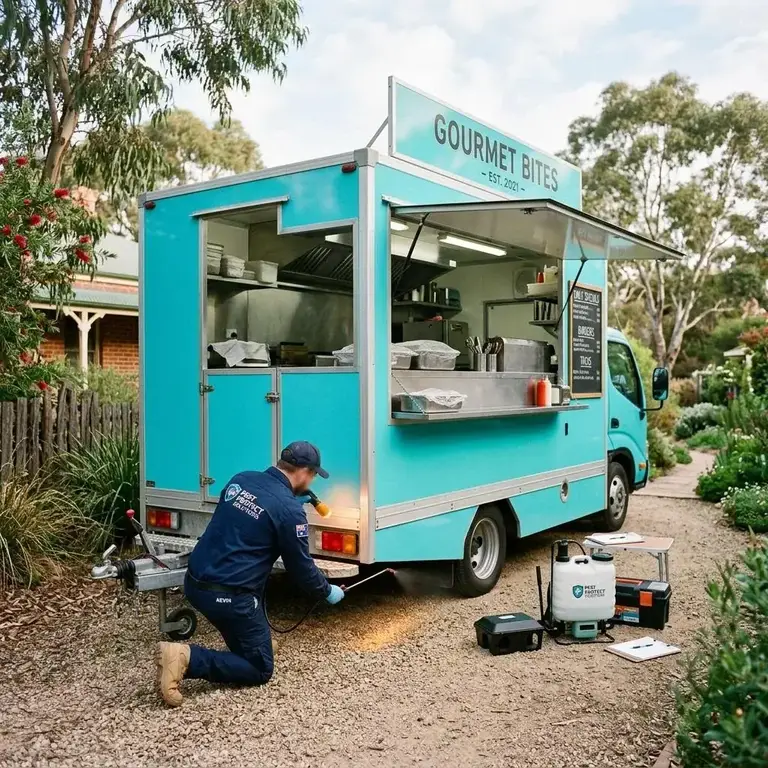
Your daily routine matters as much as the calendar. Seal gaps around service windows, vents, doors and cable entries with silicone or fine mesh. Store dry goods in sealed, airtight containers raised off the floor. Empty waste bins every service, fit tight lids and never leave rubbish bags inside overnight. Degrease grills, fryers and the spaces beneath equipment nightly — cockroaches feed on grease film. Inspect every delivery before loading, checking cartons for droppings, egg cases and webbing.
Nine times out of ten, when we open up a food truck with a cockroach problem, the grease build-up is behind the fryer where nobody looks, and the entry point is a gap the size of a pencil around a cable. Fix the hygiene and the proofing, and the treatment actually holds. Skip them, and you’ll be calling us back every month.
Book a licensed technician for an initial inspection and treatment, then lock in a four-to-eight-weekly service schedule that tightens over summer. Keep every written service report with your food safety records — council inspectors ask for them, and they are your fastest proof of due diligence if an issue is ever raised. If you see daytime pest activity, treat it as urgent and arrange professional service before your next trading day.
Frequently Asked Questions
Is pest control legally required for food trucks in Australia?
Yes. Standard 3.2.2 of the Australia New Zealand Food Standards Code legally requires every food business, including mobile vendors, to take all practicable measures to prevent pests entering the vehicle and to eradicate any that do. This applies wherever your truck is parked, from city night markets to remote showgrounds. Failing to comply can result in improvement notices, fines or suspension of your food licence during council inspections.
What are the most common pests found in Australian food trucks?
German cockroaches, house mice, flies and ants are the most common offenders in Australian food trucks. Cockroaches thrive in the warm cavities around fridge motors, coffee machines and fryers, while flies cluster near the servery when breeding sites exist in bins, drains or grease traps. Rodent pressure rises in southern states from autumn into winter as mice and rats seek warmth, and northern regions keep cockroaches and flies active nearly year-round.
What warning signs of pest activity should I check for daily?
Train yourself and staff to check during your daily open-up routine for droppings (mouse pellets or cockroach droppings resembling black pepper), brown ridged egg cases around warm equipment, grease smears along wall edges marking rodent runways, gnaw marks and damaged packaging, musty oily odours indicating cockroaches, daytime sightings of pests, and fly pressure clustering at the servery window. Daytime sightings are a red flag requiring immediate professional attention.
How often does a food truck need professional pest control servicing?
Most food trucks need professional servicing every four to eight weeks, depending on truck size, pest pressure and location. A routine service typically includes bait and station checks, gel bait refresh, monitoring and an updated written service report for council records. It is wise to schedule servicing to ramp up from October ahead of summer, and again in early autumn when rodent activity rises.
Can I handle pest control in my food truck myself?
DIY prevention such as daily cleaning, sealing gaps and managing waste is essential and entirely your responsibility. However, applying pesticides inside a food vehicle is a different matter — surface sprays rarely reach harbourages, can scatter cockroaches deeper into the vehicle, and misapplied chemicals can contaminate food surfaces and breach the Food Standards Code. Active infestations belong with a licensed pest manager using APVMA-registered products placed safely away from food contact areas.
Why are written service reports important for council inspections?
Written service reports from a licensed technician after each visit are your best evidence of due diligence during inspections by environmental health officers. They demonstrate that you have taken practicable measures to prevent pests entering the vehicle and to eradicate any that do, as required by the Food Standards Code. Without documentation, inspectors have no record of your pest management efforts, which can weaken your position if improvement notices or fines are considered.
Why do food trucks attract more pests than fixed restaurants?
Food trucks pack food, grease, warmth and moisture into a few square metres, then tow that buffet into new territory every week. Each stop brings fresh pest pressure — a truck beside a rubbish enclosure at a night market faces different risks to one at a farmers market. Vehicles also have dozens of entry points that conventional kitchens lack, including vents, service hatches, cable entry points and gaps around fold-down windows.
What daily prevention steps reduce pest risk in my food truck?
Key daily habits include sealing gaps around service windows, vents, doors and cable entries with silicone or fine mesh; storing dry goods in sealed, airtight containers raised off the floor; emptying waste bins every service; and inspecting deliveries before bringing stock aboard. These steps prevent most infestations before they start. Pair them with scheduled professional servicing every four to eight weeks so any early activity is caught and documented.
What should I do if my food truck fails a council inspection due to pest activity?
If droppings, egg cases, smear marks or daytime sightings persist despite good cleaning and sealing routines, arrange a professional inspection of the vehicle. Aussie Pest Strike can assess your truck, identify entry points and harbourages, and provide treatment with a written report suitable for council records. Mention the signs you have observed and where they appear, as this helps target the inspection and any follow-up treatment your vehicle may need.
How do I set up an ongoing pest management schedule for my food truck route?
Because pest pressure changes with each stop on your route, it helps to book a scheduled service plan rather than one-off callouts. Aussie Pest Strike can discuss visit frequency suited to your truck size, trading locations and seasonal patterns, along with the documentation needed for licensing and inspections. Contact us to talk through your route and current pest concerns, and we can outline a servicing arrangement that fits how you operate.
Sources & further reading
Found Something
Dangerous?
Don’t touch it. Don’t spray it. Keep kids and pets clear, take a photo from a safe distance, and call us — or book a free inspection and we’ll come to you.
02 7235 0050