Pest Controlfor Caravan Parksand Campgrounds
Pest control for caravan parks and campgrounds comes down to managing ants, cockroaches, rodents, spiders, mosquitoes and termites across shared...
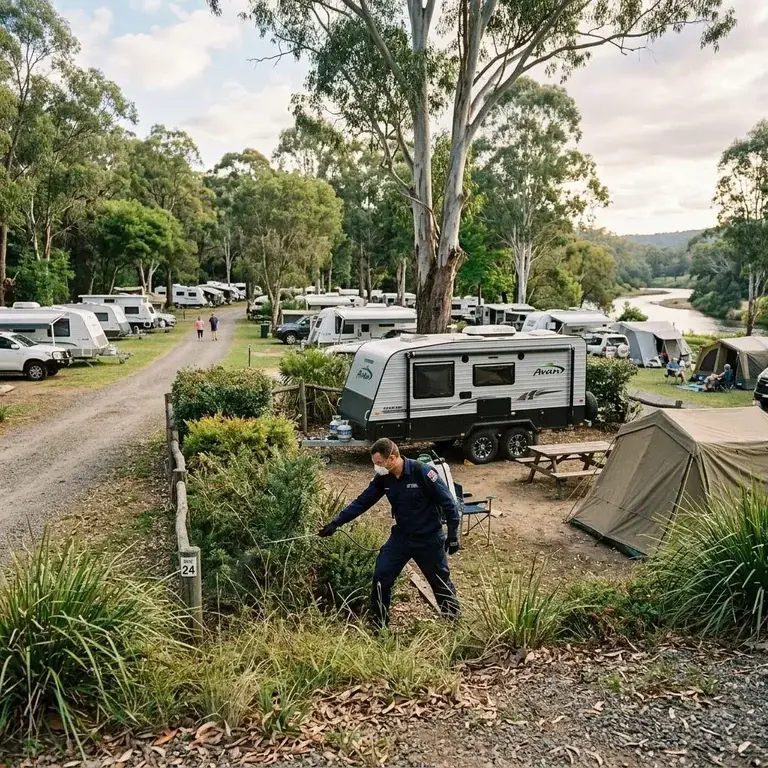
Pest control for caravan parks and campgrounds comes down to managing ants, cockroaches, rodents, spiders, mosquitoes and termites across shared amenities, cabins, sites and food areas. Whether you run a small coastal campground or a large holiday park with hundreds of sites, a structured pest management plan is essential — because a single pest sighting can quickly turn into a bad review, and bad reviews cost bookings.
In practical terms, pest control for caravan parks and campgrounds means an integrated program of routine inspections, sanitation, monitoring and targeted treatment designed for high-turnover outdoor accommodation. This guide covers the pests Australian park operators face, your compliance obligations, realistic costs for 2025-26, and how to build a program that protects guests all year round.
- Caravan parks and campgrounds combine everything pests need: food scraps, water, shelter and a constant flow of new arrivals.
- The core pest group in Australian holiday parks is ants, cockroaches, rodents, spiders, mosquitoes, termites and wasps.
- An integrated pest management (IPM) plan — prevention, monitoring and targeted treatment — beats routine calendar spraying on cost and results.
- Quarterly professional servicing is the baseline for most parks, with monthly checks of camp kitchens and waste areas during peak season.
- Food-handling areas must meet state food safety standards, and written pest records demonstrate due diligence if a complaint arises.
Why a Pest Control Program Matters for Australian Holiday Parks
Australian caravan parks and campgrounds face year-round pest pressure because of our climate, outdoor lifestyle and the way parks are built. Guests cook outdoors, store food in vans and tents, and share barbecue and camp kitchen facilities, while amenities blocks provide the warmth and moisture pests love. Dump points and waste stations attract flies and rodents if they are not maintained properly.
Regional conditions sharpen the risk. In Queensland and northern New South Wales, warm humid weather drives termites, mosquitoes and cockroaches almost year-round, and elevated timber cabins and Queenslander-style buildings have accessible subfloors where termites and rodents thrive. Southern parks see rodent pressure spike every autumn as temperatures drop. Even brick veneer cabins on concrete slabs are vulnerable — ants nest in wall cavities and slab edges, and redbacks shelter in barbecues, amenity blocks and playground equipment.
The stakes are commercial as well as sanitary. Rodents contaminate food surfaces, cockroaches spread bacteria, and mosquitoes can transmit Ross River virus. Proactive management is far cheaper than treating an established infestation or rebuilding a damaged reputation. If you operate other accommodation or food businesses alongside your park, the same principles apply — see our guides on apartment pest control for strata and unit owners and rodent control for restaurants and cafes for complementary compliance advice.
Warning Signs Your Park Has a Pest Problem
Early detection keeps small issues from becoming guest-facing disasters. Train your staff and grounds crew to check for these signs during daily rounds, and log every sighting so your technician can spot patterns.
- Droppings: Small dark pellets under sinks, in storage sheds, near bins or along cabin skirtings indicate rodent activity.
- Ant trails: Lines of coastal or bull ants moving between sites, vans and camp kitchens, especially after guests leave food scraps.
- Gnaw marks: Chewed wiring, packaging or timber around cabins and food storage areas — a rodent hallmark and a fire risk.
- Cockroach evidence: Smear marks, shed skins, egg cases or a musty odour in amenities blocks, laundries and kitchens.
- Spider webs and egg sacs: Redback webs in barbecues, camp furniture and playground equipment; huntsmans in amenity blocks.
- Mosquito breeding sites: Standing water in drains, ponds, pot plant bases and blocked gutters, particularly in warmer months.
- Termite mud tubes: Earthen leads on stumps, slabs, decks, fences and retaining walls, especially in northern and coastal regions.
- Wasp activity: European wasps hovering around food areas or entering wall cavities and ground voids.
- Guest complaints: Any report of bites, stings or sightings — treat every one as a confirmed indicator until proven otherwise.
DIY vs Professional Pest Control for Caravan Parks
Day-to-day sanitation is absolutely a job for park staff — but chemical treatments, rodent baiting programs and termite work on a commercial accommodation site belong with a licensed pest control technician. DIY products can knock down a visible ant trail, but they rarely address the nesting source, and incorrect pesticide use around guests, pets and waterways creates real liability. The table below shows where each approach fits.
| Task | DIY / Staff | Licensed Professional |
|---|---|---|
| Daily bin emptying, barbecue and camp kitchen cleaning | Yes — core prevention | Not required |
| Fixing leaks, door seals, screens, trimming vegetation | Yes — maintenance team | Can advise on pest-proofing |
| Rodent baiting and monitoring stations | Not recommended | Tamper-proof stations, checked on schedule |
| Cockroach and ant treatments in kitchens and amenities | Surface sprays only, limited effect | Gel baits and growth regulators applied to label |
| Termite inspections and treatment | No | Licensed technician with detection tools |
| Wasp nest removal | No — sting risk | Yes, with protective equipment |
| Compliance records for council inspections | Log sightings | Formal service reports and treatment records |
For a broader look at what a commercial pest control program should include, read Commercial Pest Control: What Australian Businesses Actually Need.
How Much Does Pest Control for a Caravan Park Cost?
Most Australian parks pay for a scheduled service agreement rather than one-off callouts, because regular visits are cheaper per treatment and catch problems early. Across the industry, pricing depends on park size, number of buildings, food service operations and region. The ranges below reflect typical 2025-26 Australian market rates — what pest control providers generally charge, not a quote for any one company.
| Service | Typical market rate (AUD) | What’s included / notes |
|---|---|---|
| Initial site inspection and IPM setup | $250 – $600 | Full risk mapping of amenities, kitchens, cabins and waste areas; written plan |
| Quarterly general pest service (small park) | $300 – $700 per visit | Cockroaches, ants, spiders, rodents across key zones |
| Quarterly service (large park / resort) | $800 – $2,500+ per visit | Multiple buildings, food areas, monitoring stations, detailed reporting |
| Rodent baiting program (stations and checks) | $15 – $35 per station per service | Tamper-proof stations, consumption records, re-baiting |
| Termite inspection (whole park) | $400 – $1,200 | Annual; cabins, decks, fences and retaining walls |
| Termite treatment / baiting system | $2,000 – $6,000+ | Quoted after inspection; depends on structures and extent |
| Wasp nest removal | $150 – $350 per nest | Callout basis; larger or multiple nests cost more |
These are indicative market ranges only — what the industry generally charges, not a quote. Always get a written quote based on a physical inspection of your park, and confirm what reporting is included for council and insurance purposes.
Here’s the good news: Aussie Pest Strike typically comes in well under these market rates, without cutting corners on service or reporting. To find out exactly what a tailored program would cost your park, call [aps_phone] today for an exact, obligation-free quote.
Seasonal Pest Activity in Australian Caravan Parks
Pest pressure in holiday parks peaks in spring and summer, when ants, mosquitoes, flies and wasps surge at exactly the same time as peak occupancy. Autumn drives rodents indoors as temperatures drop, while winter is the quietest period — ideal for termite inspections and servicing cabins that sit empty in the off-season.
Jan
Feb
Mar
Apr
May
Jun
Jul
Aug
Sep
Oct
Nov
Dec
Indicative pest pressure across a typical Australian holiday park. Activity peaks December to March with heat, humidity and peak occupancy, then eases through winter — though rodent pressure rises again in autumn as temperatures fall. Northern and coastal parks experience a longer, flatter peak.
Schedule heavier treatments in late winter and early spring before the rush, and time disruptive work around school holidays and long weekends to minimise impact on guests.
The parks that stay pest-free aren’t the ones that spray the most — they’re the ones that monitor the most. When we can see rodent station activity and ant trails trending up in September, we can treat small and early instead of fielding guest complaints in January. Sanitation from park staff does half the job before we even arrive.
Health, Safety and Compliance Obligations
Park operators have a duty of care to provide a safe environment for guests and staff, and food-handling areas such as camp kitchens and kiosks must meet state food safety standards — which include keeping premises free of pests. Local councils can inspect shared facilities, and a failed inspection can mean fines or forced closures during your busiest trading period.
Pesticide applications must follow APVMA-registered label directions and state licensing rules, which is why chemical treatments should be carried out by a licensed pest control technician. Work near accommodation, playgrounds and waterways needs careful product selection and timing to protect guests, pets and native wildlife. Keep written records of inspections, treatments and pest sightings — they demonstrate due diligence if a complaint or claim arises. The compliance principles are similar across food businesses; our guide on rodent control compliance for restaurants and cafes covers record-keeping expectations in more detail.
Building an Integrated Pest Management Plan
Integrated pest management (IPM) combines prevention, monitoring and targeted treatment rather than relying on routine spraying alone — and it’s the approach that works best in a high-turnover outdoor setting. A practical program starts with a full site inspection to map risk areas: amenities blocks, camp kitchens, waste compounds, cabins and irrigation points.
Prevention comes first. Fit door seals and screens to cabins, store waste in sealed bins emptied daily during peak periods, fix leaking taps and irrigation, and keep vegetation trimmed back from buildings. Train staff to spot early signs like droppings, ant trails and gnaw marks, and report them immediately. Monitoring devices and tamper-proof rodent stations, checked regularly by a licensed technician, keep pressure on pest populations year-round. Treatments are then targeted where monitoring shows activity, using the lowest-risk product that will do the job — reducing chemical use, protecting guests and delivering better long-term results than calendar spraying.
Put your park on a quarterly IPM service agreement with monthly checks of camp kitchens and waste stations through summer, plus an annual termite inspection. Combine that with a staff sanitation routine and a simple pest-sighting log, and you’ll prevent most infestations before a guest ever sees them. Book a full site inspection first — the risk map it produces shapes everything else.
Frequently Asked Questions
What pests are most common in Australian caravan parks and campgrounds?
The core pest group in Australian holiday parks includes ants, cockroaches, rodents, spiders, mosquitoes, termites and wasps. Parks combine everything pests need: food scraps from camp kitchens and barbecues, water from amenities blocks, shelter in cabins and subfloors, and a constant flow of new arrivals. Dump points and waste stations also attract flies and rodents if not maintained properly.
Why do caravan parks face year-round pest pressure?
Australian climate and park design create constant pressure. In Queensland and northern New South Wales, warm humid weather drives termites, mosquitoes and cockroaches almost all year, while elevated timber cabins offer accessible subfloors where termites and rodents thrive. Southern parks see rodent activity spike each autumn as temperatures drop. Even brick veneer cabins on slabs can host ants in wall cavities and redbacks around barbecues and playgrounds.
What warning signs indicate a pest problem in a holiday park?
Train staff to look for rodent droppings under sinks and near bins, ant trails between sites and camp kitchens, gnawed wiring or packaging, cockroach smear marks and egg cases in amenities blocks, redback webs on barbecues and playground equipment, standing water where mosquitoes breed, termite mud tubes on stumps and decks, wasps near food areas, and any guest complaint of bites or sightings. Log every sighting so patterns emerge.
What is an integrated pest management (IPM) plan for a caravan park?
An IPM plan combines prevention, monitoring and targeted treatment rather than routine calendar spraying. It typically starts with a full site inspection mapping risks across amenities, kitchens, cabins and waste areas, then uses scheduled monitoring stations, staff sanitation routines and treatments applied only where needed. The article notes IPM beats calendar spraying on both cost and results for high-turnover outdoor accommodation.
How often should a caravan park have professional pest servicing?
Quarterly professional servicing is the baseline for most parks, with monthly checks of camp kitchens and waste areas during peak season. Termite inspections should be carried out annually across cabins, decks, fences and retaining walls. Heavier treatments are best scheduled in late winter and early spring before the summer rush, with disruptive work timed around school holidays to minimise guest impact.
Which pest control tasks can park staff handle themselves?
Staff should handle daily bin emptying, barbecue and camp kitchen cleaning, fixing leaks, door seals and screens, trimming vegetation, and logging pest sightings. These sanitation and maintenance tasks form core prevention. However, chemical treatments, rodent baiting programs, termite inspections and treatment, and wasp nest removal belong with a licensed technician because incorrect pesticide use around guests, pets and waterways creates real liability.
What compliance obligations apply to food-handling areas in caravan parks?
Food-handling areas such as camp kitchens and kiosks must meet state food safety standards. Park operators also have a duty of care to provide a safe environment for guests and staff. Keeping written pest records, including formal service reports and treatment records, demonstrates due diligence if a complaint arises and supports council inspections. DIY sighting logs alone are not sufficient documentation.
How does seasonal pest activity affect scheduling in holiday parks?
Pest pressure peaks in spring and summer when ants, mosquitoes, flies and wasps surge alongside peak occupancy. Autumn drives rodents indoors as temperatures drop, while winter is the quietest period — ideal for termite inspections and servicing empty off-season cabins. Northern and coastal parks experience a longer, flatter peak. Monitoring trends lets you treat small problems early instead of fielding guest complaints in January.
Is a property-specific inspection worthwhile before starting a pest program at my caravan park?
Yes. A physical inspection maps the specific risks across your amenities blocks, camp kitchens, cabins, waste areas and surrounding vegetation, which is how an accurate integrated pest management plan is built. Aussie Pest Strike begins with this kind of full risk assessment and written plan, so treatments target the actual nesting sources and monitoring points rather than relying on generic calendar spraying that may miss your park's specific pressures.
What is a practical next step for setting up pest control at my campground?
Start by documenting what you already know: log current sightings, check for droppings, mud tubes and webbing during daily rounds, and note which zones see the most guest traffic. Then contact Aussie Pest Strike to arrange a tailored inspection and written quote based on your park's size, buildings and food service operations. A structured quarterly program with peak-season kitchen checks protects bookings before the busy season arrives.
Sources & further reading
Found Something
Dangerous?
Don’t touch it. Don’t spray it. Keep kids and pets clear, take a photo from a safe distance, and call us — or book a free inspection and we’ll come to you.
02 7235 0050