Mosquitoes in theHouse: EntryPoints and Fixes
Mosquitoes in the house usually enter through open doors, torn flyscreens, gaps around windows, and uncovered vents, then rest in dark, humid corners...
Finding mosquitoes in the house is more than an annoyance — it’s a sign your home’s defences have a gap somewhere. From a torn flyscreen to a weep hole left unscreened, mosquitoes slip inside through surprisingly small openings, then settle into dark, humid corners to wait for dusk. This guide walks through every common entry point in Australian homes, the fixes that actually work, and when it’s time to bring in professional pest control.
Mosquitoes in the house are defined as indoor-resting adult mosquitoes that have entered through structural gaps or emerged from nearby breeding sites, and controlling them requires sealing entry points, eliminating standing water, and — where pressure stays high — applying targeted residual treatments. Whether you own a raised Queenslander in Brisbane, a brick veneer in Melbourne or a slab-on-ground home in Perth, the principles are the same: block the ways in, dry out the yard, and treat what’s left.
- Mosquitoes enter through torn flyscreens, gaps around windows and doors, unscreened vents, weep holes and air-conditioning pipe penetrations — even a tear the size of a five-cent coin is enough.
- Australia has more than 300 mosquito species, but only a handful — including Culex quinquefasciatus, Aedes notoscriptus and, in North Queensland, Aedes aegypti — regularly invade homes.
- Weekly tipping-out of pot plant saucers, pet bowls, toys and gutters removes the breeding sites that keep pressure on your screens all summer.
- DIY sealing and yard hygiene solve most problems; persistent infestations typically need a licensed technician’s residual barrier treatment, usually $180–$450 depending on property size.
- Peak activity runs from October to April across most of the country, extending year-round in the tropical north.
Why Mosquitoes in the House Matter Across Australia
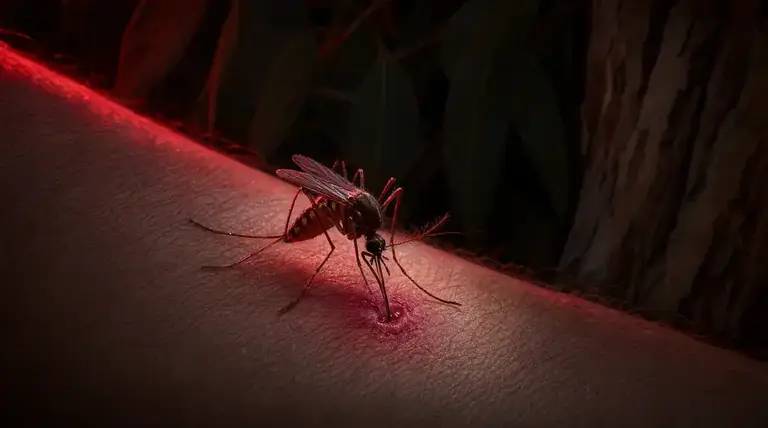
Indoor mosquitoes matter because they bite while you sleep and can transmit genuine disease, not just itchy welts. Australian mosquitoes carry Ross River virus and Barmah Forest virus nationwide — illnesses that can cause joint pain, fatigue and rash lasting months — while North Queensland faces wet-season dengue risk and Japanese encephalitis has been detected in southern states since 2022. Our guide on Ross River Virus: What Australian Families Should Know covers the health side in more detail.
Housing style plays a big part too. Raised Queenslanders have subfloor vents, gaps around stumps and ageing timber windows that admit mosquitoes freely. Brick veneer homes have weep holes along the base of external walls. Slab-on-ground construction seals better at ground level but still suffers from perished door seals, exhaust vents and pipe penetrations. Add a long, warm season — October through April in most regions, and effectively year-round in the tropics — and even one small gap becomes a nightly invitation.
Warning Signs: A Checklist of Mosquito Entry Points
The fastest way to find how mosquitoes are getting in is to inspect the usual suspects systematically. Work through this checklist at dusk, when activity peaks and gaps are easiest to spot:
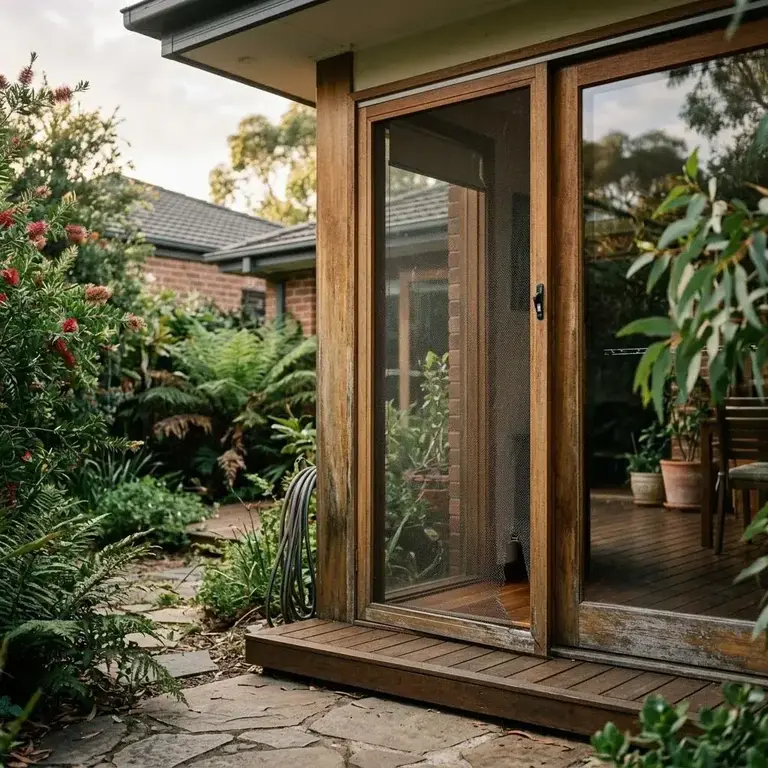
- Torn or loose flyscreen mesh — even a five-cent-coin-sized tear admits mosquitoes; check corners and where pets push against screens.
- Perished door seals and missing door sweeps — rubber seals shrink in the Australian sun, leaving gaps under and around external doors.
- Gaps around aluminium window frames — seals shrink over time, especially on sun-facing elevations.
- Unscreened exhaust and subfloor vents — bathroom, laundry and subfloor ventilation openings are open doorways for resting mosquitoes.
- Brick weep holes — essential for drainage but a common entry route in brick veneer construction.
- Chimneys and air-conditioning pipe penetrations — gaps where refrigerant lines and flues pass through walls are frequently overlooked.
- Rainwater tank inlets and overflows without mesh — these must be mosquito-proofed under Queensland and other state health regulations.
- Mosquitoes resting by day — behind curtains, under furniture and inside wardrobes indicates they’re already established indoors.
DIY Fixes vs Professional Pest Control
Most households can dramatically reduce indoor mosquitoes with a weekend of maintenance: repairing screens, fitting door seals, screening vents and tipping out standing water weekly. DIY works well when entry points are obvious and breeding sites are limited to your own yard. Professional pest control becomes worthwhile when mosquitoes persist despite good hygiene, when breeding happens off your property (neighbouring yards, stormwater drains, wetlands), or when you live in a dengue or Japanese encephalitis risk area. Our Standing Water: The Complete Mosquito Breeding Checklist is a solid starting point for the DIY side, and Mosquito Control for Your Backyard: What Actually Works explains outdoor strategies in depth.
| Factor | DIY approach | Professional treatment |
|---|---|---|
| Best for | Light, seasonal pressure with clear entry points | Persistent infestations, high-risk regions, large yards |
| Typical cost (AUD) | $20–$150 in materials (mesh, silicone, seals, Bti dunks) | $180–$450 per treatment, property-size dependent |
| Effectiveness | Good for exclusion; limited reach on resting adults | Residual barrier sprays keep working for weeks on shaded surfaces |
| Effort required | One weekend plus weekly water tipping | Single visit, typically 60–90 minutes |
| Safety considerations | Follow APVMA label directions on any product | Licensed technicians select and apply APVMA-registered products correctly |
How Much Does Mosquito Treatment Cost in Australia?
For 2025–26, the typical Australian market rate for a professional mosquito treatment on a standard suburban home sits around $180–$450, with larger properties, severe infestations or combined pest programs generally attracting higher industry charges. Rates vary by state, access and yard size, so treat the ranges below as a guide to what the Australian pest control industry commonly charges rather than fixed quotes.
| Service | Typical market rate (AUD) | What’s included/notes |
|---|---|---|
| Inspection and assessment | Free–$120 | Entry-point audit, breeding-site identification, treatment plan (many operators charge a call-out fee here) |
| Residual barrier spray (standard home) | $180–$300 | Treatment of shaded resting surfaces: under decks, fences, eaves, beneath house stumps |
| Large property or severe infestation | $300–$450+ | Extended barrier coverage, dense vegetation, acreage or multi-structure sites |
| Larvicide treatment of water features/drains | $50–$120 (often bundled) | Bti or similar larvicides for ponds, tanks and drainage points |
| Seasonal program (wet season, QLD/NT) | $400–$800 | Multiple visits across peak months; recommended in dengue and JE risk areas |
It’s worth knowing that Aussie Pest Strike typically comes in well under these general market rates, without cutting corners on products or coverage. For an exact quote tailored to your property, give us a call on [aps_phone].
Seasonal Mosquito Activity in Australia
Mosquito pressure across most of Australia builds from early spring, peaks through the humid summer months, and eases after Easter. In tropical Queensland and the Northern Territory, activity stays high year-round and spikes with the wet season, while southern states see a sharper October-to-April curve.
Jan
Feb
Mar
Apr
May
Jun
Jul
Aug
Sep
Oct
Nov
Dec
Indicative national pattern: activity climbs from September, peaks December–March, and drops sharply through winter in southern states. Northern regions remain active year-round, with wet-season surges.
The practical takeaway: book inspections and barrier treatments in early spring, before populations explode. A treatment applied in September or October protects your home through the worst months, whereas waiting until January means playing catch-up while mosquitoes are already breeding at full speed.
Nine times out of ten, when we inspect a home with a mosquito problem, we find a perished door seal and a pot plant saucer out the back doing all the damage. Seal the gaps, dry the yard, and you’ve won half the battle before we even pick up a sprayer. The barrier treatment then handles whatever the neighbours’ yards keep sending over the fence.
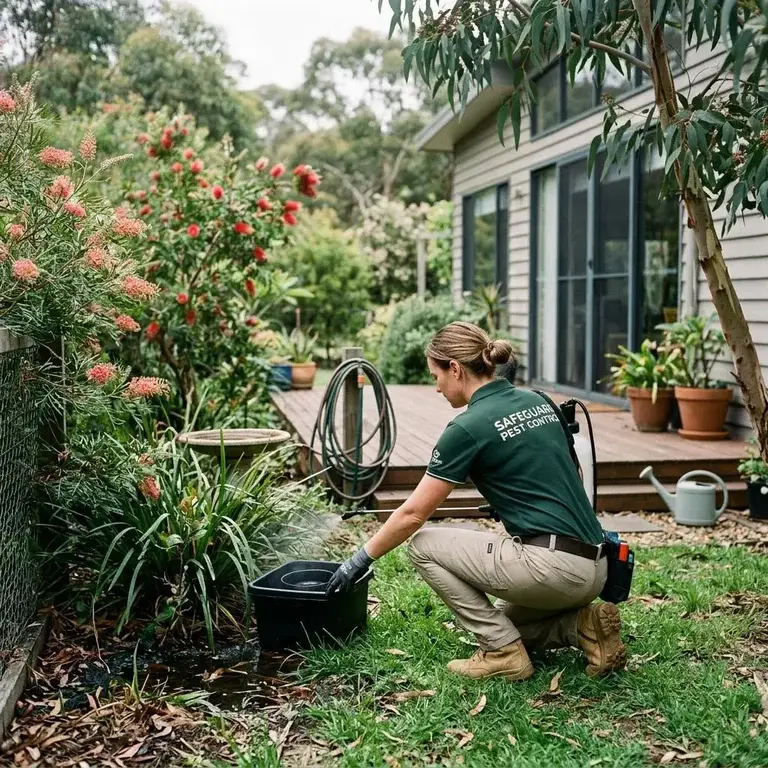
Start with exclusion: repair flyscreens, fit door seals and screen vents this weekend, and tip out every water container in the yard weekly. If mosquitoes are still getting in after two to three weeks — or you’re in a dengue or Japanese encephalitis risk area — book a professional Mosquito & Midge Control treatment with a licensed technician who can apply residual barrier sprays and larvicides correctly and safely.
Frequently Asked Questions
How are mosquitoes getting into my house?
Mosquitoes enter through surprisingly small gaps: torn or loose flyscreen mesh (even a five-cent-coin-sized tear is enough), perished door seals and missing door sweeps, gaps around aluminium window frames, unscreened bathroom, laundry and subfloor vents, brick weep holes, chimneys, air-conditioning pipe penetrations, and rainwater tank inlets without mesh. Inspect these spots at dusk when mosquitoes are most active, and check behind curtains, under furniture and inside wardrobes for adults already resting indoors.
Which mosquito species come indoors in Australia?
Australia has more than 300 mosquito species, but only a handful regularly invade homes. The main indoor offenders include Culex quinquefasciatus and Aedes notoscriptus across much of the country, while Aedes aegypti — the dengue vector — is a concern in North Queensland. These species slip through structural gaps during the day and rest in dark, humid corners before becoming active at dusk.
What DIY fixes can I do this weekend to stop mosquitoes?
Start with exclusion: repair torn flyscreens, fit new door seals and sweeps to replace rubber that has shrunk in the sun, screen exhaust and subfloor vents, and seal gaps around window frames and pipe penetrations with silicone. Then eliminate breeding sites by tipping out water from pot plant saucers, pet bowls, toys and gutters weekly. Most households can dramatically reduce indoor mosquitoes with one weekend of maintenance plus ongoing weekly water tipping.
What should I check before treating my home for mosquitoes myself?
Professional pest control becomes worthwhile when mosquitoes persist despite good DIY hygiene, when breeding happens off your property such as neighbouring yards, stormwater drains or wetlands, or when you live in a dengue or Japanese encephalitis risk area. Licensed technicians apply residual barrier sprays to shaded resting surfaces like eaves, fences and under decks, which keep working for weeks on adult mosquitoes that DIY exclusion alone cannot reach.
What signs show mosquitoes are breeding near my house rather than flying in from far away?
Professional mosquito treatment pricing depends on property size, yard complexity and treatment type. A standard suburban home usually falls at the lower end of the market range, while large blocks, acreage or heavy infestations cost more. Adding larvicide work on ponds, tanks and drains increases the total, and multi-visit seasonal programs in wetter regions run higher overall. Rates also vary by state, site access and vegetation, so treat published figures as general guides and request quotes from local providers for accurate costs.
Which times of year are mosquitoes most likely to get inside my house?
Across most of Australia, mosquito pressure builds from early spring, peaks through the humid summer months of December to March, and eases after Easter, following an October-to-April curve in southern states. In tropical Queensland and the Northern Territory, activity stays high year-round and spikes with the wet season. Book inspections and barrier treatments in September or October, before populations explode, rather than waiting until January when breeding is already at full speed.
Why does my housing style affect how many mosquitoes get inside?
Construction type shapes your home's weak points. Raised Queenslanders have subfloor vents, gaps around stumps and ageing timber windows that admit mosquitoes freely. Brick veneer homes have weep holes along the base of external walls, essential for drainage but a common entry route. Slab-on-ground homes seal better at ground level but still suffer from perished door seals, exhaust vents and pipe penetrations. Whatever the style, the fix is the same: block the ways in and dry out the yard.
Do rainwater tanks need to be mosquito-proofed?
Yes. Rainwater tank inlets and overflows without mesh are listed as common mosquito entry and breeding points, and they must be mosquito-proofed under Queensland and other state health regulations. Unscreened inlets let egg-laying females access the water inside, turning your tank into a breeding reservoir that keeps pressure on your screens all season. Fit appropriate mesh to inlets and overflows as part of your overall exclusion work.
I've repaired screens and tipped out water but mosquitoes keep getting in — how do I arrange further help?
If mosquitoes persist after two to three weeks of good exclusion and yard hygiene, it's time to book a professional Mosquito & Midge Control treatment. Aussie Pest Strike can send a licensed technician who will audit your entry points, identify any remaining breeding sites, and apply APVMA-registered residual barrier sprays and larvicides correctly and safely. Contact Aussie Pest Strike to discuss your situation and get a quote tailored to your property's size and level of mosquito pressure.
Can Aussie Pest Strike help me find where mosquitoes are entering my home?
Yes. An inspection and assessment is a practical first step if you're unsure how mosquitoes are getting in. Aussie Pest Strike technicians carry out an entry-point audit covering flyscreens, door seals, vents, weep holes and pipe penetrations, along with breeding-site identification around your yard, then put together a treatment plan based on what they find. This suits homeowners who want a systematic check of the usual suspects rather than working through the checklist alone.
Sources & further reading
Found Something
Dangerous?
Don’t touch it. Don’t spray it. Keep kids and pets clear, take a photo from a safe distance, and call us — or book a free inspection and we’ll come to you.
02 7235 0050