Mosquito Repellentsin Australia: AnHonest Guide
Mosquito repellents in Australia compared honestly: DEET, picaridin and what really works. Learn safe use plus source control from Aussie Pest Strike.
The most effective mosquito repellents in Australia are skin products containing DEET or picaridin, proven to prevent bites for several hours — while many natural and gadget-based alternatives sold as repellents offer little real protection. This guide, an honest guide to mosquito repellents in Australia, cuts through the marketing so you can spend your money on what works. Put simply, a mosquito repellent is any APVMA-registered product that, when applied as directed, measurably reduces the number of bites you receive over a set period of time.
Whether you’re hosting a barbecue at six o’clock on a Brisbane summer evening or camping through the wet season in the Top End, the same rules apply: proven active ingredients, applied properly, backed up by source reduction around your home. This guide compares the options, covers safe use for the whole family, and explains when a can of repellent stops being enough and it’s time to call in licensed pest control.
- DEET and picaridin are the two repellents with decades of evidence behind them; concentration determines how long they last, not how strongly they work.
- Citronella candles, wristbands, ultrasonic devices and vitamin B patches offer little to no reliable protection in testing.
- Only use APVMA-registered products — the approval number is your best guide to a genuine repellent.
- Reapplication after swimming, sweating or the stated time is the single most common thing people get wrong.
- Repellent is a personal shield only; combine it with source reduction and professional treatment for real relief.
Why mosquito repellent matters across Australia
Mosquitoes are a genuine public health issue in Australia, not just a nuisance, because local species can transmit Ross River virus, Barmah Forest virus and Murray Valley encephalitis. Our climate — long, humid summers in Queensland and the Northern Territory, warm wet spells across New South Wales and Victoria — gives mosquitoes an extended breeding season, and coastal wetlands, mangroves and backyard water-holding containers keep populations ticking along even in the suburbs.
Australian housing plays a part too. Queenslanders on stumps, brick veneer homes with shaded subfloors, and slab-on-ground builds with lush garden beds all create cool, damp resting spots for adult mosquitoes during the day. Container-breeding species such as Aedes notoscriptus thrive in pot plant saucers, blocked gutters and rainwater tanks, meaning the mosquitoes biting you at dinner were very likely bred within metres of your back door. If you have kids or older family members at home, it’s worth reading our guide to Ross River virus and what Australian families should know — repellent is the front line of personal protection against these viruses.
The repellents that actually work: an honest guide, o there’s no mystery
Decades of testing back two active ingredients above all others: DEET and picaridin. A mosquito repellent is only worthwhile if it reliably stops bites for a useful length of time, and only a handful of ingredients meet that bar.
- DEET: the benchmark repellent. Concentrations of 10–20% give a few hours of protection; higher percentages last longer, not stronger.
- Picaridin: as effective as DEET at similar concentrations, less greasy and odourless, with 20% formulations a popular everyday choice.
- Oil of lemon eucalyptus (PMD): a plant-derived option with reasonable evidence, but not recommended for children under three.
Concentration determines duration, not strength. A 10% DEET product typically protects for around two hours, while 20% pushes that out to several hours; going above roughly 30% adds little extra time and is rarely necessary for backyard use. Picaridin at 20% performs comparably and suits people who dislike the feel or smell of DEET. Whichever you pick, the product only works while it stays on your skin — which is why reapplication, not brand choice, is where most people go wrong.
Warning signs your repellent strategy isn’t working
If you’re still copping bites despite using products, one of the following is usually to blame. Run through this checklist before you spend more money.
- Bites within an hour of applying: your concentration is too low for the conditions, or the product has worn off through sweat.
- Bites on ankles, feet and backs of arms: you’ve missed patches — mosquitoes find any gap in coverage.
- Reliance on candles or coils alone: citronella offers minimal protection and only in still air very close by.
- Wristbands or ultrasonic apps doing the “work”: these perform poorly in independent testing because a mosquito only needs one unprotected patch of skin.
- Daytime bites near the house: a sign of container-breeding Aedes mosquitoes on your own property — check our standing water breeding checklist.
- No APVMA registration number on the label: the product hasn’t been assessed for safety and efficacy in Australia.
DIY repellents vs professional mosquito control
Personal repellent and professional treatment solve different problems: repellent stops bites on the person wearing it, while professional pest control reduces the mosquito population around your whole property. Most households need both — repellent for outings and peak times, and source reduction plus targeted treatment for the yard.
| Factor | DIY repellents and gadgets | Professional mosquito control |
|---|---|---|
| What it does | Protects the individual wearing it | Reduces breeding and resting populations across the property |
| Typical cost (AUD) | $8–$25 per product | $180–$450 per treatment |
| Duration | 2–6 hours per application | Weeks to a full season with follow-up |
| Best for | Outings, sport, travel, short outdoor stints | Heavy backyard pressure, events, families with young kids |
| Limitations | Wears off; does nothing about breeding | Higher upfront cost; needs licensed technicians for chemical treatments |
For a deeper look at reducing numbers at the source, see our guide to mosquito control for your backyard — what actually works, and what’s involved in a professional mosquito and midge control service.
What mosquito repellents and treatments cost in Australia (2025–26)
Across the Australian market, quality repellents are cheap — the industry generally charges $8 to $25 — while professional yard treatments typically sit in the low hundreds depending on property size and severity. The table below shows typical market rates charged across the industry; always confirm inclusions with your provider.
| Service / product | Typical market rate (AUD) | What’s included / notes |
|---|---|---|
| DEET or picaridin repellent | $8–$25 | Supermarket, chemist or outdoor store; check APVMA registration |
| Citronella candles / coils | $5–$30 | Minimal protection; ambience more than defence |
| Single professional mosquito treatment | $180–$350 | Barrier spray to foliage and resting areas, breeding-site advice |
| Seasonal treatment program | $350–$700 | Multiple visits across the warm months; larger or acreage properties higher |
These figures reflect what the Australian industry generally charges — and Aussie Pest Strike typically comes in well under these market rates. For an exact quote tailored to your property, give us a call on [aps_phone].
When are mosquitoes most active in Australia?
Nationally, mosquito activity peaks from late spring through early autumn, with northern regions effectively dealing with mosquitoes year-round. Southern states see a sharp drop over winter, while the Top End wet season drives the biggest surges.
Jan
Feb
Mar
Apr
May
Jun
Jul
Aug
Sep
Oct
Nov
Dec
Typical national pattern: activity builds from October, peaks February–March after summer rain, and drops away through winter — except in tropical northern Australia, where mosquitoes remain a year-round concern.
Using repellent safely and well
All repellents legally sold in Australia are assessed and registered by the APVMA, so a product carrying an approval number has met safety and efficacy standards when used as directed. That approval is your best guide to a genuine repellent, as opposed to the many unregistered gadgets and novelty bands making bold claims with no evidence behind them.
- Cover all exposed skin — mosquitoes find any gap you leave.
- Reapply after swimming, sweating or the stated time on the label.
- Sunscreen first, repellent over the top when using both.
- Use lower concentrations on young children and follow label age limits; avoid oil of lemon eucalyptus under age three.
- Wash repellent off with soap and water once you’re back indoors.
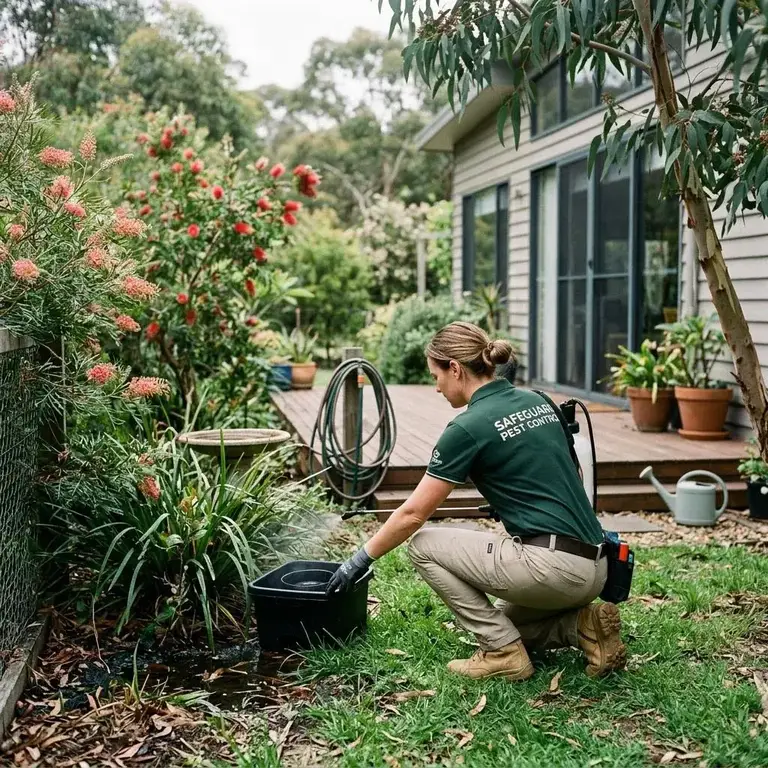
Nine times out of ten, when a family tells us repellent “doesn’t work”, they’re either under-applying it or breeding mosquitoes in their own backyard. Fix the water sources, use a proper APVMA-registered product, and most yards become liveable again. When the pressure’s still too high, that’s when a barrier treatment earns its keep.
Carry a 20% DEET or picaridin repellent and apply it properly — full coverage, reapplied on time. At home, walk the yard weekly with the standing-water checklist, and if bites persist despite that, book a professional mosquito treatment before summer peaks. Skip the wristbands, apps and candles; spend that money on what actually works.
Frequently Asked Questions
Which mosquito repellent ingredients actually work in Australia?
Decades of testing back two active ingredients above all others: DEET and picaridin. Oil of lemon eucalyptus (PMD) is a plant-derived option with reasonable evidence, but it is not recommended for children under three. Citronella candles, wristbands, ultrasonic devices and vitamin B patches offer little to no reliable protection in independent testing, so check for an APVMA registration number before buying.
Does a higher DEET concentration mean stronger protection?
No. Concentration determines how long a repellent lasts, not how strongly it works. A 10% DEET product typically protects for around two hours, while 20% pushes that out to several hours. Going above roughly 30% adds little extra time and is rarely necessary for backyard use, so choose a concentration that suits how long you will be outdoors.
How should I apply mosquito repellent correctly?
Cover all exposed skin, because mosquitoes find any gap in coverage. Reapply after swimming, sweating or once the time stated on the label has passed — this is the single most common mistake people make. If you are using sunscreen as well, apply sunscreen first and repellent over the top. Wash the repellent off with soap and water once you are back indoors.
Why do I still get bitten even when I use repellent?
Common causes include bites within an hour of applying (concentration too low or worn off through sweat), missed patches on ankles, feet and backs of arms, relying on candles or coils alone, using wristbands or ultrasonic apps that perform poorly in testing, and daytime bites near the house from container-breeding mosquitoes breeding on your own property in standing water.
What is an APVMA registration number and why does it matter?
All repellents legally sold in Australia must be assessed and registered by the APVMA, which checks safety and efficacy when products are used as directed. The approval number on the label is your best guide to a genuine repellent, helping you avoid unregistered gadgets and novelty bands that make bold claims with no evidence behind them.
When are mosquitoes most active in Australia?
Nationally, mosquito activity builds from October, peaks around February to March after summer rain, and drops away through winter. Southern states see a sharp drop over winter, while tropical northern Australia, including Queensland and the Top End during the wet season, deals with mosquitoes year-round, so repellent habits need to be constant in those regions.
Is mosquito repellent enough on its own to protect my family?
Repellent is a personal shield only — it stops bites on the person wearing it but does nothing about breeding. Mosquitoes biting you at dinner were likely bred within metres of your back door in pot plant saucers, blocked gutters or rainwater tanks. Combine proper repellent use with weekly source reduction around your yard, and consider professional treatment if pressure stays high.
Can mosquitoes in Australia transmit disease?
Yes. Mosquitoes are a genuine public health issue in Australia, not just a nuisance, because local species can transmit Ross River virus, Barmah Forest virus and Murray Valley encephalitis. Long, humid summers and extended breeding seasons across much of the country keep populations ticking along, which makes personal protection with a proven repellent an important front line.
How can Aussie Pest Strike help me tell whether my problem is mosquitoes or something else?
Bites around the home can come from mosquitoes, midges or other biting insects, and each calls for a different response. Aussie Pest Strike can help identify what is actually biting you by inspecting resting spots such as shaded subfloors, foliage and damp areas, and checking for breeding sources like pot plant saucers and blocked gutters, so you treat the right pest rather than guessing.
What practical next step can I take if repellent is not reducing bites at home?
Walk your yard weekly with a standing-water checklist, emptying or treating containers that hold water, then pair that source reduction with a properly applied APVMA-registered repellent. If bites persist despite these steps, Aussie Pest Strike can assess your property and discuss targeted barrier treatment of foliage and resting areas alongside breeding-site advice to bring numbers down.
Sources & further reading
Found Something
Dangerous?
Don’t touch it. Don’t spray it. Keep kids and pets clear, take a photo from a safe distance, and call us — or book a free inspection and we’ll come to you.
02 7235 0050