Mosquito BiteTreatment: WhatActually Works
Mosquito bite treatment that actually works: cold compress, antihistamines and what to skip, plus when to see a doctor. Free quote from Aussie Pest Strike.
The fastest mosquito bite treatment is a cold compress plus an antihistamine or hydrocortisone cream to calm the itch — and the golden rule is not to scratch. Whether you are being bitten at 5 o’clock on the back deck in Brisbane or overnight in a Melbourne brick veneer, the itchy welt is an allergic reaction to mosquito saliva, and most bites settle within a few days on their own. Mosquito bite treatment, in short, means reducing the histamine reaction, preventing infection from scratching, and knowing when a bite signals something more serious.
This guide ranks what genuinely works, what to skip, and when to escalate — then goes further, because the smartest bite treatment is fewer mosquitoes in the first place. If bites are a nightly event at your place, professional Mosquito & Midge Control deals with the source rather than the symptoms.
- Cold compress first, then antihistamine or 1% hydrocortisone cream — and never scratch.
- The itch is a histamine-driven allergic reaction to mosquito saliva, not an infection, so antibiotic creams do nothing on a plain bite.
- See a doctor if a bite turns hot, red and spreading, or if fever, joint pain or rash follows — possible Ross River virus.
- Children react more strongly; short fingernails and a light dressing beat any cream for the scratch-infect cycle.
- Constant bites mean a breeding source nearby — prevention and professional treatment outperform treating welts one at a time.
Why mosquito bites matter across Australia
Mosquito bites matter in Australia because our climate lets mosquitoes breed for most of the year, and several local species carry viruses such as Ross River virus and Barmah Forest virus. Unlike a nuisance mozzie elsewhere, an Australian bite can occasionally deliver more than an itch.
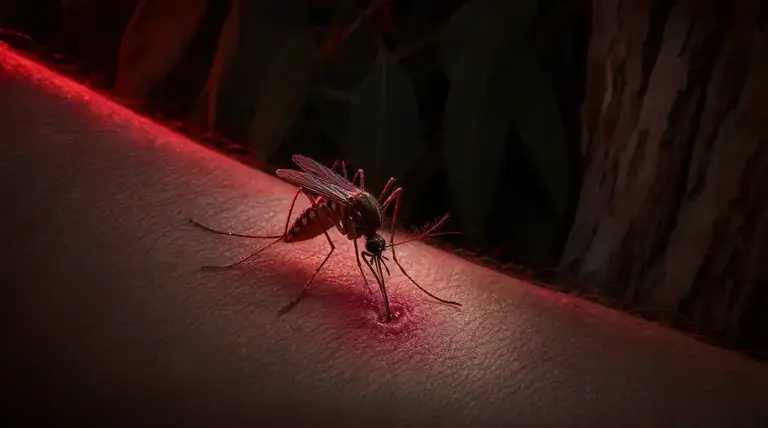
Housing style plays a real role. Elevated Queenslanders with open subfloors collect shaded, damp pockets where mosquitoes rest; slab-on-ground brick veneer homes with garden beds hard against the walls trap moisture in mulch and pot saucers; and coastal and northern regions see saltmarsh and container-breeding species in big numbers after rain. The itch itself comes from the female mosquito injecting saliva containing anticoagulants so blood flows freely. Your immune system releases histamine against those proteins, producing the raised, itchy welt. Sensitivity varies widely — children often react more strongly because they have not built partial tolerance, and some people get a delayed reaction hours later or a larger, firmer swelling called skeeter syndrome, which is an exaggerated allergic response, not an infection. Understanding that difference stops you reaching for antibiotics a simple allergic welt does not need. For the full picture on one of the most common mosquito-borne illnesses, read Ross River Virus: What Australian Families Should Know.
Warning signs a bite needs more attention
Most mosquito bites are harmless and settle within days, but a small number escalate. Watch for these signs and see a doctor if any appear:
- Hot, spreading redness and pain — suggests bacterial infection from scratching, not the bite itself.
- Fever in the days after being bitten — a possible sign of a mosquito-borne virus.
- Joint pain or swelling — a hallmark of Ross River virus, which mosquitoes transmit across much of Australia.
- Widespread rash — another reason to get checked rather than self-treat.
- Very large, firm swelling (skeeter syndrome) — usually harmless, but worth medical advice if severe or recurrent.
DIY mosquito bite treatment vs professional mosquito control
Treating the bite is always a DIY job — pharmacy products handle it well. But treating the source is different: if you are being bitten constantly, the real fix is reducing mosquito numbers around your home, which is where licensed pest control technicians add value. Here is an honest comparison:
| Approach | What it does | Notes |
|---|---|---|
| Cold compress or ice | Reduces swelling and numbs itch | Apply 10 minutes at a time |
| Antihistamine (oral or cream) | Blocks the histamine reaction | Good for multiple bites |
| Hydrocortisone 1% cream | Calms inflammation and itch | Short-term use; follow the label |
| Not scratching | Prevents infection and scarring | Cover the bite if needed |
| Professional mosquito treatment | Reduces breeding and resting populations around the home | Licensed technicians apply APVMA-registered products safely |
What to skip: undiluted essential oils (they irritate broken skin), excessive heat (it can worsen swelling), popping or breaking the welt (invites infection), and antibiotic creams on a plain itchy bite. For children, short fingernails and a light dressing do more than any product; calamine lotion is a gentle, low-risk soother, though it will not shorten how long the welt lasts.
Mosquito bite treatment and control costs in Australia (2025–26)
Across the Australian market, pharmacy bite treatments generally retail for under $25, while the going industry rate for professional mosquito control on a standard home typically sits between $150 and $450 depending on block size and severity. Here’s what the industry generally charges:
| Service | Typical market rate (AUD) | What’s included/notes |
|---|---|---|
| Pharmacy bite kit (antihistamine, hydrocortisone, calamine) | $10–$30 | Covers most household bite treatment needs |
| GP visit for infected bite or suspected virus | $0–$90 gap | Bulk-billed where available; blood test if Ross River suspected |
| One-off professional mosquito treatment | $150–$300 | Barrier spray to foliage, harbourage and resting areas |
| Seasonal mosquito management program | $250–$450+ | Repeat treatments through the warm months; breeding-site inspection |
These figures reflect typical Australian market rates across the industry. Aussie Pest Strike typically comes in well under these market rates for comparable mosquito treatments, so it’s worth getting a firm number for your property — call us on [aps_phone] for an exact quote.
Seasonal mosquito activity across Australia
Mosquito activity peaks from late spring through early autumn, driven by warmth, rain and humidity — but in northern Australia it barely stops. Plan prevention and treatment around this pattern:
Jan
Feb
Mar
Apr
May
Jun
Jul
Aug
Sep
Oct
Nov
Dec
Indicative national pattern: activity climbs from September, peaks February–March after summer rain, and eases through winter. Tropical QLD and NT stay active year-round.
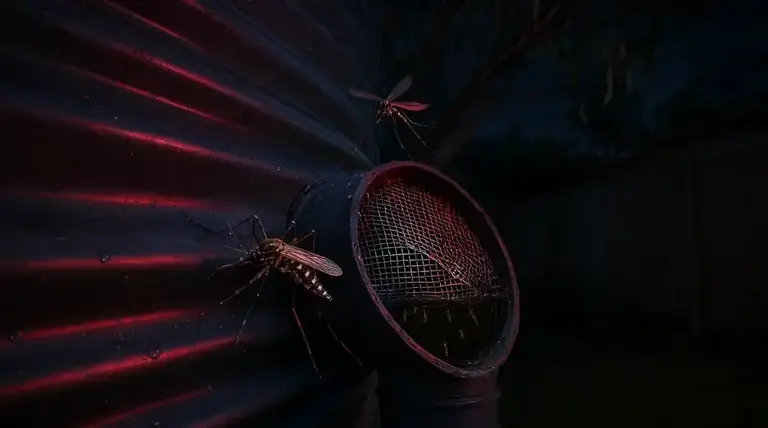
Cutting breeding sites is the highest-value move you can make — tip out pot saucers, clear gutters, and work through our Standing Water: The Complete Mosquito Breeding Checklist at the start of each season. For a broader prevention strategy, see Mosquito Control for Your Backyard: What Actually Works. Day-to-day, loose light-coloured long sleeves at dusk and intact insect screens cut exposure before you reach for repellent.
Nine times out of ten, a household that is “being eaten alive” has a breeding source within twenty metres of the back door — a blocked gutter, a pot saucer, a forgotten tarp. Fix the water, then treat the resting areas in shaded foliage, and the bite count drops dramatically within a week or two.
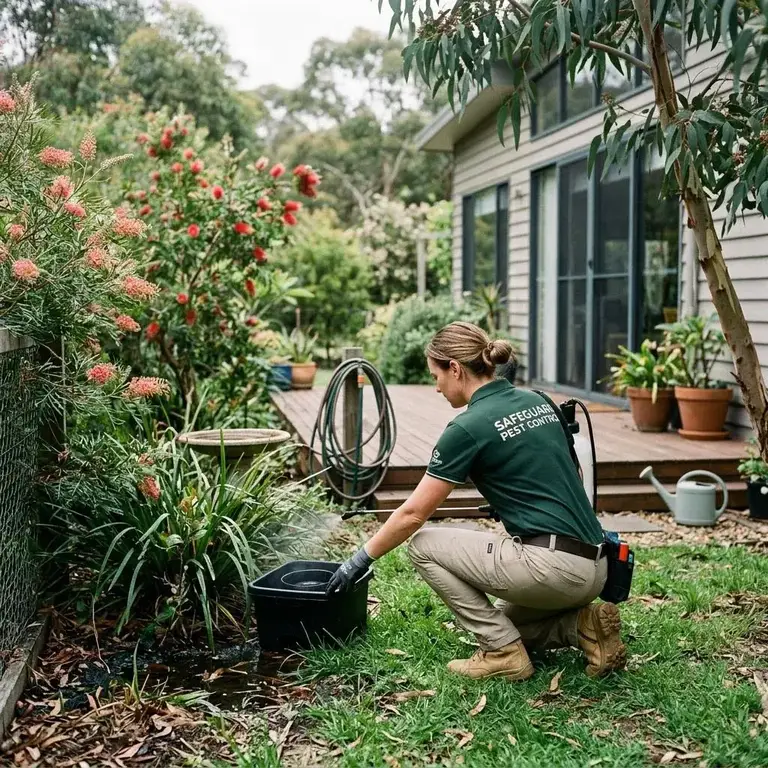
Treat bites promptly with a cold compress and antihistamine or 1% hydrocortisone, keep fingernails short on the kids, and never scratch. If bites are constant, book a licensed technician to inspect and treat breeding and resting sites — chemical treatments should always be applied by a licensed professional following APVMA-registered label directions.
Mosquito bite treatment: Frequently Asked Questions
What is the fastest mosquito bite treatment to stop itching?
Apply a cold compress for about ten minutes, then use an antihistamine or 1% hydrocortisone cream, and avoid scratching. This combination numbs the itch, blocks the histamine reaction and prevents the broken skin that leads to infection and scarring.
When should I see a doctor about a mosquito bite?
See a doctor if the bite becomes hot, swollen, painful and spreading, which suggests bacterial infection, or if you develop fever, joint pain or a rash in the following days. Those symptoms can signal a mosquito-borne illness such as Ross River virus.
Why do some people react worse to mosquito bites?
Even with good pest control, reactions depend on individual immune sensitivity to proteins in mosquito saliva. Children and people with little prior exposure often develop larger, itchier welts, and some experience an exaggerated response called skeeter syndrome, which is allergic rather than an infection.
Mosquito bite treatment works, but prevention wins. If mosquitoes have taken over your backyard, Aussie Pest Strike can locate breeding sources and apply a targeted pest control treatment program. Call Aussie Pest Strike on [aps_phone] to book a free inspection and quote today and enjoy your outdoor areas again — bite-free.
Sources & further reading
Found Something
Dangerous?
Don’t touch it. Don’t spray it. Keep kids and pets clear, take a photo from a safe distance, and call us — or book a free inspection and we’ll come to you.
02 7235 0050