Rainwater Tanksand Mosquitoes:Proofing Guide
Rainwater tanks and — an unscreened rainwater tank is a mosquito nursery, but proofing one properly is quick and often required by law. Mosquitoes only need...
Rainwater tank mosquitoes breed fast in any unscreened tank, but proofing a tank properly is quick, affordable and often required by law. Mosquitoes only need an unmeshed opening the width of a pencil to get in and lay eggs on the water surface, and across Australia — from Darwin’s wet season to a muggy Brisbane summer or a warm Sydney spring — tanks sit full and undisturbed for months at a time. Rainwater tank mosquito proofing means fitting corrosion-resistant insect mesh to every inlet, outlet, overflow and vent so mosquitoes physically cannot reach the water.
The fix itself is straightforward, but the details matter: the wrong mesh corrodes, the wrong aperture lets mosquitoes through, and one missed overflow pipe undoes all your other work. This guide walks you through why tanks are such a risk, what Australian rules require, how to proof every opening step by step, what it costs, and when to call in professional pest control for a wider backyard problem.
- Rainwater tank mosquito proofing means covering every opening — inlet, overflow, vents and hatch — with durable mesh of 1 mm aperture or finer.
- Most Australian states and territories require tanks to be insect-proofed under plumbing or public health rules; check your local council.
- Use stainless steel or brass mesh — fibreglass and aluminium corrode or get chewed through.
- One unscreened tank can seed mosquitoes across a whole neighbourhood, as females disperse hundreds of metres to bite.
- DIY proofing typically costs under $150 in materials; professional inspections and treatments for wider infestations usually range from $150–$450.
Why rainwater tank mosquitoes are such a risk across Australia
Rainwater tanks combine everything mosquitoes want: a large, dark, undisturbed body of water that never dries out. In Australia’s climate — where many regions see warm conditions for six months or more of the year — that makes a tank a near-perfect, year-round breeding site.
Culex and Aedes species, both common around Australian homes, readily breed inside tanks. A single unscreened tank can seed a whole street because females disperse hundreds of metres from where they hatch to find a blood meal. Larvae also thrive on the organic matter that washes in off the roof — leaf litter, dust and pollen — so an unscreened tank can sustain generation after generation without any outside help.
This matters more than simple annoyance. Mosquito-borne illnesses such as Ross River virus are a genuine concern for Australian households, particularly through the warmer, wetter months — see Ross River Virus: What Australian Families Should Know for the symptoms and risk periods. Housing style plays a role too: Queenslanders on stumps, brick veneer homes on slabs and rural properties with multiple tanks all tend to have tanks positioned close to outdoor living areas, right where people gather in the evening when mosquitoes are most active.
What Australian rules require
Most state and territory plumbing and public health guidelines require rainwater tanks to be insect-proofed. As a rule, all openings should be covered with durable mesh no coarser than 1 mm aperture, which excludes mosquitoes while allowing water to flow freely. Requirements are enforced in many areas, so check your local council or state health department before assuming your existing setup complies.
Warning signs your tank is breeding mosquitoes
The clearest sign of a problem is larvae wriggling in the water or a cloud of adult mosquitoes hovering around the tank at dusk. Work through this checklist to confirm whether your tank is a breeding site.
- Wriggling larvae — small, comma-shaped creatures hanging at the water surface or darting down when disturbed, visible through the hatch or strainer.
- Adult mosquitoes at the tank — a persistent swarm near the inlet, overflow or hatch, especially in the hour before dark.
- Torn or missing mesh — rusted, holed or dislodged screens on the inlet strainer or overflow, often after storms.
- Gaps around the hatch — a loose or warped access lid leaving openings wider than a pencil.
- Unscreened overflow — an open overflow pipe or flap valve stuck in the open position.
- More bites indoors — a sudden rise in mosquito bites around the home that lines up with the tank rather than other water sources.
If you spot any of these, run through our Standing Water: The Complete Mosquito Breeding Checklist to find every other source on the property at the same time.
DIY proofing vs professional pest control
Fitting mesh to a rainwater tank is a genuine DIY job for most handy homeowners — the materials are cheap and the work takes an afternoon. Professional help becomes worthwhile when rainwater tank mosquitoes are already established, when the tank connects to drinking water plumbing, or when they persist despite proofing because they’re breeding elsewhere on the property.
| Factor | DIY proofing | Professional service |
|---|---|---|
| Typical cost (AUD) | $40–$150 in mesh, sealant and fittings | $150–$450 depending on scope |
| Time involved | 1–3 hours plus inspection | Single visit, often under 2 hours |
| Best for | Sound tanks with no active larvae | Active breeding, potable tanks, persistent infestations |
| Chemical treatments | Bti briquettes for garden-only tanks | Licensed technician applies APVMA-registered larvicides or residual treatments |
| Limitations | Easy to miss an opening; no treatment of surrounding areas | Higher upfront cost, but covers the whole property |
If you discover larvae already wriggling in an existing tank, you do not necessarily have to drain it. For tanks used only for the garden, a proprietary larvicide such as a Bti (Bacillus thuringiensis israelensis) briquette targets mosquito larvae specifically and is widely regarded as low-risk to other wildlife. For tanks connected to drinking water, seek advice from your local council or a licensed plumber before adding anything, and prioritise sealing the entry points so the problem cannot recur. Any broader chemical treatment around the yard should be handled by a licensed pest control technician using APVMA-registered products.
Step-by-step: how to proof a rainwater tank
Proof every opening with stainless steel or brass mesh of 1 mm aperture or finer, and seal the edges so there are no gaps. The table below covers each point of entry.
| Opening | How to proof it |
|---|---|
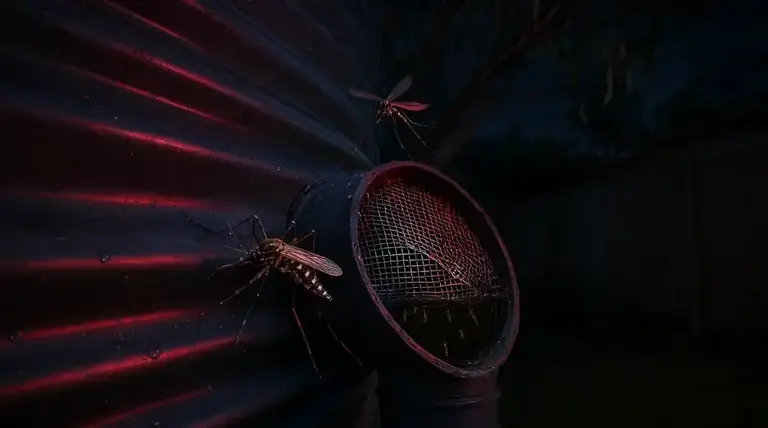
| Inlet or leaf strainer | Fit 1 mm stainless or brass mesh, seal edges |
| Overflow outlet | Attach a mesh flap valve or screened cowl |
| Air vents | Cover with insect-proof mesh |
| Access hatch | Ensure a tight, gap-free seal |
Choosing the right mesh matters. Use stainless steel or brass — fibreglass and aluminium can corrode or be chewed through. Keep the aperture at 1 mm or finer to block both mosquitoes and leaf litter, and inspect the mesh every few months for tears, rust or blockages. Fine mesh does double duty by keeping out leaves that would otherwise rot and foul the water, and it also blocks small animals and frogs that can drown and contaminate a supply. Always inspect after storms, when debris and wind can dislodge screens or tear older mesh. Once every opening carries intact 1 mm mesh, an outbreak inside the tank becomes almost impossible.
What does mosquito proofing and treatment cost in Australia?
Across the Australian market, DIY mesh proofing materials typically run $40–$150, while industry rates for professional mosquito services on an average residential block generally sit between $150–$450 per visit in 2025-26. What the market charges varies with property size, tank access and how widespread the breeding is.
| Service | Typical market rate (AUD) | What’s included/notes |
|---|---|---|
| DIY mesh and fittings | $40–$150 (typical Australian market rate) | Stainless mesh, flap valve, sealant from hardware stores |
| Tank inspection and proofing check | $100–$200 (typical Australian market rate) | All openings checked, compliance advice, minor repairs |
| Larvicide treatment (tank/water bodies) | $120–$250 (typical Australian market rate) | Bti or registered larvicide applied by licensed technician |
| Full yard mosquito treatment | $200–$450 (typical Australian market rate) | Residual barrier spray to foliage, resting areas and harborage |
| Seasonal treatment program | $500–$900/year (typical Australian market rate) | 2–3 visits across peak season for lasting control |
For a full breakdown of treatment options, see our Mosquito & Midge Control service page and the practical guide Mosquito Control for Your Backyard: What Actually Works.
Worth knowing: Aussie Pest Strike typically comes in well under these typical Australian market rates. For an exact quote tailored to your property, give us a call on [aps_phone] today.
Seasonal mosquito activity around water tanks
Mosquito activity around Australian rainwater tanks peaks from late spring through early autumn, roughly October to April in most regions, and can persist year-round in the tropical north. Tanks are at their most dangerous after rain, when they’re full and adult mosquitoes are actively seeking still water.
Jan
Feb
Mar
Apr
May
Jun
Jul
Aug
Sep
Oct
Nov
Dec
Indicative activity for temperate southern Australia. In Queensland and the NT, expect elevated activity through the dry season as well, with sharp spikes after monsoonal rain. Proof your tank in winter or early spring, before populations build.
Nine times out of ten, when we find heavy mosquito numbers at a property, there’s an unscreened overflow or a perished strainer mesh on the rainwater tank. Proofing takes an afternoon and costs less than a family dinner out — but people only check the tank after they’ve been bitten all summer. Do it before the season starts, and check it again after every big storm.
Inspect your tank today: fit 1 mm stainless or brass mesh to every inlet, overflow and vent, and seal the hatch. If you find active larvae, treat garden-only tanks with a Bti briquette and get advice before touching a potable supply. If bites continue after proofing, book a professional inspection — the source is almost always another water body nearby, and a licensed technician can find and treat it in one visit.
Frequently Asked Questions
What size mesh do I need to mosquito-proof a rainwater tank?
Use insect mesh with an aperture of 1 mm or finer on every tank opening. Mosquitoes can squeeze through gaps as narrow as a pencil width, so anything coarser than 1 mm risks letting them through to lay eggs on the water surface. Fine mesh also keeps out leaf litter, small animals and frogs that can foul the water. Most Australian plumbing and public health guidelines specify this 1 mm standard.
Which type of mesh is best for rainwater tanks?
Stainless steel or brass mesh is the best choice for proofing a rainwater tank. Fibreglass and aluminium mesh can corrode over time or be chewed through by pests, leaving openings that mosquitoes exploit. Corrosion-resistant mesh holds up against weather and the damp conditions around a tank. Inspect the mesh every few months for tears, rust or blockages, and always check it after storms when debris and wind can dislodge screens.
Which parts of a rainwater tank need to be screened?
Every opening needs covering: the inlet or leaf strainer, the overflow outlet, air vents and the access hatch. Fit 1 mm stainless steel or brass mesh to the inlet and vents, attach a mesh flap valve or screened cowl to the overflow, and make sure the hatch has a tight, gap-free seal. One missed opening, such as an unscreened overflow pipe or a flap valve stuck open, undoes all your other proofing work.
How do I know if my rainwater tank is breeding mosquitoes?
Look for wriggling larvae — small comma-shaped creatures hanging at the water surface or darting down when disturbed — visible through the hatch or strainer. Other warning signs include a persistent swarm of adult mosquitoes near the inlet, overflow or hatch around dusk, torn or missing mesh, gaps around a loose or warped hatch lid wider than a pencil, an open overflow pipe, and a sudden rise in bites around your home.
Are Australian homeowners legally required to mosquito-proof their rainwater tanks?
Most state and territory plumbing and public health guidelines require rainwater tanks to be insect-proofed, with all openings covered by durable mesh no coarser than 1 mm aperture. Requirements are enforced in many areas, so check with your local council or state health department before assuming your existing setup complies. Rules vary between jurisdictions, so confirming locally is the safest approach rather than relying on general guidance.
Can I treat mosquito larvae in my rainwater tank without draining it?
Yes, in some cases. For tanks used only for garden watering, a proprietary larvicide such as a Bti (Bacillus thuringiensis israelensis) briquette targets mosquito larvae specifically and is widely regarded as low-risk to other wildlife. For tanks connected to drinking water plumbing, seek advice from your local council or a licensed plumber before adding anything. Either way, sealing every entry point with intact mesh is essential so the problem cannot recur.
When should I call a professional instead of proofing my tank myself?
Fitting mesh is a genuine DIY job for most handy homeowners, taking one to three hours plus inspection. Professional help becomes worthwhile when larvae are already established in the tank, when the tank connects to drinking water plumbing, or when mosquitoes persist despite proofing because they are breeding elsewhere on the property. A licensed technician can apply APVMA-registered larvicides or residual treatments across the whole yard, not just the tank.
When are mosquitoes most active around rainwater tanks in Australia?
Mosquito activity around rainwater tanks peaks from late spring through early autumn, roughly October to April in most regions, and can persist year-round in the tropical north such as Darwin. Tanks are at their most dangerous after rain, when they are full and adult females are actively seeking still water to lay eggs. Warm conditions lasting six months or more mean a full, undisturbed tank can sustain breeding generation after generation.
What information should I provide when booking Aussie Pest Strike for help with rainwater tank mosquitoes?
Be ready to describe how many tanks you have and where they sit relative to outdoor living areas, whether you have seen larvae wriggling in the water or adult swarms near the tank, and the condition of any existing mesh on the inlet, overflow, vents or hatch. Mention whether the tank supplies drinking water, since that affects treatment options, and note any other standing water sources on the property so breeding sites beyond the tank can be assessed too.
What should I do first if I find larvae in my rainwater tank?
Start by inspecting every opening — inlet strainer, overflow, vents and hatch — for torn, rusted or missing mesh, and check the hatch lid for gaps wider than a pencil. If the tank is garden-only, a Bti larvicide briquette can target the larvae while you arrange repairs. If it feeds drinking water plumbing, contact your council or a licensed plumber before adding anything. Aussie Pest Strike can inspect the tank and treat any wider backyard breeding sites once entry points are identified.
Sources & further reading
Found Something
Dangerous?
Don’t touch it. Don’t spray it. Keep kids and pets clear, take a photo from a safe distance, and call us — or book a free inspection and we’ll come to you.
02 7235 0050