Mice in YourCar: Wiring Damageand Removal Guide
Finding mice in your car is more common than most Australians realise, particularly through autumn and winter when rodents seek warm shelter. Mice chew...
Finding mice in your car is more common than most Australians realise, particularly through autumn and winter when rodents seek warm shelter. Mice chew through wiring, insulation and upholstery, causing damage worth hundreds or even thousands of dollars. This guide explains why mice target vehicles across Australia, the warning signs, safe removal methods and how to keep them out for good.
Mice in your car is a rodent problem where the introduced house mouse nests in a vehicle’s engine bay or cabin and gnaws wiring, hoses and interior materials, often causing electrical faults and costly repairs. Whether you park in a suburban driveway, a farm shed or a city garage, no Australian vehicle is immune — and catching an infestation early is the difference between a quick clean-up and a five-figure repair bill.
- The introduced house mouse (Mus musculus) is the main culprit behind vehicle damage in every Australian state and territory.
- Soy-based wiring insulation, bonnet liners and seat foam make modern cars highly attractive nesting sites.
- Wiring repairs typically range from $500 to more than $5,000, and tracing a fault alone can take an auto electrician hours.
- Avoid baits inside the vehicle — a poisoned mouse often dies in a vent or dashboard cavity, leaving a smell that lingers for months.
- Professional Rodent Control & Removal plus garage-wide prevention is the most reliable long-term fix.
Why Mice Target Cars in Australia
Mice target cars because a parked vehicle offers exactly what a rodent needs: warmth, shelter from predators and rain, and abundant nesting material. In Australia, the risk climbs sharply in regional areas during mouse plagues, like those that swept the grain belts of New South Wales, Queensland, Victoria and South Australia in recent years.
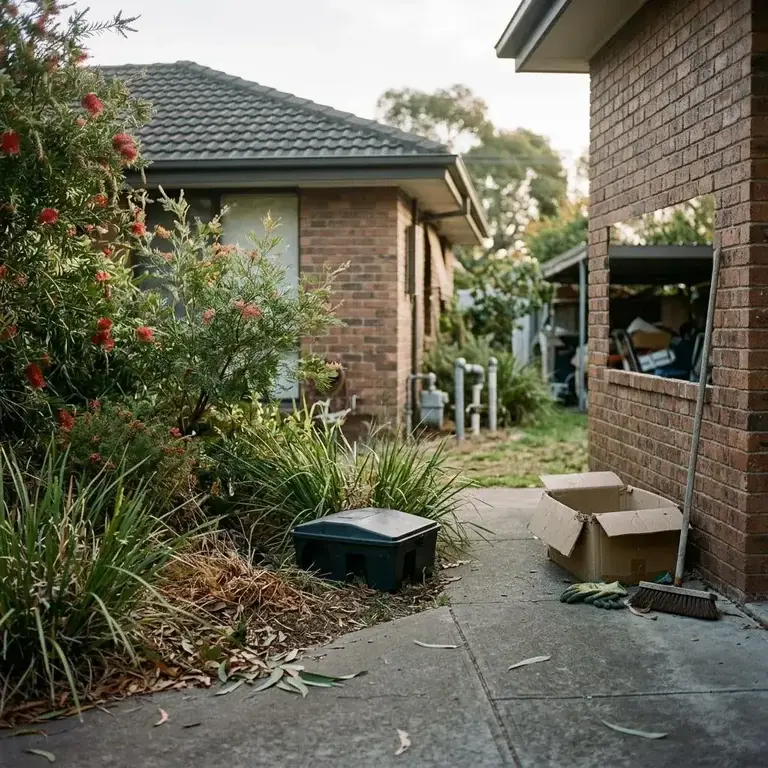
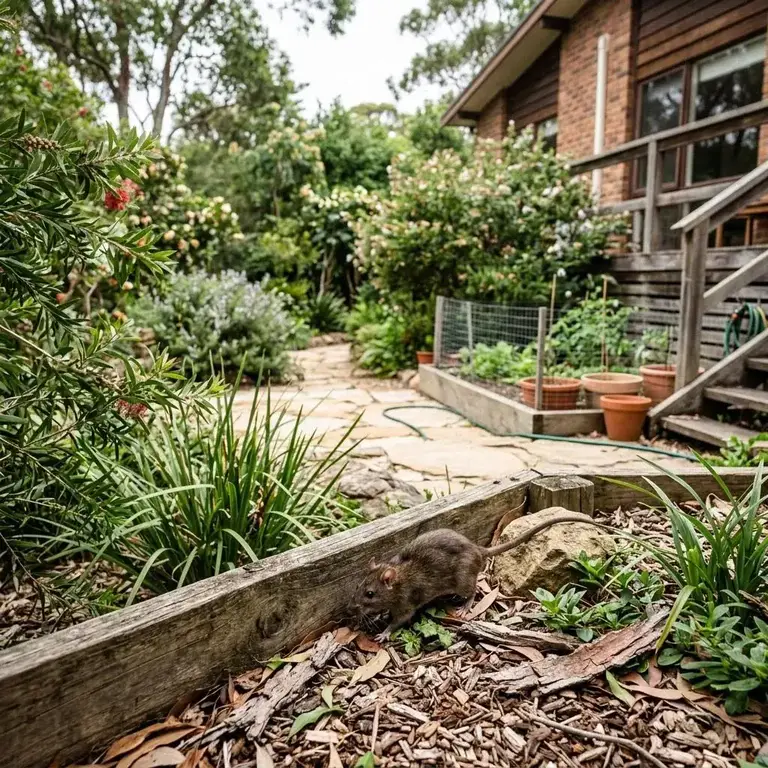
Climate plays a big role. From April through August, overnight temperatures drop and mice move from paddocks and gardens into anything warm — and an engine bay holds heat for hours after you park. Even in milder coastal cities, winter drives rodents indoors, and cars, caravans and utes parked outside are easy entry points. Suburban driveways attract mice when gardens, compost bins, bird seed and pet food are nearby, which is why infestations are just as common in brick veneer suburbs as on rural properties.
Modern vehicles are especially inviting. Many manufacturers use soy-based insulation on wiring, which mice find palatable, while bonnet insulation, cabin filters and seat foam make excellent nesting material. Cars left unused for days — weekend utes, caravans or a second vehicle — are prime targets. If mice have already found your vehicle, there is a fair chance they are also exploring your home, so it pays to review the Signs of Rats or Mice in Your Home: The Full Checklist at the same time.
Warning Signs of Mice in Your Car
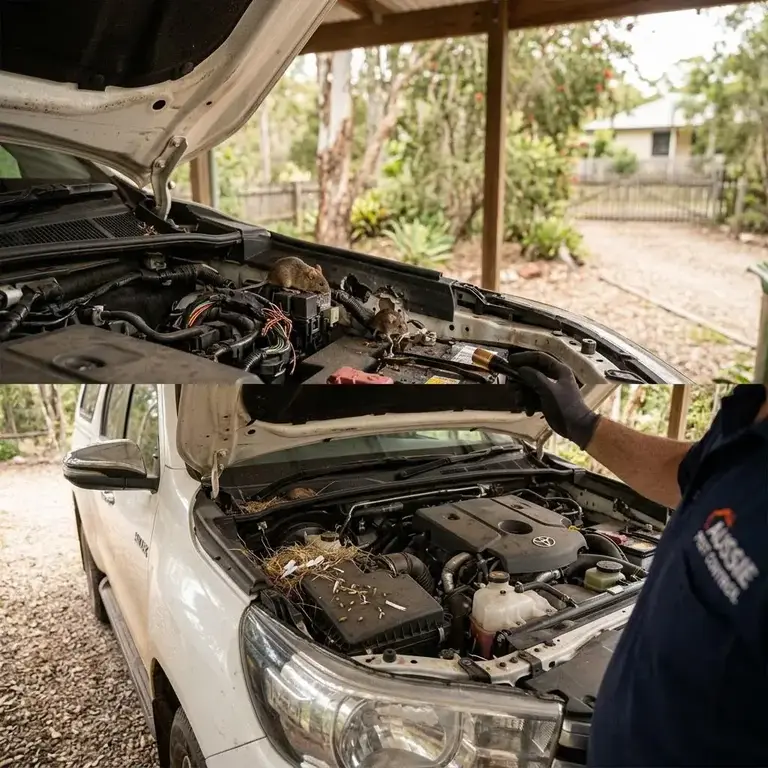
The clearest signs of mice in your car are droppings, shredded nesting material, gnaw marks, a musty urine smell and unexplained electrical faults. Catching these early can save you a fortune in repairs, so check the engine bay, cabin and boot regularly.
- Small, dark droppings on carpets, seats or around the battery — often the first clue a mouse has moved in.
- Shredded nesting material such as paper, fabric, leaves or insulation gathered under the bonnet or seats.
- Gnaw marks on wiring, hoses or plastic under the bonnet, sometimes with exposed copper visible.
- A musty, ammonia-like smell from urine, strongest through the cabin vents when the fan is running.
- Unexplained warning lights, electrical faults, malfunctioning windows or a flat battery.
- A car that refuses to start, which often means a chewed harness or damaged sensor.
If you are seeing similar evidence indoors — droppings in the pantry, scratching in the roof — the vehicle problem is likely part of a wider infestation. Roof voids are a common highway for rodents, and our guide to Roof Rats in Australia: Behaviour, Risks and Control explains how rodents travel between roof spaces, garages and parked vehicles.
DIY Removal vs Professional Pest Control
DIY removal works for a single, freshly discovered mouse, but recurring infestations, garage-wide activity or long-term vehicle storage call for a licensed pest control technician. The honest difference is that DIY deals with the mouse you can see, while professionals eliminate the population causing it.
For a DIY attempt, park in the open with the bonnet up for a few hours — mice dislike light and disturbance. Wearing gloves and a mask, clear out nesting material and droppings, then disinfect the area, because mouse urine can carry leptospirosis and salmonella. Set snap traps baited with peanut butter beside the front tyres overnight. Avoid baits inside the vehicle: a poisoned mouse often dies in a vent or dashboard cavity, leaving a smell that lingers for months.
| Factor | DIY approach | Professional pest control |
|---|---|---|
| Best for | One-off mouse, caught early | Recurring infestations, plagues, stored vehicles |
| Typical cost (AUD) | $20–$80 for traps and disinfectant | $180–$450 for a rodent treatment |
| Identification | Guesswork — natives like antechinus are easily mistaken for mice | Licensed technicians distinguish house mice from protected native species |
| Chemical use | Hardware-store baits, higher misuse risk | APVMA-approved products applied strictly to label directions |
| Long-term result | Often temporary — mice return to the same shelter | Population elimination plus entry-point advice |
If mice keep returning, the problem has spread to your garage, or the vehicle is stored long-term, call a licensed pest controller. Professionals use APVMA-approved products applied to label directions and can tell house mice from protected native animals such as the antechinus, which is often mistaken for a mouse. Our Rodent Control & Removal service covers vehicles, garages and the surrounding property in a single visit.
How Much Does Wiring Damage and Removal Cost in Australia?
Across the Australian market, wiring repairs typically run from $500 for minor fixes to more than $5,000 for a full harness replacement, while the going industry rate for professional rodent removal around a vehicle and garage generally sits between $180 and $600. Auto electricians often bill hours just to trace a fault before repairs even begin.
Rodent damage is rarely cosmetic. A single chewed harness can trigger short circuits, disable airbags and ABS sensors, or leave you stranded with a car that will not start. In the worst cases, exposed wiring sparks an engine fire. Many comprehensive car insurance policies in Australia cover rodent damage, but excesses and exclusions vary, so read your Product Disclosure Statement. Compulsory third party cover will not help — it only covers injuries to people.
| Service | Typical market rate (AUD) | What’s included/notes |
|---|---|---|
| Professional rodent inspection | $0–$150 | Entry-point and nesting-site assessment; some operators waive the fee |
| Rodent treatment — vehicle and garage | $180–$450 | Trapping and APVMA-approved baiting by a licensed technician |
| Whole-property rodent program | $350–$600 | Multi-visit treatment covering house, garage, shed and vehicles |
| Rodent proofing and exclusion | $250–$800 | Sealing garage gaps, doors and entry points to keep rodents out |
| Auto electrical repair (minor) | $500–$1,500 | Fault tracing and localised wiring repair by an auto electrician |
| Full wiring harness replacement | $3,000–$5,000+ | Parts and labour; check comprehensive insurance cover first |
Given what the market charges for repairs, professional pest control and Rodent Proofing & Exclusion around your garage is cheap insurance against a chewed harness.
Here’s the good news: Aussie Pest Strike typically comes in well under these typical Australian market rates. To find out exactly where your job sits, call [aps_phone] for an exact quote.
When Are Mice Most Active Around Vehicles?
Mouse activity in vehicles peaks from April to August, when cold nights push rodents into warm engine bays, with a secondary spike in regional areas during plague years. Summer activity is lower but never zero, particularly where food sources sit near driveways.
Jan
Feb
Mar
Apr
May
Jun
Jul
Aug
Sep
Oct
Nov
Dec
Indicative seasonal activity for mice nesting in vehicles across Australia. Activity climbs from March, peaks through the cold months of June and July, and tapers off as spring warmth returns — though plague conditions in grain-growing regions can lift activity in any month.
From April to August, pop the bonnet weekly and check for fresh droppings before damage takes hold. Regional drivers should stay alert year-round during plague seasons, when mouse numbers explode and vehicles, caravans and farm machinery are hit hard. The same seasonal pressure drives rats indoors too — see Rat Control: How Professionals Actually Eliminate Rats if larger rodents are part of the picture.
Nine times out of ten, when we find mice in a car, they’re also living in the garage or under the house — the vehicle is just the warmest room in their territory. Treat the car alone and they’ll be back inside a fortnight. Treat the whole property and seal the entry points, and the problem actually ends.
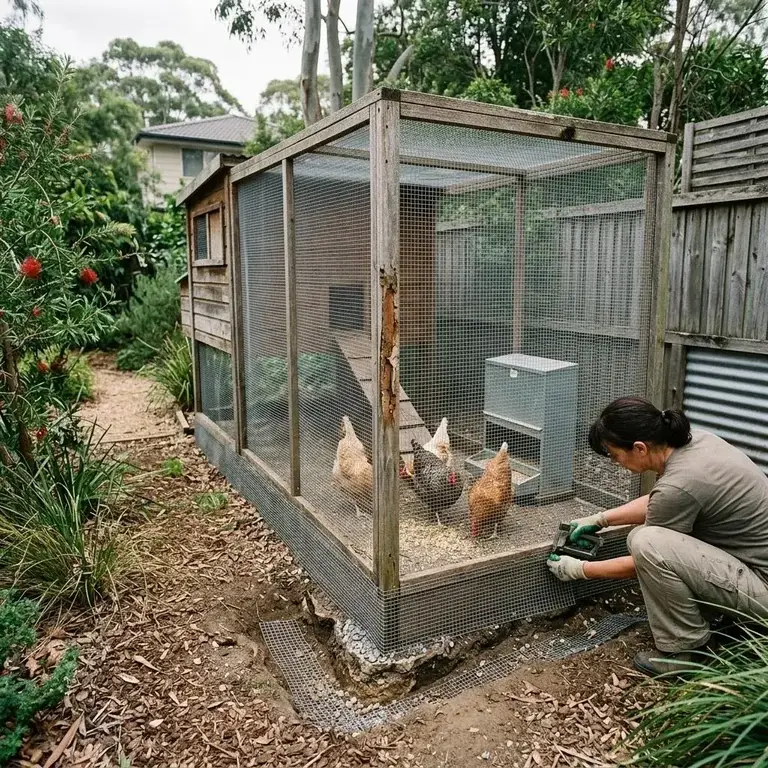
Act the moment you spot droppings or gnaw marks. Remove nesting material safely, set snap traps beside the tyres, and book a free inspection with a licensed technician to check the garage and surrounding property. Pair any treatment with proofing work — sealing gaps, clearing clutter and removing food sources — because prevention beats repair every time.
Frequently Asked Questions
Why do mice nest in cars in Australia?
A parked vehicle offers warmth, shelter from predators and rain, and plenty of nesting material. Engine bays hold heat for hours after you park, which is especially attractive from April to August when overnight temperatures drop. Modern cars are even more inviting because soy-based wiring insulation, bonnet liners, cabin filters and seat foam are palatable or useful for nesting. Cars left unused for days, such as weekend utes and caravans, are prime targets.
How do mice get into a car's engine bay and cabin?
Look for small dark droppings on carpets, seats or around the battery; shredded nesting material such as paper, fabric or insulation under the bonnet or seats; gnaw marks on wiring, hoses or plastic with exposed copper sometimes visible; a musty ammonia-like urine smell strongest through the vents when the fan runs; unexplained warning lights, electrical faults or a flat battery; and a car that refuses to start, often caused by a chewed harness or damaged sensor.
How much does it cost to repair mouse damage to car wiring?
Repair costs vary widely depending on how much of the harness mice have chewed. Minor damage to a few wires may only need splicing and insulation, while extensive gnawing can require replacing entire wiring looms, sensors, or connectors, which is far more labour-intensive. Auto electricians often spend hours tracing faults before any repair begins, which adds to the bill. Check whether your comprehensive policy covers rodent damage and review any exclusions before booking repairs.
Can I remove mice from my car myself?
DIY removal can work for a single, freshly discovered mouse. Park in the open with the bonnet up for a few hours, as mice dislike light and disturbance. Wearing gloves and a mask, clear out nesting material and droppings, then disinfect the area because mouse urine can carry leptospirosis and salmonella. Set snap traps baited with peanut butter beside the front tyres overnight. Recurring infestations or garage-wide activity call for a licensed pest controller.
Why should I avoid using baits inside my car?
Baits placed inside a vehicle often kill the mouse in an inaccessible spot such as a vent or dashboard cavity. The carcass then decomposes where you cannot reach it, leaving a smell that lingers for months. Snap traps baited with peanut butter beside the front tyres are a safer DIY option. If baiting is needed, professionals use APVMA-approved products applied strictly to label directions, targeting the wider population around the vehicle and garage.
When are mice most active around vehicles?
Activity peaks from April to August, when cold nights push rodents into warm engine bays. Numbers climb from March, peak through June and July, and taper off as spring arrives, though plague conditions in grain-growing regions of New South Wales, Queensland, Victoria and South Australia can lift activity in any month. Summer activity is lower but never zero where food sources sit near driveways. From April to August, pop the bonnet weekly and check for fresh droppings.
Could the animal in my car be a native species instead of a mouse?
Yes. Native animals such as the antechinus are easily mistaken for house mice, especially by homeowners attempting DIY identification. Getting this wrong matters because some natives are protected. Licensed pest control technicians are trained to distinguish the introduced house mouse (Mus musculus), the main culprit behind vehicle damage across every Australian state and territory, from protected native species before deciding on a control approach.
Does finding mice in my car mean I have a bigger problem at home?
Often yes. If mice have already found your vehicle, there is a fair chance they are also exploring your home, garage or shed. Nine times out of ten, when mice are found in a car they are also living in the garage or under the house — the vehicle is simply the warmest room in their territory. Check indoors for droppings in the pantry or scratching in the roof, and consider reviewing signs of rats or mice in your home at the same time.
How can Aussie Pest Strike help me deal with mice in my car?
Aussie Pest Strike offers professional rodent inspection and treatment covering vehicles, garages and the surrounding property, using APVMA-approved products applied to label directions. A technician can assess entry points and nesting sites, distinguish house mice from protected native species like the antechinus, and eliminate the population causing repeat visits rather than just the mouse you can see. If your infestation keeps returning or the vehicle is stored long-term, contact Aussie Pest Strike to discuss next steps.
Should I get my whole property treated if I find mice in my car?
In most cases yes, because the vehicle is usually part of a wider territory that includes the garage, shed or under the house. Aussie Pest Strike can inspect your property, identify how rodents are moving between shelter sites, and recommend proofing and exclusion work such as sealing garage gaps and doors alongside treatment. Combining vehicle clean-up with garage-wide prevention gives the most reliable long-term result, so ask Aussie Pest Strike about a whole-property rodent program during your enquiry.
Sources & further reading
Found Something
Dangerous?
Don’t touch it. Don’t spray it. Keep kids and pets clear, take a photo from a safe distance, and call us — or book a free inspection and we’ll come to you.
02 7235 0050