Rat Control:How Professionals ActuallyEliminate Rats
Rat control how — professional rat control works by inspecting to find nests, runways and entry points, then combining tamper-resistant baiting or trapping...
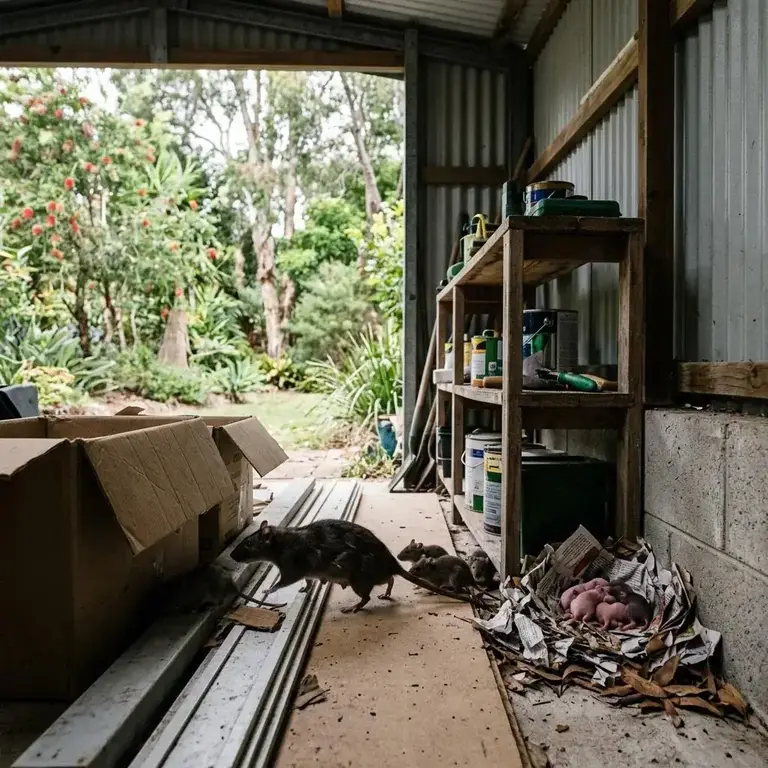
If you’ve heard scratching in the ceiling at night or found droppings in the pantry, you’re already dealing with an established problem — and professional rat control is the fastest, safest way to end it. Across Australia, from slab-on-ground brick veneer homes in the suburbs to raised Queenslanders with open subfloors, rats exploit our housing styles and warm climate year-round, and a breeding pair can produce dozens of offspring within a year. Rat control is the systematic process of inspecting a property to find nests, runways and entry points, eliminating the active population with tamper-resistant baiting or trapping, and proofing the building so new rats can’t return.
Effective rat control is about eliminating the source and denying re-entry — not just catching the one rat you happened to see. Australia’s two main pest species are the roof rat (Rattus rattus) and the larger Norway rat (Rattus norvegicus), and a licensed technician targets each according to its behaviour. Below is exactly how professionals approach the job, what it costs, and when DIY stops making sense.
- Professional rat control follows four steps: inspect, bait or trap, proof, then monitor — skipping proofing is why most DIY attempts fail.
- Rats can squeeze through a 12 mm gap and gnaw through timber, soft mortar and plastic, so sealing entry points is non-negotiable.
- Roof rats and Norway rats behave differently; identifying the species determines where control devices are placed.
- Tamper-resistant bait stations placed by licensed technicians are far safer around children, pets and native wildlife than loose supermarket baits.
- Expect most infestations to be under control within one to three weeks, with typical Australian costs ranging from roughly $250 to $600+ depending on severity.
Why Rat Control Matters So Much in Australian Homes
Rats thrive in Australia because our climate lets them breed for most of the year and our housing gives them easy shelter. In southern states, activity surges in autumn and winter as rats push indoors for warmth; in Queensland and coastal New South Wales, roof rats remain active almost year-round, nesting in roof voids, palms and dense garden vegetation.
Housing style plays a big role. Raised Queenslanders and older homes on stumps offer open subfloors where Norway rats burrow near drains and footings. Brick veneer homes on concrete slabs have weep holes and roof-to-eave gaps that roof rats exploit. Add fruit trees, chicken coops, compost bins and pet food left outside, and most Australian backyards offer everything a rat colony needs.
The stakes go beyond nuisance. Rats contaminate food, spread disease through droppings and urine, and gnaw constantly — including on electrical wiring, which creates a genuine fire risk in roof voids. We break down these dangers in detail in our article on whether rodents are dangerous: health, wiring and fire risks. The short version: a small problem ignored for a few months becomes an expensive one.
Warning Signs of a Rat Infestation
The clearest sign of rats is fresh droppings combined with gnaw marks and greasy rub marks along walls — if you see two or more of these, you have an active infestation. Use this checklist to assess your property, and see our full guide on signs of rats or mice in your home for photos and more detail.
- Droppings — dark, capsule-shaped pellets 10–18 mm long, found along walls, in pantries, under sinks or in roof voids.
- Gnaw marks — paired tooth grooves on timber, plastic pipes, food packaging, and even electrical cables.
- Rub marks — dark greasy smears along walls, beams and pipes where rats travel repeatedly.
- Noises at night — scratching, scurrying or gnawing in ceilings and walls, typically shortly after dusk and before dawn.
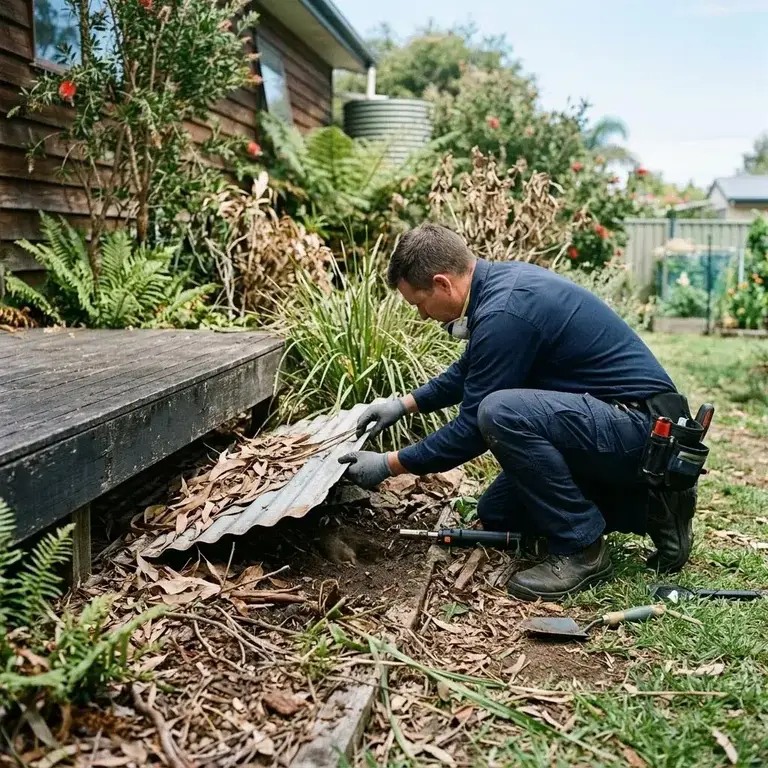
- Burrows — holes 60–90 mm wide near foundations, drains, compost heaps and under sheds (a Norway rat hallmark).
- Nests — shredded insulation, paper or fabric gathered in roof voids, wall cavities or behind appliances.
- Pet behaviour — dogs or cats fixating on a wall, cupboard or appliance where they can smell or hear activity.
How Professional Rat Control Works, Step by Step
Professional rat control works by combining species identification, targeted baiting or trapping, structural proofing and follow-up monitoring into one program. Here’s what that looks like in practice.
Step 1: Inspection and species identification
The technician reads the evidence — droppings, gnaw marks, rub marks and runways — to establish which species is present and where they travel. Roof rats favour ceilings, roof voids and overhanging trees; Norway rats burrow at ground level near drains and subfloors. Knowing the species and routes decides exactly where control devices go, which is why our rodent control and removal service always starts with a thorough inspection rather than guesswork.
Step 2: Targeted baiting and trapping
- Tamper-resistant bait stations placed along active runways and secured so children, pets and non-target wildlife cannot access the bait — a legal and safety requirement.
- Snap and multi-catch traps used where baiting is unsuitable, such as inside food-preparation areas or where a carcass must be recovered promptly.
- Placement along walls and beams, because rats are thigmotaxic — they run against surfaces, not across open floor.
Step 3: Proofing — the step DIY misses
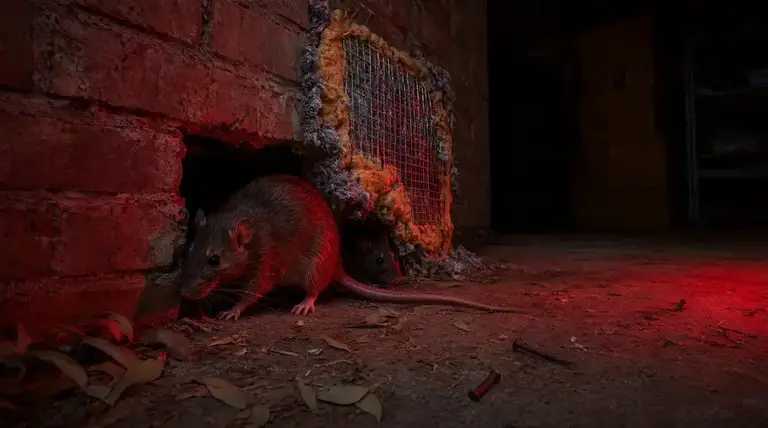
Rats can squeeze through a 12 mm gap and gnaw through timber, soft mortar and plastic. Professionals seal weep holes, roof-to-eave gaps, pipe penetrations and door thresholds using steel wool, metal mesh and appropriate sealants. Without this step, new rats simply reoccupy the vacated territory. Our dedicated rodent proofing and exclusion work is what turns a one-off treatment into a permanent fix.
Step 4: Monitoring and follow-up
Stations are checked and topped up, activity is monitored, and the plan is adjusted until activity ceases. For properties with ongoing risk — near waterways, food premises or bushland — a maintenance program keeps numbers down long-term.
Why baiting is done responsibly
Licensed technicians follow product label directions and secondary-poisoning controls, recovering carcasses where possible so that pets and native predators such as owls and goannas aren’t exposed. Loose supermarket baits scattered in a roof or yard are discouraged — they leave carcasses in the open and give no record of what was used. A professional program documents products, batch numbers and placement locations, which matters for safety and, in commercial settings, audit compliance.
DIY vs Professional Rat Control: An Honest Comparison
DIY trapping can knock down a single opportunistic rat, but established infestations almost always require professional rat control because traps alone don’t address the nest or the entry points. Here’s how the two approaches stack up:
| Factor | DIY traps and baits | Professional program |
|---|---|---|
| Species identification | Guesswork; wrong device placement is common | Evidence-based ID guides device placement |
| Safety around kids and pets | Loose baits left exposed; carcasses in open areas | Tamper-resistant, secured stations; carcass recovery |
| Entry-point proofing | Usually skipped or done with foam rats can gnaw through | Steel mesh, metal flashing and proper sealants |
| Long-term result | New rats reoccupy within weeks | Elimination plus exclusion; monitoring confirms success |
| Typical upfront cost | $30–$100 in products, often repeated | $250–$600+ once, with follow-up included |
Rat Control Costs in Australia (2025–26)
Across the Australian pest control industry, a standard residential rat treatment typically sits between $250 and $600, with severe infestations or extensive proofing pushing higher. Market pricing varies with property size, roof access, species and how much exclusion work is involved. The figures below reflect what the industry generally charges — always get an on-site quote, as pest control pricing is rarely accurate sight-unseen.
| Service | Typical cost (AUD) | What’s included / notes |
|---|---|---|
| Inspection and quote | $0–$120 | Often free with treatment; species ID and entry-point mapping |
| Standard baiting/trapping program | $250–$450 | Tamper-resistant stations, placement, one follow-up visit |
| Severe infestation treatment | $450–$800 | Multiple visits, larger station counts, carcass recovery |
| Proofing / exclusion work | $300–$1,500+ | Depends on gaps, roofline condition and access |
| Ongoing maintenance plan | $60–$120 per visit | Quarterly or bi-monthly station checks; common for food premises and high-risk sites |
It’s worth noting that Aussie Pest Strike typically comes in well under these market rates while still delivering a thorough, professional treatment. For an exact quote based on your property and situation, give the team a call on [aps_phone] today.
Seasonal Rat Activity Across Australia
Rat activity in Australia peaks from March through August as cooler weather drives rodents indoors, though northern regions see significant activity year-round. The chart below shows typical call-out volume by month across Australian pest control operators.
Jan
Feb
Mar
Apr
May
Jun
Jul
Aug
Sep
Oct
Nov
Dec
Indoor rat activity climbs sharply from autumn as rats seek warmth and shelter, peaking in mid-winter. Booking treatment in early autumn — before colonies establish in your roof — is the smart move. In tropical and subtropical areas, expect meaningful activity in every month.
Nine times out of ten, when a homeowner says the traps stopped working, the rats haven’t gone — they’ve just bred faster than the traps can catch them. The job’s only finished once the entry points are sealed and a follow-up visit shows zero fresh activity. Anything less and you’re renting the solution, not owning it.
If you’ve confirmed two or more warning signs, skip the supermarket aisle and book a professional inspection. A combined program of secured baiting or trapping plus proper proofing resolves most infestations within one to three weeks and prevents the cycle repeating. If you’re hearing noises overhead specifically, our guide to roof rats in Australia: behaviour, risks and control explains what you’re likely dealing with.
Frequently Asked Questions
How do professionals actually get rid of rats?
Professional rat control follows four steps: inspect, bait or trap, proof, then monitor. The technician first identifies the species and maps runways and entry points, then places tamper-resistant bait stations or traps along active routes. Next they seal entry points so new rats cannot re-enter, and finally they monitor stations until activity ceases. Skipping the proofing step is why most DIY attempts fail.
What are the warning signs of a rat infestation?
The clearest sign is fresh droppings combined with gnaw marks and greasy rub marks along walls. Other indicators include scratching or scurrying noises in ceilings at night, burrows 60–90 mm wide near foundations or drains, nests of shredded insulation or paper, and pets fixating on walls or cupboards. If you notice two or more of these signs, you likely have an active infestation.
Why is proofing so important in rat control?
Rats can squeeze through a 12 mm gap and gnaw through timber, soft mortar and plastic. Professionals seal weep holes, roof-to-eave gaps, pipe penetrations and door thresholds using steel wool, metal mesh and appropriate sealants. Without this exclusion work, new rats simply reoccupy the vacated territory within weeks, which is why baiting alone rarely delivers a permanent fix.
What is the difference between roof rats and Norway rats?
Australia's two main pest species behave differently, which affects where control devices are placed. Roof rats favour ceilings, roof voids and overhanging trees, while Norway rats are larger and burrow at ground level near drains, footings and subfloors. A licensed technician reads droppings, gnaw marks and runways to identify which species is present before deciding on device placement.
Why shouldn't I use loose supermarket baits for rats?
Loose baits scattered in a roof or yard leave carcasses in open areas where pets and native predators such as owls and goannas can be exposed to secondary poisoning, and there is no record of what was used. Licensed technicians use tamper-resistant, secured stations that children, pets and wildlife cannot access, follow product label directions, and document products, batch numbers and placement locations.
How long does professional rat control take to work?
Most infestations come under control within one to three weeks of treatment beginning. Severe infestations may require multiple visits, larger station counts and carcass recovery. After baiting or trapping, follow-up monitoring confirms activity has ceased, and properties near waterways, food premises or bushland may benefit from an ongoing maintenance program to keep numbers down long-term.
When is rat activity highest in Australia?
Rat activity peaks from March through August as cooler weather drives rodents indoors seeking warmth, particularly in southern states during autumn and winter. In Queensland and coastal New South Wales, roof rats remain active almost year-round, nesting in roof voids, palms and dense garden vegetation. Northern regions can see significant activity outside the usual peak months.
Can I handle a rat problem myself instead of calling a professional?
DIY trapping can knock down a single opportunistic rat, but established infestations almost always require professional help because traps alone do not address the nest or the entry points. DIY approaches often involve guesswork about species, exposed baits around children and pets, and proofing done with foam rats can gnaw through — meaning new rats reoccupy the territory within weeks.
How does Aussie Pest Strike tailor a rat treatment plan to my property?
Expect to talk through the evidence you have noticed, such as droppings, noises in the ceiling or gnaw marks, and any areas of concern like the roof void, subfloor, pantry or garden. A technician will want to inspect the property to identify the species, map runways and entry points, and discuss whether baiting, trapping or proofing suits your situation, plus any follow-up monitoring needed.
What is a practical next step if I suspect rats in my home?
Aussie Pest Strike can inspect your property, identify the species present and provide an exact quote based on your situation rather than a sight-unseen estimate, then recommend a treatment and proofing plan. The practical next step is to note the signs, inspect the relevant area carefully, and seek property-specific advice if the issue continues.
Sources & further reading
Found Something
Dangerous?
Don’t touch it. Don’t spray it. Keep kids and pets clear, take a photo from a safe distance, and call us — or book a free inspection and we’ll come to you.
02 7235 0050