Rats in the Garden:Why They’re Thereand What to Do
Rats in the garden are usually there for three things: food, water and shelter. Fallen fruit, compost heaps, chook pens, pet bowls and dense vegetation...
Rats in the garden are after three things: food, water and shelter. Fallen fruit, compost heaps, chook pens, pet bowls and dense vegetation all attract black rats and Norway rats in backyards right across Australia, from coastal Queensland to suburban Melbourne. Put simply, a rat in the garden is a wild rodent using your yard as a feeding station or nesting site — and left unchecked, a single pair can breed into a colony that moves into your roof or shed.
The fix is straightforward in principle: remove the attractants, block the entry points, and if activity continues, set traps or call a licensed pest controller. This guide walks you through why rats turn up, how to spot them early, what you can handle yourself, and when it’s time to bring in professional pest control.
- Rats come for food, water and shelter — fallen fruit, compost, chook feed, pet bowls and dense vegetation are the big drawcards.
- The two culprits in Australian gardens are the black rat (Rattus rattus) and the Norway rat (Rattus norvegicus).
- Look for droppings, burrows, gnaw damage, runs and night-time rustling — you’ll usually see evidence before the animal.
- Removing attractants and proofing structures solves most mild problems; established colonies usually need trapping or professional treatment.
- Professional rodent control in Australia typically costs $180–$550 for an initial treatment, with proofing quoted separately.
Why a Rat in the Garden Matters in Australia
Australian conditions are close to perfect for rats. Mild winters in subtropical Queensland and northern New South Wales allow year-round breeding, while southern states see activity spike in autumn and winter as rats seek warmth, and after heavy rain or flooding that flushes them from drains and burrows.
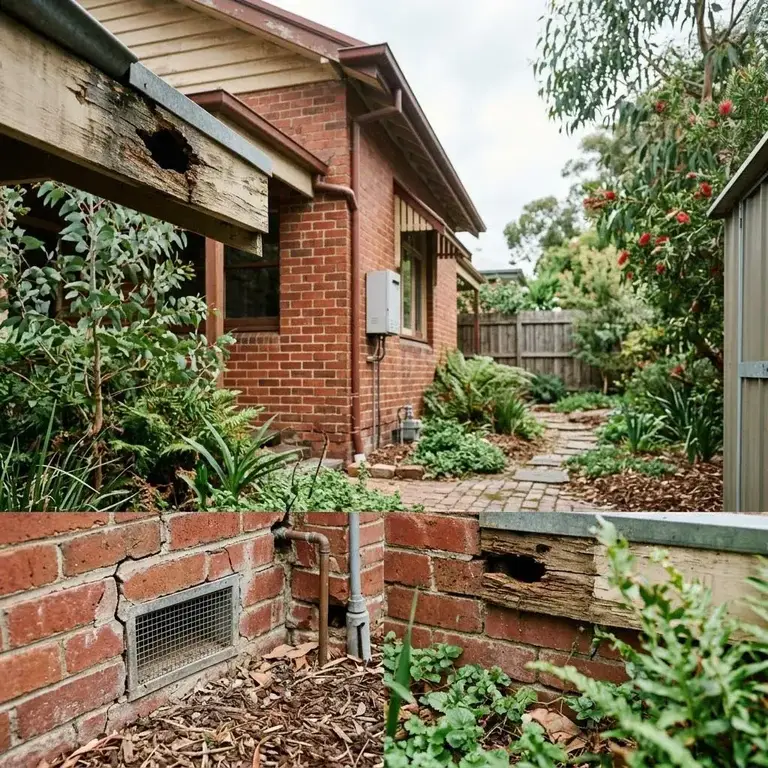
The black rat is a nimble climber common in coastal Queensland, New South Wales, Victoria and Western Australia. It nests in dense shrubs and palms before moving into roof voids — a serious issue for Queenslanders on stumps and brick veneer homes with weep holes and ageing rooflines. The stockier Norway rat is a burrower that favours moist soil near drains, creeks and compost heaps, and it’s a regular problem around subfloor spaces, garden beds and concrete slab edges.
Our housing styles make it worse. Subfloor voids, timber stumps, garden sheds, chicken coops and under-deck cavities give rats sheltered harbourage within metres of the house. A garden infestation is rarely just a garden problem — it’s usually a staging ground for the roof, walls or subfloor. If you’re seeing evidence indoors as well, run through our signs of rats or mice in your home checklist to gauge how far the problem has spread.
Warning Signs You Have Rats in the Garden
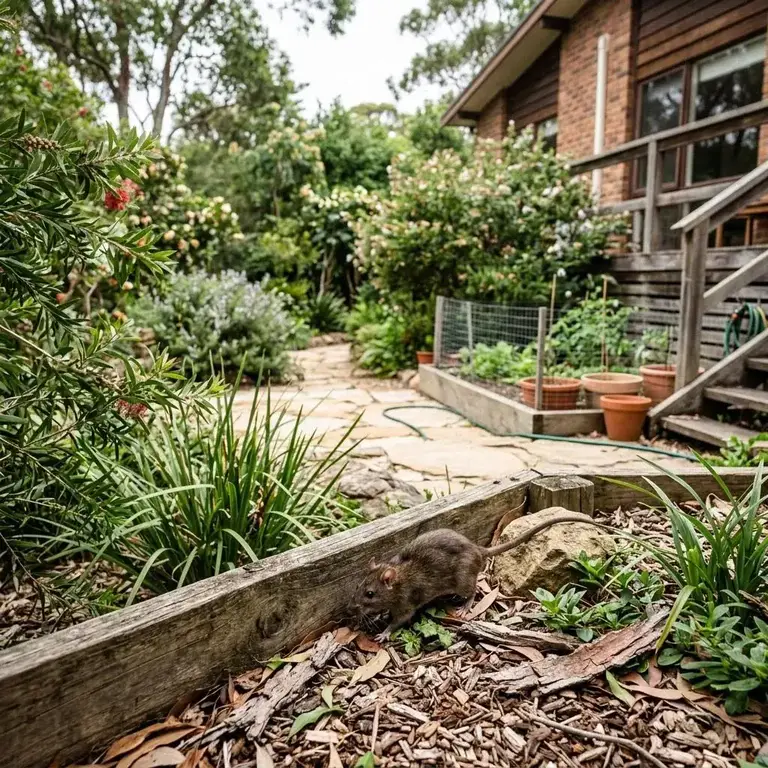
Rats are mostly nocturnal, so you’ll almost always see the evidence before the animal. Walk the garden at dusk and check for these tell-tale signs:
- Droppings: dark, spindle-shaped pellets 10–15 mm long along fences, garden beds and near bins.
- Burrows: holes 6–9 cm wide in soil banks, under sheds, compost heaps and along concrete edges — classic Norway rat sign.
- Gnaw damage: half-eaten fruit, chewed irrigation pipe, and teeth marks on shed doors or stored timber.
- Runs and rub marks: worn paths through grass and greasy smears along fence lines and walls.
- Night activity: rustling in dense plants, pets fixated on one spot, or scattering birds in the aviary.
If the signs point to climbers — droppings in the shed rafters, damage up high, noise overhead — you may be dealing with roof rats. Our guide to roof rats in Australia: behaviour, risks and control explains how that species behaves once it leaves the garden for the roof void.
DIY vs Professional Rat Control
DIY control suits a mild, early problem: one or two rats, no burrow systems, nothing in the house. Anything beyond that — persistent activity after two to three weeks, extensive burrows, or rats in the roof, walls or subfloor — calls for a licensed pest controller.
Start with hygiene. Pick up fallen fruit daily, harvest ripe produce promptly, use a sealed compost bin (skip meat, dairy and cooked scraps), feed pets indoors or bring bowls in at night, and store chook pellets and bird seed in metal bins with tight lids. Fix leaking taps, thin out dense ground covers and stack firewood off the ground.
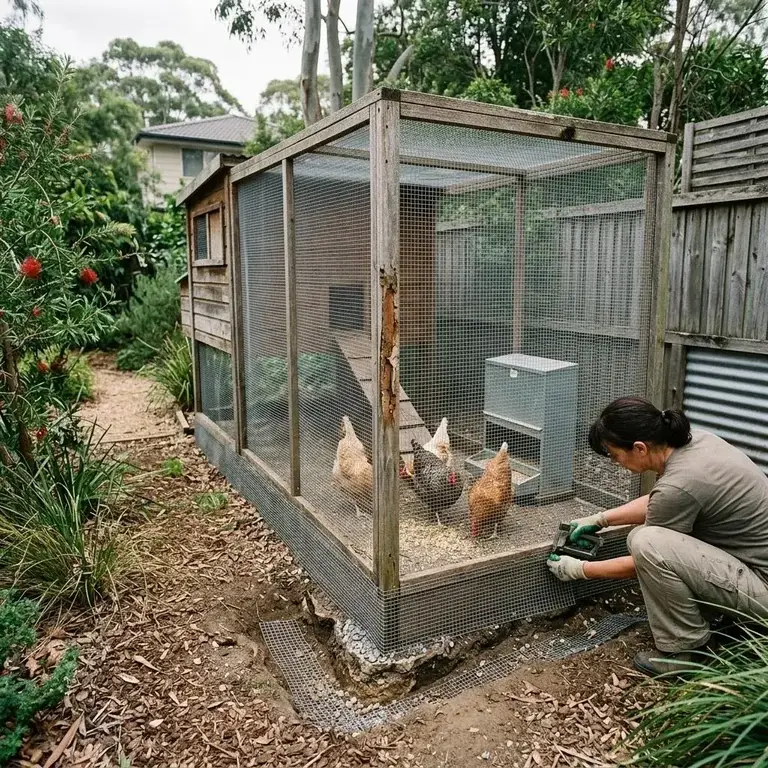
Next, proof the structures. Rats can squeeze through a gap the width of a thumb, so seal openings under sheds, stairs and decking with galvanised wire mesh, line the base of compost bins, and trim branches that overhang the roof — black rats will use them as a bridge into the roof void. For anything structural, our Rodent Proofing & Exclusion service handles the sealing properly.
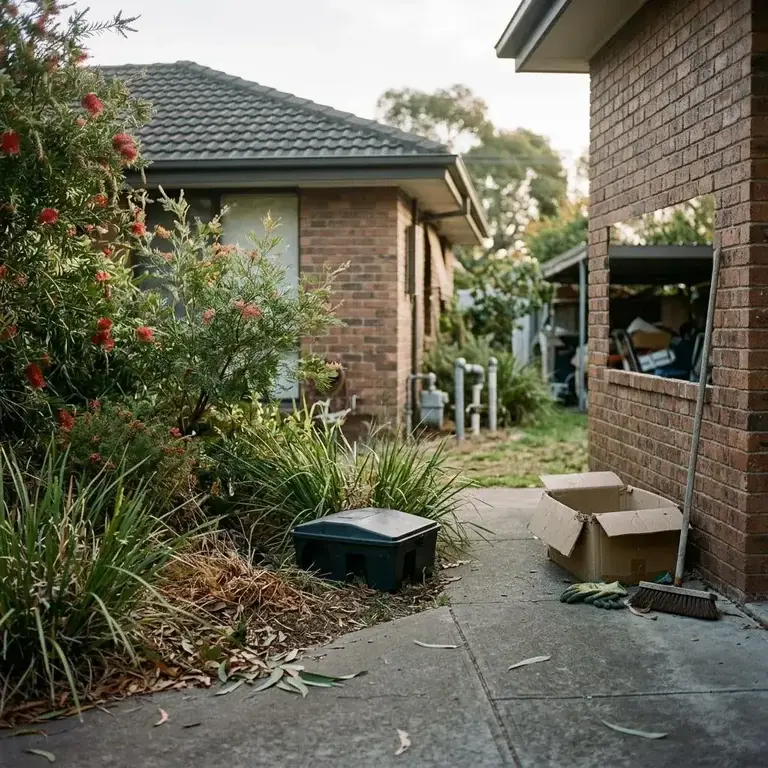
For small numbers, snap traps set along runs and baited with peanut butter or dried fruit work well — place them inside a box or station so native birds, lizards and pets can’t reach them. Be cautious with rodenticides: second-generation anticoagulant baits such as brodifacoum can kill owls and other wildlife that eat poisoned rats. Always follow the label and use tamper-resistant bait stations, and leave any chemical treatment to a licensed technician. One more caution: the native bush rat (Rattus fuscipes) is protected under state laws such as the NSW Biodiversity Conservation Act 2016, so if you’re unsure of the species, get it identified before baiting.
| Factor | DIY | Professional |
|---|---|---|
| Best for | Mild, early activity outdoors | Established colonies or rats in structures |
| Species ID | Guesswork — risk to native bush rats | Confirmed before treatment |
| Products | Shop-bought traps and low-strength baits | Commercial-grade products used safely around kids, pets and wildlife |
| Proofing | Basic mesh and tidying | Tailored exclusion for slab, subfloor or Queenslander homes |
| Upfront cost | $20–$80 in traps and materials | $180–$550 initial treatment |
How Much Does Garden Rat Control Cost in Australia?
Across the Australian market, households typically pay between $180 and $550 for an initial professional rodent treatment, depending on property size, severity and how many follow-up visits are needed. Proofing work is usually quoted separately by most operators because it varies so much between a slab-on-ground home and a high-set Queenslander.
| Service | Typical market rate (AUD) | What’s included/notes |
|---|---|---|
| Inspection and assessment | $0–$150 | Species ID, burrow and entry-point mapping; the industry often waives this with treatment |
| Initial rodent treatment | $180–$400 | Tamper-resistant bait stations and/or trapping program outdoors |
| Severe or multi-visit program | $400–$550+ | Large properties, heavy infestations, follow-up visits over 4–8 weeks |
| Rodent proofing and exclusion | $250–$900+ | Mesh, sealing subfloor, shed and deck entry points; quoted per property |
For a full breakdown of how professionals approach elimination, see Rat Control: How Professionals Actually Eliminate Rats, or book our Rodent Control & Removal service directly.
It’s worth noting that Aussie Pest Strike typically comes in well under these general market rates while delivering the same professional-grade treatment. For an exact quote tailored to your property, give us a call on [aps_phone] today.
Seasonal Rat Activity in Australian Gardens
Rat activity in Australian gardens peaks from late summer through winter, when breeding populations are high and rats push toward buildings for warmth and food. Activity dips slightly in mid-spring as natural food becomes abundant, but in subtropical regions breeding continues year-round.
Jan
Feb
Mar
Apr
May
Jun
Jul
Aug
Sep
Oct
Nov
Dec
Typical garden rat activity across southern Australia. Activity climbs from autumn as rats seek warmth and shelter, peaking in June–July, then eases in spring. In subtropical Queensland and northern NSW, expect elevated activity year-round, with spikes after heavy rain or flooding.
Nine times out of ten, when I find rats in a roof, the trail leads straight back to the garden — a compost heap, a chook pen, fruit on the ground. Fix the garden first and you solve half the problem before we’ve set a single trap. The other half is blocking the way in, because a rat only needs a gap the width of your thumb.
Start today: pick up fallen fruit, seal the compost bin, bring pet bowls in at night and store feed in metal containers. Walk the fence line at dusk and note every burrow and run. If signs persist after two to three weeks, or you find burrow systems or activity near the house, book a licensed pest controller for a proper inspection, species identification and treatment plan — and get proofing quoted at the same time so they can’t come back.
Frequently Asked Questions
Why are there rats in my garden?
Rats come into gardens for three things: food, water and shelter. Fallen fruit, compost heaps, chook feed, pet bowls left out overnight and dense vegetation are the biggest drawcards. In Australia, the two culprits are usually the black rat, a climber that nests in shrubs before moving into roof voids, and the Norway rat, a burrower that favours moist soil near drains, compost heaps and subfloor spaces.
What signs show I have rats in the garden?
Because rats are mostly nocturnal, you will usually see evidence before you see the animal. Walk the garden at dusk and look for dark spindle-shaped droppings 10–15 mm long along fences and garden beds, burrows 6–9 cm wide in soil banks or under sheds, half-eaten fruit, gnaw marks on pipes and timber, worn runs through grass, greasy rub marks on walls, rustling in dense plants at night, or pets fixated on one spot.
How do I get rid of rats in my garden myself?
Start with hygiene: pick up fallen fruit daily, harvest ripe produce promptly, use a sealed compost bin without meat or dairy scraps, bring pet bowls inside at night, store chook pellets and bird seed in metal bins with tight lids, fix leaking taps, thin dense ground covers and stack firewood off the ground. Then proof structures by sealing gaps under sheds and decking with galvanised wire mesh and trimming branches that overhang the roof.
When should I call a professional for garden rats?
DIY control suits mild, early problems with one or two rats outdoors and no burrow systems. Call a licensed pest controller if activity persists after two to three weeks of your own efforts, if you find extensive burrows, or if rats have moved into the roof, walls or subfloor. Professionals can confirm the species before treatment, which matters because the native bush rat is protected under state laws.
Are rat baits safe to use around wildlife and pets?
Be cautious with rodenticides. Second-generation anticoagulant baits such as brodifacoum can kill owls and other wildlife that eat poisoned rats. If you do bait, always follow the label, use tamper-resistant bait stations, and keep traps inside boxes or stations so native birds, lizards and pets cannot reach them. Any chemical treatment is best left to a licensed technician, and uncertain species should be identified first because the native bush rat is protected.
Which rat species am I likely seeing in my Australian garden?
The black rat (Rattus rattus) is a nimble climber common in coastal Queensland, New South Wales, Victoria and Western Australia. It nests in dense shrubs and palms before moving into roof voids. The stockier Norway rat (Rattus norvegicus) is a burrower favouring moist soil near drains, creeks and compost heaps, often found around subfloors, garden beds and slab edges. Droppings in rafters or noise overhead suggest climbing black rats.
Does rat activity change with the seasons in Australia?
Yes. Across southern Australia, rat activity climbs from autumn as rats seek warmth and shelter, peaking in June and July, then eases in spring when natural food becomes abundant. In subtropical Queensland and northern New South Wales, mild winters allow year-round breeding, so expect elevated activity all year, with spikes after heavy rain or flooding that flushes rats from drains and burrows.
Can garden rats move into my house?
Yes, and it happens often. A garden infestation is rarely just a garden problem — compost heaps, chook pens and fruit trees act as staging grounds for rats moving into the roof, walls or subfloor. Rats can squeeze through a gap the width of a thumb, and black rats will use overhanging branches as bridges onto the roofline. Queenslanders on stumps and brick veneer homes with weep holes are particularly exposed.
How would Aussie Pest Strike assess the signs of rats in my garden?
A technician would walk the property at an appropriate time and map what the article describes: droppings along fences and beds, burrow openings under sheds and along concrete edges, gnaw damage, worn runs and greasy rub marks. They would identify whether you are dealing with climbing black rats or burrowing Norway rats, locate entry points near the house such as weep holes or subfloor gaps, and build a treatment plan around those findings rather than guessing.
What practical next step can Aussie Pest Strike take if DIY efforts have not worked?
If hygiene changes and basic proofing have not stopped activity after two to three weeks, the next step is a proper inspection with species identification and a treatment plan covering trapping or tamper-resistant bait stations outdoors. Because garden rats often lead back into the roof or subfloor, ask for rodent proofing and exclusion to be quoted at the same time, so entry points under sheds, decks and the house are sealed and the problem cannot simply return.
Sources & further reading
Found Something
Dangerous?
Don’t touch it. Don’t spray it. Keep kids and pets clear, take a photo from a safe distance, and call us — or book a free inspection and we’ll come to you.
02 7235 0050