Rat-Proofing YourChicken Coop: ABackyard Guide
Rats love a chicken coop for the same reasons your chooks do: food, water and shelter. This guide shows you how to rat-proof your chicken coop with...
Rats love a chicken coop for the same reasons your chooks do: food, water and shelter. If you’ve searched “h” for help with rats around your hens, you’re not alone — backyard poultry keeping is booming across Australia, and rodents are cashing in. This guide shows you how to rat-proof your chicken coop with hardware cloth, smart feed storage and tidy habits, plus when to call a licensed pest controller.
Rat-proofing a chicken coop means combining physical exclusion (sealing every gap larger than a 20-cent coin with 6.5 mm galvanised mesh), removing food and water attractants, and using safe trapping so rats can’t live, feed or breed anywhere near your birds. Done properly, most backyarders can dramatically cut rat pressure within a few weeks — but an established infestation usually needs professional pest control to finish the job.
- Rats target coops for feed, water, shelter and eggs — remove the attractants and half the battle is won.
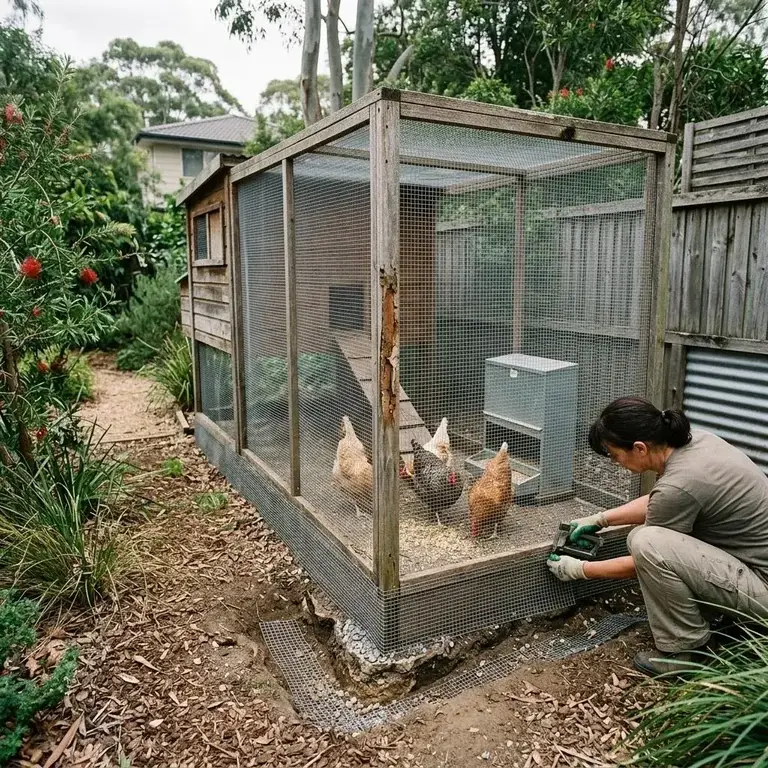
- Standard chicken wire won’t stop rats; use 6.5 mm galvanised hardware cloth buried 300 mm deep or a 450 mm outward skirt.
- Store feed in sealed metal drums, use a treadle feeder and collect eggs daily.
- Snap traps in covered stations are the safest DIY control around poultry; use rodenticide only with extreme care.
- Pressure peaks in autumn and winter — proof your coop before March, not after you find droppings.
Why Rats Target Backyard Chicken Coops Across Australia
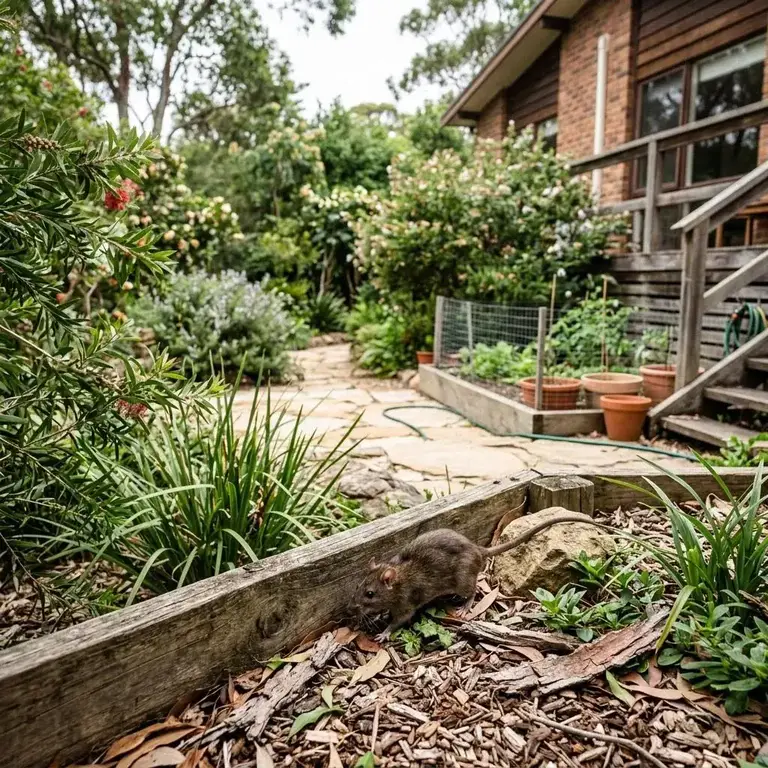
Rats target coops because a coop concentrates everything they need in one small footprint: reliable grain, drinking water, nesting material and shelter from predators and weather. Australian conditions make the problem worse — our mild winters let both major species breed nearly year-round, and our housing styles give them plenty of places to hide.
The two main culprits are the black rat (Rattus rattus), an agile climber common along the east coast, and the Norway or brown rat (Rattus norvegicus), a burrower that tunnels under floors and footings. Black rats are a particular headache for Queenslanders and older homes on stumps, where they travel along branches, fences and overhead lines straight onto coop roofs. If you want to understand how they move and nest, see our guide to roof rats in Australia: behaviour, risks and control. Norway rats dominate around slab-on-ground and brick-veneer homes in the southern states, burrowing under pavers, garden beds and coop floors.
Pressure peaks in autumn and winter as rats seek warmth, and after heavy rain flushes burrows. A single pair can produce hundreds of descendants in a year, so a few droppings in March can become a serious infestation by July. Rats also spread salmonellosis and leptospirosis through droppings and urine in feed and water, kill chicks, steal eggs and stress laying hens — egg production often drops before you ever see a rat.
Warning Signs: h Checklist for Rat Activity Around Your Coop
Rats are nocturnal, so you’ll almost always spot evidence before you spot the animal. Run this checklist weekly from late summer onwards — catching activity early is far cheaper than treating an established colony.
- Droppings along walls and runways — black rat droppings are pointed; Norway rat droppings are blunt capsules. Fresh droppings are dark and soft.
- Greasy rub marks on timber, mesh and entry points where coats brush repeatedly.
- Gnawed timber, feed bins and plastic tubs — rats must gnaw constantly and will chew through feed sacks overnight.
- Burrow entrances 70–120 mm wide near footings, under floors and along fence lines — classic Norway rat sign.
- Missing eggs and stressed hens — birds refusing to roost or go into nesting boxes.
- A musky, ammonia-like smell in nesting boxes and corners.
- Noises after dark — scratching, scurrying and squeaking in walls, roofs or under the floor.
Many of these signs overlap with what you’d see indoors — our signs of rats or mice in your home checklist is worth a read if you’re finding evidence closer to the house too.
How to Rat-Proof Your Chicken Coop: DIY Steps vs Professional Help
Most backyarders can handle proofing and sanitation themselves, but trapping out an established population — or any baiting near poultry — is best left to a licensed technician. Here’s an honest comparison of what each approach covers.
Secure the Structure
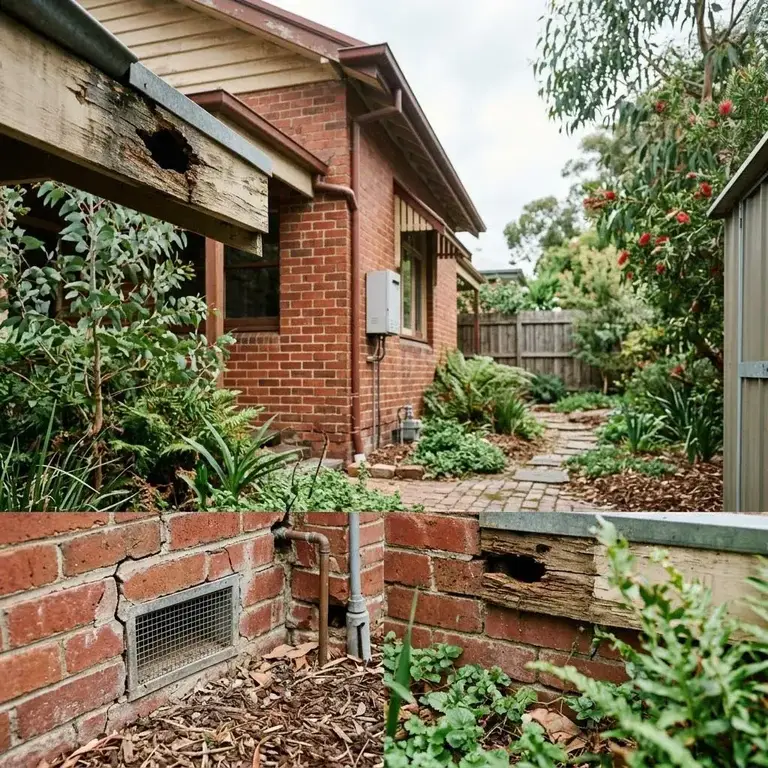
Standard chicken wire keeps chooks in but won’t stop rats — they squeeze through a gap the size of a 20-cent coin. Cover windows, vents and lower walls with 6.5 mm galvanised hardware cloth, bury the mesh 300 mm deep, or lay a 450 mm outward-facing mesh skirt around the perimeter to defeat burrowers. A concrete floor is the gold standard.
Manage Feed and Water
Spilled grain is the number one attractant. Feed only what your birds eat in a day, sweep up spills before dusk, and store feed in sealed metal drums — rats chew straight through plastic tubs and feed sacks. A treadle feeder, which opens only under a chook’s weight, is worth the investment. Collect eggs daily.
Keep the Surrounds Tidy
Rats hate exposed ground. Keep a one-metre clear zone around the coop, mow regularly, and store timber and corrugated iron off the ground. Trim overhanging branches — black rats are superb climbers and will drop straight onto the roof.
| Factor | DIY approach | Professional approach |
|---|---|---|
| Best for | Prevention, early signs, low activity | Established infestations, recurring problems |
| Exclusion | Hardware cloth, mesh skirts, sealed drums | Full inspection, rodent proofing & exclusion of coop and surrounds |
| Control method | Snap traps in covered stations, checked daily | Tamper-proof bait stations, trapping programs, APVMA-compliant baiting |
| Risk to chooks & wildlife | Low if traps are covered; high if loose bait is used | Managed — licensed technicians place and secure all baits |
| Timeframe | Weeks of daily checking | Typically resolved over 2–4 visits |
If you do trap yourself, bait snap traps with peanut butter or pumpkin seeds, set them along walls and runways inside covered stations so chooks and native birds can’t trigger them, check daily, and bag carcasses before binning. Be cautious with rodenticides: second-generation anticoagulants such as brodifacoum persist in the food chain and have killed owls, frogmouths and quolls that ate poisoned rats. Several states have tightened retail sales, and all baits must follow the APVMA-approved label — never leave loose bait where chooks, pets or wildlife can reach it. For heavy infestations, professional rodent control & removal is the safer and faster option.
What Does Rat-Proofing and Rat Control Cost in Australia?
Across the Australian market, DIY proofing materials for a typical backyard coop generally run $150–$450, while professional rat control with follow-up visits is typically charged at $250–$600, depending on property size and severity. Full exclusion work on a coop and surrounding structures sits higher on the industry scale, but it’s a once-off investment that prevents repeat call-outs.
| Service | Typical cost (AUD) | What’s included/notes |
|---|---|---|
| DIY proofing materials | $150–$450 | Hardware cloth, metal drums, treadle feeder, fixings |
| Professional rat treatment (coop/yard) | $250–$450 | Inspection, tamper-proof stations, 2–3 follow-up visits |
| Severe infestation program | $450–$700 | Extended baiting/trapping program, burrow treatment, monitoring |
| Rodent proofing & exclusion | $400–$900+ | Mesh installation, entry-point sealing; priced on scope |
These market rates vary by state, access and how far the rats have spread — rats in a coop often means rats in the roof or garage too. Our article on rat control: how professionals actually eliminate rats explains what a thorough treatment involves.
While those figures reflect what the industry typically charges, Aussie Pest Strike usually comes in well under these market rates while still delivering a comprehensive, professional job. For an exact quote tailored to your property, call us on [aps_phone].
Seasonal Rat Activity Around Australian Coops
Rat pressure on backyard coops climbs sharply from March and peaks through autumn and winter, when rodents seek warmth and dry shelter and natural food becomes scarce. Activity dips over spring and early summer but never disappears entirely, especially in coastal Queensland and northern NSW.
Jan
Feb
Mar
Apr
May
Jun
Jul
Aug
Sep
Oct
Nov
Dec
Typical rat pressure on backyard coops across Australia: activity builds from March, peaks May–July as rats seek warmth and shelter, then eases through spring. Heavy rain events can cause sudden spikes at any time of year by flooding burrows.
Nine times out of ten, when we’re called to a coop job the feed’s in an open bag and there’s grain on the ground. Fix the food source and the entry points first, and the trapping becomes straightforward — skip that step and you’re just feeding the next generation of rats.
Start this weekend: fit 6.5 mm galvanised hardware cloth over every opening larger than your thumb, get feed into sealed metal drums, add a treadle feeder and clear a one-metre zone around the coop. If you’re already seeing droppings, burrows or missing eggs, book a licensed pest control technician now — a small autumn problem becomes a serious winter infestation fast.
Frequently Asked Questions
Why does standard chicken wire fail to keep rats out of a coop?
Standard chicken wire is designed to keep chooks in, not to stop rats getting in. Rats can squeeze through any gap the size of a 20-cent coin, and chicken wire openings are far larger than that. For effective exclusion, cover windows, vents and lower walls with 6.5 mm galvanised hardware cloth instead, and make sure every opening larger than your thumb is sealed.
How do I stop rats burrowing under the coop floor?
Bury your 6.5 mm galvanised hardware cloth at least 300 mm deep around the coop, or lay a 450 mm outward-facing mesh skirt around the perimeter to defeat burrowers. This matters most where Norway rats are active, as they tunnel under floors, footings, pavers and garden beds. A concrete floor is described as the gold standard for keeping burrowing rats out of the coop entirely.
What are the warning signs of rats around my chicken coop?
Run a weekly checklist from late summer onwards. Look for droppings along walls (pointed for black rats, blunt capsules for Norway rats), greasy rub marks on timber and mesh, gnawed feed bins and plastic tubs, burrow entrances 70–120 mm wide near footings, missing eggs, hens refusing to roost, a musky ammonia smell in nesting boxes, and scratching or squeaking noises after dark. Fresh droppings are dark and soft.
Which rat species cause problems for Australian backyard coops?
The two main culprits are the black rat (Rattus rattus) and the Norway or brown rat (Rattus norvegicus). Black rats are agile climbers common along the east coast, particularly troublesome in Queensland and older homes on stumps, travelling along branches, fences and overhead lines onto coop roofs. Norway rats dominate around slab-on-ground and brick-veneer homes in southern states, burrowing under floors and footings.
What type of feed container keeps rats from getting into my chicken food?
Spilled grain is the number one attractant, so store feed in sealed metal drums — rats chew straight through plastic tubs and feed sacks. Feed only what your birds eat in a day, sweep up spills before dusk, and collect eggs daily. A treadle feeder, which opens only under a chook's weight, is worth the investment because it stops rats accessing grain while letting your birds feed normally.
Is it safe to use rat bait or poison near chickens?
Be extremely cautious with rodenticides around poultry. Second-generation anticoagulants such as brodifacoum persist in the food chain and have killed owls, frogmouths and quolls that ate poisoned rats. Several states have tightened retail sales, and all baits must follow the APVMA-approved label. Never leave loose bait where chooks, pets or wildlife can reach it — snap traps in covered stations are the safer DIY option.
When is rat pressure highest around Australian chicken coops?
Rat pressure climbs sharply from March and peaks through autumn and winter, roughly May to July, when rodents seek warmth and dry shelter and natural food becomes scarce. Activity dips over spring and early summer but never disappears entirely, especially in coastal Queensland and northern NSW. Heavy rain events can also cause sudden spikes at any time of year by flooding rats out of their burrows.
What can I do about the area surrounding my coop to deter rats?
Rats hate exposed ground, so keep a one-metre clear zone around the coop, mow regularly, and store timber and corrugated iron off the ground rather than stacked on the soil. Trim overhanging branches too, because black rats are superb climbers and will travel along branches, fences and overhead lines before dropping straight onto the coop roof. Removing these pathways and hiding spots makes the area far less attractive.
I've tried the prevention steps but still have rats around my coop — how do I arrange further help?
If you've fitted hardware cloth, secured feed in metal drums and tidied the surrounds but activity continues, an established population usually needs professional treatment. Aussie Pest Strike can inspect the coop and surrounds, identify entry points and run a trapping or baiting program suited to properties with poultry. Contacting them for a quote tailored to your property is the practical next step once DIY proofing alone isn't enough.
How can I get a professional assessment of rat activity around my coop before starting work?
A professional inspection can confirm which species you're dealing with, locate burrows and entry points, and show whether rats have spread from the coop into the roof or garage. Aussie Pest Strike offers inspections of the coop and surrounding structures, so you know exactly what exclusion and control work is needed before buying materials or setting traps. Reaching out for an assessment is a sensible first move if you're seeing fresh signs each week.
Sources & further reading
Found Something
Dangerous?
Don’t touch it. Don’t spray it. Keep kids and pets clear, take a photo from a safe distance, and call us — or book a free inspection and we’ll come to you.
02 7235 0050