Roof Rats inAustralia: Behaviour,Risks and Control
Roof Rats in Australia — Roof rats in — roof rats the black rat, Rattus rattus are agile climbers that nest in roof voids, wall cavities and trees, entering...
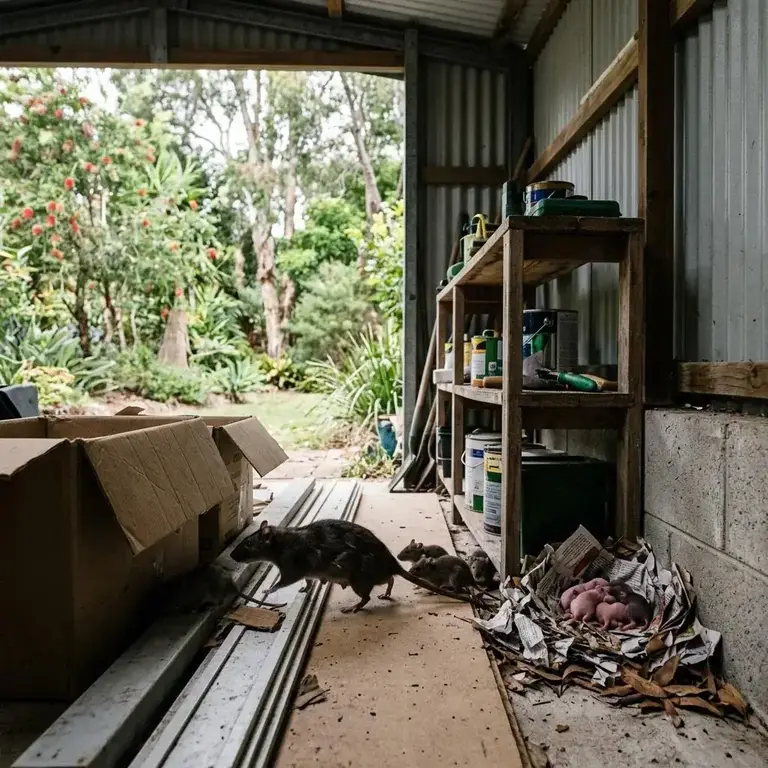
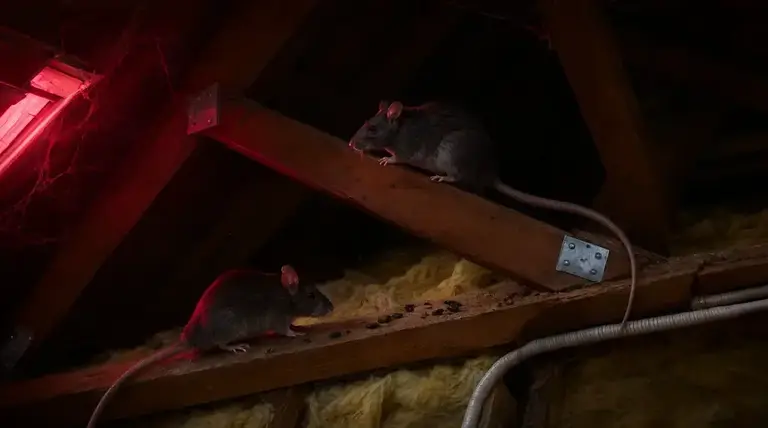
If you hear scratching, scurrying or gnawing in your ceiling after dark, roof rats are the most likely culprit in Australian homes. These agile climbers are responsible for more night-time roof noise complaints than any other rodent, and they bring genuine health and fire risks with them.
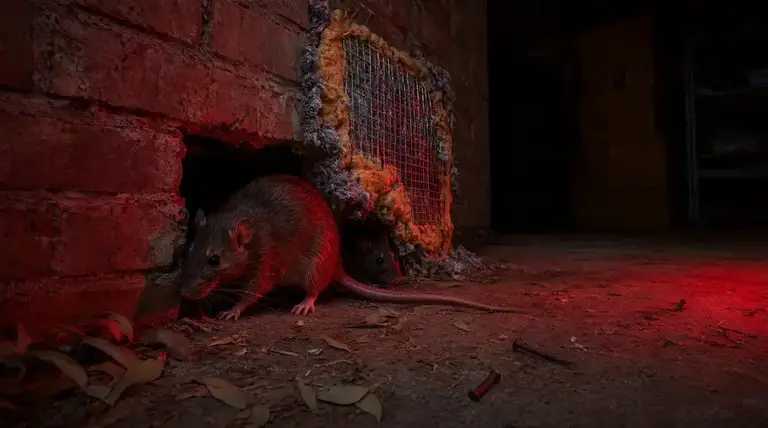
Roof rats — the black rat, Rattus rattus — are defined as slender, tree-dwelling rodents that nest above ground in roof voids, wall cavities and dense vegetation, entering buildings through gaps as small as 12 mm. Because they live up high rather than burrowing at ground level, controlling them demands a different approach to standard rat treatment. This guide explains their behaviour, the risks they pose, and how professional rodent control & removal gets them out for good.
- Roof rats (black rats) nest in roof voids, wall cavities and trees, and squeeze through gaps as small as 12 mm.
- Fast, light scratching overhead at night — especially just after dusk — is the classic sign of roof rat activity.
- They spread diseases such as leptospirosis and salmonellosis, and their gnawing on electrical cabling is a recognised cause of house fires.
- Effective control means treating the roof void, trimming vegetation back from the roofline and sealing every entry point.
- Professional treatment in Australia typically costs $250–$650 for an initial programme, with exclusion work quoted separately.
Why Roof Rats Thrive in Australian Homes
Roof rats flourish across Australia because our climate, vegetation and housing styles give them year-round food, shelter and easy aerial access to rooflines. Unlike colder countries where winter knocks populations back, much of Australia lets them breed through most of the year.
Housing design plays a big part. Older Queenslanders on stumps have open eaves, gable vents and leafy gardens that suit them perfectly. Brick veneer homes with tiled roofs develop gaps at the ridge, eaves and broken tiles over time. Even modern slab-on-ground homes offer entry through weep holes, pipe penetrations and garage door seals. Add fruiting palms, citrus trees, mango trees and dense ornamental plantings — staples of Australian backyards — and you have a rooftop highway with a food supply attached.
Roof rats typically weigh just 150–250 g. They are superb climbers, scaling brick walls, power and NBN cables, downpipes and overhanging branches to reach the roofline. They favour fruit, seeds and plant matter over the meatier diet of ground-dwelling Norway rats, which is exactly why fallen citrus and bird feeders near a house act as magnets.
They are strongly nocturnal, most active in the first hours after dusk, and they follow set runways along beams and cables inside the roof void. A colony grows quickly — females produce several litters a year of 5–8 pups each — so a faint scratching in autumn can become a serious infestation by spring if left alone.
Warning Signs of Roof Rats in Your Roof
The clearest signs of roof rats are overhead noises at night, droppings in the roof void and greasy rub marks along beams and entry points. Use this checklist to confirm what you’re dealing with — and cross-check against our full checklist of signs of rats or mice in your home.
- Night-time scratching and scurrying — fast, light movement in the ceiling or walls, strongest just after dusk and before dawn.
- Droppings — dark, spindle-shaped droppings 12–18 mm long in the roof void, along beams or in the garage.
- Greasy rub marks — dark smears along rafters, pipes and eave gaps where oily fur repeatedly brushes past.
- Gnaw damage — chewed electrical cabling, plastic pipes, stored boxes and timber in the roof space.
- Nesting debris — shredded insulation, paper and leaves dragged into corners of the roof void.
- Flattened, soiled insulation — insulation that has lost its loft and smells of urine.
- Fruit damage outside — half-eaten citrus or mangoes, hollowed fruit left hanging, and activity in palms at dusk.
- Pet agitation — dogs and cats fixating on the ceiling or a particular wall at night.
DIY vs Professional Roof Rat Control
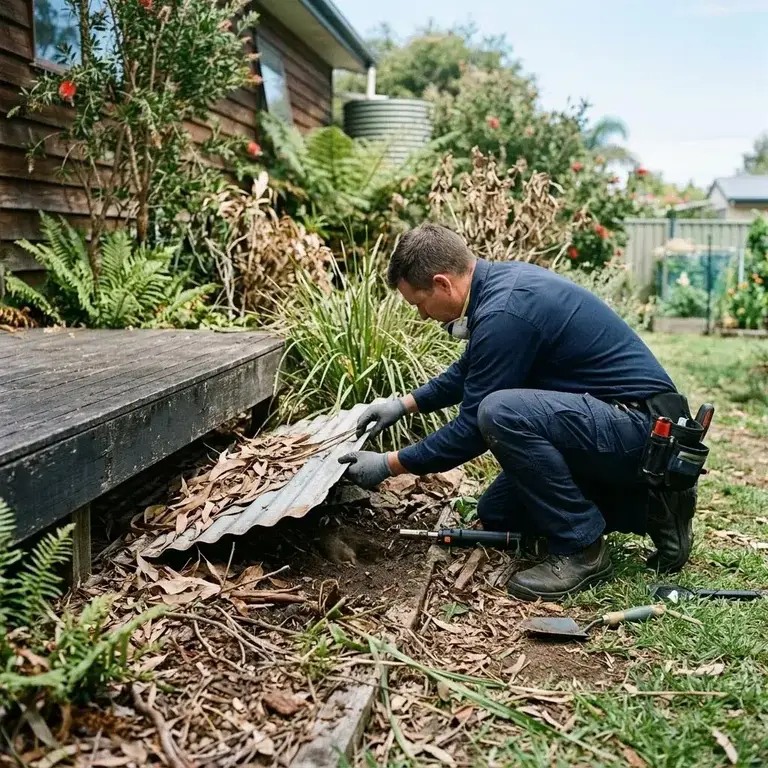
DIY trapping can knock down a small, newly arrived roof rat population, but established infestations in roof voids almost always need professional treatment combined with proper exclusion work. The reason is simple: the critical work happens at height, in cramped roof spaces, around live wiring, and any chemical treatment should be handled by a licensed technician under APVMA-registered product labels.
| Factor | DIY approach | Professional treatment |
|---|---|---|
| Inspection | Guesswork from ground level; entry points easily missed | Full roof void, roofline and perimeter inspection; species confirmed |
| Devices and bait | Retail traps and baits, often poorly placed or unsecured | Professional-grade, tamper-resistant stations placed on beam runways, secured from pets and wildlife |
| Safety | Roof access, wiring and heat risks; risk to non-targets | Licensed, insured technicians with correct roof access equipment |
| Exclusion | Obvious gaps only; 12 mm entries overlooked | Systematic sealing of eaves, tiles, vents, weep holes and penetrations |
| Outcome | Temporary reduction; re-entry common | Elimination at the source, follow-up visits and service warranty |
Our guide on how professionals actually eliminate rats walks through the full process, and our rodent proofing & exclusion service is what keeps them out permanently.
Roof Rat Control Costs in Australia (2025–26)
Across the Australian pest control industry, professional roof rat treatment generally sits between $250 and $650 for an initial programme, with exclusion and proofing work typically quoted separately based on the home. Market rates vary with roof access, home size, infestation severity and location — a single-storey brick veneer is simpler for most operators than a two-storey Queenslander with complex rooflines.
| Service | Typical market rate (AUD) | What’s included/notes |
|---|---|---|
| Inspection and quote | Free – $150 | Roof void and perimeter check; some operators charge a call-out fee, others inspect free |
| Initial roof rat treatment | $250 – $450 | Bait stations and/or traps in roof void and along runways, secured from non-targets |
| Severe or large-home programme | $450 – $650 | Multiple visits, heavier device placement, follow-up monitoring |
| Exclusion/proofing work | $300 – $1,200+ | Sealing eave gaps, tiles, vents and penetrations; varies with roof complexity |
| Ongoing monitoring plan | $40 – $80 per visit | Quarterly station checks; suits high-pressure properties near bush or fruit trees |
These figures reflect what the industry generally charges — Aussie Pest Strike typically comes in well under these market rates while still delivering a thorough, guaranteed treatment. For an exact quote tailored to your property, give us a call on [aps_phone].
Seasonal Roof Rat Activity Across the Year
Roof rat activity in Australian homes peaks from late summer through winter, when outdoor food drops off and rodents push into roof voids for warmth and shelter. Activity never fully stops in warmer regions, but the autumn-to-winter surge is when most homeowners first notice them.
Jan
Feb
Mar
Apr
May
Jun
Jul
Aug
Sep
Oct
Nov
Dec
Indicative activity pattern: roof rats move indoors as autumn fruiting ends and temperatures fall, peaking through winter (May–August) and easing as outdoor food returns in late spring. Northern regions see flatter, year-round activity.
Most callouts start with the same line — “something’s running around above my bedroom at night.” Nine times out of ten it’s roof rats, and nine times out of ten there’s a branch touching the roof or a 15 mm gap at the eave that nobody’s ever looked at. Treat the roof void, seal the entries and trim the access, and the problem stays solved.
Don’t wait for the colony to breed through winter. Trim branches back at least 1 m from the roofline, pick up fallen fruit, then book a professional inspection. The lasting fix is a three-step combination: eliminate the active population in the roof void, seal every gap of 12 mm or more, and remove aerial access from trees and cables. Traps alone won’t hold the line if the entry points stay open.
Health and Fire Risks You Shouldn’t Ignore
Roof rats are dangerous because they contaminate living spaces with disease-carrying urine and droppings, and their constant gnawing on electrical cabling in roof voids is a recognised cause of house fires. These risks are covered in depth in our article Are Rodents Dangerous? Health, Wiring and Fire Risks Explained.
Key concerns include leptospirosis and salmonellosis spread through contaminated insulation and stored items, insulation that loses its thermal value once soiled and flattened, and accumulated nesting debris. Add the sleep disruption from persistent night noise, and a “wait and see” approach rarely makes sense.
Roof Rat vs Norway Rat: Know the Difference
Roof rats nest up high and climb, while Norway rats burrow at ground level — and telling them apart determines where treatment goes. If your evidence is overhead, you’re dealing with roof rats and treatment belongs in the roof void, not in ground burrows.
Norway rats (Rattus norvegicus) are heavier at 300–500 g, with a blunt nose, small ears and a tail shorter than the body; they burrow near drains, compost heaps and subfloors. Roof rats are lighter and sleeker, with large ears, a pointed snout and a tail longer than the body. Scratching in the ceiling, droppings in roof insulation and greasy rub marks along a rafter all point overhead.
Frequently Asked Questions
What are roof rats and how do they get into Australian homes?
Roof rats, also known as black rats (Rattus rattus), are slender, tree-dwelling rodents that nest above ground in roof voids, wall cavities and dense vegetation. They are superb climbers, scaling brick walls, power and NBN cables, downpipes and overhanging branches to reach the roofline. They can squeeze through gaps as small as 12 mm, entering through eave gaps, broken tiles, weep holes, pipe penetrations and garage door seals.
What signs indicate roof rats are living in my roof?
The clearest signs include fast, light scratching and scurrying overhead at night, strongest just after dusk and before dawn. Look for dark, spindle-shaped droppings 12–18 mm long in the roof void, greasy rub marks along rafters and pipes, gnawed electrical cabling or stored boxes, shredded nesting debris, flattened urine-soiled insulation, half-eaten citrus or mangoes outside, and pets fixating on the ceiling at night.
Why do roof rats thrive in Australian homes?
Australia's climate lets roof rats breed through most of the year, unlike colder countries where winter knocks populations back. Housing styles help them too: older Queenslanders on stumps have open eaves and gable vents, while brick veneer homes with tiled roofs develop gaps at ridges and eaves over time. Fruiting palms, citrus trees, mango trees and dense plantings provide food and an aerial highway straight to the roofline.
How quickly can a roof rat problem grow?
Roof rat colonies grow quickly. Females produce several litters a year of 5–8 pups each, so a faint scratching heard in autumn can become a serious infestation by spring if left untreated. Roof rats typically weigh just 150–250 g and breed readily where food and shelter are available, which is why early action matters rather than waiting to see whether the noise stops on its own.
What health and fire risks do roof rats pose?
Roof rats spread diseases such as leptospirosis and salmonellosis through contaminated urine, droppings and insulation. Their constant gnawing on electrical cabling in roof voids is a recognised cause of house fires. Soiled, flattened insulation also loses its thermal value, and accumulated nesting debris adds to the mess. Persistent night-time noise disrupts sleep, so a wait-and-see approach rarely makes sense.
How do roof rats differ from Norway rats?
Roof rats nest up high and climb, favouring fruit, seeds and plant matter, while Norway rats burrow at ground level and prefer a meatier diet. This difference determines where treatment goes: evidence found overhead points to roof rats, so the focus should be on the roof void, roofline entry points and trimming vegetation back from the house rather than ground-level baiting alone.
When is roof rat activity highest during the year?
Activity peaks from late summer through winter, when outdoor food drops off and rodents push into roof voids for warmth and shelter. The autumn-to-winter surge, roughly May to August, is when most homeowners first notice noises overhead. In warmer northern regions activity stays flatter year-round, but it never fully stops anywhere, so prevention should continue throughout the year.
Why does DIY roof rat control often fall short?
DIY trapping can knock down a small, newly arrived population, but established infestations almost always need professional treatment combined with exclusion work. The critical work happens at height in cramped roof spaces around live wiring, and chemical treatments must follow APVMA-registered product labels. DIY efforts often miss 12 mm entry points, place devices poorly, and deliver only temporary reduction with re-entry common.
I have trimmed branches back from my roofline and picked up fallen fruit but still hear scratching overhead. How can Aussie Pest Strike help?
If prevention steps like trimming vegetation and removing fruit have not stopped the noise, there is likely an active colony already established in your roof void plus entry points that need sealing. Aussie Pest Strike can inspect the roof void and roofline, confirm the species, treat the active population along beam runways, and identify the gaps letting rats in. Contact us to arrange an inspection tailored to your property.
What is the practical next step after spotting rub marks and droppings in my ceiling?
Rub marks and droppings confirm rodent activity, so the next step is a proper inspection before the colony breeds further. Aussie Pest Strike can carry out a full roof void and perimeter check, confirm whether you are dealing with roof rats rather than another rodent, and explain what treatment and exclusion work your home needs. Get in touch to book an inspection and receive a quote suited to your situation.
Sources & further reading
Found Something
Dangerous?
Don’t touch it. Don’t spray it. Keep kids and pets clear, take a photo from a safe distance, and call us — or book a free inspection and we’ll come to you.
02 7235 0050