Signs of Rats orMice in YourHome: The Full Checklist
Signs of Rats or Mice in Your Home — the most reliable signs of rats or mice are droppings, scratching or scurrying noises in walls and ceilings at night,...
If you’ve noticed something scurrying in the ceiling after dark or found small dark pellets in the pantry, you’re probably asking yourself: do i have rats or mice? Across Australia, from Queenslanders on stumps in Brisbane to brick veneer homes in Melbourne and slab-on-ground builds in Perth, rodents are one of the most common reasons homeowners call a pest control company — and the earlier you catch them, the cheaper and simpler the fix.
Rodents are secretive and mostly nocturnal, so you’ll almost always spot the evidence before you spot the animal. The most reliable signs of rats or mice are droppings, scratching or scurrying noises at night, gnaw marks on food packaging or wiring, and greasy rub marks along walls. This checklist walks through every clue — from droppings to smell — shows you how to tell rats from mice, and explains when it’s time to bring in a licensed technician.
- Droppings are the clearest sign: rat droppings are 12–18 mm and spindle-shaped; mouse droppings are 3–6 mm and rice-like.
- Scratching or scurrying in the roof void, walls or subfloor at night usually means rodents are already active.
- A single female mouse can produce 5–10 litters a year, so a minor sighting can become an infestation within a couple of months.
- Rodents gnaw electrical cabling — a recognised fire risk — so acting before winter saves money and stress.
- Professional rodent treatment in Australia typically ranges from about $250 to $700+ AUD depending on severity and property size.
Why Rodents Are Such a Problem in Australian Homes
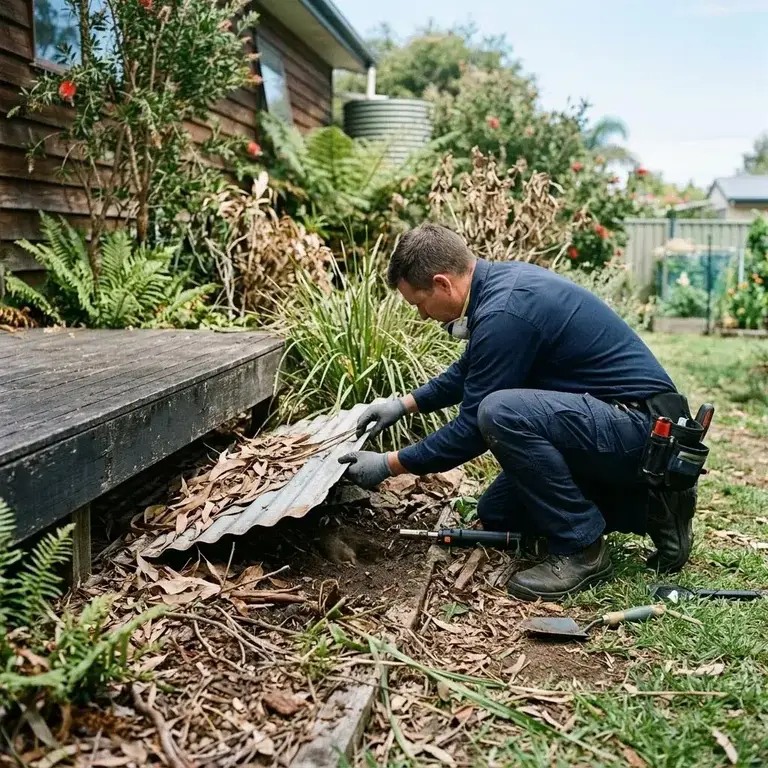
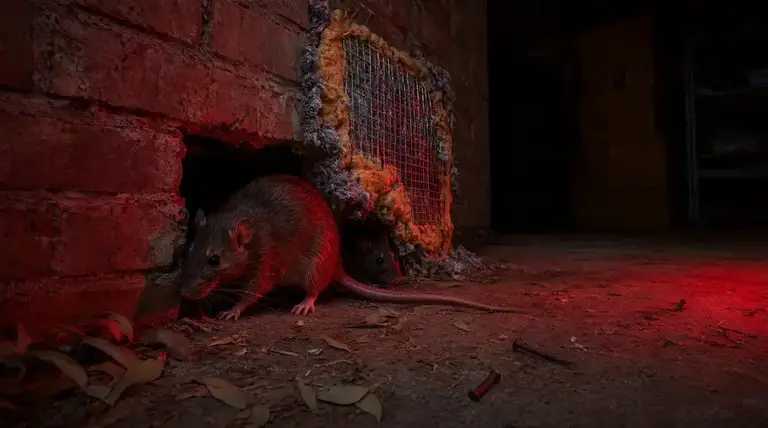
Rodents thrive across Australia because our housing styles and climate give them warmth, shelter and easy entry points. Subfloor cavities under older timber homes, generous roof voids in Queenslanders, weep holes in brick veneer walls and unsealed penetrations around pipes all double as rodent highways.
As temperatures drop from March onwards, rats and mice move indoors in search of warmth and food — which is why autumn is peak season for pest control callouts. The two main culprits are the roof rat (Rattus rattus), which favours ceilings, eaves and trees, and the house mouse, which prefers kitchens, pantries and wall cavities. Norway rats also turn up around drains and subfloors in some areas. Roof rats are particularly destructive in Australian homes, and if the scratching is overhead, our guide to roof rats in Australia: behaviour, risks and control explains their habits in detail.
The health and safety stakes are real. Rodents contaminate food and surfaces with urine and droppings, and their constant gnawing — including on electrical wiring — is a recognised fire risk. Our article on whether rodents are dangerous: health, wiring and fire risks explained covers why an untreated infestation is never just a nuisance.
The Complete Signs of Rats or Mice Checklist (What i Look For)
The quickest way to confirm rodents is to check for these eight tell-tale signs, starting with droppings and noises. If you find two or more of these, activity is established rather than a one-off visitor.
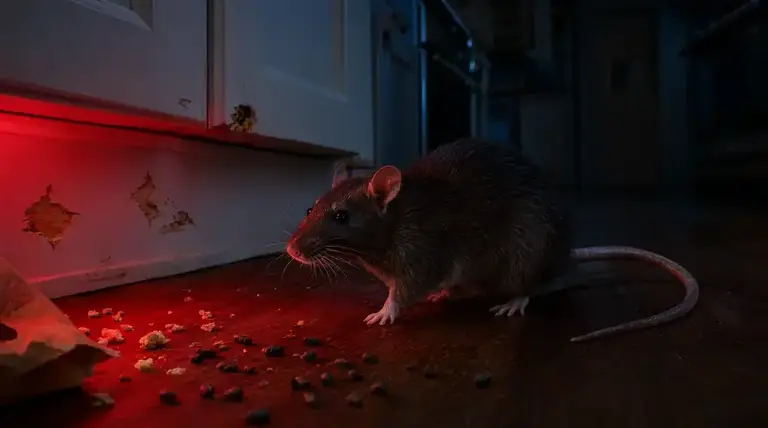
- Droppings — the clearest sign. Rat droppings are 12–18 mm, dark and spindle-shaped; mouse droppings are 3–6 mm, like grains of rice. Fresh droppings are dark, soft and shiny; old ones are grey, dry and crumble when pressed.
- Noises at night — scratching, gnawing or scurrying in the roof void, walls or subfloor, usually after dark.
- Gnaw marks — on food packaging, timber, plastic and even electrical cabling. Rat gnaw holes run around 50 mm across; mouse holes around 20 mm.
- Rub / smear marks — greasy dark trails where rodents brush repeatedly along walls, beams and pipes.
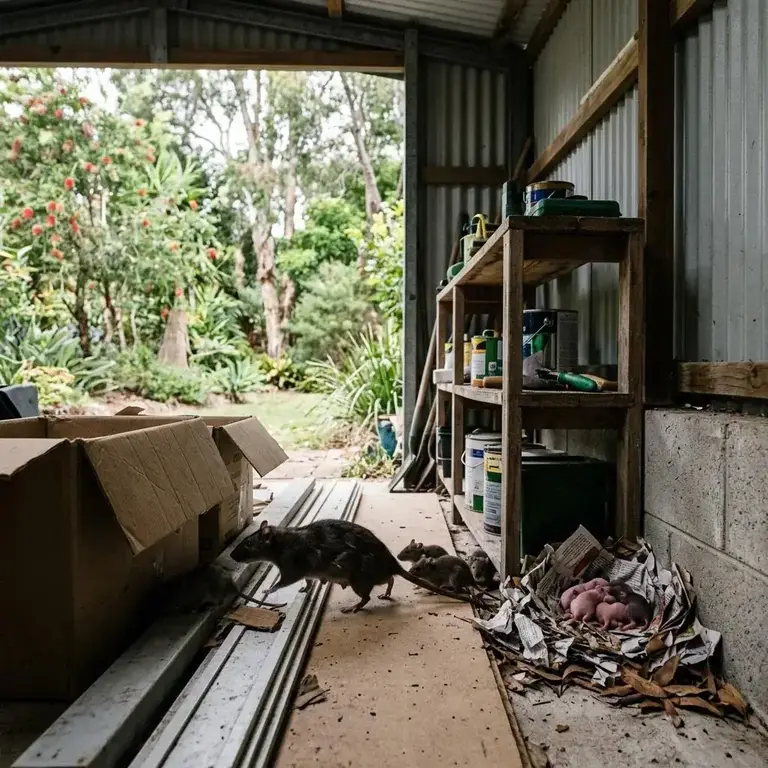
- Nests — shredded paper, insulation or fabric hidden in roof voids, wall cavities or behind appliances.
- Runways — worn tracks through dust, insulation or along garden edges and fence lines.
- A musky ammonia smell — strongest in enclosed spaces like roof voids and cupboards with heavy activity.
- Pet behaviour — dogs or cats fixating on a particular wall, cupboard or section of ceiling.
Where you find the evidence matters too. Droppings concentrated along a skirting board or in one pantry corner mark a runway or feeding station — exactly where traps and monitors should go. Two distinct droppings sizes in the same house can mean both mice and rats, which is surprisingly common in older Australian homes with subfloor and roof access. Noises overhead usually point to roof rats, while kitchen droppings often indicate mice.
DIY vs Professional Rodent Control
Traps from the hardware store can knock over one or two mice, but they rarely solve an established infestation — if i find fresh droppings in more than one room, DIY is usually just buying time. Snap traps and exclusion of obvious gaps are reasonable first steps for very light activity, but baits and rodenticides should be placed by licensed technicians, both for APVMA-compliant safety around kids and pets and for effective results.
| Factor | DIY approach | Professional treatment |
|---|---|---|
| Best for | One or two mice, caught early | Established activity, rats, recurring problems |
| Species ID | Guesswork from droppings | Confirmed on inspection, treatment matched to species |
| Entry points | Obvious gaps only | Full roof, subfloor and perimeter audit with proofing |
| Bait safety | Risk to pets and children if misused | Licensed placement in lockable, tamper-resistant stations |
| Long-term result | Often temporary | Elimination plus exclusion to stop re-entry |
For a deeper look at methodology, our article on rat control: how professionals actually eliminate rats breaks down the inspection-to-proofing process step by step.
How Much Does Rodent Control Cost in Australia?
Across the Australian market, professional rodent treatment generally sits between $250 and $700+ AUD for a standard home, with the final figure driven by severity, species and property size. Industry-wide, proofing and exclusion work is priced separately because it involves physical repairs to entry points.
| Service | Typical market rate (AUD) | What’s included / notes |
|---|---|---|
| Inspection and assessment | $0–$150 | Species ID, entry-point mapping, treatment plan; many operators charge a call-out fee |
| Standard rodent treatment (baiting/trapping) | $250–$450 | Lockable bait stations, traps, roof void and subfloor treatment, follow-up visit |
| Heavy infestation / large property | $450–$700+ | Multiple visits, combined rat and mouse activity, acreage or multi-level homes |
| Rodent proofing & exclusion | $300–$900+ | Sealing gaps, eaves, weep holes and pipe penetrations; depends on access and materials |
These are the typical rates you’ll see quoted across the industry, and every property is different, so an on-site inspection is the only reliable way to get a firm figure. For full details on what’s involved, see our rodent control & removal service page and our rodent proofing & exclusion service.
Here’s the good news: Aussie Pest Strike typically comes in well under these market rates, without cutting corners on treatment quality or follow-up. For an exact quote tailored to your property, give us a call on [aps_phone] today.
Seasonal Rodent Activity in Australia
Rodent activity indoors peaks in autumn and winter (March to August) as rats and mice move inside for warmth, then tapers through spring and summer. The chart below shows typical relative activity across the year in Australian homes.
Jan
Feb
Mar
Apr
May
Jun
Jul
Aug
Sep
Oct
Nov
Dec
Indoor rodent activity climbs sharply from March, peaks through the cooler months of May to July, and eases as outdoor food and warmth return in spring. Treating and proofing in early autumn beats the winter rush.
Nine times out of ten, by the time a homeowner hears scratching in the ceiling, the rodents have been there for weeks. The droppings and rub marks always show up first — people just don’t know where to look. Catch it at the droppings stage and the job is smaller, cheaper and finished in a single visit.
If you’ve found fresh droppings, heard night-time scratching or spotted gnaw marks, book a professional inspection now rather than waiting. Given how fast rodents breed, a two-week delay in autumn can turn a $300 treatment into an infestation needing multiple visits plus proofing. Traps alone won’t seal the entry points — treatment combined with exclusion is what keeps them out for good.
Signs of Rats or Mice in Your Home: Frequently Asked Questions
What are the signs rats are in my home?
The quickest way to tell is to compare the droppings: rat droppings are 12–18 mm and spindle-shaped, while mouse droppings are 3–6 mm and rice-sized. Combine that with the size of any gnaw holes — roughly 50 mm for rats versus 20 mm for mice — and you can usually identify which species you’re dealing with before a technician arrives.
What does a rodent infestation smell like?
An established rodent infestation produces a distinct musky, ammonia-like odour caused by urine and nesting material. It’s most noticeable in enclosed spaces such as roof voids, cupboards, wall cavities and pantries. A strong, persistent smell in these areas usually indicates heavy, ongoing activity rather than a passing visitor.
Are noises in the roof at night always rats?
Often, but not always. Scratching and scurrying overhead at night usually indicate roof rats or possums, since both are nocturnal and favour ceiling spaces. Checking for droppings, rub marks and entry points around eaves helps confirm which pest is responsible — a professional inspection settles it quickly if the evidence is unclear.
Seeing the signs? Don’t wait until winter makes it worse. Aussie Pest Strike’s licensed pest control technicians will confirm the species, map every entry point and give you a firm quote during a free on-site inspection — anywhere in Australia. Call Aussie Pest Strike on [aps_phone] today and get ahead of the rodents before they get ahead of you.
Sources & further reading
Found Something
Dangerous?
Don’t touch it. Don’t spray it. Keep kids and pets clear, take a photo from a safe distance, and call us — or book a free inspection and we’ll come to you.
02 7235 0050