Rat Entry Points:The 7 SpotsProfessionals Check First
The most common rat entry points in Australian homes are roof and eave gaps, broken tiles, weep holes, gaps around pipes, worn garage door seals, subfloor...
Rats don’t need an open door to move into your home — a gap the size of a 20-cent coin is enough. A professional rodent inspection always starts at the same seven spots, because that’s where the overwhelming majority of Australian infestations begin. If you’re hearing scratching at night or finding droppings in the pantry, knowing where rats get in is the first step to getting them out for good.
Rat entry points are the gaps, holes and openings around your home’s exterior that rodents use to access roof voids, wall cavities and subfloors — and sealing them is the foundation of any lasting rat control program. This guide walks through the seven entry points professionals check first, how to confirm a route is active, what DIY sealing can and can’t achieve, and what you can expect to pay for professional help anywhere in Australia.
- A rat can squeeze through a 20-millimetre gap — roughly a 20-cent coin — so even small defects around your roofline, pipes and doors are potential entry points.
- Roof rats enter from above (eaves, broken tiles, ridge capping); Norway rats enter at ground level (subfloor vents, garage seals, pet flaps).
- Exclusion is the only permanent fix — baiting and trapping without sealing just clears space for the next rat.
- Professional rodent proofing typically costs $250–$900 AUD depending on the home, with full elimination programs from $350–$750.
- Autumn (March–May) is peak rat season across Australia; late summer is the smartest time to seal entry points.
Why Rat Entry Points Are a Serious Problem in Australia
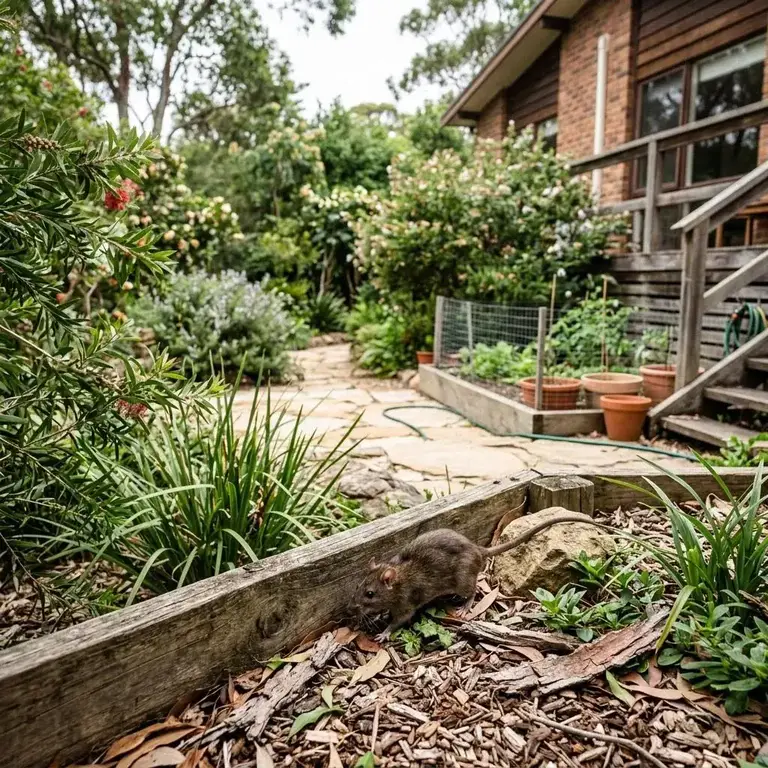
Two introduced species cause almost all domestic rat problems in Australia, and our housing styles give both of them plenty of ways in. The black or roof rat (Rattus rattus) is an agile climber common across coastal Queensland, New South Wales and Perth, while the brown or Norway rat (Rattus norvegicus) burrows at ground level around Melbourne, Adelaide and Hobart. You can read more about the climber’s habits in our guide to Roof Rats in Australia: Behaviour, Risks and Control.
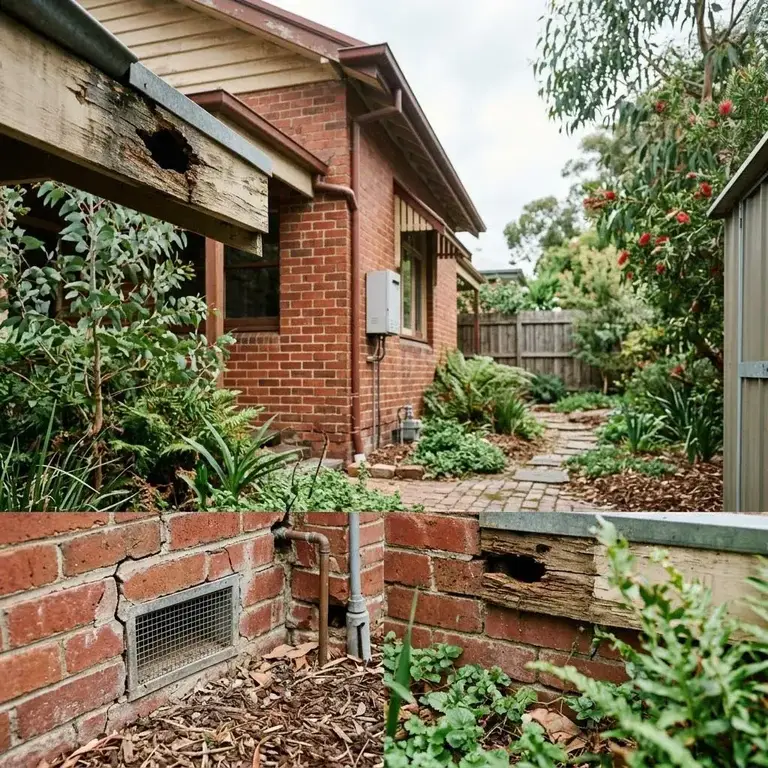
Australian construction works in their favour. Older Queenslanders and homes on stumps have open subfloors full of vents and access hatches. Brick veneer homes rely on weep holes for drainage — which double as rodent doorways. Terracotta-tiled roofs in Sydney and Melbourne suburbs slip and crack with age, and every pipe, air-conditioning line and NBN cable that passes through a wall leaves a gap a builder probably sealed with silicone a rat can gnaw through in minutes.
Both species push indoors hardest from March to July, when cooler southern nights and the end of the northern wet season send them hunting for warmth, water and food. Once inside, they contaminate food, gnaw electrical wiring and breed rapidly — which is why pest control professionals treat entry-point exclusion as the priority, not an afterthought.
Warning Signs a Rat Entry Point Is Active
Before you seal anything, confirm the route is actually in use. An active entry point shows a cluster of physical evidence, and a trained eye can often tell which species is using it. Check for these signs along walls, rafters, subfloors and around suspected gaps:
- Greasy rub marks — dark, oily smears along walls, beams and pipework where rats run the same route nightly.
- Spindle-shaped droppings — 10 to 14 millimetres long, concentrated near feeding areas and along runways.
- Fresh gnaw marks — pale, rough edges on timber, plastic, door seals and even electrical cabling.
- Night-time scratching — movement in the ceiling or walls between dusk and dawn, often starting overhead for roof rats.
- Pet behaviour — a dog or cat fixating on one corner, wall or cupboard for days at a time.
- Nesting material — shredded cardboard, insulation or fabric stashed in the roof void, garage or subfloor.
For the complete picture, work through our full checklist of Signs of Rats or Mice in Your Home — catching activity early makes treatment far cheaper.
DIY Sealing vs Professional Rat Control
Handy homeowners can seal many minor gaps themselves, but an established infestation almost always needs a licensed technician. The difference comes down to diagnosis: a professional identifies the species, finds every active route (including the ones you can’t see), and combines exclusion with safe, APVMA-compliant treatment. Our article on Rat Control: How Professionals Actually Eliminate Rats explains the full process.
| Factor | DIY sealing | Professional service |
|---|---|---|
| Best for | One or two obvious gaps, no active infestation | Recurring droppings, ceiling noise, established colonies |
| Materials | Steel wool, copper mesh, hardware cloth, brush strip | Commercial-grade exclusion materials plus tamper-resistant bait stations |
| Roof void/subfloor access | Often limited or unsafe | Full inspection of roof void, subfloor and perimeter |
| Rodenticide use | Hardware-store baits only; risk to pets and wildlife if misused | APVMA-registered products applied by licensed technicians |
| Long-term result | Often redirects rats to another gap | Exclusion work typically backed by a service warranty |
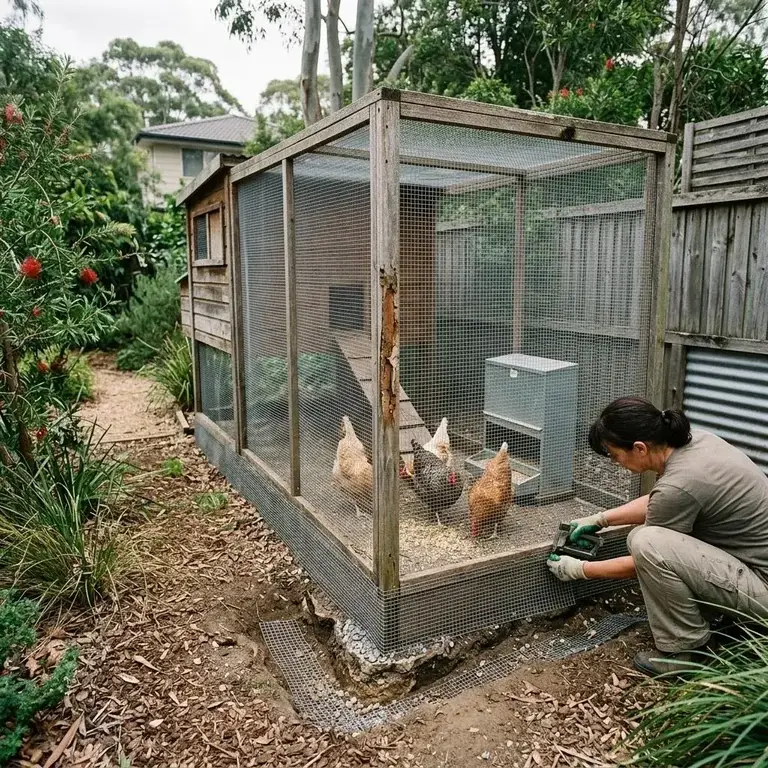
If you go the DIY route, use materials rodents can’t chew through: pack small gaps with stainless steel wool or copper mesh finished with expanding foam, fit galvanised hardware cloth (six-millimetre mesh) over vents and weep holes, replace perished seals with rodent-proof brush strip, repoint ridge capping, and trim branches at least two metres back from the roofline. Note that second-generation anticoagulant baits can poison owls, frogmouths and pets — leave chemical treatments to licensed professionals.
How Much Does Rat Control Cost in Australia?
Across the Australian market in 2025–26, a full rat elimination program generally runs between $350 and $750 AUD, with standalone proofing work typically quoted anywhere from $250 to $900 depending on the size and style of the home. Industry-wide, a single-storey brick veneer on a slab sits at the cheaper end of what most companies charge; a two-storey Queenslander with an open subfloor and a tiled roof attracts quotes at the top of the range. Typical market rates across the industry:
| Service | Typical market rate (AUD) | What’s included/notes |
|---|---|---|
| Inspection and quote | $0–$150 | Full perimeter, roof void and subfloor assessment; many operators charge a call-out fee |
| Rodent proofing & exclusion | $250–$900 | Sealing all identified entry points with chew-proof materials; price scales with home size |
| Baiting/trapping program | $250–$500 | Tamper-resistant stations, placement around children and pets, follow-up visits |
| Combined elimination package | $350–$750 | Exclusion plus treatment, usually with a service warranty |
| Ongoing monitoring (optional) | $60–$120 per visit | Quarterly checks for high-pressure properties near bushland or waterways |
Our Rodent Control & Removal and Rodent Proofing & Exclusion pages break down exactly what each service covers.
It’s worth knowing that Aussie Pest Strike typically comes in well under these general market rates. For an exact quote tailored to your property, give us a call on [aps_phone] today.
Seasonal Rat Activity Across Australia
Rat pressure peaks in autumn and early winter (March to July) across most of Australia, when cooling nights drive rodents indoors; activity dips in late spring and early summer when food and shelter are plentiful outside. Autumn is peak call-out season for pest control companies in Sydney, Melbourne and Brisbane, while northern regions see a secondary spike as the wet season winds down. The chart below shows typical relative activity by month:
Jan
Feb
Mar
Apr
May
Jun
Jul
Aug
Sep
Oct
Nov
Dec
Indicative seasonal rat activity in Australian homes. Pressure climbs sharply from March, peaks through April–July as rats seek warmth indoors, and eases from September. Sealing entry points in late summer is the cheapest, most effective timing.
Nine times out of ten, the homeowner has already baited the rats — and the rats are still there, because nobody sealed the way in. We measure every gap rather than eyeball it, because a 20-millimetre hole under a garage door is an open invitation. Fix the building first, and the treatment actually sticks.
Walk your property this weekend and check the seven entry points above — roofline and eaves, tiles and ridge capping, weep holes, pipe penetrations, garage seals, subfloor vents, and doors or pet flaps. Seal minor gaps with chew-proof materials. If you find fresh droppings, rub marks or hear scratching, book a professional inspection before autumn: an established colony only gets more expensive to remove.
Frequently Asked Questions
How small a gap can a rat squeeze through?
A rat can squeeze through a gap of about 20 millimetres — roughly the size of a 20-cent coin. That means even minor defects around your roofline, pipes, vents and doors are potential entry points. This is why professionals measure gaps rather than eyeball them, and why sealing even small openings is the foundation of any lasting rat control program.
Which rat species enters homes at roof level versus ground level?
The black or roof rat (Rattus rattus) is an agile climber that typically enters from above, using eaves, broken tiles and ridge capping to reach roof voids. The brown or Norway rat (Rattus norvegicus) burrows and enters at ground level, exploiting subfloor vents, garage seals and pet flaps. Knowing which species you have helps target the right entry points first.
What are the seven entry points professionals check first?
Professionals start with the roofline and eaves, tiles and ridge capping, weep holes in brick veneer walls, pipe penetrations where services like air-conditioning lines and NBN cables pass through walls, garage door seals, subfloor vents and access hatches, and doors or pet flaps. These seven spots account for the overwhelming majority of Australian rat infestations.
How can I tell if an entry point is actively being used by rats?
Look for a cluster of physical evidence: greasy rub marks along walls, beams or pipework; spindle-shaped droppings 10 to 14 millimetres long; fresh gnaw marks with pale, rough edges on timber, plastic or cables; night-time scratching in the ceiling or walls; pets fixating on one spot for days; and nesting material such as shredded insulation or cardboard nearby.
What materials should I use to seal rat entry points myself?
Use materials rats cannot chew through: pack small gaps with stainless steel wool or copper mesh finished with expanding foam, fit galvanised hardware cloth with six-millimetre mesh over vents and weep holes, replace perished door seals with rodent-proof brush strip, repoint cracked ridge capping, and trim tree branches back at least two metres from the roofline.
When is the best time of year to seal rat entry points in Australia?
Late summer is the smartest time to seal entry points, before autumn pressure builds. Rat activity peaks from March to July across most of Australia as cooling nights drive rodents indoors seeking warmth, water and food. Northern regions also see a secondary spike as the wet season winds down. Sealing before March gives you the best chance of preventing an established colony.
Why does baiting alone fail to get rid of rats permanently?
Baiting and trapping without sealing entry points only clears space for the next rat to move in. Exclusion — physically closing every gap a rat could use — is the only permanent fix. Professionals treat entry-point proofing as the priority rather than an afterthought, because fixing the building first is what makes any treatment program actually stick long term.
Why do Australian home designs make rat problems worse?
Common construction styles create ready-made access routes. Older Queenslanders and homes on stumps have open subfloors full of vents and hatches. Brick veneer homes rely on weep holes for drainage, which double as rodent doorways. Terracotta-tiled roofs slip and crack with age, and every pipe, air-conditioning line or NBN cable through a wall leaves a gap often sealed only with silicone, which rats gnaw through quickly.
What should I discuss with an Aussie Pest Strike technician about rat entry points?
A technician will want to know what signs you've noticed — scratching sounds, droppings, rub marks or pet behaviour — and where they occur. Expect discussion of which species is likely involved, whether activity is in the roof void, wall cavities or subfloor, which of the seven common entry points apply to your home's construction style, and how exclusion work would be combined with treatment to stop rats returning.
What practical next step should I take after reading about rat entry points?
Walk your property and check the seven key areas: roofline and eaves, tiles and ridge capping, weep holes, pipe penetrations, garage seals, subfloor vents, and doors or pet flaps. Seal any minor gaps you find with chew-proof materials such as steel wool or hardware cloth. If you find fresh droppings, rub marks or hear scratching, contact Aussie Pest Strike for a professional inspection before autumn arrives.
Sources & further reading
Found Something
Dangerous?
Don’t touch it. Don’t spray it. Keep kids and pets clear, take a photo from a safe distance, and call us — or book a free inspection and we’ll come to you.
02 7235 0050