Processionary Caterpillars:The Danger inYour Yard
Processionary caterpillars are the hairy larvae of the bag-shelter moth (Ochrogaster lunifer), a native Australian pest famous for marching nose-to-tail...
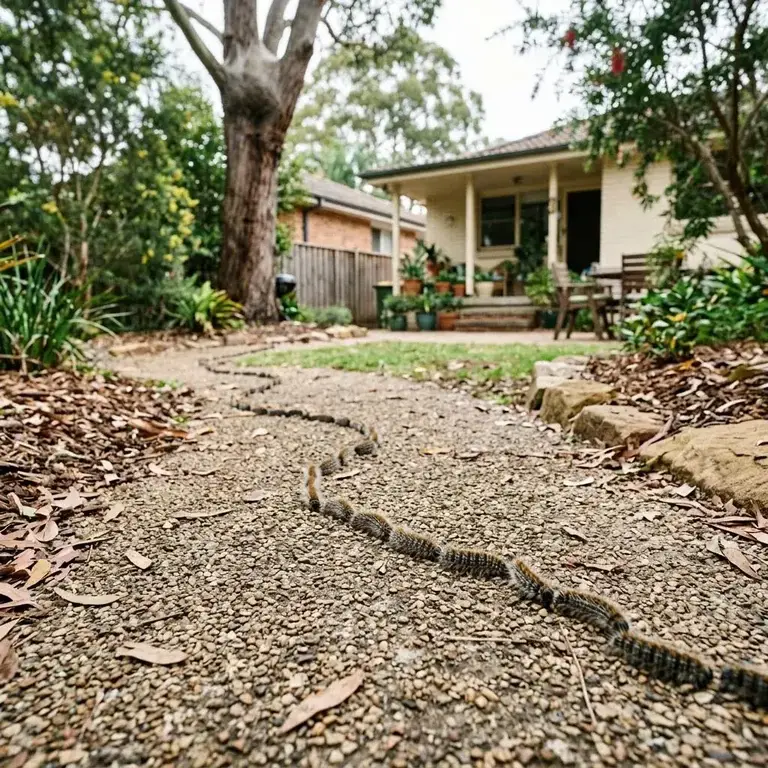
If you’ve spotted a line of hairy, grey-brown caterpillars marching nose-to-tail across your lawn or driveway, you’ve likely met processionary caterpillars — one of the most hazardous garden pests in Australia. Processionary caterpillars are the larval stage of the native bag-shelter moth (Ochrogaster lunifer), famous for travelling in long processions and for the thousands of barbed hairs that can cause severe skin, eye and respiratory reactions in people and pets. (Keyword reference: r.)
Unlike many garden pests that simply chew your plants, these caterpillars pose a genuine health risk, and nests should never be touched, hosed or burnt. This guide covers how to identify them, why they’re dangerous, what professional removal typically costs in 2025-26, and when activity peaks across Australia — so you can protect your family, pets and livestock with confidence.
- Processionary caterpillars (bag-shelter moth larvae) are found across mainland Australia and are most active from late spring through autumn.
- Their microscopic barbed hairs cause intensely itchy rashes, conjunctivitis and breathing problems in people — and can be life-threatening to horses and dangerous to dogs and cats.
- Never touch, hose down or burn a nest; disturbing it scatters hazardous hairs through the air and across your yard.
- Professional nest removal typically costs $150–$450 (AUD), depending on nest size, height and access.
- Early detection in spring, when bag shelters are small, makes treatment safer and cheaper.
Why Processionary Caterpillars Matter Across Australia (r)
Processionary caterpillars matter Australia-wide because the bag-shelter moth is established across every mainland state and territory, and our outdoor lifestyle, native street trees and hobby-farm culture put people and animals in regular contact with them. From coastal Queensland and New South Wales through Victoria and South Australia to Western Australia and the Northern Territory, these larvae feed mainly on wattles (Acacia species) and eucalypts — two of the most common tree groups in Australian yards, parks and paddocks.
Housing styles play a role too. Homes on larger suburban blocks, acreage properties and rural fringes often have mature gums and wattles close to lawns, clotheslines and play areas, so processions regularly cross driveways, paths and backyards. Ground nests are common on smooth-barked trees, putting the hazard right at ankle height for children and dogs. Horses on hobby farms face the most serious risk of all, making this as much a livestock issue as a suburban pest control concern. If you’re already managing other lawn invaders such as the ones covered in our guide to Armyworm: The Lawn Destroyer Spreading Across Australia, add processionary caterpillars to your seasonal watch list.
Warning Signs: How to Spot an Infestation in Your Yard
The clearest warning sign is the nest itself — a silken, grey-brown bag shelter in a tree or at its base — often accompanied by marching caterpillars, droppings and chewed leaves. Check your wattles and gums each spring and look for these indicators:
- Silken bag shelters — grey-brown nests from fist-sized to football-sized, hanging in the canopy or sitting at the base of a wattle or gum.
- Nose-to-tail processions — lines of hairy, grey-brown caterpillars with paler stripes, sometimes several metres long, crossing lawns, fences, paths and driveways.
- Frass trails — dark droppings scattered on the ground beneath infested trees.
- Chewed or stripped foliage — wattles and eucalypts losing leaves as the colony feeds and grows.
- Shed skins in webbing — cast skins caught around the bag, which remain hazardous long after the caterpillars have left.
- Pet symptoms — a dog that suddenly drools heavily, paws at its mouth or vomits after sniffing the garden may have contacted a procession.
If you see a procession on the move, treat it as a warning that a nest is almost certainly nearby — and keep well clear.
DIY vs Professional Removal
DIY removal is strongly discouraged because disturbing a nest or procession releases thousands of airborne barbed hairs that linger in the area for months. Licensed technicians have the protective equipment, access gear and APVMA-compliant methods needed to remove and dispose of nests safely. Here’s how the two approaches compare:
| Factor | DIY approach | Professional removal |
|---|---|---|
| Safety | High risk — hairs become airborne and cling to skin, clothing and pets | Protective equipment and controlled removal minimise exposure |
| Effectiveness | Partial nests and scattered hairs often remain; reinfestation likely | Complete nest removal and destruction, plus treatment where reinfestation is likely |
| Access | Canopy nests usually out of safe reach of ladders | Poles, elevated access and height-safe equipment |
| Typical cost | Low upfront, but potential medical or vet bills far outweigh savings | $150–$450 for most residential jobs |
While you wait for treatment, keep children and pets indoors, fence off the area, note the tree species and nest location for your technician, and avoid mowing or whipper-snipping near the site, which can flick hairs into the air.
Professional Removal Costs in Australia (2025-26)
Across the Australian pest control industry, most residential processionary caterpillar jobs are quoted between $150 and $450 (AUD), with larger or high-access jobs typically sitting above that range. Market rates depend on nest size, height, tree access and whether follow-up tree treatment is needed. The figures below reflect what the industry generally charges, not any single company’s pricing:
| Service | Typical market rate (AUD) | What’s included/notes |
|---|---|---|
| Inspection and assessment | $0–$90 | Many operators waive this fee; confirms species and nest locations |
| Single ground/low nest removal | $150–$250 | Safe removal, destruction and disposal of one accessible nest |
| Canopy or multiple nests | $250–$450 | Elevated access, several nests or larger colonies |
| Tree treatment for reinfestation | $120–$300 | Targeted treatment of host trees by a licensed technician |
| Acreage/paddock management plan | $400+ | Multiple trees, horse paddocks, seasonal monitoring |
Bundling caterpillar work with a broader Lawn Grub & Garden Pest Treatment program is often the most cost-effective way to protect the whole yard, especially if you’re also battling curl grubs — see our guide to Lawn Grubs and Curl Grubs: Saving Your Lawn.
It’s worth knowing that Aussie Pest Strike typically comes in well under these general market rates — we keep our overheads low and pass the savings on. For an exact quote tailored to your property, give us a call on [aps_phone] and we’ll sort you out straight away.
Seasonal Activity: When Processionary Caterpillars Are on the Move
Processionary caterpillar activity in Australia peaks from late spring through autumn, when the larvae are fully grown and leaving their food trees to pupate in the soil. Winter is the quietest period, although old bag shelters remain hazardous year-round. The chart below shows typical relative activity by month:
Jan
Feb
Mar
Apr
May
Jun
Jul
Aug
Sep
Oct
Nov
Dec
Typical processionary caterpillar activity across Australia. Sightings climb from early spring, peak over summer as mature larvae march to pupation sites, and taper off through autumn. Even in low-activity months, old nests and shed hairs stay hazardous.
Because Ochrogaster lunifer is a native insect, the goal is management rather than eradication. Check wattles and gums each spring for early bag shelters, when they’re small and easier to deal with. If you keep horses, consider removing heavily infested trees from paddocks or spelling those paddocks during peak season in summer and autumn — mares that ingest the hairs can suffer equine amnionitis and fetal loss, a condition linked to late-term abortions.
The biggest mistake we see is homeowners knocking a nest down with a broom or hitting it with the hose. All that does is blast thousands of hairs into the air, and they end up on the lawn, the washing line and the dog. Fence the area off, keep everyone inside and let a licensed technician handle the removal — it’s faster, safer and usually cheaper than a trip to the emergency vet.
If you find a bag shelter or procession on your property, do not touch it. Isolate the area, keep children and animals away, and book professional removal before the caterpillars disperse to pupate in the soil. For year-round peace of mind, pair nest removal with a seasonal garden pest program that also covers invaders like Portuguese Millipedes: The Plague Pest and lawn-destroying grubs.
Frequently Asked Questions
What are processionary caterpillars and why are they dangerous?
Processionary caterpillars are the larvae of the native bag-shelter moth (Ochrogaster lunifer). They travel in nose-to-tail lines and carry thousands of microscopic barbed hairs that can cause intensely itchy rashes, conjunctivitis and breathing problems in people. They can be life-threatening to horses and dangerous to dogs and cats, making them one of Australia's most hazardous garden pests.
How do I identify a processionary caterpillar nest in my yard?
Look for a silken, grey-brown bag shelter ranging from fist-sized to football-sized, hanging in a wattle or gum canopy or sitting at the tree's base. Other signs include nose-to-tail processions of hairy caterpillars with paler stripes, dark droppings beneath infested trees, chewed or stripped foliage, shed skins caught in webbing, and pets drooling or pawing at their mouths after sniffing the garden.
Why should I never touch, hose down or burn a processionary caterpillar nest?
Disturbing a nest releases thousands of barbed hairs into the air, where they linger for months and settle on lawns, washing lines, clothing and pets. Hosing or burning scatters these hazardous hairs widely rather than removing them. The safest approach is to fence off the area, keep children and animals away, and let a licensed technician remove the nest with proper protective equipment.
Where in Australia are processionary caterpillars found?
The bag-shelter moth is established across every mainland state and territory, from coastal Queensland and New South Wales through Victoria and South Australia to Western Australia and the Northern Territory. The larvae feed mainly on wattles (Acacia species) and eucalypts, so homes with mature gums and wattles near lawns, paths or play areas face regular contact with processions.
When are processionary caterpillars most active?
Activity peaks from late spring through autumn, when fully grown larvae leave their food trees to pupate in the soil. Sightings climb from early spring and peak over summer. Winter is the quietest period, but old bag shelters and shed hairs remain hazardous year-round, so nests should be treated as dangerous even when no live caterpillars are visible.
What does professional processionary caterpillar removal typically cost?
Professional removal costs vary with nest size, tree height, access difficulty and how many nests are present. Low, easily reached nests are usually the cheapest to treat, while canopy work or multiple infested trees increases the price. Many operators provide quotes after inspecting the site, so contacting a local pest controller for an assessment is the most reliable way to learn what your situation will cost.
Can I remove a processionary caterpillar nest myself?
DIY removal is strongly discouraged. Disturbing a nest sends barbed hairs airborne, partial removal often leaves scattered hairs behind, reinfestation is likely, and canopy nests are usually out of safe reach on ladders. Licensed technicians have protective equipment, elevated access gear and compliant methods to remove and dispose of nests completely and safely.
Why are horses at particular risk from processionary caterpillars?
Horses on hobby farms face the most serious risk of all. Mares that ingest the caterpillars' barbed hairs can develop equine amnionitis and fetal loss, a condition linked to late-term abortions. If you keep horses, consider removing heavily infested trees from paddocks or spelling those paddocks during peak season in summer and autumn when mature larvae are on the move.
What happens during an Aussie Pest Strike inspection for processionary caterpillars?
A technician will confirm the species and locate any bag shelters on your property, checking wattles and gums as well as ground-level nests on smooth-barked trees. They will assess nest size, height and access before recommending removal options. While you wait, keep children and pets indoors, fence off the area, note the tree species and nest location, and avoid mowing nearby.
What should I do next after finding a processionary caterpillar nest?
Do not touch the nest or procession. Isolate the area, keep children and animals well clear, and contact Aussie Pest Strike to book professional removal before the caterpillars disperse to pupate in the soil. For ongoing protection, ask about pairing nest removal with a seasonal garden pest program that also covers lawn grubs, Portuguese millipedes and other common invaders.
Sources & further reading
Found Something
Dangerous?
Don’t touch it. Don’t spray it. Keep kids and pets clear, take a photo from a safe distance, and call us — or book a free inspection and we’ll come to you.
02 7235 0050