Lawn Grubs andCurl Grubs:Saving Your Lawn
Lawn grubs and curl grubs turn turf brown by eating roots and blades. Learn to identify, test for and treat them to save your lawn. Free inspection available.
Brown patches spreading across healthy turf through summer are one of the most common calls we get from Australian homeowners, and the culprit is usually feeding you can’t see until the damage is done. Lawn grubs are the larvae of beetles and moths that eat grass roots and blades, turning healthy turf into brown, spongy patches over summer — and catching them early is the difference between a quick recovery and a full lawn renovation.
Not all lawn grubs are the same pest. Curl grubs (beetle larvae) attack the roots underground, while surface caterpillars such as armyworm chew the leaves at night — correct identification decides how you treat and save your lawn. This guide walks you through identifying which pest you have, testing for it, deciding between DIY and professional pest control, and what treatment typically costs in Australia in 2025–26.
- Lawn grubs are the larvae of beetles and moths; curl grubs eat roots underground while armyworm and webworm caterpillars chew blades at the surface.
- The “carpet test” and a soapy-water flush confirm which pest you have and whether numbers justify treatment.
- Peak activity runs October to February, when beetles and moths lay eggs after warm, wet weather.
- Professional lawn grub treatment in Australia typically costs $150–$400 depending on lawn size and pest density.
- A healthy, well-watered lawn tolerates low grub numbers — treat based on density, not the first grub you find.
Why lawn grubs hit Australian lawns so hard
Australian conditions are close to perfect for lawn grubs: warm-season grasses, long humid summers and sandy coastal soils give beetles and moths everything they need to breed. Most Australian lawns are couch, buffalo or kikuyu, and all three are vulnerable — though buffalo tends to show damage later because of its vigorous runners.
Climate drives the pressure. In Queensland and coastal New South Wales, summer storms trigger mass beetle flights, and sandy soils — common in coastal Perth and parts of Queensland — let beetles burrow and lay eggs more easily, which is why curl grub pressure is often higher there. In southern states, the season is shorter but just as damaging because lawns grow more slowly and recover less quickly.
Housing style plays a part too. Homes with floodlit gardens, outdoor entertaining areas and irrigated turf — whether a renovated Queenslander, a brick veneer on a slab, or a new estate block — attract egg-laying beetles to well-lit, well-watered grass. New turf and lawns already stressed by drought or compaction are hit hardest, since they have less root reserve to withstand feeding.
Warning signs: how to spot a grub problem
The fastest way to diagnose lawn grubs is to combine visual symptoms with two simple tests. Peel back a section of dying turf: if the grass lifts like a loose carpet because the roots are gone, curl grubs are the cause; if the roots hold but blades are chewed to the crown, you’re dealing with surface caterpillars.
- Brown patches spreading from summer to autumn — the classic sign of active grub feeding, often starting in sunny, dry edges.
- Turf lifts easily with no root anchorage — curl grubs have severed the roots below the surface.
- Birds digging the lawn — ibis, magpies and currawongs tearing at grass are feeding on grubs; treat it as an early warning.
- Spongy, soft footing underfoot — root damage and tunnelling make the lawn feel like a mattress.
- Irregular chewed blades or bare crowns — surface caterpillars feeding overnight; check our guide to armyworm and the lawn damage it causes if patches appear almost overnight.
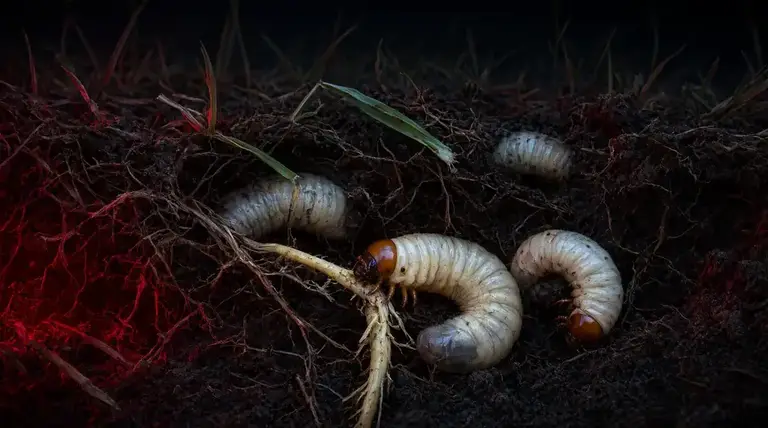
- White C-shaped grubs in the soil — 15–25 mm long, found 3–10 cm down when you dig or lift turf.
For the tell-tale test, mix a capful of dishwashing liquid in a watering can and drench a square metre of lawn — grubs surface within minutes, letting you gauge numbers. More than a handful per square metre usually warrants treatment. A healthy lawn can tolerate a low background population without visible harm, so the flush test is about judging density rather than reacting to the first grub you find.
DIY vs professional lawn grub treatment
DIY treatment works for small, confirmed infestations caught early; professional pest control makes sense when damage is widespread, the pest is unclear, or previous treatments have failed. APVMA-registered granular or liquid insecticides need to be watered in and timed when young larvae are near the surface — get the timing or product wrong and you waste money while the grubs keep feeding.
| Factor | DIY | Professional |
|---|---|---|
| Identification | Easy to confuse curl grubs with caterpillars | Correct ID decides the right product and timing |
| Products | Retail-grade, lower active rates | Commercial-grade, applied by licensed technicians |
| Timing | Often applied too late, after damage shows | Timed to young larvae near the surface |
| Cost | $30–$80 in products, plus your time | $150–$400 with inspection and advice |
| Follow-up | On you to monitor and re-treat | Re-inspection and recovery plan included |
A broader yard approach also pays off. Scarab beetles share habitat with other soil pests covered in our guide to coastal brown ant damage in lawns, and a healthy garden can harbour earwigs — a friend in the garden but a pest indoors — so a whole-of-yard plan beats spot-treating one patch. Our pest prevention tips for Australian homes round it out.
What lawn grub treatment costs in Australia (2025–26)
Across the Australian market, professional lawn grub treatment on a typical residential block generally runs between $150 and $400, with larger or severely damaged lawns pushing towards the top of that range and beyond. What the industry charges varies with lawn size, pest density, and whether follow-up visits or lawn recovery work are included.
| Service | Typical cost (AUD) | What’s included/notes |
|---|---|---|
| Inspection and flush test | $0–$120 | Pest identification and density assessment; often free with treatment |
| Targeted grub treatment (small lawn, under 150 m²) | $150–$220 | APVMA-registered product applied and watered in by a licensed technician |
| Full lawn treatment (150–400 m²) | $220–$350 | Whole-lawn coverage for curl grubs and/or surface caterpillars |
| Severe infestation / follow-up visit | $300–$400+ | Second application, recovery advice, aeration recommendations |
| Preventative seasonal program | $250–$500/yr | Spring and early-summer treatments timed to beetle flights |
These figures reflect typical Australian market rates across the industry, not any one company’s price list. Any chemical treatment should be carried out by a licensed technician using APVMA-registered products, applied according to the label — no treatment is risk-free, and correct application protects your family, pets and beneficial insects.
Here’s the good news: Aussie Pest Strike typically comes in well under these market rates, without cutting corners on licensed technicians or APVMA-registered products. For an exact quote on your lawn, call us on [aps_phone] today.
Seasonal activity: when lawn grubs strike
Curl grub activity peaks from late spring through summer (October to February) as beetles lay eggs after rain, with a second smaller window in early autumn. Surface caterpillars like armyworm follow a similar pattern, often exploding after warm, wet spells.
Jan
Feb
Mar
Apr
May
Jun
Jul
Aug
Sep
Oct
Nov
Dec
Typical lawn grub pressure across most of Australia: activity builds from September, peaks December–February when larvae are feeding hardest, and tapers through autumn as soils cool. Northern regions can see activity nearly year-round.
Whatever the season, lawn health is your best defence — deep watering, correct mowing height and aeration help turf recover and resist damage, and a vigorous lawn shrugs off grub numbers that would wreck a stressed one.
Most lawns we inspect don’t have a grub problem — they have a grub problem that was treated with the wrong product at the wrong time. The carpet test and a soapy flush take five minutes and tell you exactly what you’re dealing with. Treat young larvae in late spring and you’ll rarely need a second application.
Run the soapy-water flush now if you’re seeing brown patches. If you count more than a handful of grubs per square metre — or the turf lifts like loose carpet — book a professional Lawn Grub & Garden Pest Treatment before summer peaks. Early, correctly timed treatment is cheaper and far more effective than renovating a dead lawn in autumn. While you’re checking the garden, keep an eye out for other seasonal invaders like Portuguese millipedes, which thrive in the same warm, wet conditions.
Frequently Asked Questions
What are lawn grubs and how do they damage my lawn?
Lawn grubs are the larvae of beetles and moths that feed on grass, turning healthy turf into brown, spongy patches over summer. Curl grubs, which are beetle larvae, attack the roots underground, while surface caterpillars such as armyworm chew the leaves at night. Root feeding causes turf to lift like loose carpet, while blade chewing leaves irregular damage at the crown.
How do I tell the difference between curl grubs and surface caterpillars?
Peel back a section of dying turf. If the grass lifts like a loose carpet because the roots have been eaten away, curl grubs are the cause. If the roots hold firm but the blades are chewed down to the crown, you are dealing with surface caterpillars such as armyworm. Curl grubs themselves are white, C-shaped larvae about 15–25 mm long found 3–10 cm below the soil.
What is the soapy-water flush test for lawn grubs?
Mix a capful of dishwashing liquid in a watering can and drench one square metre of lawn. Grubs will surface within minutes, letting you count them and gauge density. More than a handful of grubs per square metre usually warrants treatment. A healthy lawn can tolerate a low background population without visible harm, so the test is about judging numbers rather than reacting to a single grub.
What warning signs suggest I have a lawn grub problem?
Look for brown patches spreading from summer into autumn, turf that lifts easily with no root anchorage, birds such as ibis, magpies or currawongs digging at the grass, spongy or soft footing underfoot, and irregularly chewed blades or bare crowns that appear almost overnight. White C-shaped grubs in the soil when you dig are another clear sign of curl grubs.
When is lawn grub season in Australia?
Curl grub activity peaks from late spring through summer, roughly October to February, as beetles lay eggs after warm, wet weather, with a smaller second window in early autumn. Surface caterpillars like armyworm follow a similar pattern and often explode after warm, wet spells. Activity builds from September, peaks December to February, and tapers through autumn, though northern regions can see activity nearly year-round.
Should I treat lawn grubs myself or call a professional?
DIY treatment suits small, confirmed infestations caught early, using APVMA-registered granular or liquid insecticides watered in when young larvae are near the surface. Professional control makes sense when damage is widespread, the pest is unclear, or previous treatments have failed. Common DIY mistakes include confusing curl grubs with caterpillars and applying products too late, after damage has already shown.
Why do some lawns get worse lawn grub problems than others?
Floodlit gardens, irrigated turf and outdoor entertaining areas attract egg-laying beetles. New turf and lawns stressed by drought or compaction are hit hardest because they have less root reserve to withstand feeding. The practical next step is to note the signs, inspect the relevant area carefully, and seek property-specific advice if the issue continues.
Can my lawn recover from grub damage without renovation?
Yes, if the problem is caught early. A healthy, well-watered lawn tolerates low grub numbers, and treating young larvae in late spring rarely requires a second application. Deep watering, correct mowing height and aeration help turf recover and resist damage. Catching grubs early is the difference between a quick recovery and a full lawn renovation later in autumn.
How would Aussie Pest Strike assess whether my brown patches are caused by lawn grubs?
A technician would combine visual symptoms with simple tests: peeling back dying turf to check whether it lifts like loose carpet from severed roots, inspecting soil 3–10 cm down for white C-shaped curl grubs, and running a soapy-water flush over a square metre to count surfacing grubs. This identifies whether curl grubs or surface caterpillars are responsible and whether the density justifies treatment.
When should I book Aussie Pest Strike for a lawn grub inspection?
If you are seeing spreading brown patches, run the soapy-water flush test first. If you count more than a handful of grubs per square metre, or the turf lifts like loose carpet, book a professional lawn grub and garden pest treatment before summer peaks. Early, correctly timed treatment during late spring or early summer is far more effective than waiting until autumn.
Sources & further reading
Found Something
Dangerous?
Don’t touch it. Don’t spray it. Keep kids and pets clear, take a photo from a safe distance, and call us — or book a free inspection and we’ll come to you.
02 7235 0050