Bird Droppings:Health Risks andSafe Cleanup
Bird droppings health: bird droppings are a real health hazard, not just an eyesore: accumulated pigeon droppings can carry the organisms behind...
Bird droppings are far more than an eyesore — whether you searched for this guide with a single letter like “i” or a full question, the answer is the same: bird droppings health risks are genuine across Australia. Dried droppings release infectious dust when disturbed, carrying the organisms behind psittacosis, cryptococcosis and histoplasmosis, and safe clean-up means wetting the waste down, wearing proper protection and disinfecting — never dry-sweeping.
This guide explains the real health risks, where droppings build up unnoticed in Australian homes and businesses, how to clean small deposits safely yourself, and when a large accumulation calls for a licensed pest control team with proper PPE and containment.
- Dried bird droppings release infectious dust linked to psittacosis, cryptococcosis and histoplasmosis — inhalation is the main route of infection.
- Never dry-sweep or blow droppings; mist them with water or disinfectant first to suppress dust.
- Roof voids, disused chimneys, signage ledges and the cavity under solar panels are the highest-risk accumulation zones.
- People with asthma, chronic lung conditions or weakened immunity face the greatest risk and should avoid cleanup entirely.
- Exclusion — netting, spikes and proofing — is almost always cheaper than repeated remediation of a heavy roost.
Why bird droppings health risks are serious across Australia
Bird droppings are a health hazard because accumulated, dried faeces harbour bacteria and fungal spores that become airborne as fine dust when disturbed — and Australian conditions make that accumulation faster and more common than most people realise. Our climate, housing styles and abundant pest bird species create ideal roosting conditions year-round.
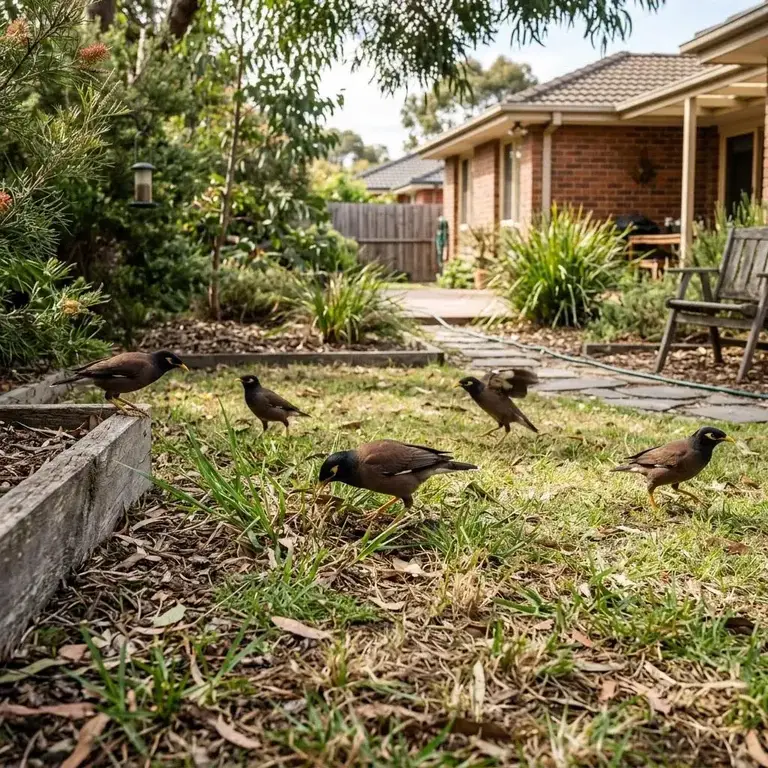
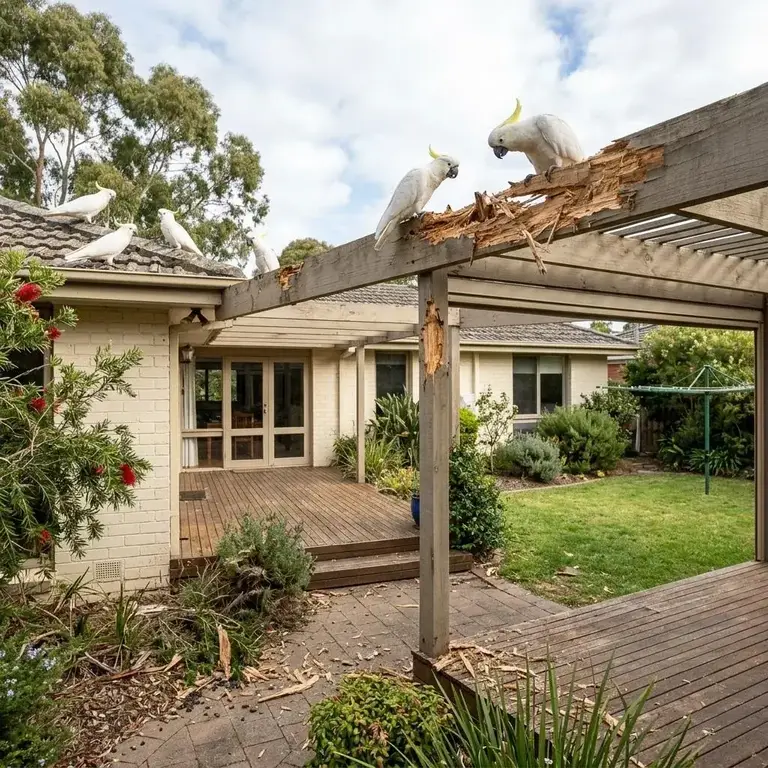
Feral pigeons, Indian mynas, starlings and sparrows thrive in every Australian capital and regional centre. They favour exactly the structures we build: the open subfloor and high-pitched roof voids of Queenslanders, the tile and Colourbond roofs of brick-veneer homes, and the sheltered ledges of commercial shopfronts. In the warm northern states, roosts stay active for most of the year; in southern cities, winter drives birds harder into sheltered roof spaces.
The cavity beneath rooftop solar panels has become one of the fastest-growing problem areas nationally. Panels give pigeons a dry, shaded, predator-free nesting site, and droppings pile up where no one can see them. Our guide to bird-proofing solar panels covers this in detail, and the related problems are outlined in Pigeons Nesting on Your Roof: Problems and Solutions.
Keep the risk in perspective: a few droppings on a path are not a medical emergency, and psittacosis and the fungal infections remain uncommon in Australia. The concern rises sharply with the volume and age of an accumulation — a long-neglected roost in a roof void deserves far more caution than an occasional splash on the driveway.
Warning signs: how do i know droppings are becoming a hazard?
You know droppings have become a hazard when you can see visible accumulation, smell ammonia-like odours, or find dried, powdery deposits in enclosed spaces such as roof voids. Use this checklist to assess your property:
- Visible build-up on ledges, gutters or paths — repeated deposits in the same spots signal an established roost nearby.
- Powdery, grey-white deposits in the roof void — dried droppings that crumble to dust are the highest respiratory risk.
- Birds entering or leaving the same gap daily — under eaves, through broken tiles, or beneath solar panels.
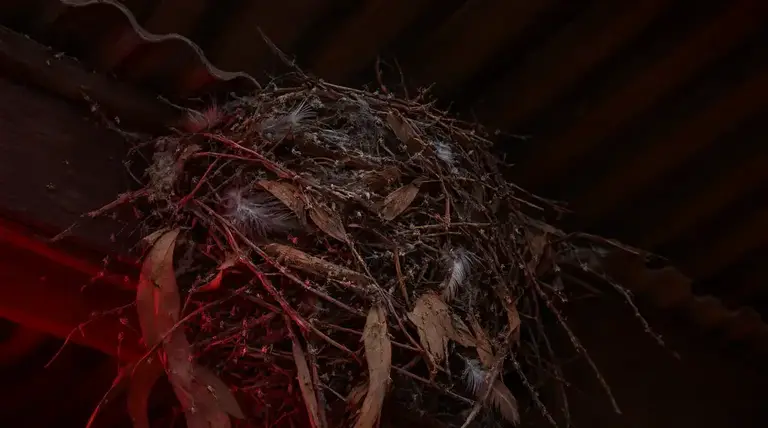
- Nesting material in gutters or valleys — nests mean droppings, and droppings attract insects and support bird mites, as covered in our guide to bird mites and lice.
- Ammonia or musty odours indoors — heavy accumulations in a ceiling cavity can taint indoor air.
- Staining on ceilings or walls — moisture mixed with droppings can track through plasterboard over time.
- Increased insect activity — droppings and nesting material attract beetles, flies and mites that migrate into living areas.
The most hazardous accumulations are usually out of sight: roof voids under a long-standing roost, ledges behind commercial signage, disused chimneys and the cavity beneath solar panels. Because these areas stay dry and undisturbed, droppings dry to a fine powder that becomes airborne the moment someone enters. Anyone accessing such a space should treat it as a respiratory hazard from the outset.
DIY vs professional cleanup: which approach do i need?
Small, fresh deposits on hard outdoor surfaces are reasonable DIY jobs with the right precautions; large accumulations, roof-void contamination and commercial sites need professional remediation with proper PPE, containment and disinfection. The dividing line is volume, location and the bird droppings health risk — anyone with asthma, a chronic lung condition or compromised immunity should not attempt cleanup at all.
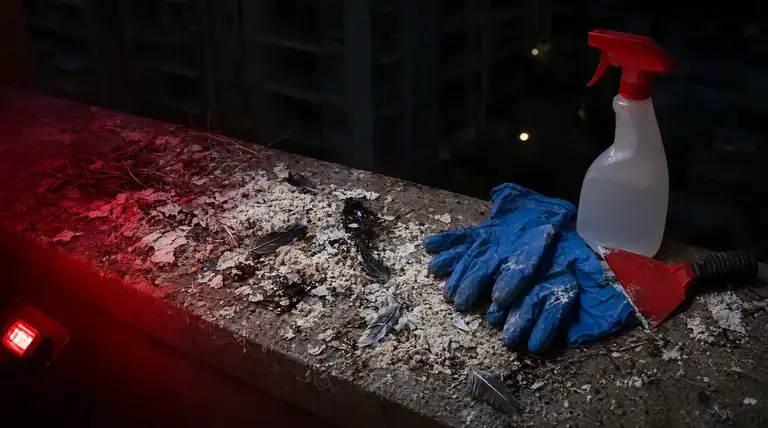
For a safe DIY cleanup of a minor deposit, follow this order: protect yourself with a P2/N95 mask, gloves, eye protection and washable clothing; lightly mist the droppings with water or disinfectant to suppress dust; scrape and bag the waste gently — never dry-sweep or use a leaf blower; apply a suitable disinfectant and allow the correct contact time; then double-bag the waste, wash your hands and launder clothing immediately.
| Factor | DIY cleanup | Professional remediation |
|---|---|---|
| Best for | Small, fresh deposits on paths, decks and outdoor furniture | Heavy accumulations, roof voids, chimneys, commercial sites |
| Protection | P2/N95 mask, gloves, eye protection, washable clothing | Full PPE, respirators, containment and controlled disposal |
| Dust control | Misting with water or disinfectant before removal | Wet methods plus extraction and containment of the work area |
| Disinfection | Household disinfectant with correct contact time | Commercial-grade disinfectants applied by licensed technicians |
| Prevention | Remove food sources, hose down regularly | Netting, spikes, solar panel mesh and full proofing |
| Typical cost | $30–$80 in PPE and disinfectant | $350–$2,500+ depending on scale |
Where chemical disinfectants or biocides are needed, follow label directions carefully, and for anything beyond a minor deposit, engage licensed technicians who apply products in line with APVMA requirements.
Bird dropping cleanup and proofing costs in Australia (2025–26)
Across the Australian market, professional bird dropping cleanup generally runs between $350 and $2,500 or more, depending on the volume of waste, access difficulty and whether proofing is included. Roof-void remediation and commercial work sit at the higher end of the market because of PPE, containment and disposal requirements. The table below shows the typical market rates you’d expect to see quoted across the industry — not the price of any one provider.
| Service | Typical market rate (AUD) | What’s included/notes |
|---|---|---|
| Minor outdoor cleanup and disinfection | $350–$600 | Paths, decks, small ledges; wet removal, disinfectant, bagged disposal |
| Roof-void remediation | $900–$2,500+ | Full PPE, containment, waste extraction, disinfection of the cavity |
| Solar panel clean and bird proofing | $700–$1,800 | Nest and dropping removal under panels plus perimeter mesh — see our Solar Panel Bird Proofing service |
| Commercial ledge/signage cleanup | $800–$3,000+ | Elevated access, containment, disinfection, scheduled maintenance options |
| Exclusion and proofing (netting, spikes) | $500–$4,000+ | Site-dependent; part of our Bird Control & Proofing work |
These figures represent typical industry-wide ranges for 2025–26, and any proper quote will require an inspection because access, waste volume and roof type vary so widely between a slab-on-ground brick veneer and a high-set Queenslander.
It’s worth knowing that Aussie Pest Strike typically comes in well under these general market rates — we keep our pricing sharp without cutting corners on safety or disposal. For an exact quote tailored to your property, give us a call on [aps_phone] and we’ll sort you out.
Seasonal bird and droppings activity across Australia
Bird roosting and droppings accumulation in Australia peak from late winter through summer, when pigeons and other pest birds breed most actively, then ease slightly through autumn. Spring nesting means the heaviest build-up appears from about September to February, though warm northern regions see meaningful activity almost year-round.
Jan
Feb
Mar
Apr
May
Jun
Jul
Aug
Sep
Oct
Nov
Dec
Indicative relative activity levels for pest bird roosting and droppings accumulation in Australia. Breeding peaks in spring and early summer drive the heaviest build-up; late winter sees birds sheltering in roof voids, restarting the cycle. Tropical regions experience less seasonal variation.
The worst jobs we attend are roof voids where pigeons have been roosting for years — the droppings are ankle-deep and dry as talc. One dry sweep in there and you’ve filled the whole house with contaminated dust. Wet it down, mask up, or better yet, let a crew with proper containment handle it.
Handle small outdoor deposits yourself using the wet-down method with PPE, but treat any roof-void accumulation, solar panel nesting or commercial build-up as a professional job. Once the area is clean, invest in exclusion — netting, spikes or panel mesh — because prevention through proofing is almost always cheaper than repeated remediation of a heavy roost.
Bird droppings: frequently asked questions
Can bird droppings really make you sick?
Yes. Dried droppings can harbour the organisms behind psittacosis (a bacterial, pneumonia-like illness caused by Chlamydia psittaci), cryptococcosis and histoplasmosis (both fungal infections). Inhaling dust from disturbed, dried droppings is the main way people become infected, which is why wet cleanup methods are essential.
Why shouldn’t I dry-sweep bird droppings?
Dry-sweeping or using a leaf blower turns dried droppings into infectious airborne dust that can be inhaled deep into the lungs. Lightly misting the droppings with water or disinfectant first suppresses that dust, making removal far safer. Always wear a P2/N95 mask, gloves and eye protection during cleanup.
When should I call a professional for bird mess?
Call a professional pest control service for large accumulations, roof-void contamination, deposits under solar panels, or any commercial site. These situations require proper PPE, containment, safe waste disposal and thorough disinfection. People with asthma, chronic lung conditions or weakened immunity should avoid cleaning droppings themselves entirely.
Prevention beats cleanup every time — stopping birds roosting in the first place with netting, spikes, panel mesh and regular clean-outs keeps accumulation from ever building up again. If you’re facing a heavy build-up of bird droppings at home or at work, Aussie Pest Strike’s licensed pest control technicians can safely remove the waste, disinfect the affected areas and bird-proof the site so the problem doesn’t return. Call Aussie Pest Strike on [aps_phone] today to book your free inspection and quote.
Sources & further reading
Found Something
Dangerous?
Don’t touch it. Don’t spray it. Keep kids and pets clear, take a photo from a safe distance, and call us — or book a free inspection and we’ll come to you.
02 7235 0050