Cockatoo Damage:What’s Legal andWhat Works
If you're dealing with cockatoo damage to decks, window frames, solar panels or crops, you need solutions that are legal, humane and effective — because...
Cockatoo damage to decks, window frames, solar panels and crops is one of the most frustrating problems Australian homeowners face — and one of the most legally tangled. Because cockatoos are protected native birds, the solutions that work must also be lawful and humane. If you’ve typed a quick “o” of frustration into a search bar after watching a sulphur-crested cockatoo shred your cedar sill, this guide is for you: it covers what Australian law allows, which deterrents genuinely deliver, realistic costs, and when a licensed bird control professional is the smart call.
In short: cockatoo damage control in Australia means using legal, non-lethal deterrents — physical exclusion, visual scares and attractant removal — because all cockatoo species are protected wildlife, and harming them without a permit carries heavy fines. That’s the framework everything else in this article hangs off, so let’s get into the detail.
- All Australian cockatoos are protected under state, territory and federal law — killing, trapping or interfering with them without authorisation is illegal.
- Physical exclusion (netting, spikes, mesh guards, metal capping) is the only reliable long-term fix; visual deterrents only work when rotated.
- Peak damage season runs from late spring through autumn, roughly November to March, when flocks feed and roost in suburbs.
- Professional bird proofing typically costs between $300 and $3,000+ AUD depending on the area protected, and is far cheaper than repeat repairs.
- Permits for lethal control are rare and only granted after non-lethal methods have demonstrably failed.
Why Cockatoo Damage Matters Across Australia (and Why “o” Searches Spike)
Cockatoo damage matters Australia-wide because sulphur-crested cockatoos, galahs and little corellas are intelligent, long-lived birds with powerful beaks they must constantly wear down — and our homes provide ideal gnawing material. Chewing is natural behaviour, but soft cedar window sills, hardwood decking, rubber seals and outdoor furniture cop the consequences.
Australian housing makes the problem worse. Elevated Queenslanders with exposed timber stumps and verandah railings, brick veneer homes with cedar window frames, and rendered slab homes with decorative timber screens all offer chewable surfaces. From late winter through spring, pairs strip bark and enlarge tree hollows while preparing nests; from summer into autumn, large flocks descend on suburbs, orchards and grain crops across New South Wales, Victoria, Queensland and South Australia. A single flock can shred a deck railing or strip a fruit tree in a few noisy visits — which is why searches for everything from “cockatoo o my roof” to full-blown damage queries surge every February.
The stakes aren’t just cosmetic. Chewed solar cabling is a fire and warranty risk, dislodged ridge capping invites water ingress, and a flock that adopts your roofline brings noise, droppings and secondary pests. If you’re weighing up broader roofline issues, our guide to pigeons nesting on your roof covers overlapping problems and solutions.
Warning Signs of Cockatoo Damage on Your Property
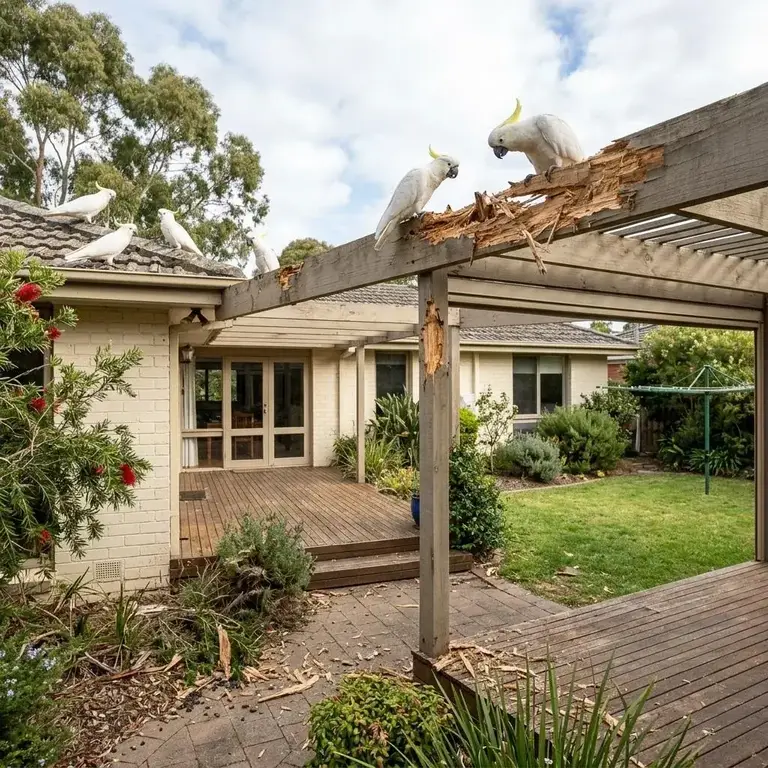
The earliest warning signs of cockatoo activity are fresh wood shavings, beak-gouge marks and birds returning to the same perch at the same times each day. Catching the pattern early — before a flock establishes a routine — dramatically improves your odds. Check for the following:
- Wood shavings and chips on decks, sills or garden beds beneath railings, beams and window frames.
- Paired beak gouges — distinctive parallel grooves in soft timber, rubber seals or outdoor furniture.
- Chewed cabling or conduit around solar arrays, air-conditioning units and antennas.
- Dislodged ridge caps, tiles or flashing along the roofline, often with droppings below.
- Stripped bark or enlarged hollows in mature trees during late winter and spring nesting prep.
- Stripped fruit trees or vegetable beds, with half-eaten produce dropped beneath the canopy.
- Dawn and dusk flock noise — screeching groups arriving or leaving a regular roost signals habituation is underway.
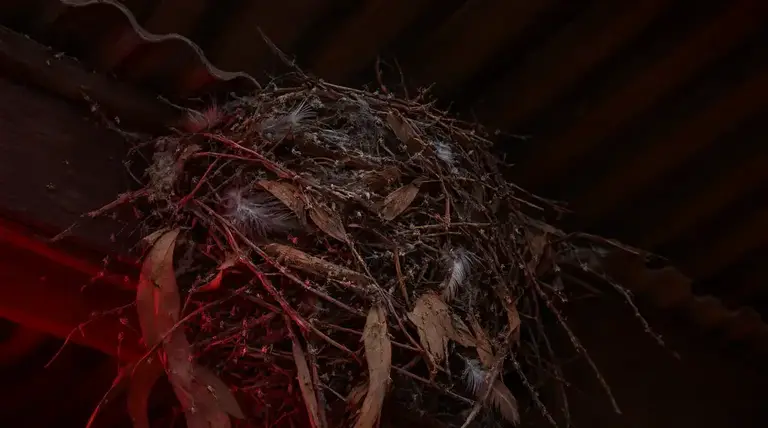
- Nesting debris near the roof, which can also harbour bird mites and lice once nests are active or abandoned.
What Australian Law Says About Controlling Cockatoos
Australian law protects every cockatoo species, meaning you cannot legally kill, trap, injure or interfere with them or their active nests without a permit. This is the single most important fact in any cockatoo control plan.
Protection comes from state and territory wildlife laws — the Biodiversity Conservation Act 2016 (NSW), the Wildlife Act 1975 (Vic) and the Nature Conservation Act 1992 (Qld) among them — plus the federal Environment Protection and Biodiversity Conservation Act 1999. Penalties for unlawful harm include heavy fines.
Permits are the exception, not the rule. Where damage is severe, regulators may issue a licence to harm native animals (NSW), an Authority to Control Wildlife (Victoria) or a Damage Mitigation Permit (Queensland). Approval usually requires proof that non-lethal methods have failed, and lethal control is rarely granted for common species. In parts of Western Australia, certain corellas are declared pests under biosecurity legislation — so always check your state and local rules before acting, and have any chemical or handling work done by a licensed technician.
DIY vs Professional Cockatoo Deterrents: What Actually Works
No single gadget solves a cockatoo problem — success comes from combining methods, acting early and rotating tactics before birds habituate. Basic DIY measures like moving hawk kites every few days, securing wheelie bin lids, cleaning fallen seed and fruit, and capping exposed beam ends are worthwhile first steps. But for rooflines, solar arrays and recurring flocks, professional bird control and proofing delivers compliant, commercial-grade results that DIY can’t match. Here’s the honest comparison:
| Factor | DIY approach | Professional service |
|---|---|---|
| Effectiveness | Short-term; birds habituate to static decoys and tape within weeks | Long-term exclusion via netting, spikes, mesh and capping |
| Legal compliance | Fine for deterrents; risky if you attempt trapping or removal | Licensed technicians work within wildlife law and permit conditions |
| Safety | Ladder and roof work carries fall risk | Height safety equipment, insured installers |
| Warranty impact | DIY solar mesh can void panel or roof warranties | Installed to preserve warranties, e.g. solar panel bird proofing |
| Upfront cost | $50–$400 in materials | $300–$3,000+ depending on scope |
How Much Does Cockatoo-Proofing Cost in Australia?
Across the Australian market, professional cockatoo-proofing typically costs between $300 and $3,000+ AUD, with most suburban jobs landing between $500 and $1,500 depending on roof access, materials and area covered. As a pest control investment, it’s usually far cheaper than repeat timber or panel repairs. These are typical 2025–26 industry market rates:
| Service | Typical cost (AUD) | What’s included/notes |
|---|---|---|
| Inspection and deterrent plan | $0–$150 | Species ID, damage assessment, compliance advice |
| Bird spikes or bird wire (ledges/ridges) | $300–$900 | Stainless steel spikes per linear metre, installed |
| Solar panel mesh guard | $500–$1,500 | Perimeter mesh, UV-stable clips, warranty-safe fitting |
| Netting over fruit trees/garden beds | $250–$1,200 | UV-stable netting, frames or tensioning |
| Timber capping/metal flashing | $400–$1,800 | Metal or polycarbonate guards on sills, beams, railings |
| Full roofline exclusion (large homes) | $1,500–$3,000+ | Combined netting, spikes and capping at height |
For a deeper dive on panel protection specifically, see our complete guide to bird-proofing solar panels — the same mesh principles apply whether the culprit is a cockatoo or a pigeon.
Worth knowing: Aussie Pest Strike typically comes in well under these typical market rates, so the figures above shouldn’t be your last word on cost. Call us on [aps_phone] for an exact quote tailored to your property and roofline.
Seasonal Cockatoo Activity Across Australia
Cockatoo damage peaks from late spring through autumn (roughly November to March), when large flocks feed and roost in suburbs, with a secondary spike in late winter as pairs strip bark and prepare nest hollows. Timing your deterrents before these windows is critical — exclusion installed in October outperforms a panicked response in February every time.
Jan
Feb
Mar
Apr
May
Jun
Jul
Aug
Sep
Oct
Nov
Dec
Typical cockatoo damage pressure by month across eastern and southern Australia: flocks peak December–March, ease through winter, then lift from August as nesting behaviour begins. Northern regions may see activity shift with the wet season.
The biggest mistake we see is people waiting until the flock has claimed the roof as its own. Once cockatoos have a routine, you’re negotiating with fifty very clever birds. Get the mesh and capping on in spring, and most of the battle is won before it starts.
Start with the free stuff: remove attractants, rotate visual deterrents and net vulnerable trees now. Then book a licensed technician to install physical exclusion — solar mesh, ridge spikes and timber capping — before the summer flock season. It’s the only approach that’s legal, humane and proven to last. If you’re comparing options, our solar panel bird proofing service is a common first step for roof-focused damage.
Frequently Asked Questions
Are cockatoos protected in Australia, and can I legally harm them?
Yes. All Australian cockatoo species are protected under state and territory wildlife laws and the federal Environment Protection and Biodiversity Conservation Act 1999. You cannot legally kill, trap, injure or interfere with them or their active nests without a permit, and unlawful harm carries heavy fines. Permits for lethal control are rare and usually only granted after non-lethal methods have demonstrably failed.
What is the most reliable long-term fix for cockatoo damage?
Physical exclusion is the only dependable long-term solution. Options include netting over fruit trees and garden beds, stainless steel spikes or bird wire on ledges and ridges, mesh guards around solar panels, and metal capping or flashing on chewable timber such as sills, beams and railings. Visual deterrents like hawk kites can help but only work when rotated regularly, because birds habituate to static decoys within weeks.
When is cockatoo damage worst during the year?
Damage pressure peaks from late spring through autumn, roughly November to March, when large flocks feed and roost in suburbs across eastern and southern Australia. There is a secondary spike in late winter as pairs strip bark and enlarge tree hollows while preparing nest hollows. Installing exclusion measures in spring, before flocks establish a routine, works far better than reacting once birds have claimed your roofline.
What are the early warning signs of cockatoo damage?
Look for fresh wood shavings and chips beneath railings, beams and window frames; paired parallel beak gouges in soft timber, rubber seals or outdoor furniture; chewed cabling or conduit near solar arrays and air-conditioners; dislodged ridge caps or flashing with droppings below; stripped bark or enlarged hollows in mature trees; half-eaten fruit under trees; and regular dawn or dusk flock noise signalling a roost routine forming.
Why do cockatoos chew houses and decks?
Cockatoos are intelligent, long-lived birds whose powerful beaks must be constantly worn down, so chewing is natural behaviour. Unfortunately, Australian homes provide ideal gnawing material: soft cedar window sills, hardwood decking, exposed timber stumps and verandah railings on Queenslanders, rubber seals and outdoor furniture all cop the consequences, especially from late winter through spring when nesting preparation begins.
How much does professional cockatoo-proofing cost?
Professional cockatoo-proofing costs vary with the size of the area, roof access difficulty and materials chosen. Solar panel mesh guards are usually the most common job, while spikes, bird wire, tree netting and full roofline exclusion sit at different points on the scale. Most suburban homes fall in a moderate mid-range budget. Compared with repeatedly replacing chewed timber, capping and seals, one-off proofing is generally the more economical long-term option.
Can DIY deterrents solve a cockatoo problem on their own?
DIY measures are worthwhile first steps but rarely sufficient alone. Moving hawk kites every few days, securing bin lids, cleaning fallen seed and fruit, and capping exposed beam ends help short term, but birds habituate to static decoys and tape within weeks. For rooflines, solar arrays and recurring flocks, professional exclusion using commercial-grade netting, spikes, mesh and capping delivers compliant, lasting results that DIY cannot match.
Are there any exceptions where cockatoos can be legally controlled?
Yes, but permits are the exception rather than the rule. Where damage is severe, regulators may issue a licence to harm native animals in NSW, an Authority to Control Wildlife in Victoria, or a Damage Mitigation Permit in Queensland. Approval generally requires proof that non-lethal methods have failed, and lethal control is rarely granted for common species. In parts of Western Australia, certain corellas are declared pests under biosecurity legislation, so always check your state rules first.
How do I choose a cockatoo-proofing method that suits my home's materials?
Aussie Pest Strike deals with bird problems including cockatoo damage, and availability can vary by location, so the simplest step is to get in touch directly to confirm whether your property falls within their service area. They can discuss your specific situation — whether it is chewed sills, solar panel mesh or fruit tree netting — and advise on compliant, non-lethal options suited to your state's wildlife rules.
What should I do next if cockatoos are damaging my property?
Start with the free measures: remove attractants such as fallen seed and fruit, secure bin lids, and rotate any visual deterrents you already own. Then contact Aussie Pest Strike for an inspection and deterrent plan tailored to your roofline and damage pattern. Acting in spring, before flocks establish a roosting routine, gives you the best chance of stopping damage before it becomes expensive.
Sources & further reading
Found Something
Dangerous?
Don’t touch it. Don’t spray it. Keep kids and pets clear, take a photo from a safe distance, and call us — or book a free inspection and we’ll come to you.
02 7235 0050