Indian Mynas:Managing Australia’s WorstPest Bird
Indian mynas are among Australia's most damaging introduced birds, evicting native species from nesting hollows, fouling buildings with droppings and...
Indian mynas are among the most destructive introduced birds in Australia, evicting native wildlife from nesting hollows, fouling homes and businesses with droppings, and gathering in noisy communal roosts. Ranked n among the world’s worst invasive species, they have colonised much of the east coast and show no signs of slowing down. This guide covers how to identify Indian mynas, the damage they cause, humane deterrents, legal control options, realistic costs and when to call a licensed pest control professional.
Simply put, the Indian myna (Acridotheres tristis) is an introduced bird from Asia that aggressively outcompetes native Australian species for nesting sites and food, and is legally classified as a pest across much of the country. Whether you have birds nesting in your roof void or a roost fouling your outdoor entertaining area, acting early makes all the difference.
- Indian mynas are an unprotected, introduced pest — but native lookalikes like noisy miners are fully protected, so correct identification is essential.
- They nest in roof voids, gutters, wall cavities and signage, causing drainage blockages, fire risk, bird mites and corrosive droppings.
- Breeding runs roughly September to March, with pairs raising two or three clutches — early intervention before spring is most effective.
- Poisoning and glue traps are illegal; humane trapping and exclusion are the compliant options.
- Professional bird-proofing typically costs $300-$900 for a standard home, with inspections often free.
Why Indian Mynas Rank n Among Australia’s Worst Pests
Indian mynas matter because they damage both native ecosystems and the built environment, and Australia’s warm, urbanised east coast gives them ideal conditions year-round. They were introduced to Melbourne in the 1860s to control insects in market gardens and later released into Queensland’s cane fields — a decision that backfired spectacularly.
Since then they have spread through Victoria, New South Wales, the ACT and Queensland, earning a place on the IUCN’s list of the world’s 100 worst invasive species. They thrive wherever people live: scavenging from bins and outdoor dining areas, and roosting communally in groups of several hundred birds in a single stand of trees.
Australian housing suits them perfectly. Roof voids in brick veneer homes, the open eaves and stumps of older Queenslanders, gutters on slab-built suburban houses and commercial signage all provide ready-made nesting cavities. Unlike native hollow-nesters that depend on old-growth trees, mynas happily exploit any gap in a roofline — which is why professional Bird Control & Proofing focuses so heavily on exclusion work around eaves and vents.
Warning Signs of an Indian Myna Problem
The clearest warning sign is repeated bird traffic to a single gap in your roofline, gutter or wall cavity, especially during spring and summer. Catching the problem early prevents nests, mites and blocked drainage. Watch for:
- Birds entering roof gaps — mynas hopping along the gutter and slipping under tiles, flashing or broken eave vents, particularly at dawn and dusk.
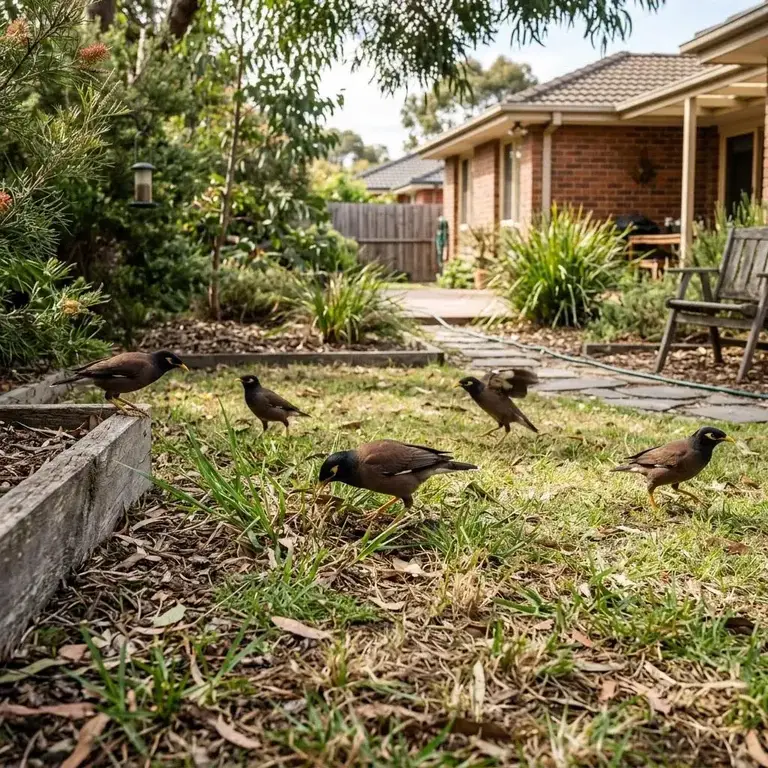
- Strutting brown birds with yellow beaks — adults are about 23 centimetres long with a chocolate-brown body, glossy black head, bright yellow beak and a yellow patch of bare skin behind the eye; white wing patches flash in flight.
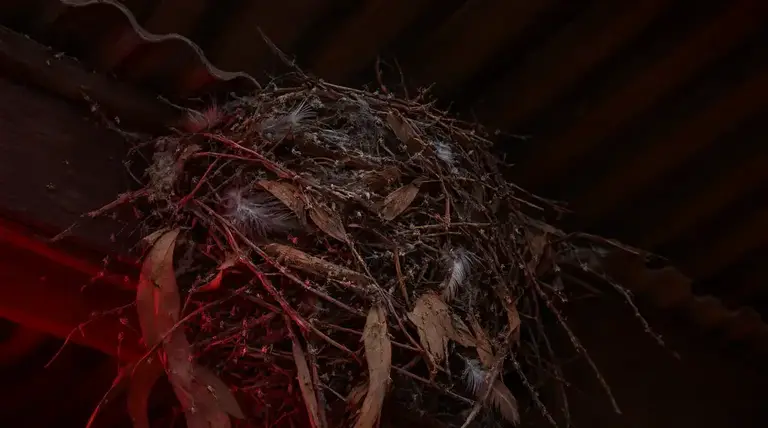
- Nesting debris in gutters — twigs, grass and rubbish stuffed into downpipes and roof valleys, often causing overflow in heavy rain.
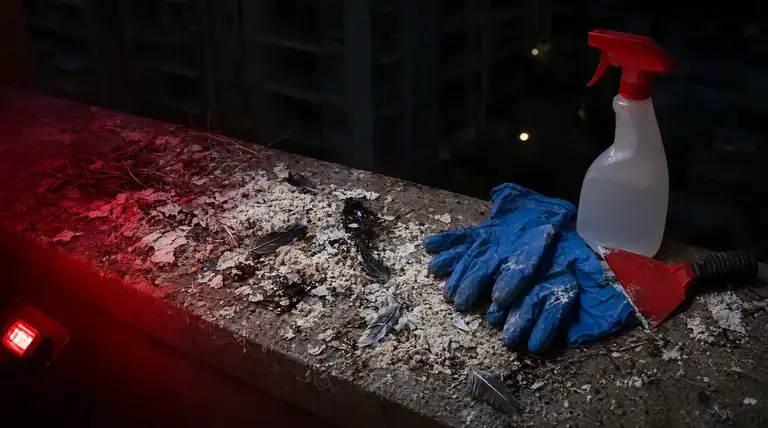
- Droppings on walls, paths and outdoor furniture — corrosive, unsightly and a hygiene concern near food areas.
- Scratching or chirping in the ceiling — a sure sign of an active nest in the roof void.
- Large evening roosts — dozens or hundreds of birds gathering noisily in a nearby stand of trees.
- Tiny biting insects indoors — bird mites migrating from an abandoned nest; see our guide to Bird Mites and Lice: When Nests Become a Pest Problem.
One critical caution: don’t confuse Indian mynas with noisy miners. The native noisy miner is a protected grey honeyeater that looks superficially similar. Harming native birds can attract heavy fines under state wildlife laws, so have a professional confirm the species before any control work begins.
DIY Deterrence vs Professional Pest Control
DIY prevention — sealing food sources and blocking entry points — works well for low-level pressure, but established nests and large roosts usually need professional trapping and proofing. The legal and welfare requirements around humane trapping and euthanasia also make professional help the safer path once birds are entrenched.
| Factor | DIY approach | Professional service |
|---|---|---|
| Species identification | Risk of confusing protected noisy miners | Confirmed by a licensed technician |
| Proofing and exclusion | Basic mesh on visible gaps; easy to miss entry points | Full roofline audit, quality mesh and flashing on every access point |
| Trapping | Council or community cage-trap programs; you must euthanise humanely | Compliant trapping and humane dispatch handled for you |
| Nest and mite clean-up | Exposure to mites, droppings and dust in roof voids | Safe removal, sanitisation and mite treatment |
| Legal compliance | Your responsibility; rules vary by state | Work carried out to state biosecurity and welfare requirements |
If you do tackle prevention yourself, the priorities are: keep bins tightly sealed, clean up food scraps in outdoor areas, feed pets indoors, never leave pet food out overnight, seal gaps around eaves and vents with bird-proof mesh, remove old nests once birds have left, and avoid feeding wild birds. Much of the same exclusion logic applies to other pest birds — our article on Pigeons Nesting on Your Roof: Problems and Solutions covers similar roof-void issues.
Indian Myna Control Costs in Australia (2025-26)
Across the Australian pest control industry, homeowners typically pay between $300 and $900 for inspection, nest removal and basic proofing, with larger commercial or trapping programs generally costing more. Market rates vary with roof access, the number of entry points and whether solar panels are involved.
| Service | Typical market rate (AUD) | What’s included/notes |
|---|---|---|
| Inspection and quote | Free-$150 | Species confirmation, entry-point audit; some providers charge a call-out fee |
| Nest removal and clean-up | $200-$500 | Removal from roof void/gutters, sanitising, mite treatment if needed |
| Roofline proofing (mesh, flashing) | $300-$900 | Sealing eaves, vents, valleys on a standard single-storey home |
| Solar panel bird proofing | $500-$1,200 | Mesh skirt around array; see Solar Panel Bird Proofing |
| Humane trapping program | $250-$700+ | Cage trapping over multiple visits; suited to established populations |
| Commercial bird management | $1,000+ | Signage proofing, netting, ongoing servicing for hospitality and retail |
Across the market, two-storey homes, steep roofs and Queenslanders with complex subfloor and verandah structures tend to sit towards the upper end of these ranges.
These figures reflect typical Australian market rates — Aussie Pest Strike typically comes in well under them while still delivering the same thorough, humane service. For an exact quote tailored to your property, give us a call on [aps_phone].
Seasonal Activity: When Indian Mynas Cause the Most Trouble
Indian mynas are active all year, but nesting problems peak from September to March and communal roosting peaks through autumn and winter. The chart below shows typical activity pressure across the calendar.
Jan
Feb
Mar
Apr
May
Jun
Jul
Aug
Sep
Oct
Nov
Dec
Activity peaks through the spring-summer breeding season (September-March), when pairs defend nest sites and raise two or three clutches. Cooler months bring lower nesting pressure but large, noisy communal roosts. Winter is the ideal time to proof your roof before spring nesting begins.
The biggest mistake we see is homeowners sealing a roof gap while birds are still nesting inside — you trap the birds, and a few weeks later you’re dealing with mites and smell instead. We always confirm the species first, remove the nest at the right time, then proof every entry point so the problem doesn’t come back next season.
Act before spring. Remove food sources now, have any active nests professionally removed once inactive, and proof your roofline, gutters and solar panels with quality mesh. If mynas are already established in numbers, a compliant trapping program run by a licensed pest controller is the most effective way to reduce local populations humanely and legally.
Frequently Asked Questions
How do I tell an Indian myna apart from a native noisy miner?
Indian mynas are about 23 centimetres long with a chocolate-brown body, glossy black head, bright yellow beak and a patch of bare yellow skin behind the eye; white wing patches flash in flight. The native noisy miner is a protected grey honeyeater that looks superficially similar. Because harming native birds can attract heavy fines under state wildlife laws, have a professional confirm the species before any control work begins.
Why are Indian mynas considered such a serious pest in Australia?
Indian mynas aggressively outcompete native hollow-nesting birds for nesting sites and food, and they appear on the IUCN's list of the world's 100 worst invasive species. Introduced to Melbourne in the 1860s to control insects in market gardens and later released into Queensland cane fields, they have since spread through Victoria, New South Wales, the ACT and Queensland, thriving wherever people live.
What damage can Indian mynas cause around my home?
They nest in roof voids, gutters, wall cavities and commercial signage, causing drainage blockages from nesting debris, fire risk, bird mite infestations and corrosive droppings on walls, paths and outdoor furniture. Droppings near food areas also raise hygiene concerns. Scratching or chirping in the ceiling usually signals an active nest in the roof void that needs attention.
When is Indian myna breeding season and when should I act?
Breeding runs roughly from September to March, with pairs defending nest sites and raising two or three clutches during spring and summer. Communal roosting peaks through autumn and winter. Winter is the ideal time to proof your roofline before spring nesting begins, because acting early prevents nests, mites and blocked drainage from taking hold.
Is it legal to trap or poison Indian mynas?
Poisoning and glue traps are illegal for Indian myna control. Humane trapping and exclusion are the compliant options. Council or community cage-trap programs exist, but if you trap birds yourself you must euthanise them humanely, and rules vary by state. Professional services handle compliant trapping and humane dispatch according to state biosecurity and welfare requirements.
Can I stop Indian mynas myself, or do I need a professional?
DIY prevention works well for low-level pressure: keep bins sealed, clean up food scraps, feed pets indoors, seal gaps around eaves and vents with bird-proof mesh, remove old nests once birds have left, and avoid feeding wild birds. Established nests and large roosts usually need professional trapping and proofing, plus safe removal of nests, droppings and mites from roof voids.
Why shouldn't I seal a roof gap while mynas are still nesting inside?
Sealing an entry point while birds are still nesting traps them inside the roof void. A few weeks later you may be dealing with dead birds, smell and a migration of bird mites into your living spaces instead of the original problem. The correct sequence is to confirm the species, remove the nest once inactive, then proof every entry point so birds cannot return next season.
How much does professional Indian myna control typically cost?
Professional Indian myna control costs vary widely depending on the scope of work. A standard job covering inspection, nest removal and basic roofline proofing on a single-storey home generally sits in a moderate price range, while humane trapping programs, solar panel proofing and commercial bird management cost more. Factors affecting the final figure include roof access difficulty, the number of entry points to seal, whether solar panels need protection, and how extensive any clean-up of droppings or nesting material is.
How can Aussie Pest Strike help me plan next steps for an Indian myna problem?
Aussie Pest Strike can confirm whether the birds around your property are Indian mynas rather than protected noisy miners, audit your roofline for every entry point, and recommend the right sequence of nest removal, sanitisation and proofing. If mynas are already established in numbers, a licensed technician can outline a compliant humane trapping program suited to your situation and timing before spring nesting begins.
What should I do first if I suspect Indian mynas are nesting in my roof?
Start by noting where and when birds enter your roofline, then contact Aussie Pest Strike for a species confirmation and entry-point inspection before doing anything else. Avoid sealing gaps while birds may still be active inside, and hold off removing any nest until a technician confirms it is inactive. Once the situation is assessed, proofing work can be scheduled ahead of the September to March breeding season.
Sources & further reading
Found Something
Dangerous?
Don’t touch it. Don’t spray it. Keep kids and pets clear, take a photo from a safe distance, and call us — or book a free inspection and we’ll come to you.
02 7235 0050