Bird-Proofing SolarPanels: AComplete Guide
Bird proofing solar panels: bird-proofing solar panels means fitting mesh or clips around the panel perimeter to block the warm, sheltered gap underneath...
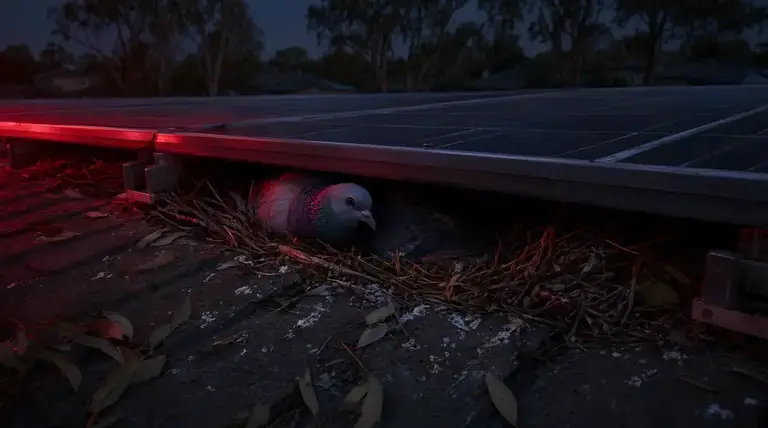
When it comes to bird proofing solar panels, the most effective approach is fitting UV-rated mesh or clips around the perimeter of your solar array to block the warm, sheltered gap underneath where pigeons and other pest birds nest — protecting your system’s output, your roof, and your household’s health. If you’re asking yourself “how do I stop birds nesting under my solar panels?”, you’re not alone: it’s one of the most common questions we hear from homeowners across Australia, and the answer is almost always a professionally fitted perimeter mesh system.
Across Australia, from the brick veneer suburbs of Melbourne and Sydney to high-set Queenslanders in Brisbane and slab-on-ground homes in Perth, rooftop solar is now standard — and feral pigeons have noticed. The gap between your panels and roof creates a perfect nesting cavity, and once birds move in, droppings, mites and damaged wiring follow quickly. This guide covers why it happens, how to spot it, what proofing options cost in 2025–26, and whether DIY or professional pest control is the right call for your home.
- The 8–12 cm gap beneath solar panels is an ideal nesting site for feral pigeons and starlings — warm, dry and predator-free.
- Nests and droppings can cut solar output by roughly 10–25% and create wiring fault and fire risks.
- Clip-on perimeter mesh is the gold-standard fix and does not void your panel warranty — never drill the frames.
- Always remove nests and disinfect before sealing, or you’ll trap bird mites inside your roof space.
- Professional bird-proofing typically costs $500–$1,500 AUD depending on array size and access — far less than repeated clean-ups or panel repairs.
Why bird proofing solar panels matters in Australia
Australia’s climate and housing stock make solar panel bird problems worse here than almost anywhere else. Intense sun, long breeding seasons and millions of rooftop arrays give feral pigeons year-round shelter in every capital city and regional centre.
Feral pigeons breed whenever conditions allow, and in most of Australia that means much of the year. The cavity under a solar array mimics the cliff ledges pigeons evolved to nest on — elevated, sheltered from rain, and out of reach of cats and other predators. Add the warmth radiating from panels on a cool morning, and you have premium bird real estate. In northern states, where temperatures stay mild through winter, nesting can continue with barely a pause; in southern states, activity surges hard from late winter through summer.
Housing style plays a role too. Single-storey brick veneer homes with low-pitch Colorbond or tile roofs are easy for birds to land on, while two-storey and high-set homes give pigeons the elevated vantage they prefer. Either way, once a pair establishes a nest, they return season after season — and the mess compounds. This sits squarely within the wider problem covered in our guide to pigeons nesting on your roof: problems and solutions, but solar arrays concentrate the issue into one expensive, electrically live location.
Warning signs birds are nesting under your panels
The clearest signs of birds under solar panels are persistent cooing and scratching sounds, droppings streaking down the roof, and debris poking from the panel edges. Work through this checklist — if you tick two or more, an inspection is warranted.
- Cooing, scratching or fluttering sounds from the roof, especially at dawn and dusk when birds come and go.
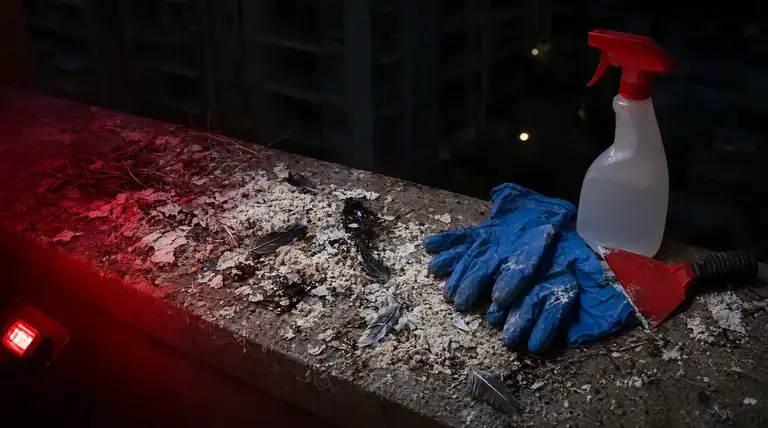
- Droppings on the roof, gutters or panels — white streaks running down tiles below the array, or heavy soiling on the glass itself.
- Feathers, twigs or straw poking from panel edges — visible nesting material escaping the gap underneath.
- Birds repeatedly landing on the roofline near the array, or ducking under the panel edges when you watch from the yard.
- A drop in solar generation that isn’t explained by weather — nests and droppings shade cells and can reduce output by 10–25%.
- Tiny biting insects indoors — bird mites migrating from a nest can move into ceiling spaces and bedrooms.
- Overflowing or smelly gutters below the array, clogged with droppings and nest debris after rain.
Many owners only discover the problem when a routine solar service or a noticeable dip in generation prompts a closer look. If your system output slipped over a summer and the panels look soiled, birds beneath the array are a common and easily overlooked cause.
DIY vs professional bird-proofing: which should i choose?
DIY bird proofing solar panels can work for single-storey homes with safe roof access, but professional installation is strongly recommended for most households because the job combines working at height, live electrical equipment, contaminated nest material and warranty-sensitive fittings. Here’s how the two approaches compare honestly.
| Factor | DIY | Professional |
|---|---|---|
| Upfront cost | $150–$400 in materials | $500–$1,500 installed |
| Safety at height | Falls are the biggest risk; harnesses rarely used | Trained, insured technicians with roof-access equipment |
| Nest clean-out | Often skipped; mite and disease exposure | Full removal, disinfection and safe disposal |
| Warranty risk | Drilling frames can void panel warranty | Non-invasive clip systems preserve warranty |
| Materials | Hardware-store mesh often not UV-rated | Galvanised or PVC-coated mesh rated for Australian sun |
| Species compliance | Easy to misidentify protected native birds | Species confirmed before any nest removal |
If you do go the DIY route, follow the correct order: first confirm no active nest with dependent chicks is present; remove all nesting material and droppings wearing a mask and gloves; disinfect the area thoroughly; then fit mesh with purpose-made clips that never pierce the panel frame. Sealing birds out without a clean-out traps mites, which then seek new hosts — often you. Our article on bird mites and lice: when nests become a pest problem explains what happens next, and it’s not pleasant. Note also that feral pigeons are unprotected, but native species fall under state wildlife law, so identification matters before you touch anything. Where chemical treatments or disinfectants are involved, a licensed pest control technician should carry out the application.
What does solar panel bird-proofing cost in Australia?
Across the Australian market, professional solar panel bird-proofing generally sits between $500 and $1,500 AUD in 2025–26, depending on array size, roof pitch, access and whether a full clean-out is needed. Below are the typical rates the industry charges for each part of the job.
| Service | Typical cost (AUD) | What’s included/notes |
|---|---|---|
| Inspection and quote | Free–$120 | Roof assessment, species check, written quote |
| Nest removal and disinfection | $200–$450 | Debris removal, droppings clean-up, mite treatment |
| Perimeter mesh install (standard array) | $500–$1,200 | UV-rated mesh, clip-on system, no drilling |
| Large or two-storey arrays | $1,000–$1,500+ | Extra linear metres, access equipment, harness work |
| Anti-roosting spikes (add-on) | $100–$300 | Ridge caps and landing ledges near the array |
| Panel cleaning (optional) | $150–$350 | Restores output lost to soiling |
Compare that once-off outlay against the alternatives: repeated professional cleans at the standard market rate of $150–$350 each, potential wiring repairs, degraded panel frames from acidic droppings, and lost generation of 10–25% for as long as the birds stay. Prevention here is genuinely cost-effective. For broader bird issues around the roofline, our bird control and proofing service covers spikes, netting and exclusion beyond the solar array, while dedicated solar panel bird proofing handles the array itself in a single visit.
One thing worth knowing: Aussie Pest Strike typically comes in well under these general market rates. Every roof and array is different, so the smartest move is to get an exact figure for your place — give us a call on [aps_phone] and we’ll sort you out with a firm, no-obligation quote.
Seasonal bird activity around solar panels in Australia
Pigeon nesting activity under solar panels peaks from late winter through summer across most of Australia, roughly August to February, and eases through autumn. Northern regions see flatter, year-round activity; southern states see a sharper spring surge.
Jan
Feb
Mar
Apr
May
Jun
Jul
Aug
Sep
Oct
Nov
Dec
Typical nesting activity pattern across southern Australia. The ideal time to proof is the June–July lull, before the spring breeding surge — but proofing can be done any time once active nests with chicks are cleared.
Nine times out of ten, when we get called to a solar job, the owners had no idea birds were under there until their power bill crept up or a panel fault showed on the monitoring app. The biggest mistake we see is mesh fitted straight over an active nest — you haven’t solved the problem, you’ve just locked it in. Clean it out properly first, treat for mites, then seal it with clips that never touch the panel frame.
Book a professional clean-out and clip-on mesh installation as a single job, ideally in the winter lull before spring breeding begins. Insist on galvanised or PVC-coated UV-rated mesh, clips spaced so no gap exceeds a couple of centimetres, and zero drilling of panel frames. If droppings have built up on the roof or paths below, arrange safe cleanup at the same time — our guide to bird droppings: health risks and safe cleanup explains why a mask, gloves and proper disinfection are non-negotiable.
Frequently Asked Questions
Why do birds nest under solar panels?
The 8–12 cm gap between your panels and the roof creates a warm, dry, sheltered cavity that mimics the cliff ledges feral pigeons evolved to nest on. It is elevated, protected from rain and out of reach of predators, and the warmth radiating from the panels adds to its appeal. Once a pair establishes a nest there, they tend to return season after season.
What are the signs that birds are nesting under my solar panels?
Common warning signs include cooing, scratching or fluttering sounds from the roof at dawn and dusk, droppings streaking down tiles or soiling the panel glass, and feathers or twigs poking out from panel edges. You may also notice birds repeatedly landing near the array, an unexplained drop in solar generation of roughly 10–25%, tiny biting insects indoors from bird mites, or gutters clogged with droppings and debris.
How much does bird-proofing solar panels cost in Australia?
Bird-proofing costs vary with array size, roof pitch, access difficulty and whether nests need removal first. A standard perimeter mesh install on an accessible single-storey roof usually sits at the lower end of the range, while larger arrays, steep roofs or two-storey homes push the price higher. Nest removal, disinfection and optional extras such as anti-roosting spikes or panel cleaning add to the total. Getting quotes from a few local installers is the best way to compare.
Can I bird-proof my solar panels myself?
If you proceed, confirm no active nest with chicks is present, remove all nesting material wearing a mask and gloves, disinfect thoroughly, then fit UV-rated mesh with purpose-made clips that never pierce the frame. The practical next step is to note the signs, inspect the relevant area carefully, and seek property-specific advice if the issue continues.
Will bird-proofing void my solar panel follow-up support?
Hardware-store mesh fitted with screws or adhesives can also cause problems, which is why UV-rated galvanised or PVC-coated mesh attached with purpose-made clips is considered the gold-standard approach. The practical next step is to note the signs, inspect the relevant area carefully, and seek property-specific advice if the issue continues.
Why must nests be removed before sealing panels with mesh?
Sealing birds out without first removing nests and disinfecting traps bird mites inside the gap. With their original hosts gone, the mites seek new hosts and often migrate into ceiling spaces and bedrooms, biting occupants. Proper order matters: confirm no active nest with dependent chicks is present, remove all nesting material and droppings, treat for mites, then fit the mesh.
When is the best time of year to bird-proof solar panels?
Pigeon nesting under solar panels peaks from late winter through summer, roughly August to February across southern Australia, while northern regions see flatter year-round activity. The ideal window is the June–July lull before the spring breeding surge. That said, proofing can be done at any time once active nests with chicks have been properly cleared.
Are pigeons under solar panels protected in Australia?
Feral pigeons are unprotected, but native species such as starlings' native lookalikes and other birds that shelter under arrays can fall under state wildlife law, so correct identification matters before any nest is removed. Misidentifying a protected native bird can create legal problems. A professional technician will confirm the species before touching any nest material.
What should I discuss with an Aussie Pest Strike technician about bird-proofing my solar panels?
A technician will typically want to assess your array size, roof pitch and access, check for active nests and identify the bird species involved before any removal. Expect discussion of whether a full clean-out and mite treatment is needed before fitting clip-on UV-rated mesh, whether anti-roosting spikes would help nearby ridge caps, and how your current generation figures compare with expected output.
How do I get started with Aussie Pest Strike on a solar panel bird problem?
Start by noting what you have observed — sounds from the roof, droppings, nesting material at panel edges, or a dip in your monitoring app's output figures. Then request an inspection and written quote covering species checks, nest removal, disinfection and perimeter mesh installation. Every roof and array differs, so a site-specific assessment is the practical next step rather than guessing at materials or costs.
Sources & further reading
Found Something
Dangerous?
Don’t touch it. Don’t spray it. Keep kids and pets clear, take a photo from a safe distance, and call us — or book a free inspection and we’ll come to you.
02 7235 0050