Huntsman vs WolfSpider: How toTell Them Apart
When weighing up a huntsman vs wolf spider, the fastest clues are body shape and behaviour: huntsmans are flat-bodied with long, sideways-splayed legs and...
When it comes to a huntsman vs wolf spider, the fastest way to tell them apart is body shape and behaviour: huntsmans are flat-bodied with long, sideways-splayed legs and usually turn up on walls and ceilings, while wolf spiders are stockier ground hunters whose eyes shine back at you in torchlight. Both are common across Australia, from Brisbane backyards to Melbourne garages, and neither is considered medically dangerous. If you’ve ever typed “u” into a search bar mid-panic after spotting something large on the bedroom wall, this guide will give you the clear, no-nonsense answers you’re after.
Put simply, a huntsman is a flattened, long-legged wall-dweller and a wolf spider is a compact, burrowing ground-dweller — that single distinction resolves most huntsman vs wolf spider confusion. Below we break down the key differences, where each spider lives, whether they’re dangerous, what professional spider control costs in 2025-26, and when it makes sense to call a licensed technician rather than reach for the thong.
- Huntsmans are flat-bodied with crab-like sideways legs and favour walls, ceilings and cars; wolf spiders are stocky, ground-dwelling hunters.
- Wolf spider eyes reflect torchlight with a bright green-white shine — huntsman eyes don’t.
- Only female wolf spiders carry a round egg sac on their spinnerets and spiderlings on their back.
- Neither spider is medically dangerous like a redback or funnel-web, and both eat cockroaches and other pest insects.
- Recurring sightings usually signal a bigger insect problem — a licensed pest control inspection gets to the root cause.
Why Huntsman vs Wolf Spider Identification Matters Across Australia
Knowing which spider you’re dealing with tells you whether to leave it be, relocate it, or call a professional — and in Australia’s climate, you’ll meet both species regularly. From humid Queensland summers to cooler southern winters, huntsmans and wolf spiders thrive in every state and territory, and our housing styles give them plenty of entry points.
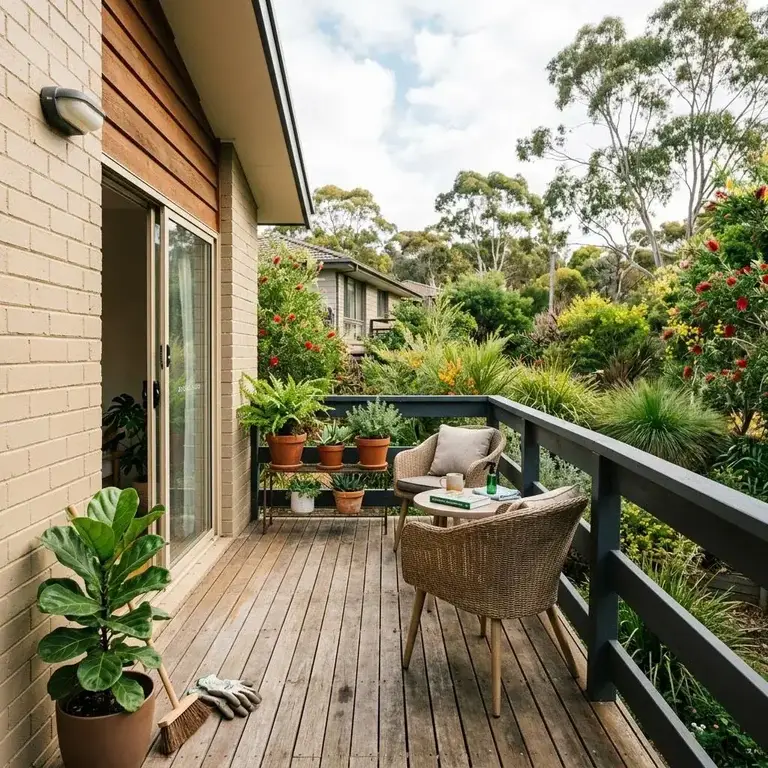
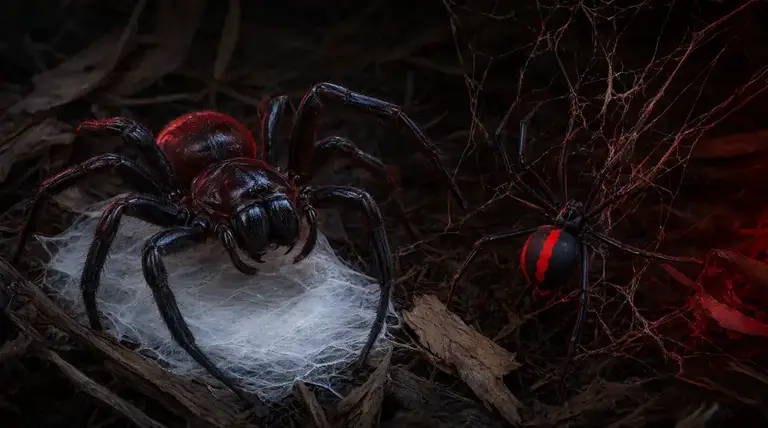
Older Queenslanders on stumps have gaps around floorboards and subfloor access that suit wandering wolf spiders after heavy rain. Brick veneer homes with weep holes and tiled roof voids are prime territory for huntsmans slipping in behind fascia boards, while concrete slab homes still see both species wandering in under doors. A confirmed ID matters most if someone is bitten, if numbers are building up around the house, or if you need to rule out genuinely dangerous species. For those, see our guides on the Funnel-Web Spider: Identification, Danger and Control and the Redback Spider: Identification, Bites and Safe Removal.
Both spiders are beneficial hunters that eat cockroaches, moths and other insects, so the goal is sensible management — not panic. (And yes, if you searched “u” looking for a quick answer, you’re in the right place.)
Warning Signs: How to Tell a Huntsman From a Wolf Spider
Run through this checklist the next time you spot a large spider at home — body shape, eye shine and behaviour will usually settle the huntsman vs wolf spider question in seconds.
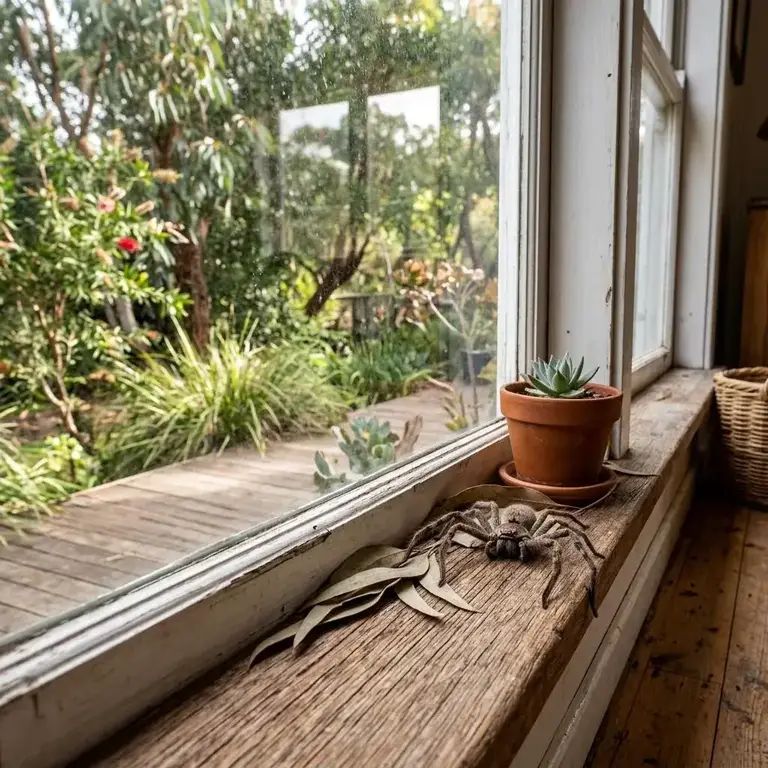
- Flat, crab-like profile: Huntsmans (family Sparassidae) have flattened bodies built for slipping under bark, with long legs held out sideways. Large species like the banded huntsman (Holconia immanis) can reach a 15-centimetre leg span.
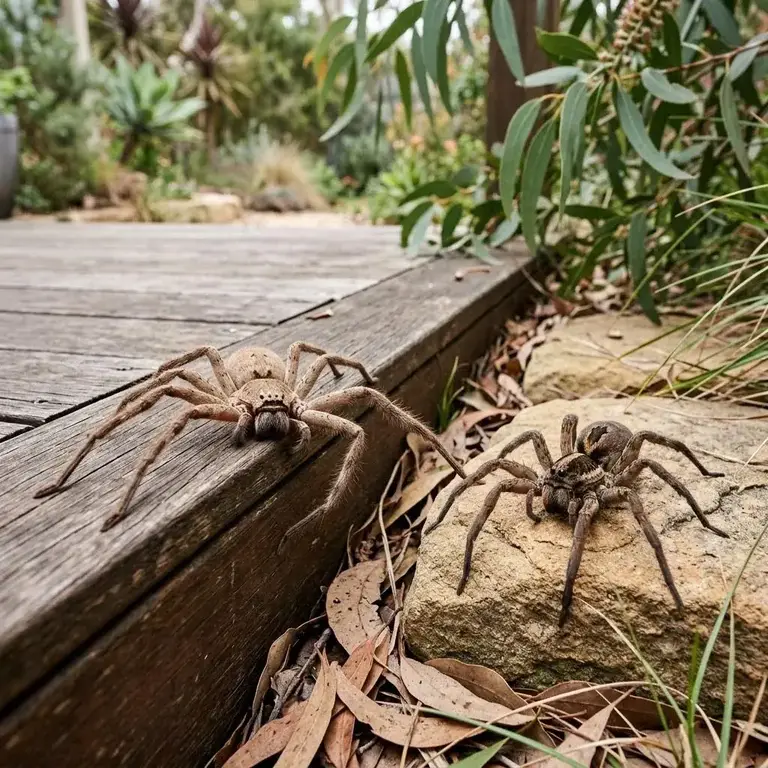
- Stocky, robust build: Wolf spiders (family Lycosidae) are more compact, with a rounded abdomen and shorter, thicker legs built for running down prey on the ground.
- Eye shine at night: Wolf spiders have two large forward-facing eyes that reflect torchlight with a bright green-white shine across the lawn. Huntsman eyes are smaller, in two rows, and don’t shine the same way.
- Colouring: Huntsmans are usually grey or brown, sometimes banded; wolf spiders are mottled brown with camouflage patterning.
- Where you found it: On a bedroom wall, behind curtains or above the car sun visor — almost certainly a huntsman. In leaf litter, garden beds, lawns or a silk-lined burrow — a wolf spider.
- Round egg sac on the rear: Female wolf spiders carry a round egg sac attached to their spinnerets, then carry spiderlings on their backs. Huntsmans never do this — they guard a flat egg sac under bark.
- No capture web: Neither species builds a web to catch food; both hunt by ambush or pursuit. A spider in a messy web is a different animal altogether.
DIY vs Professional Spider Control: What’s Worth Doing Yourself?
Day-to-day prevention is a genuine DIY job — sealing gaps, tidying gardens and reducing insect-attracting lights will cut spider numbers significantly. But recurring infestations, egg sacs through the eaves, or wolf spiders thick across the lawn usually point to a bigger underlying insect population, and that’s where professional Spider Control & Removal earns its keep. Licensed technicians use APVMA-registered products applied to entry points, roof voids and perimeters — treatments that should always be handled by a qualified operator, not a weekend spray from the hardware store.
| Factor | DIY approach | Professional treatment |
|---|---|---|
| Best for | Occasional single spider; prevention | Recurring sightings, egg sacs, heavy lawn activity |
| Typical cost | $0–$60 (sealant, globes, vacuum) | $180–$350 for a standard house treatment |
| Effectiveness | Good for reducing entry points and habitat | Targets the insect food source and harbourage areas |
| Safety | No chemicals involved if done physically | APVMA-registered products applied by licensed technicians |
| Time | Ongoing weekend effort | Usually one visit plus a follow-up if needed |
Practical DIY steps worth doing: seal gaps around doors, windows and weep holes and fit flyscreens; switch outdoor lights to yellow globes that attract fewer insects; clear leaf litter, wood piles and debris away from the house; vacuum webs and corners regularly; store shoes and gloves off the garage floor; and trim vegetation back from walls so spiders lose their bridges into the roof void.
How Much Does Spider Control Cost in Australia in 2025-26?
Across the Australian market in 2025-26, most households pay between $180 and $350 for a standard professional spider treatment, with larger properties and combined pest packages typically costing more. Industry rates vary with home size, construction (subfloor access on a Queenslander adds time), and whether the treatment covers internal, external and roof-void areas.
| Service | Typical market rate (AUD) | What’s included/notes |
|---|---|---|
| Inspection and identification | Free – $120 | Species ID, entry-point assessment; many operators across the industry inspect free |
| Standard spider spray (3-4 bed house) | $180 – $300 | Internal skirtings, external perimeter, eaves, window frames |
| Roof void and subfloor treatment | $80 – $150 add-on | Dusting or residual application where spiders harbour |
| Garden/perimeter treatment (wolf spiders) | $100 – $200 | Lawns, garden beds, fence lines; targets ground hunters |
| Combined general pest package | $250 – $450 | Spiders plus cockroaches, ants, silverfish — removes the food source |
Remember: persistent spiders are usually feeding on something. A combined treatment that knocks down the cockroach and moth population often solves the spider problem longer-term than targeting spiders alone.
These figures reflect typical Australian market rates — Aussie Pest Strike typically comes in well under them. For an exact quote tailored to your property, give the team a call on [aps_phone].
Seasonal Activity: When Huntsmans and Wolf Spiders Are Most Active
Across most of Australia, huntsman and wolf spider activity peaks from October through March, when warm weather brings males out wandering in search of mates and insects are abundant. Activity dips through the cooler months, particularly in southern states, though tropical northern Queensland sees strong activity nearly year-round and heavy rain at any time can push both species indoors.
Jan
Feb
Mar
Apr
May
Jun
Jul
Aug
Sep
Oct
Nov
Dec
Indicative indoor sighting levels for huntsman and wolf spiders across temperate Australia. Peak season runs October to March, when wandering male huntsmans appear on walls and wolf spiders are most visible on lawns after dark. Northern regions see elevated activity through winter as well.
Booking a perimeter treatment in early spring, before the summer peak, gives the best results — the residual barrier is in place before spider numbers climb. For a deeper look at the huntsman side of the equation, read Huntsman Spiders: Dangerous or Harmless Housemates?.
Are Huntsman and Wolf Spiders Dangerous?
No — neither spider is linked to serious envenomation, and both are reluctant biters that usually only strike if squeezed or trapped against skin. A huntsman bite typically causes mild local pain and swelling; a wolf spider bite can be more painful, with redness and itchiness that settles within a day or two.
The real risk with huntsmans is surprise rather than venom — one dropping from a sun visor while you’re driving can cause an accident, which is why they’re worth relocating from the car before you set off. Seek medical advice if any bite shows spreading redness, severe pain or unusual symptoms, and if there’s any chance the spider was actually a redback or funnel-web, treat it as urgent.
Nine times out of ten, the “monster” on the wall is a huntsman doing you a favour by eating cockroaches. What we look at on inspection isn’t the spider itself — it’s what’s feeding it. If we’re seeing wolf spiders right across the lawn or huntsmans every week, there’s almost always a bigger insect issue underneath, and fixing that is what actually solves the problem.
Leave the odd huntsman or wolf spider alone — or trap it under a container, slide cardboard beneath and release it outside. If spiders keep reappearing, you find egg sacs in the eaves, or wolf spiders are thick through the lawn, book a professional inspection. A licensed pest control technician will identify the species, treat entry points and harbourage with APVMA-registered products, and address the underlying insect population that’s attracting them.
Frequently Asked Questions
What is the quickest way to tell a huntsman spider from a wolf spider?
Look at body shape and behaviour. Huntsmans are flat-bodied with long legs splayed sideways like a crab, and they usually turn up on walls, ceilings or behind curtains. Wolf spiders are stockier and more compact, with shorter, thicker legs, and they live on the ground in leaf litter, lawns or burrows. That single distinction resolves most confusion between the two.
Do wolf spider eyes shine at night like other spiders?
Yes. Wolf spiders have two large forward-facing eyes that reflect torchlight with a bright green-white shine, which makes them easy to spot across the lawn after dark. Huntsman eyes are smaller and arranged in two rows, and they do not produce the same reflective shine. Shining a torch over grass at night is one of the most reliable ways to confirm you are looking at wolf spiders rather than huntsmans.
How can I identify a female wolf spider carrying eggs?
Only female wolf spiders carry a round egg sac attached to their spinnerets at the rear of the body. After the spiderlings hatch, she carries them on her back for a period. Huntsmans never do this — instead, a female huntsman guards a flat egg sac tucked under bark. If you see a brown mottled spider with a round ball under its abdomen or babies riding on its back, it is definitely a wolf spider.
Are huntsman spiders or wolf spiders dangerous to people?
Neither species is considered medically dangerous, unlike redbacks or funnel-webs. Both are reluctant biters that generally only bite if squeezed or trapped against skin. A huntsman bite typically causes mild local pain and swelling, while a wolf spider bite can be more painful, with redness and itchiness that settles within a day or two. The main risk with huntsmans is surprise — for example, one dropping from a car sun visor while driving.
Where am I most likely to find each spider around my home?
Location is a strong clue. Huntsmans favour walls, ceilings, behind curtains, roof voids and even cars — they often slip in behind fascia boards through weep holes and gaps. Wolf spiders are ground-dwellers found in leaf litter, garden beds, lawns and silk-lined burrows, and they may wander indoors after heavy rain, particularly into homes with subfloor access. Finding a spider high on a wall almost certainly means it is a huntsman.
When are huntsman and wolf spiders most active in Australia?
Activity peaks from October through March, when warm weather brings male spiders out wandering in search of mates and insect prey is abundant. Sightings dip during cooler months, especially in southern states, though tropical northern Queensland sees strong activity nearly year-round. Heavy rain at any time of year can push both species indoors. Booking a perimeter treatment in early spring places a residual barrier before numbers climb.
What can I do myself to reduce spiders around my house?
Practical DIY steps include sealing gaps around doors, windows and weep holes and fitting flyscreens; switching outdoor lights to yellow globes that attract fewer insects; clearing leaf litter, wood piles and debris away from the house; vacuuming webs and corners regularly; storing shoes and gloves off the garage floor; and trimming vegetation back from walls so spiders lose their bridges into the roof void. These measures cut spider numbers significantly.
Why do I keep seeing spiders if neither species is dangerous?
Recurring sightings usually signal a bigger underlying insect problem rather than a spider problem. Both huntsmans and wolf spiders are beneficial hunters that eat cockroaches, moths and other pest insects, so persistent spiders are typically feeding on something. A combined treatment that reduces cockroach and moth populations often solves the spider issue longer-term than targeting spiders alone, which is why a professional inspection to find the root cause is worthwhile.
What should I discuss with an Aussie Pest Strike technician about huntsman or wolf spider sightings?
A technician will want to know where you are seeing spiders — on walls and ceilings, which points to huntsmans, or across lawns and garden beds, which suggests wolf spiders. Expect discussion of entry points such as weep holes, gaps under doors and vegetation touching walls, plus whether an underlying insect population is sustaining them. They can also explain treatment options covering internal areas, eaves, roof voids, subfloors and perimeters for your home's construction style.
When is the best time to book Aussie Pest Strike for spider prevention?
Early spring, before the October-to-March peak, is the ideal window for booking a perimeter treatment, because the residual barrier is established before warm weather brings wandering males out and spider numbers climb. If you are already seeing repeated sightings, egg sacs near the eaves, or wolf spiders thick across the lawn after dark, arrange an inspection sooner so the technician can assess entry points and any underlying insect food source.
Sources & further reading
Found Something
Dangerous?
Don’t touch it. Don’t spray it. Keep kids and pets clear, take a photo from a safe distance, and call us — or book a free inspection and we’ll come to you.
02 7235 0050