Redback Spider:Identification, Bites andSafe Removal
Redback spider identification, bite first aid and safe removal explained. Learn to spot Australia's iconic red-striped spider and book expert control.
Few spiders are as instantly recognisable — or as widely feared — as the redback spider, found in every Australian state and territory from Darwin backyards to Hobart sheds. With its jet-black body and iconic red stripe, the female redback is one of Australia’s most medically significant spiders, yet it’s also one of the most misunderstood.
A redback spider is a highly venomous native Australian spider (Latrodectus hasselti) identified by the female’s glossy black, pea-sized body and the red or orange stripe on her abdomen. Bites are painful and warrant medical attention, but deaths are extremely rare — antivenom has been available since 1956. This guide covers identification, bite symptoms and first aid, safe removal, and when to call in professional pest control.
- Only the female redback is dangerous to humans — look for a glossy black 10 mm body with a red stripe or hourglass mark.
- Redbacks thrive in dry, sheltered, human-made spots: letterboxes, sheds, BBQs, pot rims and outdoor furniture.
- Do NOT use a pressure-immobilisation bandage for a redback bite — apply a cold pack and seek medical advice.
- One female can produce multiple egg sacs of around 250 eggs, so small problems become big ones fast over summer.
- Recurring activity calls for licensed professional spider treatment targeting harbourage points and webs.
Why the Redback Spider Matters Across Australia
The redback spider matters because it lives exactly where Australians live — around homes, sheds and outdoor entertaining areas in every state and territory. Unlike many venomous species, the redback tolerates hot, dry conditions exceptionally well, which is why it thrives from suburban Perth backyards to Adelaide sheds and inland Queensland verandahs.
Australian housing gives redbacks endless harbourage. Homes on concrete slabs often have weep holes, meter boxes and garden edging that stay dry and undisturbed, while older homes with subfloors offer cool, sheltered voids. Raised Queenslanders are a particular hotspot — the shaded area beneath the house, stored timber and under-house laundry areas are prime redback territory. Brick veneer homes collect them behind downpipes, in garage corners and under window ledges.
The species has adapted brilliantly to human environments, and few gardens are entirely without them. A single female can produce multiple egg sacs, each containing around 250 eggs, so a quiet, cluttered shed corner can build a surprising population over one warm season. That adaptability — combined with a habit of building webs at exactly the height a hand reaches into — explains why redbacks account for a large share of Australia’s spider bites each year. If you’re also worried about Australia’s other notorious species, see our guide to the Funnel-Web Spider: Identification, Danger and Control for comparison.
How to Identify a Redback Spider: Warning Signs Checklist
The clearest sign of a redback spider is the female herself — glossy black, pea-sized (around 10 mm), with the iconic red stripe — supported by her distinctive messy web in a dry, sheltered spot. Use this checklist when inspecting your property:
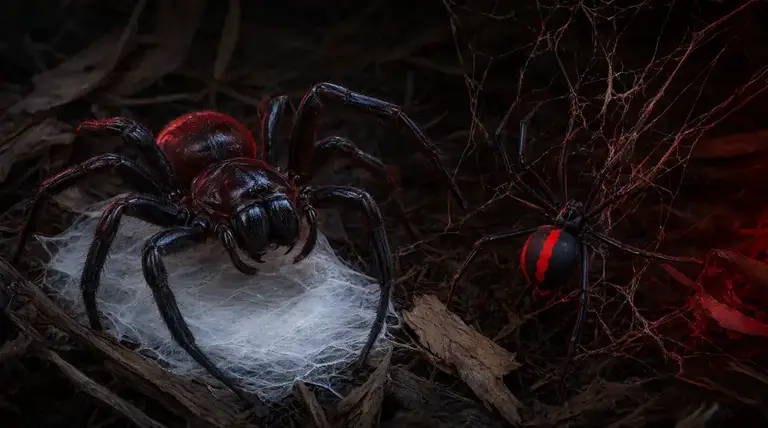
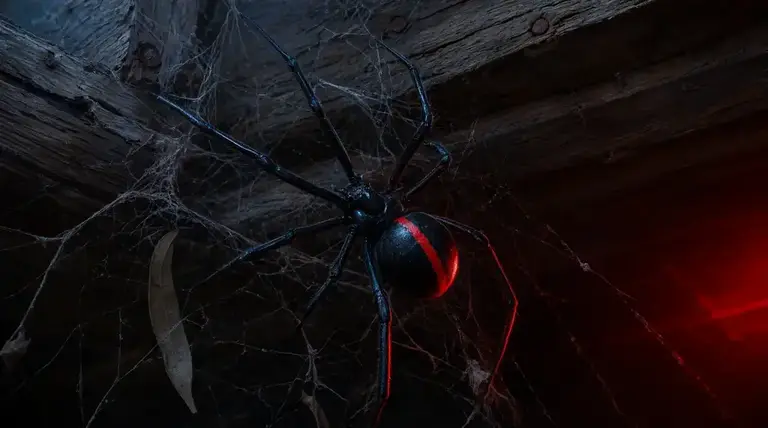
- Female spider — glossy black body around 10 mm, with a red or orange stripe or hourglass on top of the abdomen and often a red patch underneath. Only the female is dangerous to humans.
- Male spider — much smaller (3–4 mm), light brown, and rarely capable of a significant bite. Often found near the female’s web.
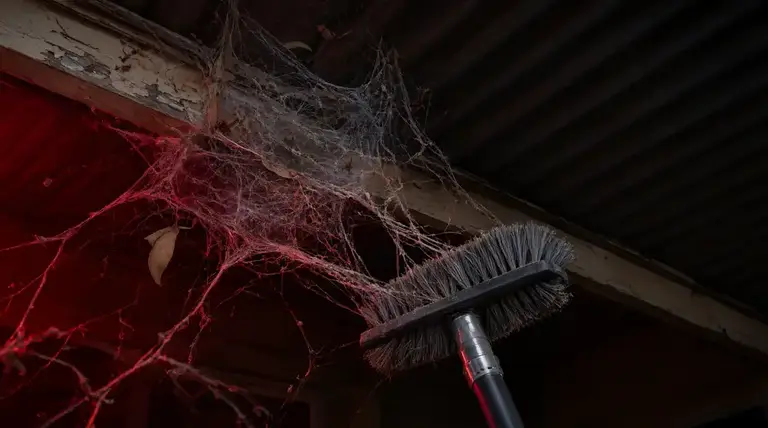
- Web type — a messy, tangled, irregular web with sticky trap-lines running to the ground, quite unlike the neat orb webs of garden spiders or the flat sheet webs of a huntsman (which barely uses a web at all).
- Location — dry, undisturbed, human-made shelters: letterboxes, meter boxes, under outdoor furniture and pot rims, garden sheds, beneath BBQs, inside children’s toys left outside, and under outdoor seating.
- Egg sacs — round, cream-coloured silken sacs suspended in the web, each potentially holding around 250 eggs.
- Night-time activity — redbacks sit in their webs after dark; spotting one with a torch at night is often easier than during the day.
Don’t confuse redbacks with other commonly misidentified species — for example, bites blamed on white-tails are a frequent source of confusion. Our article on White-Tail Spider Bites: Separating Fact from Myth clears up the differences.
Redback Bites: Symptoms and First Aid
A redback bite typically causes intense, increasing pain around the bite site, often with sweating, nausea and localised swelling that develops over hours — symptoms usually worsen gradually rather than suddenly. Bites are rarely fatal, but they are medically significant and should never be ignored.
First aid for a redback bite differs from snake and funnel-web bites in one critical way: do not apply a pressure-immobilisation bandage, as it can intensify the pain. Instead, apply a cold pack or ice wrapped in cloth, keep the person calm and still, and seek medical advice. Antivenom is available if symptoms are severe. Children and the elderly should always be assessed by a doctor, even when symptoms appear mild at first.
DIY vs Professional Redback Spider Control
A single redback in an accessible spot can often be dealt with carefully by a confident homeowner, but an established population — multiple webs, egg sacs, or recurring activity — needs professional pest control to break the breeding cycle. Here’s an honest comparison:
| Factor | DIY approach | Professional treatment |
|---|---|---|
| Best for | One isolated spider in an open, reachable spot | Multiple webs, egg sacs, or recurring activity |
| Method | Long-handled tool or suitable surface spray from a distance; never handle by hand | Targeted treatment of harbourage points, webs and egg sacs by a licensed technician |
| Reach | Limited to visible, accessible spiders | Subfloor voids, roof spaces, sheds, fence lines and hidden harbourage |
| Safety | Bite risk if webs are disturbed carelessly | APVMA-approved products applied by licensed technicians |
| Longevity | Temporary — egg sacs hatch and spiders return | Residual protection plus prevention advice |
Alongside any treatment, prevention pays off: declutter sheds, garages and outdoor storage; wear gloves when reaching into letterboxes, meter boxes and under furniture; store toys and shoes indoors; and shake out anything left outside. For a full breakdown of what’s involved, see our Spider Control & Removal service page.
Redback Spider Treatment Costs in Australia (2025–26)
Across the Australian pest control industry, professional redback spider treatment generally costs between $150 and $450 AUD for a standard residential property in 2025–26, depending on property size, construction type and the extent of the infestation. The figures below are typical Australian market rates — what the industry generally charges — not a quote from any one provider. Every property is quoted individually after inspection.
| Service | Typical market rate (AUD) | What’s included/notes |
|---|---|---|
| General spider treatment (unit/townhouse) | $150–$250 | External perimeter, webs, harbourage points, letterbox, garage |
| General spider treatment (3–4 bed house) | $220–$350 | Full external and internal treatment, sheds, fence lines, eaves |
| Subfloor or roof void dusting | $80–$150 (add-on) | Common add-on for Queenslanders and older homes with voids |
| Severe infestation / large rural property | $350–$550+ | Multiple structures, heavy harbourage, follow-up visit included |
| Annual pest control plan | $300–$600/yr | Scheduled treatments covering spiders and general pests |
These are the going rates across the Australian market — and Aussie Pest Strike typically comes in well under them. For an exact quote tailored to your property, give us a call on [aps_phone].
Seasonal Redback Activity in Australia
Redback activity peaks in summer (December to February) when females are breeding and populations surge, then tapers through autumn and winter — though in warm northern regions they remain active nearly all year. The chart below shows typical relative activity across the months.
Jan
Feb
Mar
Apr
May
Jun
Jul
Aug
Sep
Oct
Nov
Dec
Typical redback activity across Australia: peak breeding and encounters occur December–February, with a secondary build from September as temperatures rise. Northern regions see elevated year-round activity.
The practical takeaway: late winter and early spring (August–October) is the smartest time to book treatment. Knocking populations back before the summer breeding surge means fewer females, fewer egg sacs, and far fewer encounters around your outdoor areas through the peak season.
Nine times out of ten, the worst redback problems we see are in spots the homeowner never checks — under the BBQ hotplate, inside the meter box, beneath the kids’ trampoline frame. Treat the webs you can see and you’ve done half the job; treat the harbourage you can’t see and the problem stays gone. That’s the difference a proper inspection makes.
If you’re finding redback webs in more than one or two spots, spotting egg sacs, or dealing with spiders that keep returning, book a professional treatment before summer. A licensed technician will treat harbourage points, webs and egg sacs directly, and advise on proofing your home — a far safer and more lasting result than repeated DIY spraying.
Frequently Asked Questions
How do I identify a female redback spider?
The female redback has a glossy black, pea-sized body of around 10 mm, with a red or orange stripe or hourglass mark on top of the abdomen and often a red patch underneath. Only the female is dangerous to humans. Males are much smaller at 3–4 mm, light brown, and rarely capable of a significant bite. Look for her messy, tangled web in dry, sheltered spots such as sheds, letterboxes and under outdoor furniture.
What does a redback spider web look like?
A redback web is messy, tangled and irregular, with sticky trap-lines running down to the ground. This is quite different from the neat orb webs of garden spiders or the flat sheet webs sometimes associated with huntsmans, which barely use a web at all. Round, cream-coloured egg sacs suspended in the web are another strong clue, as each can hold around 250 eggs.
Where are redback spiders most commonly found around a home?
Redbacks favour dry, undisturbed, human-made shelters: letterboxes, meter boxes, garden sheds, under BBQs, beneath outdoor furniture and pot rims, inside children's toys left outside, and under outdoor seating. Homes on concrete slabs offer weep holes and meter boxes, while raised Queenslanders provide shaded subfloor areas, stored timber and under-house laundry spots that are prime redback territory.
What should I do if I am bitten by a redback spider?
Do not apply a pressure-immobilisation bandage, as it can intensify the pain — this differs from snake and funnel-web bite first aid. A bite typically causes intense, increasing pain with sweating, nausea and localised swelling over hours. Children and the elderly should always be assessed by a doctor, even if symptoms seem mild.
Are redback spider bites fatal?
Deaths from redback bites are extremely rare, but bites are medically significant and should never be ignored. Antivenom has been available since 1956 and is used if symptoms are severe. The practical next step is to note the signs, inspect the relevant area carefully, and seek property-specific advice if the issue continues.
Can I remove a redback spider myself?
A single redback in an open, reachable spot can often be dealt with by a confident homeowner using a long-handled tool or a suitable surface spray from a distance. Never handle one by hand, as disturbing webs carelessly carries a bite risk. If you find multiple webs, egg sacs or recurring activity, professional treatment is needed to break the breeding cycle.
When is redback activity highest in Australia?
Redback activity peaks in summer from December to February, when females are breeding and populations surge, then tapers through autumn and winter. In warm northern regions they remain active nearly all year. Late winter and early spring, from August to October, is considered the smartest time to book treatment, because knocking populations back before the breeding surge means fewer females and fewer egg sacs through peak season.
How can I prevent redbacks around my property?
Declutter sheds, garages and outdoor storage to remove harbourage points. Wear gloves when reaching into letterboxes, meter boxes and under furniture, store toys and shoes indoors, and shake out anything left outside before use. Redbacks often hide in spots homeowners never check, such as under the BBQ hotplate, inside the meter box or beneath trampoline frames, so regular checks of these areas help.
How can Aussie Pest Strike help with Redback Spider: Identification, Bites and Safe Removal?
Yes. Redback problems are often concentrated in hidden harbourage points the homeowner never checks, such as under the BBQ hotplate, inside the meter box or beneath the kids' trampoline frame. Treating only the webs you can see addresses half the job. An inspection tailored to your property identifies those concealed harbourage points, any egg sacs, and the extent of activity, so treatment targets the source rather than just visible spiders.
What is the practical next step if I keep finding redback webs and egg sacs?
If you are finding webs in more than one or two spots or spotting cream-coloured egg sacs, an established population is likely building, and each sac can hold around 250 eggs. The practical next step is arranging a licensed professional spider treatment targeting harbourage points, webs and egg sacs. Aussie Pest Strike can assess your property and recommend targeted treatment, ideally booked in late winter or early spring before the summer breeding surge.
Sources & further reading
Found Something
Dangerous?
Don’t touch it. Don’t spray it. Keep kids and pets clear, take a photo from a safe distance, and call us — or book a free inspection and we’ll come to you.
02 7235 0050