Why SpidersMove Indoors WhenIt Rains
Spiders move indoors when it rains because heavy downpours flood burrows, destroy webs and wash away the insects they feed on, pushing them to find dry...
Spiders move indoors when it rains because heavy downpours flood their burrows, destroy their webs and wash away the insects they feed on, forcing them to seek dry shelter — very often inside your home. Across Australia, wet weather is the single biggest trigger for sudden spider sightings, particularly during summer storm season along the east coast.
If you have ever walked into the laundry after a thunderstorm and found a huntsman the size of your hand on the wall, you already know how quickly things change once the rain sets in. This guide explains exactly why spiders come inside when it rains, which species to watch for, what it costs to treat the problem, and when it is time to call in a licensed pest control professional.
- Rain floods burrows and webs, and displaces insect prey, pushing spiders indoors for dry shelter and food.
- Huntsmen are the most common post-rain visitors; funnel-webs and redbacks are the medically significant ones to watch.
- Sealing gaps, clearing debris and reducing outdoor lighting before storm season prevents most intrusions.
- Professional spider treatments in Australia typically range from about $180 to $450 depending on property size and species risk.
- Repeated sightings, egg sacs, or funnel-webs and redbacks near living areas warrant a licensed technician.
Why Spiders Move Indoors When It Rains in Australian Homes
Spiders move indoors when it rains because their outdoor shelters fail and their food supply disappears, while Australian homes offer dry air, stable temperatures and plentiful entry points. Most local species live in burrows, under bark, in leaf litter or in webs strung through gardens and around eaves — all of which flood, collapse or wash out in sustained rain.
Ground-dwelling species such as trapdoor and funnel-web spiders are literally flushed from their retreats. Web-builders lose both their hunting grounds and their prey, because flying insects vanish in wet conditions. Your home then becomes the obvious refuge: gaps under doors, weep holes in brick veneer, cracked window seals and open garage doors all turn into easy entry points during a downpour.
Housing style matters too. Older homes on stumps with open subfloors — including classic Queenslanders — give spiders sheltered voids to colonise, while slab-on-ground homes still admit them through weep holes and garage gaps. Along the humid east coast, summer storm season coincides with peak spider breeding and dispersal, which is why sightings spike so sharply between November and March.
Warning Signs Spiders Have Moved In After Rain
The clearest warning sign is a sudden increase in spider sightings in the days following heavy rain, particularly at night. Beyond that, watch for these indicators around your home:
- Frequent sightings on walls and ceilings — especially large huntsmen appearing in living areas, bathrooms and laundries after storms.
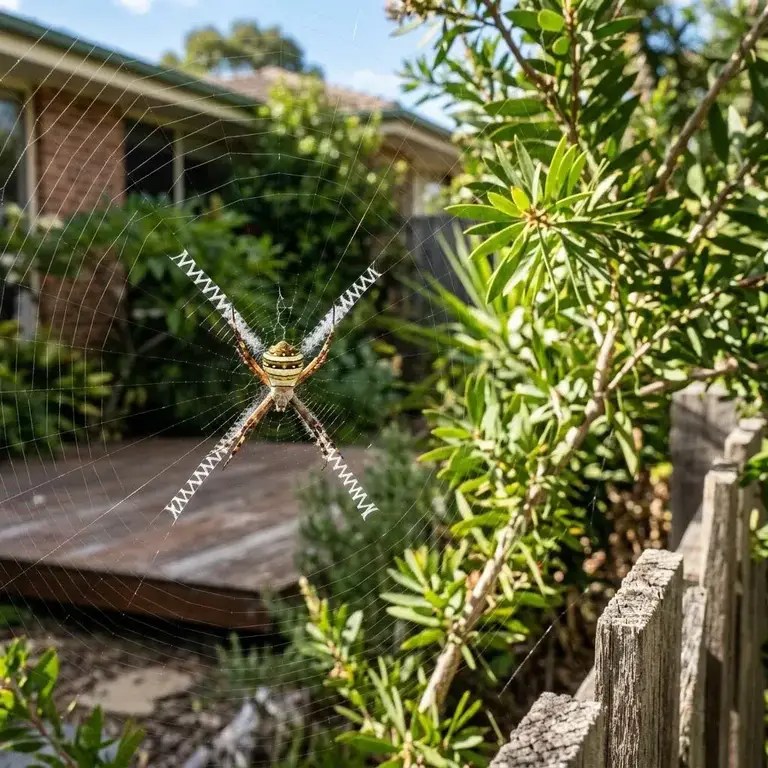
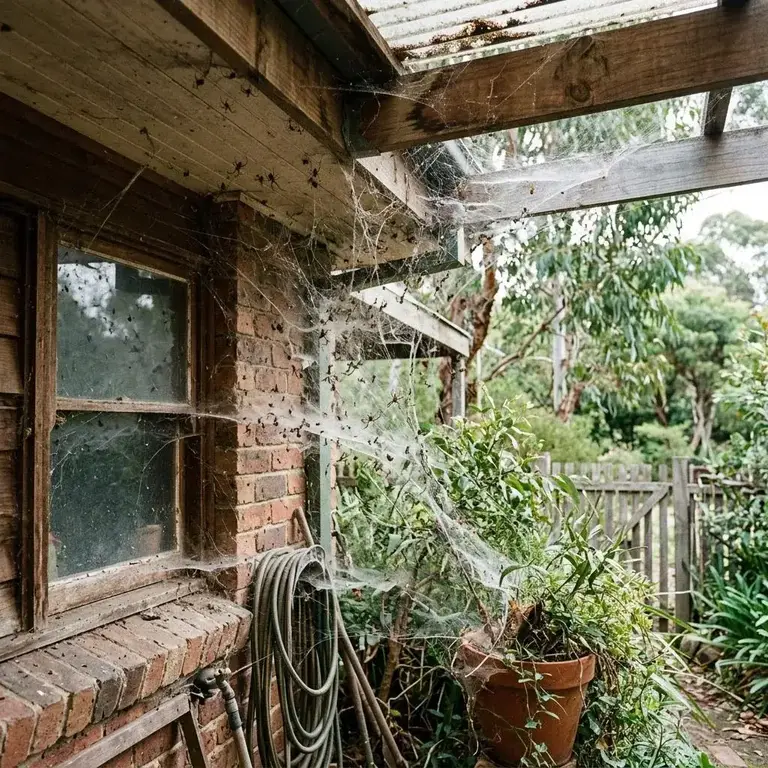
- New webs in window corners and eaves — messy, funnel-shaped webs from black house spiders, or fresh orb webs appearing overnight.
- Egg sacs — silken balls tucked into web corners, behind furniture or in garage clutter, each potentially holding dozens of spiderlings.
- Spiders in shoes, gloves and washing piles — a classic wet-weather behaviour, and a genuine danger with funnel-webs in NSW and south-east Queensland.
- Burrows or silk-lined holes near the house — in garden beds, retaining walls and lawn edges, which can indicate ground-dwelling species close to entry points.
- Increased insect activity indoors — where prey goes, spiders follow.
Which Spiders Come Indoors in Wet Weather?
Huntsmen are by far the most common post-rain visitors, but funnel-webs, redbacks and white-tails also move inside when conditions turn wet. Knowing which is which determines how urgently you should act.
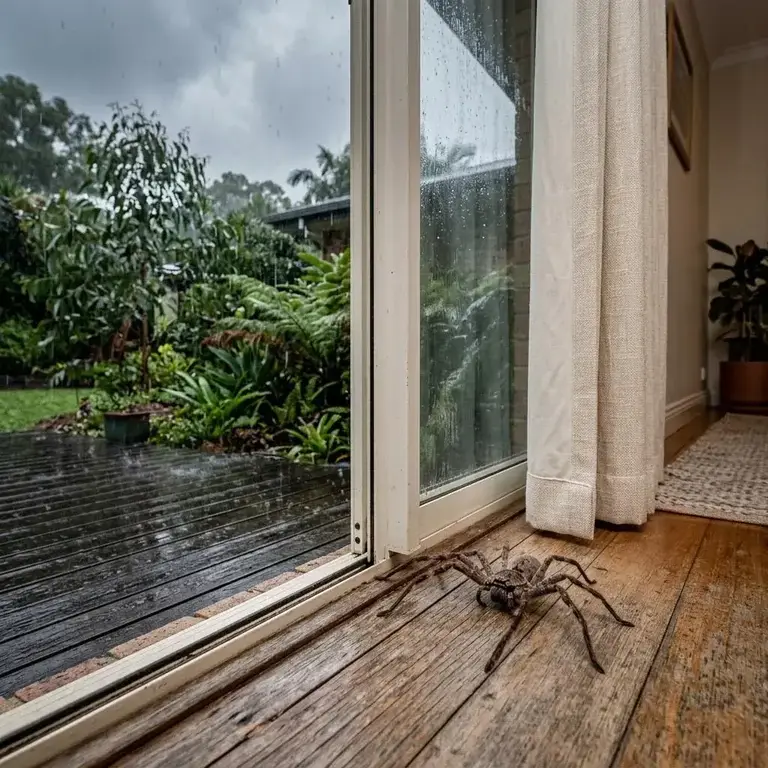
Huntsman spiders are large, fast and harmless to humans. They normally live under bark and squeeze through remarkably narrow gaps to escape the wet. Despite their alarming size, they are timid and genuinely useful, feeding on cockroaches and other insects. Our guide on Huntsman Spiders: Dangerous or Harmless Housemates? covers them in detail.
Funnel-web spiders are a different matter. In New South Wales and south-east Queensland, male Sydney funnel-webs wander in search of mates during humid summer months, and rain frequently drives them into garages, laundries, shoes and piles of washing. Their venom is potentially lethal, so any suspected funnel-web must be treated with extreme caution and never handled. See our page on Funnel-Web Spider: Identification, Danger and Control if you are in a known funnel-web area.
Redback and white-tailed spiders also shift when it rains. Redbacks favour dry, sheltered spots such as sheds, meter boxes and outdoor furniture, and move closer to the house when those haunts get waterlogged — read more about Redback Spider: Identification, Bites and Safe Removal. White-tails are nomadic night hunters, and wet weather increases encounters, particularly in bedrooms and bathrooms.
DIY Prevention vs Professional Spider Treatment
Most post-rain spider problems can be reduced significantly with DIY prevention, but established infestations, egg sacs or dangerous species need professional pest control. Here is how the two approaches compare:
| Factor | DIY approach | Professional treatment |
|---|---|---|
| Best for | Occasional huntsmen, prevention before storm season | Repeat infestations, egg sacs, funnel-webs and redbacks |
| Typical cost | $20–$80 (sealants, mesh, surface sprays) | $180–$450 per treatment |
| Effectiveness | Good for exclusion; limited residual control | Residual barriers around entry points and harbourages |
| Species identification | Guesswork; risk of misidentifying dangerous species | Trained identification and targeted treatment |
| Safety | Risk of bites when disturbing webs or handling spiders | Licensed technicians using APVMA-registered products |
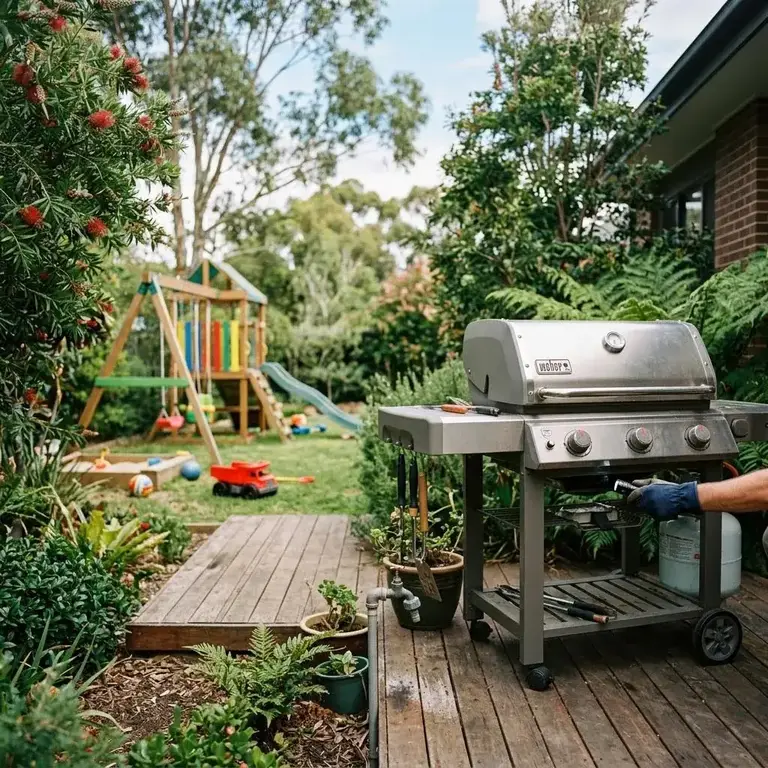
Sensible DIY steps include sealing gaps with weather stripping and door sweeps, repairing flyscreens, meshing weep holes, clearing leaf litter and woodpiles from the perimeter, switching to yellow outdoor globes, and shaking out shoes and clothing during wet spells. Any chemical treatment beyond basic surface sprays is best left to a licensed technician.
How Much Does Spider Control Cost in Australia?
Across the Australian pest control industry in 2025–26, the typical market rate for professional spider treatment sits between $180 and $450, depending on property size, construction type and the species involved. Larger homes, subfloor access and treatments targeting funnel-webs or redbacks generally command the higher end of the market.
| Service | Typical market rate (AUD) | What’s included/notes |
|---|---|---|
| General spider spray (standard home) | $180–$280 | Internal/external residual treatment, eaves, webs removed |
| Large home or acreage treatment | $280–$450 | Extended perimeter, sheds, fences, subfloor where accessible |
| Funnel-web or redback targeted treatment | $250–$450 | Harbourage treatment, burrow dusting, entry-point barriers |
| Inspection and identification | Often free–$120 | Species ID, entry-point and risk assessment, treatment quote |
These figures reflect what the industry generally charges across Australia. Our Spider Control & Removal service includes a full property assessment, targeted treatment and practical advice on keeping spiders out long term.
Here’s the good news: Aussie Pest Strike typically comes in well under these market rates. For an exact quote tailored to your property, give us a call on [aps_phone] today.
Seasonal Spider Activity in Australia
Spider activity indoors peaks through the warmer, wetter months from late spring to early autumn, when storms, humidity and breeding dispersal combine. Activity drops through winter in southern states but remains moderate year-round in Queensland and the tropical north.
Jan
Feb
Mar
Apr
May
Jun
Jul
Aug
Sep
Oct
Nov
Dec
Typical indoor spider activity across southern and eastern Australia. Peaks align with summer storms and humid breeding months (Nov–Mar); winter dips are less pronounced in Queensland and the tropics.
After every big storm front, our call-outs for spiders jump within 48 hours — it is that predictable. The homes that stay spider-free are the ones that sealed their entry points before the season started and had a residual barrier in place. Prevention really is nine-tenths of the job.
Before storm season, seal doors, windows and weep holes, clear debris from the perimeter and tidy garages and sheds. If you are seeing spiders every time it rains, finding egg sacs, or you suspect funnel-webs or redbacks near living areas, book a professional inspection — licensed technicians use APVMA-registered products and can identify species safely. In NSW, check that your technician holds an EPA-issued pest management licence.
Frequently Asked Questions
Why do spiders come inside when it rains?
Heavy rain floods the burrows of ground-dwelling species, collapses or washes away webs, and displaces the insects spiders feed on. With their outdoor shelters and food supply gone, spiders seek dry shelter with stable temperatures — and Australian homes offer plenty of entry points such as gaps under doors, weep holes in brick veneer, cracked window seals and open garages.
Which spider species are most likely to enter homes after rain?
Huntsmen are by far the most common post-rain visitors, squeezing through narrow gaps from under bark. Funnel-webs are driven into garages, laundries, shoes and washing piles in NSW and south-east Queensland. Redbacks move closer to the house when sheds, meter boxes and outdoor furniture get waterlogged, while white-tails become more active indoors at night.
Are huntsman spiders dangerous when they come indoors?
No. Despite their large size and speed, huntsman spiders are timid and harmless to humans. They normally live under bark and only move inside to escape wet conditions. They are actually useful to have around because they feed on cockroaches and other insects, so most indoor huntsmen can simply be relocated outside rather than treated as a threat.
What warning signs show spiders have moved in after rain?
The clearest sign is a sudden increase in sightings in the days after heavy rain, especially at night. Also watch for new webs in window corners and eaves, silken egg sacs behind furniture or in garage clutter, spiders hiding in shoes, gloves and washing piles, silk-lined burrows near garden beds or retaining walls, and increased insect activity indoors.
Why are funnel-web spiders a serious concern during wet weather?
In New South Wales and south-east Queensland, male funnel-webs wander in search of mates during humid summer months, and rain frequently drives them into garages, laundries, shoes and piles of washing. Their venom is potentially lethal, so any suspected funnel-web must be treated with extreme caution and never handled. Professional identification and treatment are strongly recommended in known funnel-web areas.
What DIY steps can stop spiders entering my home before storm season?
Seal gaps with weather stripping and door sweeps, repair flyscreens, mesh weep holes, clear leaf litter and woodpiles from the perimeter, switch to yellow outdoor globes, and shake out shoes and clothing during wet spells. These exclusion measures work well for occasional huntsmen and general prevention, but any chemical treatment beyond basic surface sprays should be left to a licensed technician.
When should I call a licensed pest control professional for spiders?
Call a professional if you are seeing spiders every time it rains, finding egg sacs, dealing with repeat infestations, or suspecting funnel-webs or redbacks near living areas. Licensed technicians can identify species safely, apply residual barriers around entry points and harbourages using APVMA-registered products, and treat burrows and subfloor areas that DIY methods cannot reach effectively.
When is spider activity indoors highest in Australia?
Indoor spider activity peaks through the warmer, wetter months from late spring to early autumn, roughly November to March, when summer storms, humidity and breeding dispersal combine along the east coast. Activity drops through winter in southern states but remains moderate year-round in Queensland and the tropical north, where conditions stay humid.
What does an Aussie Pest Strike inspection for post-rain spiders involve?
An Aussie Pest Strike inspection starts with a full property assessment covering entry points, harbourages and the species involved. The technician identifies which spiders are present, checks risk areas such as subfloors, eaves, garages and garden beds close to the house, then provides targeted treatment and practical advice on sealing gaps and keeping spiders out long term.
How can Aussie Pest Strike help me prepare my home before storm season?
Aussie Pest Strike can assess your home's vulnerable entry points before the wet season begins, when prevention matters most. After identifying likely access routes such as door gaps, weep holes and garage openings, technicians can establish residual barriers around entry points and harbourages, and advise on clearing debris and reducing outdoor lighting so spiders have fewer reasons to move indoors.
Sources & further reading
Found Something
Dangerous?
Don’t touch it. Don’t spray it. Keep kids and pets clear, take a photo from a safe distance, and call us — or book a free inspection and we’ll come to you.
02 7235 0050