Spider Infestation: Whena FewBecomes a Problem
A spider infestation occurs when spiders shift from occasional visitors to a breeding population in and around your home. In Australia, the warning signs...
A spider infestation occurs when spiders shift from occasional visitors to a breeding population living, feeding and reproducing in and around your home. In Australia, the warning signs include frequent sightings, webs rebuilding within days, egg sacs tucked into corners and eaves, and a plentiful supply of insect prey. While most species are harmless, redbacks and funnel-webs make a growing spider problem worth treating quickly — and knowing when a few spiders have tipped into a genuine infestation is the first step.
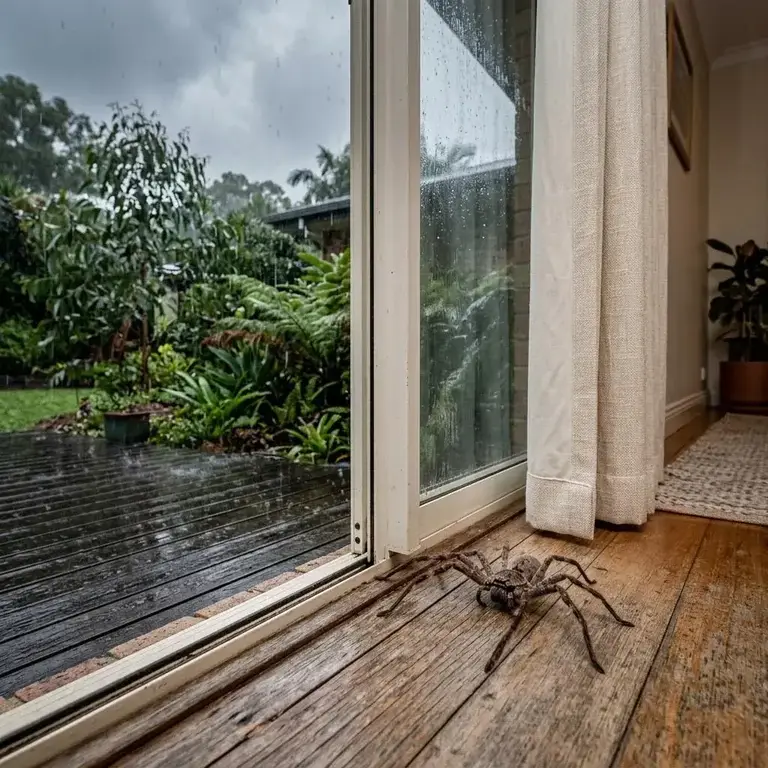
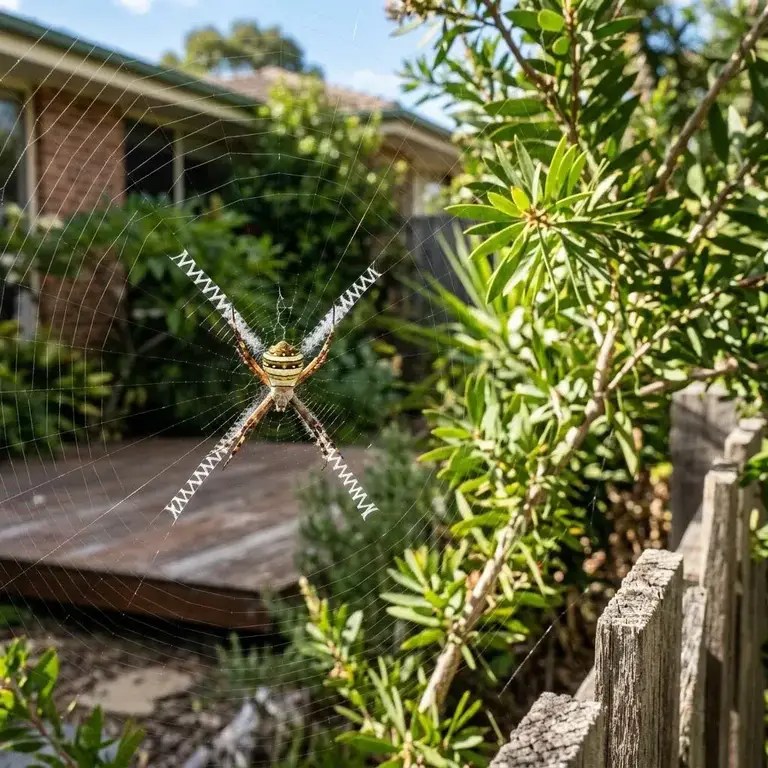
One huntsman on the ceiling is usually just passing through. Dozens of web-building spiders around your windows, fences and shed is something else entirely. This guide walks you through how to tell the difference, why spider numbers boom in Australian conditions, what you can do yourself, and when it’s time to call in licensed pest control professionals.
- A spider infestation means an established, breeding population — not just the odd wandering huntsman.
- Key warning signs: webs reappearing within days, pea-sized egg sacs, daily sightings and abundant insect prey.
- Redbacks and funnel-webs raise the stakes — repeated finds near play areas or garden gear warrant fast action.
- DIY efforts reduce numbers but rarely reach egg sacs or roof-void harbourages, so populations rebound.
- Professional spider treatments typically cost $180–$450 (AUD) and provide residual protection through the warmer months.
Why Spider Infestations Matter in Australian Homes
Australia’s climate and housing styles give spiders everything they need to thrive, which is why a small problem can become a big one in a single season. Warm, humid summers across Queensland, New South Wales and northern Western Australia accelerate breeding cycles, while mild winters in the north keep populations active almost year-round. Even in cooler southern states, spiders shelter through winter in roof voids and wall cavities, ready to surge in spring.
Housing design plays a role too. Queenslanders on stumps offer shaded, sheltered subfloor spaces that redbacks love. Brick veneer homes have weep holes and wall cavities that funnel-webs and black house spiders exploit. Slab-on-ground construction still leaves eaves, downpipes, garages and garden beds as prime harbourage. Add exterior lights drawing moths, dense shrubs against walls and cluttered sheds, and you have ideal conditions for spiders to settle in and multiply. That’s why professional Spider Control & Removal focuses as much on harbourage and entry points as on the spiders themselves.
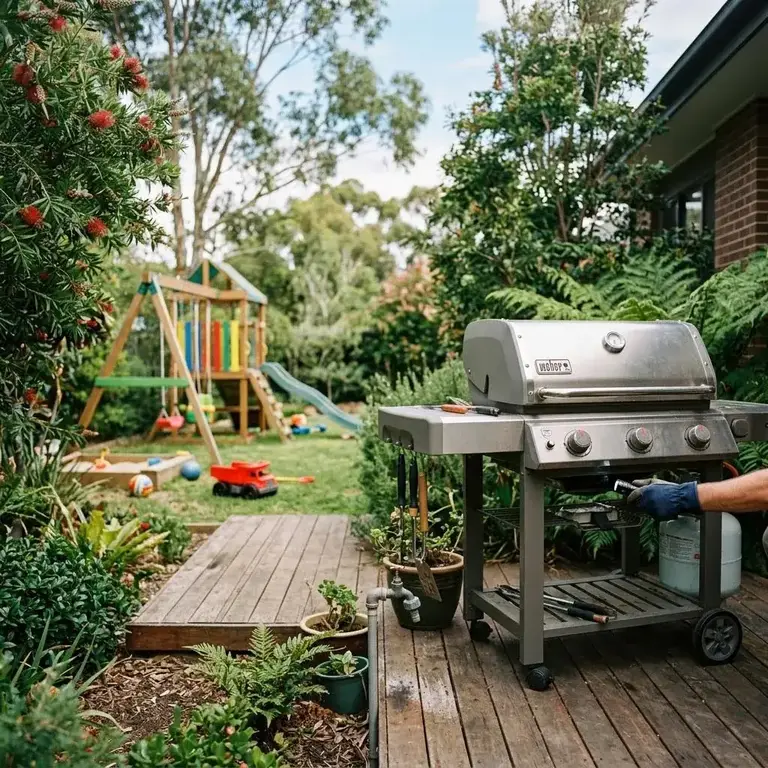
Most Australian spiders are harmless, but the exceptions matter. Our guides on Funnel-Web Spider: Identification, Danger and Control and Redback Spider: Identification, Bites and Safe Removal cover these species in detail. Even the big, startling ones often turn out to be benign — see Huntsman Spiders: Dangerous or Harmless Housemates? for reassurance. A p-level problem with harmless species is very different from a p-level problem with redbacks around the kids’ sandpit.
Warning Signs: When a Few Spiders Become a Problem
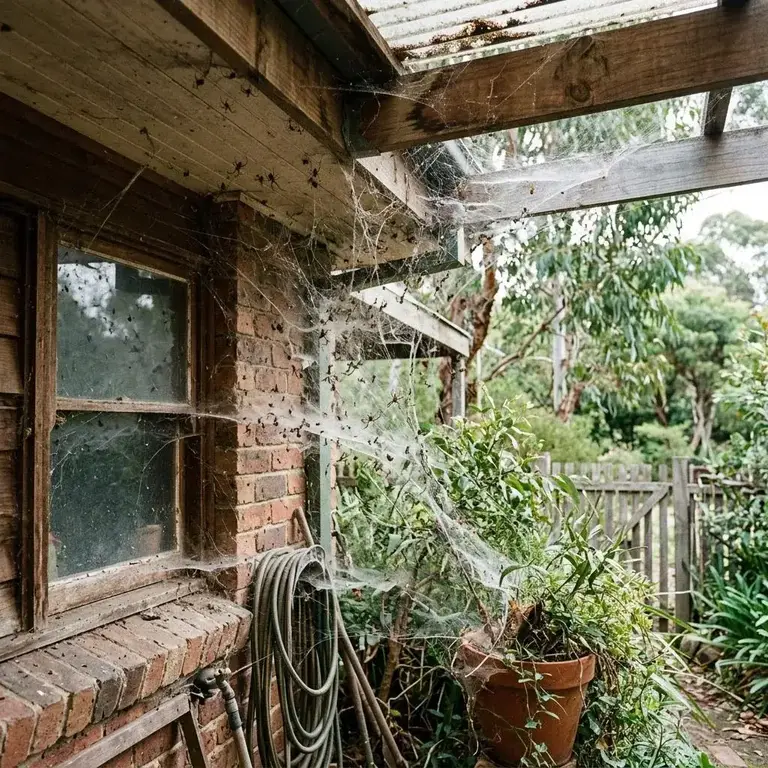
An established spider infestation announces itself through recurring webs, egg sacs, daily sightings and a reliable food supply. Not sure whether you’re dealing with casual visitors or a breeding population? These are the signs our technicians look for:
- Recurring webs: fresh webs reappear within days of being brushed away, especially under eaves and around window frames.
- Egg sacs: silken, pea-sized sacs tucked into corners, behind furniture or in shed rafters, each holding dozens of spiderlings.
- Daily sightings: spiders spotted indoors most days, or several at once along fences and retaining walls at night.
- Plentiful prey: moths, flies and mosquitoes gathering around lights and windows give spiders a reliable food supply.
- Dangerous species: repeated redback or funnel-web finds near play equipment, woodpiles or garden gloves.
If you’re ticking two or more of these boxes, the p has shifted from “a few spiders” to an infestation. Removing individual spiders won’t fix it, because new spiders keep moving in to replace them while the underlying conditions stay the same.
DIY vs Professional Spider Treatment: Which Approach Works?
DIY housekeeping reduces spider numbers and supports any professional treatment, but supermarket sprays rarely reach egg sacs or spiders hiding in roof voids and wall cavities, so populations rebound within weeks. A licensed technician applies APVMA-registered residual treatments to eaves, fences and entry points, creating a barrier that typically lasts for months. Here’s how the two approaches compare:
| Factor | DIY approach | Professional pest control |
|---|---|---|
| Reach | Kills visible spiders only; misses egg sacs and voids | Treats eaves, fences, roof voids, entry points and harbourages |
| Duration | Days to weeks before numbers rebound | Residual barrier typically lasts through the warmer months |
| Species identification | Guesswork; risky with redbacks and funnel-webs | Licensed technician identifies species and targets treatment |
| Safety | Handling dangerous species yourself carries bite risk | APVMA-registered products applied by licensed professionals |
| Cost | $20–$80 in sprays and gear, repeated often | $180–$450 for a standard residential treatment |
The sensible middle ground: do the housekeeping yourself. Brush down webs and egg sacs weekly, vacuum along skirting boards and window tracks, seal gaps around doors and pipes, fit weather seals and flyscreens, switch to warm-toned or sensor outdoor lights, trim vegetation back from walls and lift stored items off garage floors. Then bring in professionals to break the breeding cycle where DIY can’t reach.
Spider Treatment Costs in Australia (2025–26)
Across the Australian pest control industry, professional spider treatment for a standard home generally sits between $180 and $450, depending on property size, construction type and the species involved. These are typical market rates — what operators around the country commonly charge — and they vary between states and between urban and regional areas. The ranges below reflect general industry figures for 2025–26:
| Service | Typical market rate (AUD) | What’s included / notes |
|---|---|---|
| Inspection and quote | Free – $120 | Species identification, harbourage assessment; many providers across the industry offer free inspections |
| Standard exterior spider treatment | $180 – $300 | Residual spray to eaves, fences, windows, entry points; web removal |
| Full internal + external treatment | $280 – $450 | Adds roof void and subfloor dusting, skirting and garage treatment |
| Targeted redback/funnel-web treatment | $250 – $500 | Focused harbourage treatment around woodpiles, garden beds, retaining walls |
| Annual pest control plan | $350 – $700/yr | Scheduled treatments covering spiders and general pests across seasons |
Licensing rules for pest controllers vary by state, so always ask to see credentials before work begins. No reputable operator will claim a chemical treatment is 100% safe or guaranteed — instead, look for APVMA-registered products applied according to label directions by a licensed technician.
It’s worth noting that the figures above are broad industry averages, and Aussie Pest Strike typically comes in well under these market rates for equivalent work. For an exact quote tailored to your property, give us a call on [aps_phone].
Seasonal Spider Activity Across Australia
Spider activity climbs through spring, peaks over summer when egg sacs hatch and spiderlings disperse, and stays elevated into autumn as males wander in search of mates. In late summer and autumn, male funnel-webs and huntsmen commonly turn up indoors after heavy rain. Mild winters in Queensland and northern Western Australia keep populations active almost year-round, while southern states see a clear winter lull.
Jan
Feb
Mar
Apr
May
Jun
Jul
Aug
Sep
Oct
Nov
Dec
Typical spider activity pattern across temperate Australia: activity builds from September, peaks through summer and into March (when mating males wander and rain flushes spiders indoors), then eases through winter. Northern regions see higher year-round activity with a less pronounced winter dip.
The practical takeaway: late winter and early spring are the smartest times to book treatment. A residual barrier applied before the breeding surge stops populations establishing, rather than playing catch-up once egg sacs are hatching.
“Most people call us when they’re already seeing spiders every day — by then there’s usually an established population in the roof void or subfloor. The jobs that go best are the ones treated in early spring, before the egg sacs hatch. Cut the food supply, seal the entry points and treat the harbourages, and the problem rarely comes back.”
If you’re finding redbacks or funnel-webs, seeing spiders daily, or managing a property with a duty of care, don’t wait. Start with the housekeeping steps above, then book a licensed technician for a residual treatment of eaves, fences, roof voids and entry points. Treating in late winter or early spring delivers the best long-term results.
Frequently Asked Questions
What counts as a spider infestation rather than just a few spiders?
A spider infestation means an established, breeding population living, feeding and reproducing in and around your home — not the odd wandering huntsman. Warning signs include fresh webs reappearing within days of being brushed away, pea-sized egg sacs tucked into corners or shed rafters, spiders spotted indoors most days, plentiful insect prey around lights, and repeated finds of dangerous species such as redbacks near play areas.
What are the main warning signs that a few spiders have become a problem?
Technicians look for recurring webs under eaves and window frames that rebuild within days, silken pea-sized egg sacs holding dozens of spiderlings, daily indoor sightings or several spiders along fences at night, a reliable food supply of moths, flies and mosquitoes, and repeated redback or funnel-web finds near play equipment, woodpiles or garden gloves. Ticking two or more of these boxes suggests an established population.
Why do spider numbers boom so quickly in Australian homes?
Warm, humid summers across Queensland, New South Wales and northern Western Australia accelerate breeding cycles, while mild northern winters keep populations active almost year-round. Housing design adds harbourage: Queenslanders on stumps offer shaded subfloor spaces redbacks love, brick veneer homes have weep holes and wall cavities, and slab homes still have eaves, garages and garden beds. Exterior lights draw insect prey, dense shrubs and cluttered sheds complete the picture.
Which Australian spiders make a growing problem urgent to treat?
Most Australian spiders are harmless, but redbacks and funnel-webs raise the stakes considerably. Repeated finds of either species near play equipment, sandpits, woodpiles or garden gear warrant fast action. Even startling large spiders like huntsmen are usually benign and often just passing through, whereas dozens of web-building spiders around windows, fences and sheds signals something more serious needing attention.
Why does DIY spider treatment often fail to stop the problem?
Supermarket sprays kill visible spiders only and rarely reach egg sacs or spiders hiding in roof voids, wall cavities and subfloors, so populations rebound within weeks. Handling dangerous species yourself also carries bite risk, and species identification is guesswork without training. DIY housekeeping still helps by reducing numbers, but it cannot break the breeding cycle in hidden harbourages where new spiders keep emerging.
What can I do myself to reduce spider numbers around my home?
Brush down webs and egg sacs weekly, vacuum along skirting boards and window tracks, seal gaps around doors and pipes, fit weather seals and flyscreens, switch to warm-toned or sensor outdoor lights, trim vegetation back from walls, and lift stored items off garage floors. These steps cut food supply and shelter, supporting any professional treatment, though they rarely reach hidden egg sacs on their own.
When is the best time of year to book a spider treatment?
Late winter and early spring are the smartest times to book treatment. Spider activity builds from September, peaks over summer when egg sacs hatch and spiderlings disperse, and stays elevated into autumn as males wander for mates. A residual barrier applied before the breeding surge stops populations establishing, rather than playing catch-up once egg sacs are already hatching around the home.
How long does a professional residual spider treatment last?
A licensed technician applies APVMA-registered residual treatments to eaves, fences, entry points and harbourages, creating a barrier that typically lasts through the warmer months. Treatments may cover exterior surfaces only, or add roof void and subfloor dusting plus internal skirting treatment depending on the service chosen. No reputable operator claims a chemical treatment is completely safe or guaranteed, so ask about products and credentials before work begins.
I have tried the prevention steps in this article but spiders keep returning — how do I arrange practical help?
If webs keep rebuilding despite weekly brushing, vacuuming and sealing gaps, it is time to bring in a licensed technician to break the breeding cycle where DIY cannot reach. Aussie Pest Strike can assess your property, identify the species involved and treat eaves, fences, roof voids and entry points with APVMA-registered residual products. Contact us to arrange an inspection and a quote tailored to your home's construction and the severity of the problem.
What should I do first if I find redbacks or funnel-webs near my play area or garden gear?
Do not wait or attempt to handle these species yourself, as bite risk is real. Start with sensible housekeeping such as moving stored items off garage floors and clearing clutter near woodpiles, then contact Aussie Pest Strike about a targeted harbourage treatment focused on woodpiles, garden beds and retaining walls. A licensed technician will identify the species correctly and apply registered products according to label directions to reduce the danger around your family areas.
Sources & further reading
Found Something
Dangerous?
Don’t touch it. Don’t spray it. Keep kids and pets clear, take a photo from a safe distance, and call us — or book a free inspection and we’ll come to you.
02 7235 0050