Silverfish vsFirebrats: TellingThem Apart
When weighing up silverfish vs firebrats, the fastest way to tell them apart is colour and habitat: silverfish are silvery-grey and prefer cool, damp...
When homeowners search silverfish vs firebrats, the quickest clues are colour and habitat: silverfish are silvery-grey and favour cool, damp corners, while firebrats are mottled brown and cluster near ovens, boilers and hot water systems. Both are wingless, fast-moving pests in Australian homes, and both will chew book bindings, wallpaper paste and clothing if left alone.
Getting the identification right matters more than most people realise. Because these two insects live in completely different conditions, the treatment plan for one won’t fix the other. This guide breaks down exactly how to tell them apart, where they hide in Australian homes, what control costs in 2025–26, and when it’s time to bring in a licensed pest control technician.
- Silverfish are silvery-grey and thrive in cool, humid spots (21–27°C); firebrats are mottled brown and prefer heat (32–41°C).
- Both belong to the order Zygentoma, neither bites nor spreads disease, but both damage books, photos, clothing and pantry goods.
- A silverfish problem usually signals excess moisture; firebrats signal heat and shelter near appliances or roof voids.
- DIY steps (dehumidifying, sealing cracks, airtight storage) handle minor activity; established infestations need professional residual treatments.
- Typical professional treatment in Australia runs roughly $150–$450 depending on property size and severity.
Why Silverfish vs Firebrats Matter in Australian Homes
Australian climate and housing styles create ideal conditions for both pests, often in the same property. Humid coastal regions, older housing stock and hot roof voids give silverfish and firebrats everything they need to breed year-round.
In humid regions like Brisbane, coastal Queensland and northern New South Wales, silverfish are a year-round problem, with numbers spiking through the wet summer months. In Sydney, Melbourne and Adelaide, infestations often build in autumn and winter when homes are closed up and condensation raises indoor humidity. Firebrats are more common in older homes with gas appliances, commercial kitchens, bakeries and laundries with dryers running constantly.
Housing style plays a part too. Queenslanders with enclosed subfloors trap moisture and give silverfish perfect harbourage beneath the house. Brick veneer homes on concrete slabs often develop damp weep-line zones behind skirting boards, while post-war weatherboards with poor subfloor ventilation see silverfish migrate up through wall cavities. And during a hot Australian summer, ceiling cavities can exceed 40°C, creating ideal firebrat territory directly above your living areas — a fact many homeowners never consider until they’re asking “why do i keep finding bugs in the kitchen?”
Neither insect bites or spreads disease, but both feed on starchy materials and can damage books, photographs, wallpaper paste, clothing and pantry goods over time. For a deeper look at what they’re capable of, see our guide on silverfish identification and the damage they cause.
What Are Silverfish and Firebrats?
Silverfish and firebrats are ancient, wingless insects from the order Zygentoma (formerly Thysanura) that share a carrot-shaped body, three tail-like bristles and a wiggling, fish-like movement. They’ve barely changed in hundreds of millions of years, which is why they’re so well adapted to hiding in the cracks and crevices of modern homes.
In Australia, the most common species found indoors are the common silverfish (Lepisma saccharina) and the grey silverfish (Ctenolepisma longicaudata), while the firebrat (Thermobia domestica) turns up less often but in much the same places. All three feed on starches, sugars and proteins — which is why they target book glue, linen, cotton, flour and cereal.
So how do i tell which one I’ve got? Focus on three clues:
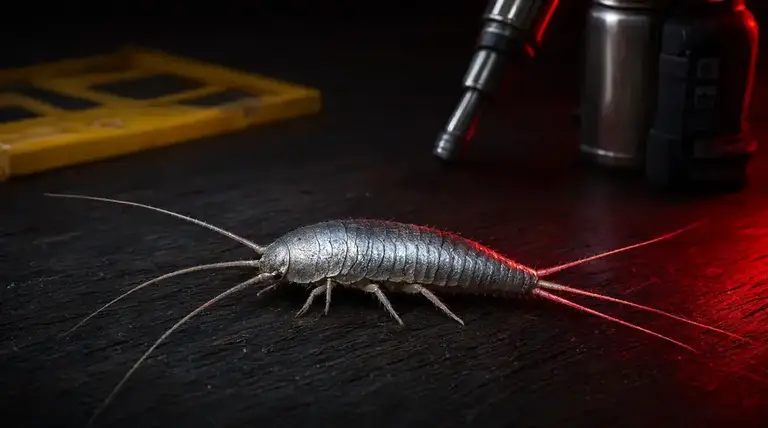
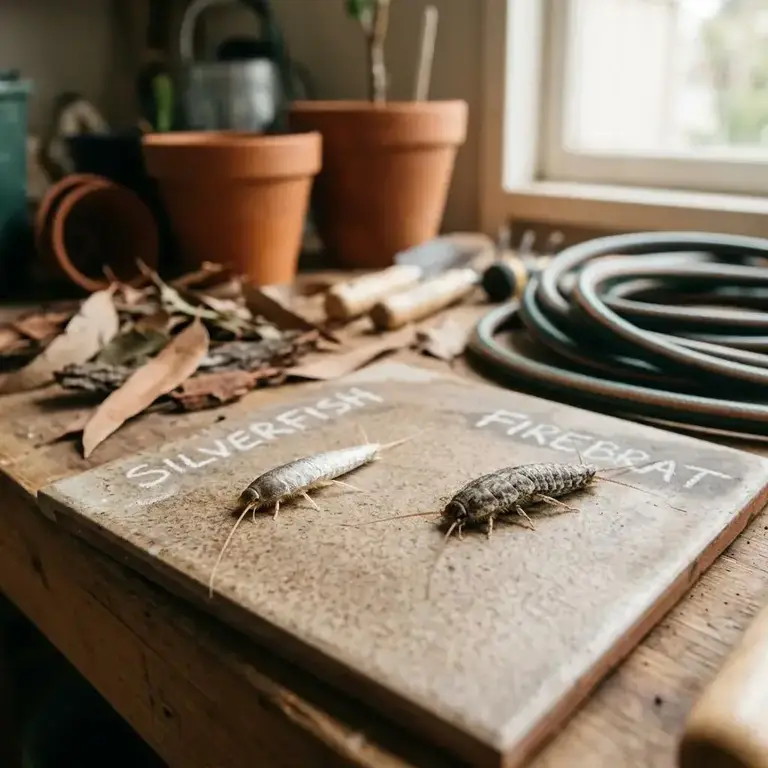
- Appearance — silverfish have a uniform silvery-grey or pearly sheen (hence the name), while firebrats are duller with a mottled grey-brown pattern of dark patches. Both grow to around 10–15 mm, but firebrats tend to look slightly stockier.
- Temperature preference — this is the most reliable clue. Silverfish thrive in cool, humid conditions (21–27°C) and favour bathrooms, laundries and damp subfloors. Firebrats live happily at 32–41°C around ovens, fireplaces, hot water systems, boiler rooms and summer roof voids.
- Nesting sites — silverfish hide in skirting boards, behind loose wallpaper, inside wardrobes and in cardboard boxes in garages. Firebrats cluster close to warm appliances and hot water pipes, often in the kitchen or near the hot water cylinder.
Warning Signs: How Do I Know Which Pest I Have?
The fastest way to identify your pest is to combine what it looks like with where you found it. Use this checklist to narrow it down before you spend a dollar on treatment.
- Colour and sheen — a pearly, silvery sheen points to silverfish; dull mottled brown patches point to a firebrat.
- Location found — bathrooms, laundries, wardrobes and damp subfloors mean silverfish; ovens, boilers, hot water cylinders and roof voids mean firebrats.
- Damage patterns — irregular holes, yellowish stains and scraped surfaces on books, photos, wallpaper or clothing are classic signs; our article on silverfish in books and clothing shows exactly what to look for.
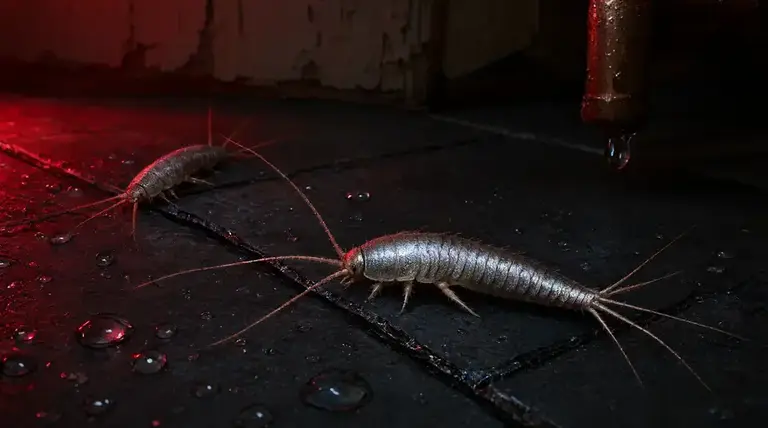
- Moisture clues — leaking taps, condensation, poor subfloor ventilation or a persistently damp bathroom (see why silverfish love bathrooms) strongly suggest silverfish rather than firebrats.
- Heat zones — repeated sightings near appliances, fireplaces or hot water pipes, especially in older homes with gas appliances, suggest firebrats.
- Sticky trap results — placing a few traps in both cool and warm areas for a week will show you which zone is active and confirm the species.
DIY vs Professional Pest Control
Minor activity can often be managed with good sanitation and moisture control, but established infestations hide deep in wall voids and roof spaces where surface sprays simply don’t reach. Here’s an honest comparison of what DIY can and can’t achieve versus a licensed treatment.
| Factor | DIY approach | Professional treatment |
|---|---|---|
| Best for | Early, low-level activity and prevention | Established or recurring infestations |
| Methods | Dehumidifiers, exhaust fans, sealing cracks, airtight storage, sticky traps | APVMA-approved residual sprays, insecticidal dusts to wall voids and roof spaces |
| Species identification | Guesswork; easy to confuse the two | Confirmed on inspection, treatment matched to species |
| Reach | Surface areas only | Harbourages in voids, roof spaces and behind skirtings |
| Upfront cost | $20–$80 in traps, caulk and containers | Typically $150–$450 depending on property |
Correct identification is where professionals earn their keep. A silverfish problem usually points to excess moisture — a leaking pipe, poor subfloor ventilation or a damp bathroom — so fixing the water source is half the battle. Firebrats signal heat and shelter near appliances, so treatment focuses on those harbourage zones instead. A licensed pest technician will identify the species, locate the harbourages and apply APVMA-approved residual treatments and dusts where they count. Any chemical application should always be carried out by a licensed technician following label directions.
What Does Silverfish and Firebrat Treatment Cost in Australia?
Across Australia, the going market rate for professional silverfish and firebrat treatment in 2025–26 generally sits between $150 and $450, depending on property size, severity and whether roof void or subfloor dusting is required. The figures below are typical industry rates — what the market generally charges — and a proper quote always follows an inspection.
| Service | Typical market rate (AUD) | What’s included/notes |
|---|---|---|
| Inspection and species identification | $0–$120 | Often free with booked treatment; confirms silverfish vs firebrats and locates harbourages |
| Standard internal treatment (unit/small home) | $150–$250 | Residual spray to skirtings, cracks, wet areas and kitchen; suited to light infestations |
| Full treatment with roof void/subfloor dusting | $250–$450 | Adds insecticidal dust to wall voids, roof spaces and subfloors; recommended for firebrats and heavy activity |
| Follow-up visit (if needed) | $80–$180 | Re-treatment of persistent harbourages; sometimes included in service warranties |
For a dedicated service tailored to these pests, see our Silverfish & Pantry Pest Control page for what’s covered.
Those figures are the general market rates across the industry — Aussie Pest Strike typically comes in well under them. For an exact quote on your property, call [aps_phone].
Seasonal Activity Across Australia
Silverfish activity peaks in the humid summer months in northern Australia and during closed-up, condensation-prone winters in the south, while firebrats surge whenever indoor heat zones run hot. The chart below reflects typical combined activity levels seen by technicians through the year.
Jan
Feb
Mar
Apr
May
Jun
Jul
Aug
Sep
Oct
Nov
Dec
Indicative activity pattern: summer humidity drives silverfish numbers up nationwide, while winter sees a secondary lift in southern states as closed homes trap condensation — and firebrats stay active year-round wherever appliances and roof voids stay hot.
Nine times out of ten, the customer says “i found it in the bathroom” and it’s a silverfish — but when we find them clustered around the hot water system or up in a 40-degree roof void, it’s firebrats, and the treatment plan changes completely. Identify the species first, fix the conditions second, and the treatment actually sticks.
Start with the free wins: run exhaust fans, fix leaking taps, improve subfloor ventilation, seal cracks around skirtings and pipe penetrations with caulk, and move books, documents, clothing and pantry goods into airtight containers. Avoid storing paper or fabric against warm appliances. If you’re still seeing activity after two to three weeks — or you’re finding insects in roof spaces or wall voids — book a licensed pest control treatment. Established infestations almost always need residual sprays and void dusting to resolve properly.
Frequently Asked Questions
What is the main difference between silverfish and firebrats?
The quickest clues are colour and habitat. Silverfish have a uniform silvery-grey or pearly sheen and favour cool, humid spots between 21 and 27 degrees Celsius, such as bathrooms, laundries and damp subfloors. Firebrats are duller with a mottled grey-brown pattern and prefer heat between 32 and 41 degrees Celsius, clustering near ovens, boilers, hot water systems and hot roof voids.
Do silverfish and firebrats bite or spread disease?
No. Neither insect bites people nor spreads disease. Both belong to the order Zygentoma and are wingless, fast-moving pests that feed on starches, sugars and proteins. The real concern is property damage: they chew book bindings, wallpaper paste, photographs, clothing and pantry goods such as flour and cereal if left undisturbed over time.
Where do silverfish hide in Australian homes?
Silverfish favour cool, humid conditions and commonly shelter in skirting boards, behind loose wallpaper, inside wardrobes and in cardboard boxes in garages. Damp bathrooms, laundries and enclosed subfloors are prime harbourage, particularly in Queenslanders with poor ventilation. In brick veneer homes on concrete slabs they may gather in damp weep-line zones behind skirting boards.
Where do firebrats typically live in a house?
Firebrats cluster close to warm appliances and hot water pipes because they thrive at temperatures of 32 to 41 degrees Celsius. Common locations include around ovens, fireplaces, boiler rooms, hot water cylinders and laundries with dryers running constantly. During a hot Australian summer, ceiling cavities can exceed 40 degrees, creating ideal firebrat territory directly above living areas.
How can I tell which pest I have before spending money on treatment?
Combine appearance with location. A pearly silvery sheen points to silverfish; dull mottled brown patches point to a firebrat. Check where you found it: bathrooms, wardrobes and damp subfloors suggest silverfish, while ovens, boilers and roof voids suggest firebrats. Placing sticky traps in both cool and warm areas for a week will show which zone is active and help confirm the species.
What do the damage signs of these pests look like?
Both pests leave irregular holes, yellowish stains and scraped surfaces on starchy materials. Look for damage on books, photographs, wallpaper paste, clothing and pantry goods such as flour and cereal. Damage alone won't tell you the species, so pair it with colour and location clues — moisture problems suggest silverfish, while repeated sightings near heat sources suggest firebrats.
Can I handle a silverfish or firebrat problem myself?
Minor, early activity can often be managed with dehumidifiers, exhaust fans, sealing cracks, airtight storage and sticky traps. However, established infestations hide deep in wall voids and roof spaces where surface sprays don't reach. DIY methods also rely on guesswork for identification, and treating the wrong species or missing the moisture or heat source usually means the problem returns.
Why does correct identification matter for treatment?
Because the two insects live in completely different conditions, a treatment plan for one won't fix the other. Silverfish signal excess moisture from leaking pipes, condensation or poor subfloor ventilation, so fixing the water source is half the battle. Firebrats signal heat and shelter near appliances, so treatment focuses on those harbourage zones instead. A licensed technician confirms the species and matches the treatment accordingly.
How can Aussie Pest Strike help me tell silverfish and firebrats apart?
Confusing these two pests is easy, and treating the wrong one wastes time and money. Aussie Pest Strike technicians inspect your home to confirm whether you have silverfish or firebrats by checking body colour, sheen and the harbourage zones involved, then locate where the insects are breeding. They also identify contributing factors such as excess moisture or heat sources near appliances, so the treatment targets the actual cause rather than just the visible activity.
When should I call Aussie Pest Strike about silverfish or firebrats?
If sticky traps keep catching insects after several weeks of dehumidifying, sealing cracks and storing goods airtight, the infestation is likely established in wall voids or roof spaces beyond the reach of surface sprays. That's when a licensed Aussie Pest Strike technician can apply APVMA-approved residual treatments and insecticidal dusts to skirtings, voids and subfloors, following an inspection and an exact quote for your property.
Sources & further reading
Found Something
Dangerous?
Don’t touch it. Don’t spray it. Keep kids and pets clear, take a photo from a safe distance, and call us — or book a free inspection and we’ll come to you.
02 7235 0050