Silverfish Treatment:DIYvs Professional
Silverfish treatment diy — for a light silverfish problem, DIY silverfish treatment (moisture control, traps and shelf products) is often enough; for...
Silverfish treatment is the process of reducing humidity, treating harbourage areas and applying targeted products to eliminate silverfish and stop them returning. If you’ve typed something like “i have silverfish — what do i do?” into a search bar, you’re not alone: it’s one of the most common queries i see from Australian households, and the honest answer is that the right approach depends on how established the infestation is.
For a light, recent problem in one room, DIY silverfish treatment — moisture control, traps and shelf products — is often enough. For persistent or widespread activity, professional pest control reaches the wall voids, roof spaces and subfloors where silverfish actually breed. This guide walks through both options so you can decide with confidence.
- DIY silverfish treatment works best for light, localised activity and centres on drying the home out below 50% humidity.
- Professional treatment reaches roof voids, wall cavities and subfloors where silverfish breed out of sight.
- Typical professional costs sit in the low-to-mid hundreds of dollars (AUD), depending on property size and access.
- Silverfish activity peaks in warm, humid months — especially in Queensland and coastal New South Wales.
- If silverfish keep returning after moisture control, or damage to books and clothing is spreading, call a licensed technician.
Why Silverfish Are Such a Problem in Australian Homes
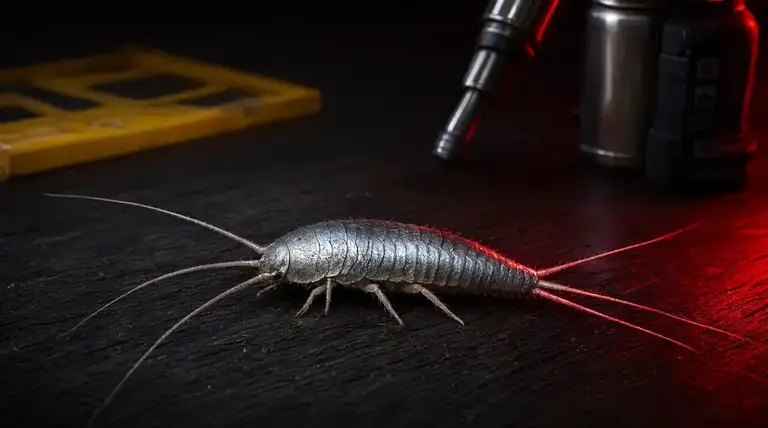
Silverfish thrive in Australia’s warm, humid conditions and in the construction styles that trap moisture — Queenslanders with enclosed subfloors, brick-veneer homes on concrete slabs, and older weatherboards with poorly ventilated roof spaces. The common silverfish (Ctenolepisma longicaudata) and the grey silverfish are now widespread from Brisbane to Melbourne.
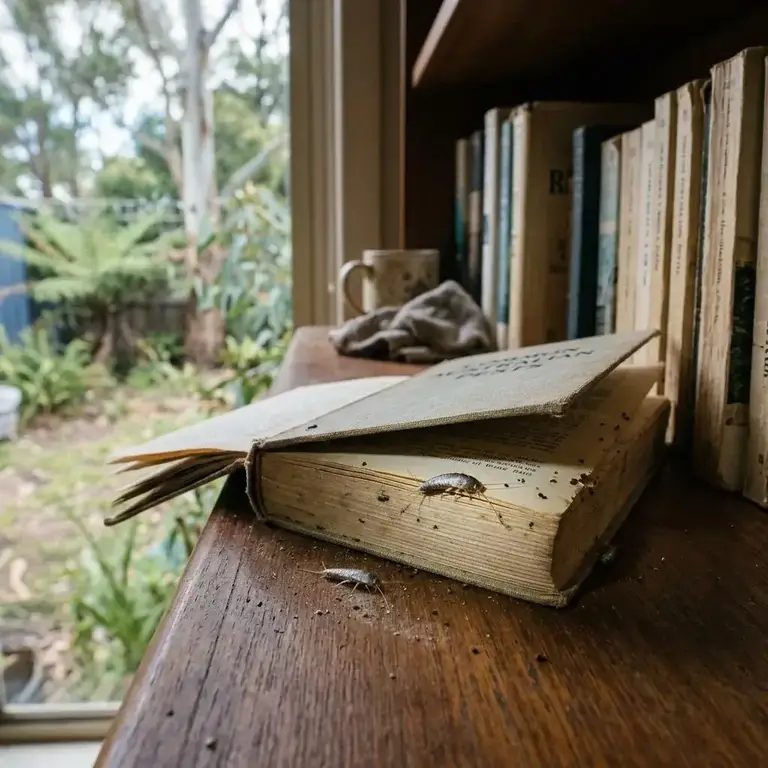
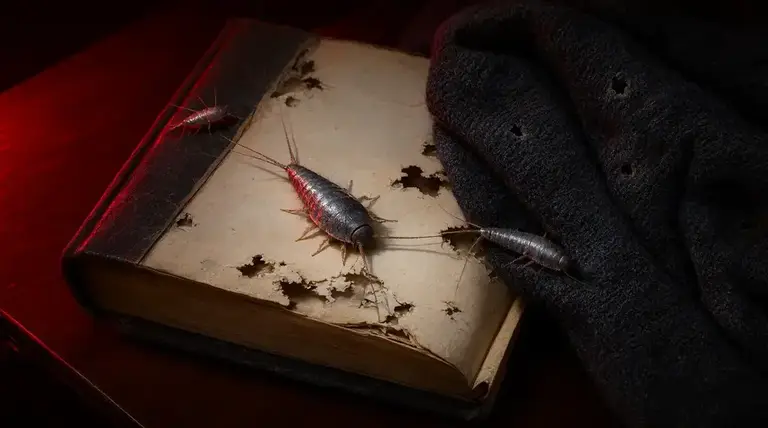
Humidity is the driver. Bathrooms without exhaust fans, laundries with unflued dryers, damp subfloors after summer storms and roof voids with minor flashing leaks all create the conditions silverfish need. Our guide to silverfish in the bathroom explains why wet areas are usually ground zero. Because Australian homes vary so much — slab versus subfloor, north versus south — treatment that ignores the moisture source rarely lasts. Silverfish also damage starchy materials: book bindings, wallpaper paste, photographs, cotton and linen. If you’re seeing that kind of damage, our article on silverfish in books and clothing covers how to protect your belongings while you treat the cause.
Warning Signs You Have an Established Silverfish Problem
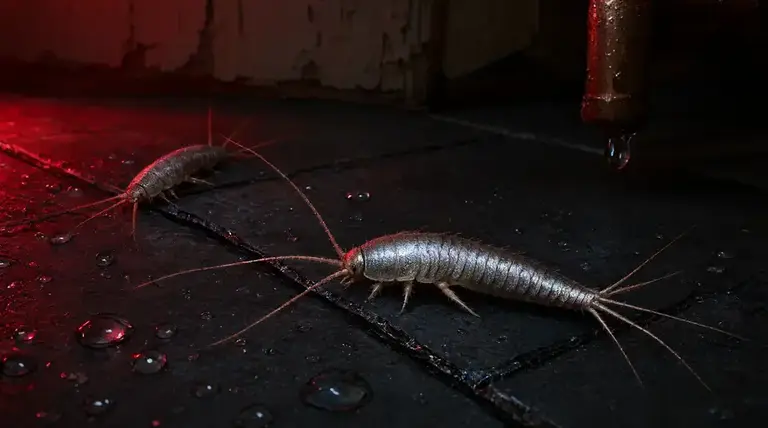
The clearest warning signs are live silverfish seen regularly, feeding damage on paper and fabric, and activity in more than one room. One or two sightings in a steamy bathroom is normal; repeated sightings elsewhere means a breeding population.
- Frequent sightings at night — silverfish are nocturnal, so seeing them by day or often suggests high numbers.
- Yellow stains and scales — tiny pepper-like droppings and shed skins along skirting boards and in cupboards.
- Feeding damage — irregular holes, notches or surface grazing on books, cardboard, wallpaper and natural-fibre clothing.
- Activity in multiple rooms — bathroom plus bedroom, study or kitchen indicates the infestation has spread beyond one moisture source.
- Signs in the roof space — droppings or damage on stored boxes in the ceiling void point to breeding above the living areas.
- Persistent humidity — condensation, musty smells or mould alongside silverfish means the driver is still active.
For a fuller rundown of what each sign means, see Silverfish: Identification and the Damage They Cause.
DIY vs Professional Silverfish Treatment: Which Do i Need?
DIY suits small, recent infestations in one room; professional treatment suits established, recurring or multi-room problems. The difference isn’t stronger chemicals — it’s reach, placement and diagnosis of the moisture source.
Because silverfish depend on humidity, effective DIY treatment is mostly about drying out and sealing the home rather than spraying. Reduce humidity below 50% with exhaust fans and a dehumidifier, set sticky traps or rolled-newspaper traps to monitor activity, apply food-grade diatomaceous earth into cracks and roof voids as a physical desiccant, use APVMA-registered surface sprays strictly to label, and store food, paper and clothing in airtight containers. These steps align with the humidity-first approach in our silverfish prevention and humidity guide.
| Factor | DIY | Professional |
|---|---|---|
| Best for | Light, localised activity | Established or recurring infestations |
| Reach | Visible surfaces and accessible cracks | Wall cavities, roof voids, subfloor |
| Products | Retail sprays, dusts, traps | Targeted residuals and IGRs, applied to label |
| Speed | Gradual over weeks | Faster knockdown with residual control |
| Ongoing result | Depends on moisture control | Combined with advice on prevention |
For the general trade-offs across all pests, our honest DIY vs professional pest control comparison is worth a read. If chemicals are involved, a licensed technician is the safest option — APVMA-registered products are effective when applied to label, but no treatment can be called completely risk-free.
What Does Silverfish Treatment Cost in Australia?
As an industry-wide guide, the typical Australian market rate for a single-pest interior silverfish treatment sits between $150 and $350 AUD, with larger homes, roof-void dusting or follow-up visits pushing the figure higher. What the industry generally charges varies widely by property size, severity and access, so treat any online figure as a market estimate, not a quote.
| Service | Typical market rate (AUD) | What’s included/notes |
|---|---|---|
| Standard interior treatment (unit or small home) | $150 – $220 market rate | Inspection, residual spray to skirting, cupboards and harbourage, prevention advice |
| Interior treatment (3–4 bedroom home) | $220 – $350 market rate | As above plus crack-and-crevice work in wet areas and storage rooms |
| Roof void or subfloor dusting | $100 – $200 market rate (add-on) | Insecticidal dust to breeding voids; depends on access |
| Follow-up visit | $80 – $150 market rate | Confirmation inspection and re-treatment of any remaining activity |
| DIY supplies (traps, DE, sprays, dehumidifier hire) | $40 – $120 market rate | Retail products; results depend entirely on moisture control |
Across the industry, the most reliable way to pin down a cost is an on-site assessment where the harbourage and moisture drivers can actually be seen. Full details of what’s included in a professional treatment are on our Silverfish & Pantry Pest Control service page.
Here’s the good news: Aussie Pest Strike typically comes in well under these typical Australian market rates, without cutting corners on inspection, treatment or follow-up. For an exact quote tailored to your property, give us a call on [aps_phone] today.
Seasonal Silverfish Activity in Australia
Silverfish are active year-round indoors, but activity peaks through the warm, humid months from late spring to early autumn, with a second spike in tropical regions during the wet season. Winter brings a dip in southern states, though heated, steamy bathrooms keep populations ticking over.
Jan
Feb
Mar
Apr
May
Jun
Jul
Aug
Sep
Oct
Nov
Dec
Indicative activity pattern across temperate and subtropical Australia: silverfish reports climb from October, peak over the humid summer (December–February) and ease through the cooler, drier southern winter. Tropical north Queensland sees elevated activity year-round.
Nine times out of ten, when i inspect a home with recurring silverfish, the owners have already sprayed the skirting boards — and missed the roof void entirely. The spray isn’t the fix; the fix is finding the moisture that’s feeding them, whether that’s a failed shower seal or a damp subfloor. Treat the void, fix the moisture, and the problem actually ends.
Start with DIY if the problem is recent and confined to one room: dehumidify, trap, seal and store vulnerable items in airtight containers. If silverfish persist after four to six weeks, appear in multiple rooms, or you suspect roof-void breeding, book a professional inspection — the cost of a single treatment is usually far less than ongoing damage to books, clothing and stored documents.
Frequently Asked Questions
Can I handle silverfish treatment on my own, or is professional help the smarter choice for my home?
DIY treatment suits light, recent infestations confined to one room. It centres on reducing humidity below 50% with exhaust fans or a dehumidifier, setting sticky or rolled-newspaper traps, applying food-grade diatomaceous earth to cracks and roof voids, and storing vulnerable items in airtight containers. If silverfish persist after four to six weeks, appear in multiple rooms, or you suspect roof-void breeding, book a professional inspection instead.
What are the warning signs of an established silverfish infestation?
Key signs include frequent sightings at night (silverfish are nocturnal, so daytime sightings suggest high numbers), yellow stains and pepper-like droppings with shed skins along skirting boards and in cupboards, and irregular holes or surface grazing on books, cardboard, wallpaper and natural-fibre clothing. Activity in more than one room, droppings on stored boxes in the ceiling void, and persistent condensation, musty smells or mould all point to a breeding population rather than a one-off sighting.
Why does humidity matter so much in silverfish control?
Humidity is the main driver of silverfish problems in Australian homes. Bathrooms without exhaust fans, laundries with unflued dryers, damp subfloors after summer storms and roof voids with minor flashing leaks all create the conditions silverfish need to breed. Construction styles that trap moisture, such as Queenslanders with enclosed subfloors and brick-veneer homes on slabs, make this worse. Treatment that ignores the moisture source rarely lasts, so drying the home out below 50% humidity is essential.
How much does professional silverfish treatment typically cost in Australia?
Professional silverfish treatment costs vary with property size, infestation severity and access. Interior treatments for a single pest are generally the most affordable option, while larger homes, roof-void or subfloor work and follow-up visits add to the total. Because every situation differs, an on-site inspection is the most reliable way to obtain an accurate quote tailored to your home.
Where do silverfish breed that DIY treatments usually miss?
Silverfish commonly breed out of sight in roof voids, wall cavities and subfloors. A common pattern is homeowners spraying skirting boards while missing the roof space entirely, where droppings and damage on stored ceiling boxes reveal breeding activity. Professional technicians can reach these hidden harbourage areas with targeted residual products and insecticidal dusts, combined with diagnosis of the moisture source such as a failed shower seal or damp subfloor.
Which products work for DIY silverfish treatment?
Effective DIY options include sticky traps or rolled-newspaper traps for monitoring, food-grade diatomaceous earth applied into cracks and roof voids as a physical desiccant, and APVMA-registered surface sprays used strictly according to the label. Dehumidifiers help bring indoor humidity below 50%. Store food, paper and clothing in airtight containers to protect them. Results depend heavily on moisture control — products alone won't fix a problem driven by ongoing dampness.
How long does it take to see results after silverfish treatment?
Silverfish are active indoors year-round, but activity peaks through the warm, humid months from late spring to early autumn. Reports climb from October and peak over humid summer months from December to February, easing through cooler southern winters, though heated bathrooms keep populations ticking over. Tropical north Queensland sees elevated activity year-round, including a wet-season spike. Queensland and coastal New South Wales experience particularly strong seasonal peaks.
What damage do silverfish cause in Australian homes?
Silverfish feed on starchy materials, causing irregular holes, notches or surface grazing on book bindings, wallpaper paste, photographs, cardboard, and natural-fibre clothing such as cotton and linen. They also leave yellow stains, tiny pepper-like droppings and shed skins along skirting boards and inside cupboards. Damage spreading across books and clothing, especially alongside sightings in multiple rooms, suggests an established breeding population that needs more than surface spraying.
What questions should I ask a pest control technician before booking silverfish treatment?
An Aussie Pest Strike technician will want to see where activity is occurring, check for moisture sources such as failed shower seals, damp subfloors or roof-void leaks, and inspect harbourage areas like wall cavities and ceiling spaces. Be ready to describe how long you've noticed silverfish, which rooms are affected, any damage to books or clothing, and what DIY steps you've already tried. This helps determine whether standard interior treatment plus roof-void or subfloor dusting suits your situation.
What's the practical next step if DIY silverfish treatment hasn't worked?
If silverfish persist after four to six weeks of dehumidifying, trapping and sealing, appear in multiple rooms, or you suspect roof-void breeding, arrange a professional inspection with Aussie Pest Strike. An on-site assessment lets the technician see the harbourage areas and moisture drivers directly, which is far more reliable than guessing from online figures. They can then recommend appropriate treatment for your property and provide prevention advice to stop the problem returning.
Sources & further reading
Found Something
Dangerous?
Don’t touch it. Don’t spray it. Keep kids and pets clear, take a photo from a safe distance, and call us — or book a free inspection and we’ll come to you.
02 7235 0050