Silverfish: Identificationand the DamageThey Cause
Silverfish identification and — silverfish are small, wingless, silvery-grey insects, 12-19 mm long, that feed on starches and cellulose and quietly damage...
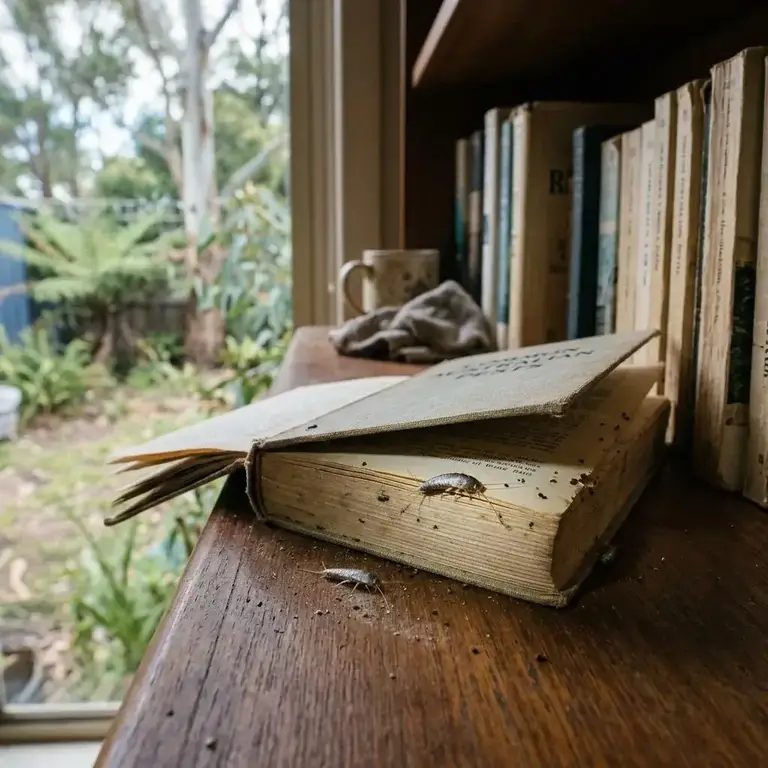
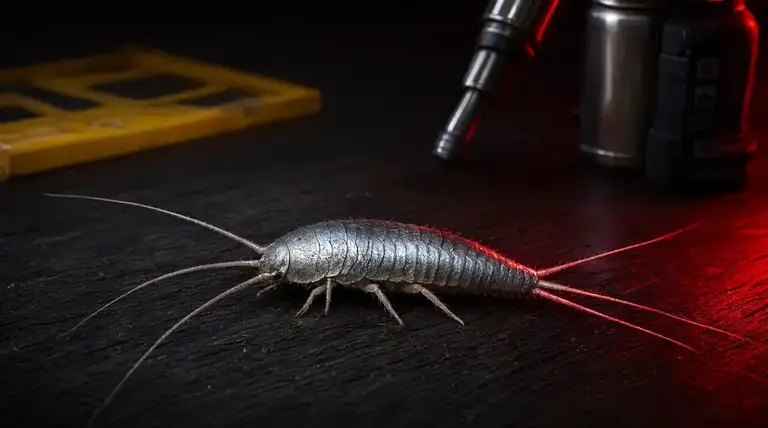
Silverfish are small, wingless, silvery-grey insects, roughly 12–19 mm long, that feed on starches and cellulose and quietly damage books, wallpaper, clothing and stored food in homes across Australia. You will recognise them by their teardrop-shaped body, three long tail bristles and a darting, fish-like movement when they’re exposed to light.
Because they hide in dark, humid corners and breed slowly, a silverfish problem often goes unnoticed until the damage is already done — chewed photograph albums, holes in a starched shirt, or contaminated flour in the pantry. This guide explains how to identify them, what they destroy, where they hide, and when it’s worth calling a licensed pest control technician instead of battling them yourself.
- Silverfish are 12–19 mm, silvery-grey, wingless insects with three tail bristles and a wriggling, fish-like movement.
- They don’t bite or spread disease, but they eat starch and cellulose — books, wallpaper paste, cotton, silk and stored food.
- Humidity of 75–95% and temperatures around 22–27°C suit them perfectly, which is why summer sightings spike in much of Australia.
- They live 2–8 years and survive weeks without food, so infestations build slowly and rarely fix themselves.
- Cutting humidity below 50% is the single most effective DIY step; persistent infestations need professional treatment.
Why silverfish thrive in Australian homes
Silverfish flourish in Australia because our climate and housing styles deliver exactly the warm, humid conditions they need. Humidity of 75–95% and temperatures around 22–27°C are ideal for them, and large parts of the country hit those numbers for months on end.
In Queensland and northern New South Wales, the humid Dec–Feb summer sends sightings climbing, particularly in older Queenslanders with enclosed subfloors and limited cross-ventilation. Brick veneer homes on concrete slabs across Melbourne, Adelaide and Perth trap moisture in bathrooms, laundries and walk-in robes, while roof voids in any style of home offer heat, dust and undisturbed paper-based insulation material. Even a well-kept home on a slab can develop a damp microclimate behind built-in wardrobes on external walls — a classic harbourage.
The common species most Australians encounter is Lepisma saccharinum. Correct identification matters because they are often confused with other small insects, and the wrong treatment wastes time and money.
Identifying silverfish: what to look for
The fastest way to confirm silverfish is their movement — a quick, side-to-side wriggle like a fish swimming — combined with a metallic silver-grey, carrot-shaped body that tapers towards the rear. If the insect has wings, jumps, or is brown and elongated, you’re looking at something else.
Key features to check:
- Metallic silver to grey body, tapering towards the tail, 12–19 mm long
- Two long antennae at the front and three bristle-like tails (cerci) at the back
- No wings at any life stage
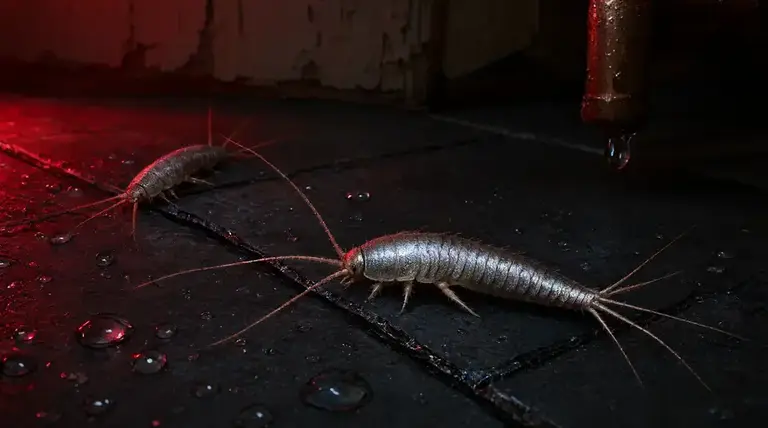
- Nocturnal — they hide in dark, humid cracks during the day and scatter when lights come on
They keep moulting throughout their long adult life, leaving behind tiny pepper-like droppings and shed skins, and they leave yellowish stains on paper and fabric where they’ve fed.
Warning signs of an infestation
The clearest warning sign is unexplained feeding damage on paper, fabric or dried food, combined with night-time sightings in wet areas. Because they avoid light, you’ll often spot the damage before you ever see the insect.
Work through this checklist:
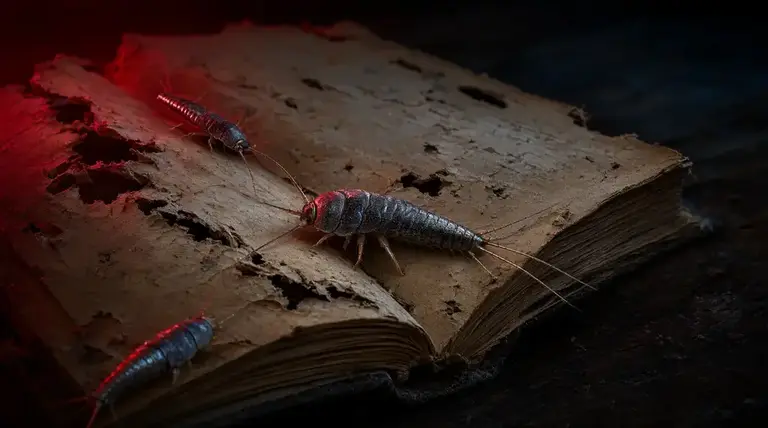
- Irregular holes and notched edges on books, documents, photographs and cardboard boxes
- Yellow staining on paper, linen or clothing where they have grazed
- Grazed patches on wallpaper, where they’ve eaten the starch-based paste behind it
- Small holes in cotton, silk and rayon, especially starched or seldom-worn garments
- Contaminated dry goods — flour, cereal and pet food with insects or debris inside
- Live insects darting for cover when you switch on a bathroom or laundry light at night
- Cast skins and tiny black droppings along skirting boards, shelving and inside book spines
They favour bathrooms, laundries, kitchens, roof voids and the gaps behind skirting boards. For a room-by-room breakdown of the dampest hotspots, see Silverfish in the Bathroom: Why and How to Stop Them, and for protecting your valuables, read Silverfish in Books and Clothing: Protecting Your Stuff.
The damage they cause
Silverfish do not bite, sting or transmit disease — the harm is purely material, because they digest polysaccharides such as starch and cellulose. Anything paper-based, starch-sized or glued is on the menu.
Typical damage by item:
| Item | Type of damage |
|---|---|
| Books and paper | Irregular holes, notched edges, yellow stains |
| Wallpaper | Grazed patches where they eat the paste |
| Clothing and linen | Holes in cotton, silk and rayon, especially starched fabric |
| Stored food | Contamination of flour, cereal and pet food |
Because they live 2–8 years, keep moulting as adults and can survive weeks without food, damage accumulates slowly and is often discovered late. Females lay eggs in tiny cracks, and in warm conditions the young hatch within 3–6 weeks, maturing over several months. Their flattened bodies let them squeeze into book spines, wall cavities and gaps behind skirting, which is why surface sprays alone rarely reach the whole population.
DIY vs professional treatment
DIY control works for small, early infestations if you’re disciplined about reducing humidity and food sources; professional treatment is the faster, more reliable option once damage is established across multiple rooms. Chemical treatments should always be applied by a licensed pest control technician in line with APVMA-approved label directions.
| Factor | DIY approach | Professional treatment |
|---|---|---|
| Best for | Early signs, one or two rooms | Established or recurring infestations |
| Methods | Dehumidifier, sealing food, vacuuming cracks, decluttering | Targeted residual sprays, dusts in voids, harbourage treatment |
| Reaches hiding spots | Limited — wall voids and roof spaces are hard to access | Yes — technicians treat cavities, subfloors and roof voids |
| Timeframe | Weeks to months of consistent effort | Usually resolved within one to two visits |
| Cost | Low upfront, but ongoing if it fails | Moderate, with service warranties common |
If you go the DIY route, focus on the fundamentals: run exhaust fans or a dehumidifier to drop indoor humidity below 50%, store books and off-season clothing in sealed containers, vacuum cracks and shelving to remove eggs, fix leaks, improve airflow in cupboards and roof spaces, and declutter cardboard and newspaper stockpiles. Consistency matters more than any single product, and our guide to silverfish prevention and the humidity connection walks through the moisture-control steps in detail. Broader household strategies are covered in our pest prevention tips for Australian homes.
How much does treatment cost in Australia?
Across the Australian pest control industry, professional silverfish treatment typically costs between $150 and $450 AUD, depending on the size of the home, the number of areas treated and whether follow-up visits are included. The figures below reflect typical market rates for 2025-26 — they’re what the industry generally charges, not a quote from any one provider.
| Service | Typical market rate (AUD) | What’s included/notes |
|---|---|---|
| Inspection and quote | $0–$120 | Many operators across the industry offer free inspections |
| Standard internal treatment | $150–$280 | Residual spray to skirting, cupboards, wet areas, targeted dusting |
| Roof void/subfloor dusting | $100–$180 add-on | Reaches hidden harbourages; often essential in Queenslanders |
| Combined general pest treatment | $250–$450 | Covers silverfish plus cockroaches, spiders and ants; better value per pest |
| Follow-up visit | $80–$150 | Sometimes included in a service warranty period |
For a fuller breakdown of industry pricing by pest and property type, see our guide on what pest control typically costs in Australia. Bundled services such as our Silverfish & Pantry Pest Control treatment generally work out cheaper than treating each pest separately.
It’s worth knowing that Aussie Pest Strike typically comes in well under these typical Australian market rates, without cutting corners on products or thoroughness. For an exact quote tailored to your home, give us a call on [aps_phone].
Seasonal activity across Australia
Silverfish are active year-round indoors, but sightings and breeding peak through the warm, humid months from November to March in most of Australia. Southern states see a sharper summer spike, while tropical Queensland and the Northern Territory support high activity almost all year.
Jan
Feb
Mar
Apr
May
Jun
Jul
Aug
Sep
Oct
Nov
Dec
Typical indoor activity pattern: peaks through the humid December–February summer when temperatures and bathroom/laundry moisture rise, easing over the drier southern winter. In tropical regions, activity stays elevated for longer.
First steps you can take today
The most effective first step is cutting indoor humidity below 50%, because dry conditions stop eggs hatching and slowly starve the population out. Everything else — sealing food, vacuuming, decluttering — supports that one goal.
Start with these actions:
- Run exhaust fans or a dehumidifier in bathrooms, laundries and wardrobes
- Store books, documents and off-season clothing in sealed plastic containers
- Vacuum along skirting, shelving and inside cupboards to remove eggs and droppings
- Fix leaking taps and improve airflow in cupboards and roof spaces
- Clear out cardboard boxes, old newspapers and paper stockpiles
- Keep flour, cereal and pet food in airtight containers
What a technician sees that you won’t
Most people treat the insect they saw in the bathroom, but by then the real population is usually in the roof void or behind a built-in wardrobe where the humidity never drops. We follow the moisture, treat the harbourage directly with dusts and residuals, and give the homeowner a ventilation plan — that’s what stops them coming back, not the spray alone.
Try humidity control and decluttering for two to three weeks if you’ve only seen one or two insects. If you’re finding damage in more than one room, or sightings keep recurring, book a professional pest control inspection. A licensed technician can treat wall cavities and roof voids that no DIY product reaches, and confirm you’re not dealing with a different pest altogether.
Frequently Asked Questions
How do I identify a silverfish in my home?
Silverfish are wingless, silvery-grey insects about 12–19 mm long with a teardrop or carrot-shaped body that tapers towards the rear. They have two long antennae at the front and three bristle-like tails at the back. Their movement is distinctive — a quick, side-to-side wriggle like a fish swimming — and they scatter when lights come on because they are nocturnal. If an insect has wings, jumps, or is brown and elongated, it is not a silverfish.
What damage do silverfish actually cause?
The harm silverfish cause is purely material — they do not bite, sting or spread disease. They digest starch and cellulose, so they chew irregular holes and notched edges into books, documents and photographs, leave yellow stains on paper and fabric, graze wallpaper by eating the starch-based paste behind it, make small holes in cotton, silk and rayon (especially starched garments), and contaminate dry goods such as flour, cereal and pet food with droppings, cast skins and debris.
Where do silverfish hide during the day?
Silverfish are nocturnal and hide in dark, humid cracks during daylight hours. They favour bathrooms, laundries, kitchens, roof voids and gaps behind skirting boards. Their flattened bodies let them squeeze into book spines, wall cavities and spaces behind built-in wardrobes on external walls, where damp microclimates form. Because they avoid light, you often notice feeding damage before you ever see the insect itself.
Why are silverfish more active in Australian summers?
Silverfish thrive at humidity of 75–95% and temperatures around 22–27°C, conditions much of Australia delivers for months on end. Sightings peak through the warm, humid months from November to March, particularly December to February. Queensland and northern New South Wales see summer spikes, especially in older homes with enclosed subfloors, while tropical regions support high activity almost year-round. Southern states see a sharper summer surge that eases over drier winters.
What do silverfish feeding marks look like on books and clothing?
Look for unexplained feeding damage on paper, fabric or dried food combined with night-time sightings in wet areas. Specific signs include irregular holes on books and photographs, yellow staining on paper or linen, grazed wallpaper patches, small holes in cotton or silk garments, contaminated flour or pet food, live insects darting for cover when bathroom lights switch on, and cast skins plus tiny black droppings along skirting boards and shelving.
Can I get rid of silverfish myself?
DIY control can work for small, early infestations if you are consistent. The single most effective step is cutting indoor humidity below 50% using exhaust fans or a dehumidifier. Also store books and off-season clothing in sealed containers, vacuum cracks and shelving to remove eggs, fix leaks, improve airflow in cupboards and roof spaces, and declutter cardboard and newspaper stockpiles. Expect weeks to months of effort, and note surface sprays rarely reach wall voids where silverfish hide.
When should I call a professional pest controller for silverfish?
Professional treatment is worth considering once damage is established across multiple rooms or infestations keep recurring despite your efforts. Licensed technicians use targeted residual sprays, dusts in voids and harbourage treatments that reach hiding spots DIY methods cannot access, such as wall cavities, subfloors and roof spaces. Chemical treatments must always be applied by a licensed technician following APVMA-approved label directions. Professional treatment usually resolves the problem within one to two visits.
How long do silverfish live and why do infestations persist?
Silverfish live 2–8 years, keep moulting throughout their adult life, and can survive weeks without food. Females lay eggs in tiny cracks, and in warm conditions young hatch within 3–6 weeks before maturing over several months. This combination of longevity, slow breeding and resilience means infestations build gradually and rarely fix themselves, which is why damage often accumulates unnoticed until it is discovered late.
When is it useful to ask Aussie Pest Strike for an on-site assessment of a silverfish problem?
An on-site assessment from Aussie Pest Strike is most useful when you have found feeding damage across several rooms, keep seeing silverfish at night despite reducing humidity, or suspect hidden populations in roof voids, subfloors or wall cavities that you cannot inspect yourself. A technician can confirm the insect is genuinely a silverfish rather than a lookalike, locate the damp harbourages supporting them, and recommend targeted treatment instead of guesswork that wastes time and money.
What practical next steps does Aussie Pest Strike suggest after spotting early signs of silverfish?
If you have noticed yellow stains on paper, holes in clothing or contaminated pantry goods but only in one area, start with moisture control: run exhaust fans or a dehumidifier to push humidity below 50%, seal books and garments in airtight containers, vacuum cracks and shelving, and clear cardboard stockpiles. If damage continues or spreads, contact Aussie Pest Strike to discuss whether targeted professional treatment would resolve the infestation faster than ongoing DIY effort.
Sources & further reading
Found Something
Dangerous?
Don’t touch it. Don’t spray it. Keep kids and pets clear, take a photo from a safe distance, and call us — or book a free inspection and we’ll come to you.
02 7235 0050