Pantry Moths: GettingRid ofIndian Meal Moths
Indian meal moth — Pantry moths getting — getting rid of pantry moths means finding and binning every infested food item, deep-cleaning the pantry, and...
Getting rid of pantry moths means finding and binning every infested food item, deep-cleaning the pantry, and setting pheromone traps to catch remaining males — a process most Australian households can manage in an afternoon if they work methodically. The culprit is almost always the Indian meal moth (Plodia interpunctella), and until the food source and hidden pupae are removed, the moths keep coming back no matter how many adults you swat.
Pantry moths are one of the most common stored-food pests across Australia-wide kitchens, from Queenslanders in Brisbane to brick-veneer homes in Melbourne’s outer suburbs. They arrive inside packaged groceries, breed fast in warm weather, and cost households real money in thrown-out food. This guide covers how to identify them, how to eliminate an infestation step by step, what professional pest control costs in 2025-26, and how to keep them out for good.
- The Indian meal moth is a small two-toned moth (pale grey at the wing base, coppery-bronze at the tip) that infests flour, rice, cereal, nuts, dried fruit, pet food and chocolate.
- Eradication has three parts: bin every infested item, vacuum and wipe the pantry including shelf undersides, and hang pheromone traps to catch surviving males.
- Larvae crawl several metres from food to pupate in ceiling corners and cupboard cracks — missing these cocoons is why infestations keep restarting.
- Professional pantry pest treatment typically costs $150–$350 AUD; prevention through airtight storage and freezing new dry goods for four days is cheaper still.
- Summer (Dec–Feb) is peak season Australia-wide, when the lifecycle can complete in just 4–6 weeks.
Why pantry moths are such a common problem in Australian kitchens
Pantry moths thrive in Australian homes because warm indoor temperatures let them breed year-round, and our climate accelerates their lifecycle dramatically in summer. A single female lays 100–400 eggs, and in the warm December-to-February period the full egg-to-adult cycle can complete in about 4–6 weeks — meaning a few eggs hidden in a bag of rice can become hundreds of moths within two months.
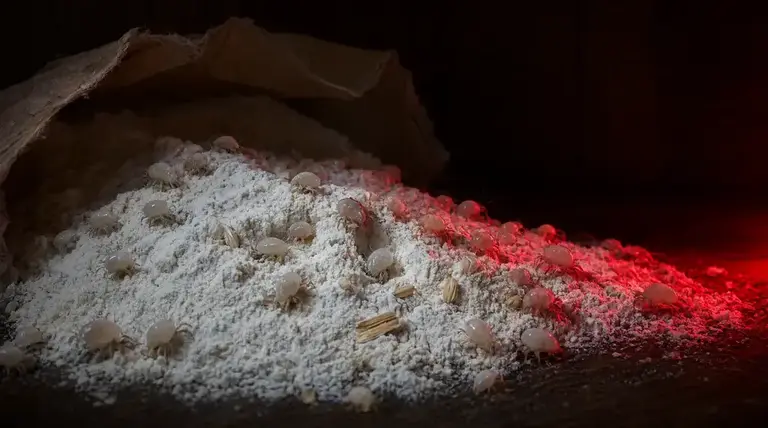
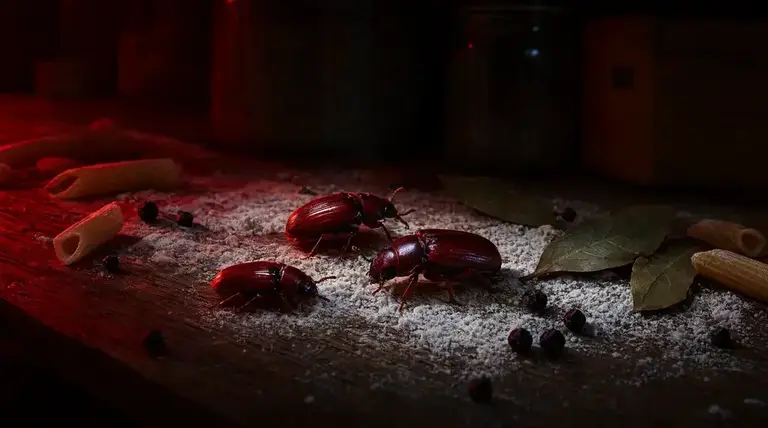
Housing style plays a role too. Older Queenslanders with generous walk-in pantries, and brick-veneer homes with pantries backing onto a hot northern wall, create ideal warm breeding pockets. Modern slab-on-ground homes with open-plan kitchens are not immune either — consistent air-conditioned warmth simply spreads the activity across more months of the year. Pantry moths also rarely arrive alone: the same bulk dry goods that harbour meal moths often carry weevils in flour and rice, and undisturbed long-grain storage can attract the pests covered in our Pantry Beetles: ID and Control Guide. Even flour mites, the invisible pantry pest, favour the same humid conditions. Almost all infestations start with eggs laid at the processing or storage stage, so no kitchen is too clean to be hit.
Warning signs: a checklist for spotting pantry moths early
The clearest sign of pantry moths is small moths fluttering around the kitchen at dusk, but the larvae and their webbing appear well before adults take flight. Work through this checklist when you open any packet of dry goods:
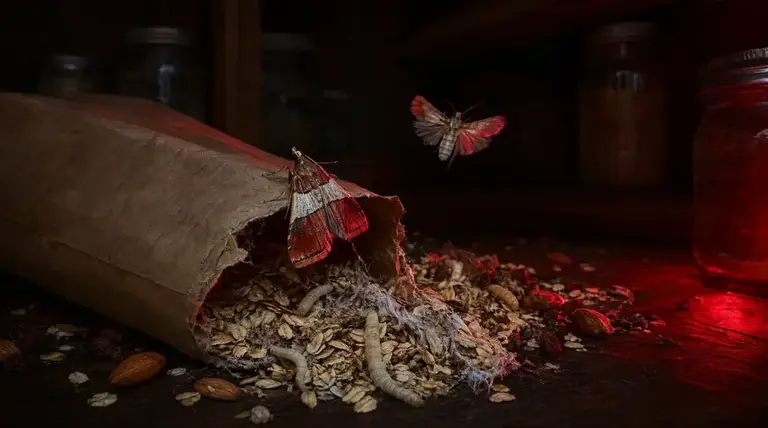
- Small moths, 8–10 mm long — with a distinctive two-tone wing, pale grey at the base and coppery-bronze at the tip, usually seen in the evening near the kitchen.
- Silken webbing — clumping grains, flour or dried fruit together inside packets or containers.
- Cream-coloured caterpillars — the destructive larval stage, found inside food or crawling up walls and splashbacks to pupate.
- Cocoons in high corners — where the cupboard ceiling meets the wall, under shelf lips, or in the crack where a door meets the frame.
- Off smells or clumped product — flour or cereal that has caked together or smells musty often hides larvae and droppings.
The larvae are surprisingly mobile. When ready to pupate they crawl away from the food, often several metres, which is why an infestation that seemed limited to one packet of flour can reappear weeks after you thought you had cleaned it out — the pupae were hiding well away from the food the whole time.
DIY vs professional pantry moth control
Most single-source infestations can be handled DIY with a thorough clean-out, but recurring or widespread problems — especially where pupae have spread through adjoining rooms — justify calling a licensed technician. Here is how the two approaches compare:
| Factor | DIY | Professional |
|---|---|---|
| Upfront cost | $20–$60 (traps, containers, cleaning supplies) | $150–$350 depending on scope |
| Time required | 3–4 hours plus 3–6 weeks of monitoring | One visit, usually 1–2 hours |
| Effectiveness | High if every infested item and all pupae are found | High; technicians target harbourage points homeowners miss |
| Best for | A first, localised infestation | Recurring infestations, large pantries, commercial kitchens |
| Chemicals | Generally not needed — avoid sprays near food | APVMA-registered products applied by licensed technicians only |
The DIY sequence that works: inspect every dry-goods packet for webbing, larvae or moths; discard all infested and open items into a sealed outdoor bin; clean by vacuuming shelves, corners and cracks, then wiping with hot soapy water; target pupae by wiping the underside of shelves and cupboard rims where cocoons hide; trap surviving males with pheromone traps; and reset by storing remaining food in airtight containers before restocking. The single biggest mistake is cleaning the shelves but missing pupae tucked into ceiling corners, which then hatch and restart the cycle. Where moths persist, a combined Silverfish & Pantry Pest Control service treats the full room, not just the cupboard.
What pantry moth treatment costs in Australia (2025-26)
Across the Australian pest control industry, the typical market rate for professional pantry moth treatment sits between $150 and $350 AUD for a standard residential kitchen, with most jobs landing near the lower end when the infestation is contained to one pantry. What operators generally charge varies with pantry size, whether adjoining rooms need treatment, and follow-up requirements.
| Service | Typical market rate (AUD) | What’s included/notes |
|---|---|---|
| Inspection and identification | $0–$99 | Often free with treatment; confirms species and source |
| Single-pantry treatment | $150–$220 | Crack-and-crevice treatment, trap placement, prep advice |
| Whole-kitchen treatment | $220–$350 | Multiple cupboards, ceiling corners, adjoining storage areas |
| Follow-up visit | $90–$150 | Check traps, treat late-hatching pupae if needed |
| DIY supplies | $20–$60 | Pheromone traps, airtight containers, cleaning gear |
Any chemical application should be performed by a licensed technician using APVMA-registered products — never spray supermarket insecticide directly onto shelves that hold food. The figures above are typical Australian market rates across the industry, not fixed quotes from any one provider.
Aussie Pest Strike typically comes in well under these market rates for pantry moth treatment, without cutting corners on thoroughness or safety. For an exact quote tailored to your kitchen and the scale of the infestation, give us a call on [aps_phone] and we’ll sort it out.
Seasonal pantry moth activity across Australia
Pantry moths are active indoors all year, but activity peaks sharply through the Australian summer (December to February) when heat shortens their lifecycle to as little as four weeks. Heated kitchens keep numbers ticking over through winter, so traps should stay up year-round.
Jan
Feb
Mar
Apr
May
Jun
Jul
Aug
Sep
Oct
Nov
Dec
Indicative activity pattern: pantry moths peak through the warm Dec–Feb summer when the lifecycle compresses to 4–6 weeks, then dip through winter — though heated kitchens sustain low-level activity in every month.
Nine times out of ten, the homeowner has already cleaned the pantry properly — but they’ve only cleaned at eye level. The cocoons we find are up in the ceiling corners or under the shelf lip, sometimes two or three metres from the food. Check high and check wide, and you’ll usually win on the first attempt.
Start with a full clean-out today: bin every open or webbed packet, vacuum and wipe every shelf including the undersides, and hang a pheromone trap. Restock only into airtight glass or hard-plastic containers, buy smaller quantities, and freeze new flour or grains for four days to kill any hitchhiking eggs. If moths are still appearing after three weeks, book a professional inspection — hidden pupae or a second source somewhere in the house is almost always the cause.
Frequently Asked Questions
What does an Indian meal moth look like?
The Indian meal moth is a small moth, 8–10 mm long, with a distinctive two-toned wing: pale grey at the base and coppery-bronze at the tip. Adults are usually seen fluttering around the kitchen in the evening. The destructive stage is the cream-coloured caterpillar (larva), which you may find inside food packets or crawling up walls and splashbacks to pupate.
Which foods do pantry moths infest?
Indian meal moths attack a wide range of dry goods, including flour, rice, cereal, nuts, dried fruit, pet food and chocolate. Infestations almost always begin with eggs laid at the processing or storage stage, so even unopened or recently purchased packets can carry them. Any dry goods showing webbing, clumping or larvae should be discarded into a sealed outdoor bin.
What are the warning signs of a pantry moth infestation?
Look for small two-toned moths flying near the kitchen at dusk, silken webbing clumping grains or dried fruit inside packets, cream-coloured caterpillars in food or on walls, cocoons in high corners where cupboard ceilings meet walls, and flour or cereal that has caked together or smells musty. Larvae and webbing usually appear before adults take flight.
Why do pantry moths keep coming back after I clean the pantry?
Larvae crawl several metres away from the food to pupate, hiding in ceiling corners, under shelf lips and in cracks around door frames. If these cocoons are missed during cleaning — often because homeowners only clean at eye level — they hatch weeks later and restart the cycle. Wiping shelf undersides and high corners is essential to break the breeding cycle.
How do I get rid of pantry moths myself?
Inspect every dry-goods packet for webbing, larvae or moths, then discard all infested and open items into a sealed outdoor bin. Vacuum shelves, corners and cracks, wipe everything with hot soapy water including shelf undersides, hang pheromone traps to catch surviving males, and restock only into airtight containers. The process takes about 3–4 hours plus 3–6 weeks of monitoring.
When is pantry moth season in Australia?
Pantry moths are active indoors all year in Australia, but activity peaks sharply through summer from December to February, when heat can compress their lifecycle to as little as four weeks. A single female lays 100–400 eggs, so numbers build quickly in warm weather. Heated kitchens keep low-level activity going through winter, so traps should stay up year-round.
How much does professional pantry moth treatment cost in Australia?
Professional pantry moth treatment costs vary depending on the size of the affected area, how many pantries or cupboards are involved, and whether adjoining rooms need attention. A single small pantry typically sits at the lower end of the price range, while treating an entire kitchen costs more. Follow-up visits and inspections are usually quoted separately, so ask providers to itemise what is included before booking.
How do I stop pantry moths coming back after treatment?
Store all dry goods in airtight glass or hard-plastic containers, buy smaller quantities so stock turns over quickly, and freeze new flour or grains for four days to kill any hitchhiking eggs before storing them. Keep pheromone traps up year-round, as heated kitchens sustain low-level moth activity through winter. If moths still appear after three weeks, hidden pupae or a second source is likely.
Can I check whether Aussie Pest Strike handles pantry moth problems like mine?
Yes. Aussie Pest Strike treats Indian meal moth and other stored-food pest infestations, from a single affected pantry through to whole-kitchen situations where larvae have spread to adjoining cupboards or storage areas. Because every infestation differs in scale and location, the best way to confirm they can help with your specific situation is to get in touch and describe what you are seeing.
What should I do if moths keep appearing after my DIY clean-out?
If moths are still appearing three weeks after a thorough clean-out, hidden pupae or a second food source somewhere else in the house is almost always the cause. Aussie Pest Strike recommends booking a professional inspection at that point, as technicians target harbourage points such as ceiling corners and shelf undersides that homeowners commonly miss, treating the full room rather than just the cupboard.
Sources & further reading
Found Something
Dangerous?
Don’t touch it. Don’t spray it. Keep kids and pets clear, take a photo from a safe distance, and call us — or book a free inspection and we’ll come to you.
02 7235 0050