Weevils in Flourand Rice:What to Do
Weevils in flour and rice breed inside grains. Learn what to do, how to freeze and store safely, and prevent them, then book a free pantry inspection.
Found tiny dark beetles in your flour or rice? You are dealing with weevils — most likely the rice weevil (Sitophilus oryzae) or granary weevil — and the fix is to bin the infested product, deep-clean the pantry and store everything else in airtight containers. Many Australians land here after typing a quick search like “e weevils in rice” mid-cooking-dinner panic, so let us get straight to what matters.
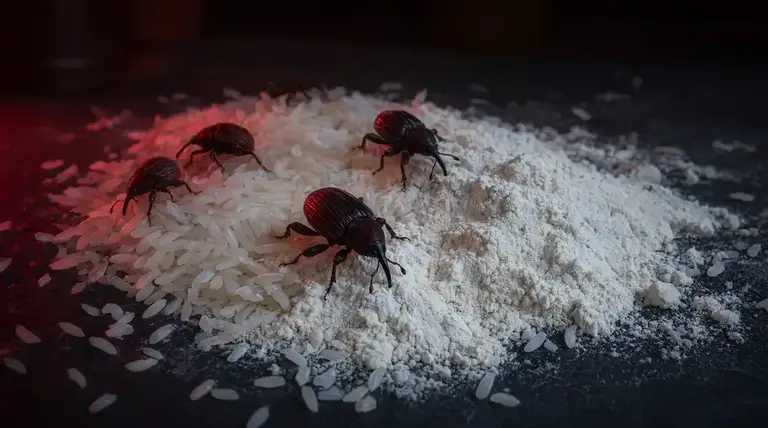
Weevils are small stored-product beetles, 2–4 mm long with a distinctive snout, whose larvae develop hidden inside individual grains of rice, wheat and other cereals. Because the immature stages are sealed inside the grain itself, an infestation is often well established before you spot the first adult wandering the shelf. This guide covers identification, immediate action, prevention, costs and when to call a licensed pest control technician — relevant for kitchens Australia-wide, from humid Queenslanders to brick-veneer homes in the southern states.
- Weevils breed inside whole grains — the female lays a single egg inside each kernel and seals it, so infested food must be discarded, not sieved.
- Freeze salvageable dry goods at -18°C for at least four days to kill hidden eggs and larvae.
- Airtight glass or hard-plastic containers are the permanent defence; weevils cannot chew through them.
- Weevils almost always arrive inside packaged grain from the shop, so a spotless kitchen does not prevent that first entry.
- Recurring infestations across multiple foods usually mean a hidden source — a professional inspection is the fastest fix.
Why Weevils Are Such a Problem in Australian Kitchens (Even If You Only Searched “E Weevils”)
Weevils thrive in Australian kitchens because our warm climate accelerates their breeding cycle, and most homes store grain products in cupboards that sit comfortably within the temperature range these beetles tolerate. In a warm Australian summer, a rice weevil can complete its lifecycle — egg to adult — in about a month, and each female may lay several hundred eggs over her lifetime.
Housing style plays a role too. Older Queenslanders and homes with subfloor ventilation often have kitchens that run warm and humid for much of the year, while slab-on-ground brick-veneer homes in New South Wales and Victoria can trap summer heat in walk-in pantries. A bag of rice left in a warm cupboard can host multiple overlapping generations before you notice anything wrong. Unlike pantry moths, whose larvae feed on the surface and leave webbing, weevil larvae eat the grain from the inside out, emerging through a tell-tale exit hole as fully grown adults.
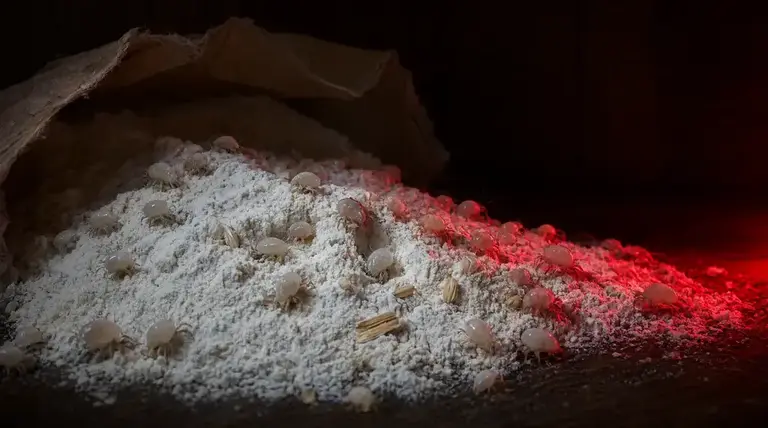
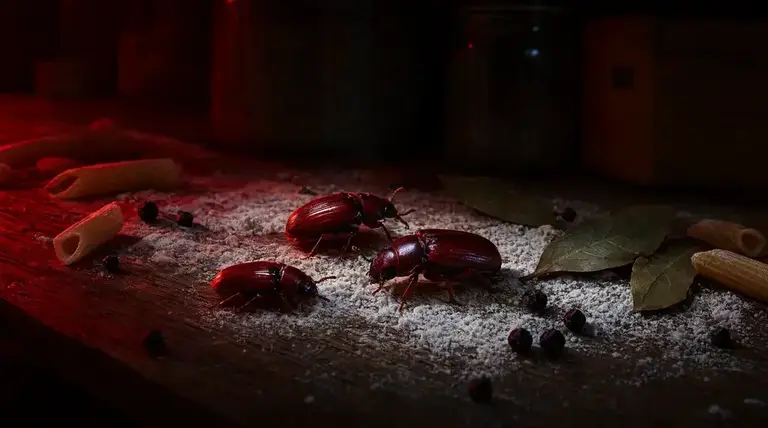
Correct identification matters, because weevils are only one of several stored-product pests Australians encounter. If you are seeing fine dust and clumping rather than beetles, it is worth reading our guide to flour mites, the invisible pantry pest, and if the culprits are flat reddish beetles without a snout, check our pantry beetles ID and control guide.
Warning Signs: How to Tell If You Have Weevils
The clearest sign of weevils is tiny dark snouted beetles crawling in or around flour, rice, pasta or dried grains. Because the larvae are hidden inside the grain, adults on the shelf usually mean the infestation is already established. Run through this checklist:
- Tiny dark beetles (2–4 mm) with an elongated snout, crawling in flour, rice, pasta, cereal or dried grains — rice weevils are reddish-brown to black and can fly.
- Hollowed-out grains or individual kernels with small round exit holes where adults have emerged.
- Fine powder or clumping at the bottom of a packet, which is a mix of grain dust and insect waste.
- Beetles spreading to neighbouring items — weevils move readily from an infested bag to nearby flour, cereal and pasta.
- Webbing instead of beetles? That points to moth larvae, not weevils — see our article on getting rid of Indian meal moths.
DIY vs Professional Weevil Control
Most single-source weevil infestations can be handled yourself: discard the infested food, vacuum and wipe down the pantry, freeze salvageable goods and repackage everything airtight. Professional pest control becomes worthwhile when weevils keep reappearing across multiple foods, when the source cannot be found, or when other stored-product pests are involved — a licensed technician can inspect, identify hidden reservoirs and apply APVMA-compliant treatments where appropriate.
| Factor | DIY approach | Professional treatment |
|---|---|---|
| Best for | Single infested packet, caught early | Recurring or multi-product infestations |
| Typical cost | $0–$40 (containers, freezer, cleaning) | $150–$350 depending on scope |
| Time involved | 2–4 hours of sorting, vacuuming and wiping | One visit, usually 45–90 minutes |
| Hidden sources | Easy to miss spilled grain behind shelves | Technician inspects cracks, voids and adjoining rooms |
| Chemical options | Not recommended around food storage | APVMA-approved products applied by licensed technicians only |
| Long-term prevention | Airtight containers, bay leaves, stock rotation | Tailored prevention plan plus monitoring advice |
If you are tackling it yourself, follow this order: bin the infested food in a sealed bag in the outdoor bin (do not just close the packet), check every neighbouring item, empty and vacuum the pantry including cracks and shelf corners, wipe down with hot soapy water and dry thoroughly, then freeze salvageable dry goods at -18°C for at least four days. Our Silverfish & Pantry Pest Control service covers weevils and other stored-product pests when the problem outgrows a DIY fix.
Weevil Treatment Costs in Australia (2025–26)
Across the Australian market, professional weevil and pantry-pest treatment generally costs between $150 and $350 for a standard residential visit, with industry pricing driven by the size of the pantry or kitchen, the number of products affected and whether follow-up visits are needed. The figures below are typical industry-wide ranges for 2025–26 — any individual quote will depend on the property and location.
| Service | Typical market rate (AUD) | What’s included/notes |
|---|---|---|
| Inspection and identification | $0–$120 | Pest ID, source tracing, treatment plan; some operators waive the fee |
| Standard pantry-pest treatment | $150–$250 | Crack-and-crevice treatment, shelf voids, prevention advice |
| Severe/whole-kitchen infestation | $250–$350 | Multiple storage areas, adjoining rooms, follow-up visit |
| Follow-up/monitoring visit | $80–$150 | Re-inspection, trap checks, retreatment if required |
These are typical Australian market rates, not our pricing. Aussie Pest Strike typically comes in well under these industry figures while delivering the same thorough, licensed treatment. For an exact quote tailored to your property, call us on [aps_phone].
Seasonal Weevil Activity Across Australia
Weevil activity in Australia peaks through the warmer months from late spring to early autumn, when higher temperatures speed up their breeding cycle. Because rice weevils tolerate a wide temperature range, they survive comfortably in most Australian kitchens year-round — but you are far more likely to notice an outbreak between November and March.
Jan
Feb
Mar
Apr
May
Jun
Jul
Aug
Sep
Oct
Nov
Dec
Indicative activity pattern: weevil breeding peaks in the warm months (roughly November to March) when the lifecycle can complete in about a month, and slows through winter — though heated kitchens can sustain activity year-round.
Nine times out of ten, the weevils came home in the packet — the eggs were already in the grain before it hit the supermarket shelf. The jobs that go wrong are the ones where people throw out one bag of rice but leave the spilled flour behind the shelf liner. Find the source, freeze what you are keeping, and seal everything hard.
Discard infested products immediately, vacuum and wipe the pantry, freeze salvageable dry goods at -18°C for four days, and move everything into airtight glass or hard-plastic containers. Buy grains in quantities you will use within a couple of months and keep the pantry cool and dry. If weevils return after a thorough clean-out, book a professional inspection — there is almost certainly a hidden source.
Frequently Asked Questions
What are the tiny dark beetles in my flour or rice?
They are almost certainly weevils, most likely rice weevils (Sitophilus oryzae) or granary weevils. These stored-product beetles measure 2–4 mm long and have a distinctive elongated snout. Rice weevils range from reddish-brown to black and can fly. Because their larvae develop hidden inside individual grains of rice, wheat and other cereals, an infestation is often well established before you spot the first adult on the shelf.
How do I know if I have weevils rather than another pantry pest?
The clearest sign is tiny dark snouted beetles crawling in or around flour, rice, pasta or dried grains. Other indicators include hollowed-out grains with small round exit holes where adults have emerged, fine powder or clumping at the bottom of a packet, and beetles spreading to neighbouring items. If you see webbing instead of beetles, that points to moth larvae rather than weevils.
Can I just sieve the weevils out of my flour instead of throwing it away?
No. Weevil females lay a single egg inside each grain kernel and seal it in place, so eggs and larvae are hidden inside the grains themselves. Sieving only removes visible adults, leaving immature stages behind. Infested food must be discarded — seal it in a bag and put it straight into the outdoor bin rather than simply closing the packet.
How do I get rid of weevils from my pantry myself?
Bin infested food in a sealed bag in the outdoor bin, then check every neighbouring item. Empty the pantry and vacuum thoroughly, including cracks and shelf corners, wipe down with hot soapy water and dry completely. Freeze salvageable dry goods at -18°C for at least four days to kill hidden eggs and larvae, then repackage everything into airtight glass or hard-plastic containers that weevils cannot chew through.
Where do pantry weevils come from if my kitchen is clean?
Weevils almost always arrive inside packaged grain from the shop — the eggs were already in the grain before it reached the supermarket shelf. A spotless kitchen cannot prevent that first entry. The common mistake is discarding one infested bag but leaving spilled flour behind shelf liners, which lets the infestation continue. Finding and removing every source matters more than general cleanliness.
Do weevils spread to other food in my pantry if I leave them untreated?
Professional help is worthwhile when weevils keep reappearing across multiple foods, when you cannot locate the source, or when other stored-product pests are involved. Recurring infestations usually mean a hidden reservoir such as spilled grain in cracks, voids or adjoining rooms. A licensed technician can inspect, identify those hidden sources and apply APVMA-compliant treatments where appropriate.
When are weevils most active in Australian homes?
Weevil activity peaks through the warmer months from late spring to early autumn, roughly November to March, when higher temperatures speed up breeding. In a warm Australian summer a rice weevil can complete its lifecycle from egg to adult in about a month, and each female may lay several hundred eggs. They survive comfortably in most kitchens year-round, though activity slows through winter.
How can I prevent weevils coming back after a clean-out?
Store all grains, flour, pasta and cereals in airtight glass or hard-plastic containers, which weevils cannot chew through. Buy grains in quantities you will use within a couple of months and rotate stock so older packets are used first. Keep the pantry cool and dry, since warm conditions accelerate breeding. Some people also use bay leaves as a deterrent alongside these measures.
How does Aussie Pest Strike treat a pantry weevil infestation?
Explain which foods are affected, how many packets or storage areas show beetles, and whether the problem keeps returning after cleaning. Mention any signs you have noticed, such as exit holes in grains, powder at the bottom of packets, or beetles spreading between items. Details about your pantry setup and how long the issue has been going help the technician plan an inspection and identify likely hidden sources.
What should I do before Aussie Pest Strike arrives to inspect for weevils?
Avoid discarding everything straight away, as leaving some affected material in place helps the technician trace the source. Do keep infested items sealed and separated from untouched food, and note where you have seen beetles, exit holes or clumping. Hold off on spraying any products around food storage, since chemical options near food are best left to licensed technicians using APVMA-approved treatments.
Sources & further reading
Found Something
Dangerous?
Don’t touch it. Don’t spray it. Keep kids and pets clear, take a photo from a safe distance, and call us — or book a free inspection and we’ll come to you.
02 7235 0050