Why Pantry Pests KeepComing Back (AndHow to Stop It)
Why Pantry Pests Keep Coming Back (And How to Stop It) — pantry pests keep coming back because eggs and larvae survive in unopened packets, shelf cracks and...
Pantry pests keep coming back because eggs and larvae survive in unopened packets, shelf cracks and spilled crumbs, so a quick wipe-down never breaks the breeding cycle. Lasting control means finding the infested source, binning it, deep-cleaning the pantry and storing everything in airtight containers.
If you’ve tossed out the weevilly flour, wiped the shelves and still found moths circling the kitchen a fortnight later, you’re not alone — it’s the single most common pantry complaint we hear across Australia. The frustrating truth is that the insects you can see are only a fraction of the problem, and until the hidden eggs and larvae are dealt with, the cycle simply restarts. This guide explains why pantry pests keep returning, how to identify a persistent infestation, and what it actually takes to get rid of it for good — whether you handle it yourself or bring in a licensed pest control technician.
- Adult moths and beetles are only a fraction of the population — eggs and larvae hide inside sealed packets, jar threads and shelf joins.
- Warm Australian conditions let Indian meal moths complete a breeding cycle in as little as four weeks above 25°C.
- Freezing suspect dry goods at −18°C for at least four days kills hidden eggs before restocking.
- Airtight glass or heavy plastic containers — not clip-top bags — are the only reliable long-term storage defence.
- If pests return within weeks of a thorough clean-out, a professional inspection will find the source you can’t reach.
Why pantry pests keep coming back in Australia
Pantry pests thrive in Australia because our warm climate accelerates their breeding cycle for most of the year. Indian meal moth larvae can develop from egg to adult in as little as four weeks when pantry temperatures sit above 25 degrees, which covers most of spring and summer in Queensland, New South Wales and Western Australia — and much of the year in the tropical north.
Housing style plays a role too. Older Queenslanders and homes with subfloor voids often have gaps around pipework and flooring where beetles and moths can travel between rooms, while brick veneer homes on concrete slabs tend to hold warmth in kitchen walls through autumn, extending the breeding season. Humid coastal conditions in Brisbane, Sydney and northern NSW favour the sawtoothed grain beetle, which breeds quickly in moisture-laden flour and rice.
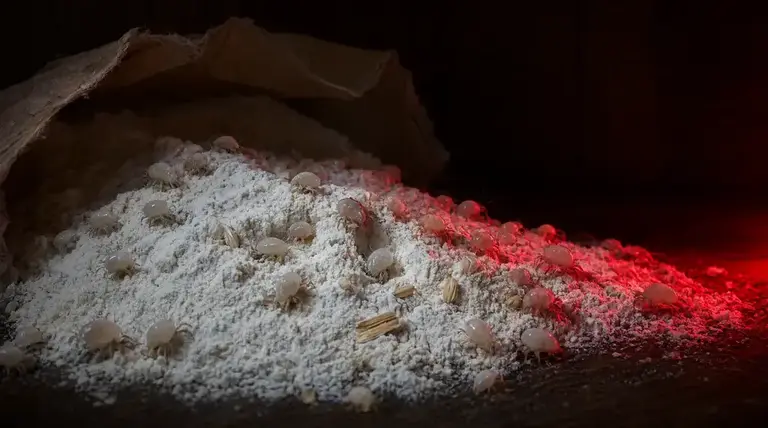
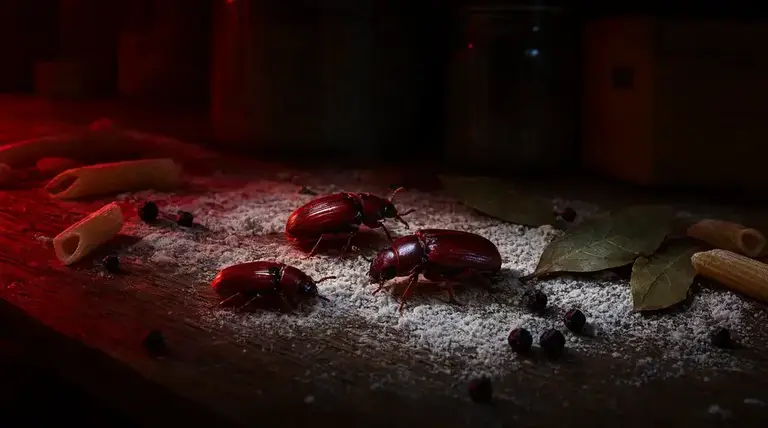
The usual suspects in Australian pantries include the Indian meal moth (Plodia interpunctella), whose cream-coloured larvae spin silky webbing through cereals, nuts and dried fruit; the sawtoothed grain beetle (Oryzaephilus surinamensis), a flat brown beetle that infests rice, pasta, flour and dried herbs; and rice weevils plus red and confused flour beetles, which favour whole grains and milled products. Weevils lay eggs inside whole grains, so infestations often arrive home from the shop already underway. For detailed identification, see our guides to getting rid of Indian meal moths, weevils in flour and rice, and our pantry beetles ID and control guide.
Warning Signs a Pantry Infestation Is Still Active
The clearest sign of an active pantry infestation is recurring adult moths or beetles after you’ve already cleaned — it means a breeding source is still present. Work through this checklist to confirm what you’re dealing with:
- Silky webbing in cereal boxes, nut packets, dried fruit or pet food, often binding grains into clumps.
- Small cream-coloured larvae crawling up walls or across ceilings away from the pantry — a sign they’re searching for pupation sites.
- Tiny brown beetles or weevils inside sealed rice, flour or pasta packets, including unopened ones.
- Clumped or dusty grain with a musty smell, caused by larval activity and cast skins.
- Moths flying at dusk, especially around the kitchen, pantry or adjoining rooms.
- Pinholes in packaging or fine powder spilling from the folds of paper and cardboard packets.
- Activity in shelf-pin holes, hinges and corner joins, where eggs and larvae shelter between cleans.
DIY Pantry Pest Treatment vs Professional Pest Control
Most mild pantry infestations can be resolved with a methodical DIY clean-out, but recurring problems usually need a licensed pest control technician to locate hidden sources. The key difference is reach: DIY works on what you can see and empty, while professionals can treat wall voids, roof spaces and other harbourage areas.
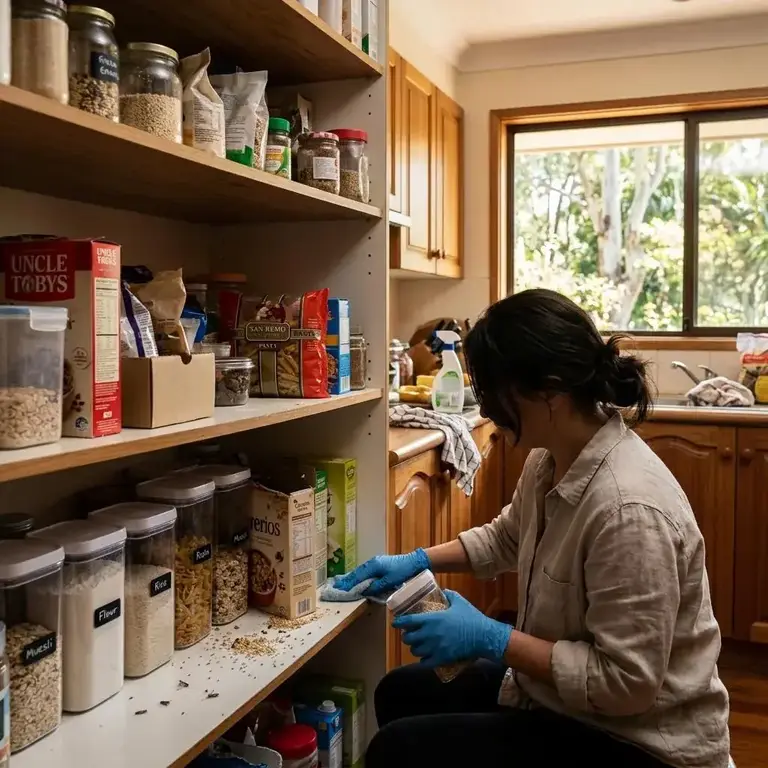
For a DIY approach, work through the pantry systematically: inspect every packet — including sealed ones — and bin anything with webbing, larvae, beetles or clumped grain, sealing rubbish bags and taking them straight outside. Vacuum shelves, corners, shelf-pin holes and hinges, then wipe with warm soapy water or a vinegar solution (skip insecticide sprays near food). Freeze suspect dry goods at −18°C for at least four days to kill hidden eggs, and decant everything into airtight glass or heavy plastic containers. Pheromone traps are useful for monitoring surviving moths, though they won’t eliminate an infestation on their own.
| Factor | DIY clean-out | Professional treatment |
|---|---|---|
| Best for | Mild, first-time infestations caught early | Recurring or widespread infestations |
| Typical cost | $20–$80 (containers, traps, cleaning) | $180–$450 depending on property and severity |
| Reaches hidden sources | Limited to visible, accessible areas | Wall voids, roof voids, under appliances, subfloor |
| Time to resolve | 1–6 weeks depending on egg hatch waves | Usually one visit, with follow-up if needed |
| Chemical use | Not recommended near food storage | APVMA-approved products applied by licensed technicians |
| Documentation | None | Service reports — important for food businesses and strata |
Pantry Pest Control Costs in Australia (2025–26)
Across the Australian market, professional pantry pest treatment typically costs between $180 and $450 for a residential property. These are typical market rates — not our prices — and what pest control companies generally charge will depend on the size of the home, the severity of the infestation and whether follow-up visits are required. Market rates also vary by state and by whether the job is a standalone treatment or part of a broader general pest service.
| Service | Typical market rate (AUD) | What’s included / notes |
|---|---|---|
| Inspection and assessment | Free – $120 | Source identification, species confirmation, treatment plan; some providers charge, others don’t |
| Single pantry pest treatment | $180 – $300 | Targeted treatment of pantry, shelving and harbourage areas with APVMA-approved products |
| Severe / whole-of-kitchen treatment | $300 – $450 | Includes wall voids, under appliances and adjacent rooms; may include a follow-up visit |
| Combined general pest treatment | $250 – $500 | Pantry pests treated alongside cockroaches, ants or silverfish — often better value |
| Commercial kitchen treatment | $350 – $800+ | Includes documentation for state food safety compliance; ongoing programs quoted separately |
Whichever provider you choose, chemical treatments around food storage areas should always be carried out by a licensed technician using APVMA-approved products. Our Silverfish & Pantry Pest Control service covers the full range of stored-product pests in one visit.
All figures above reflect typical Australian market rates, not Aussie Pest Strike’s pricing — in most cases we come in well under these rates. For an exact quote tailored to your home and infestation, give us a call on [aps_phone].
Seasonal Pantry Pest Activity in Australia
Pantry pest activity in Australia peaks through the warmer months from October to April, when temperatures above 25°C accelerate breeding cycles. Activity dips over winter in southern states but barely pauses in Queensland and the tropical north, where indoor warmth keeps populations breeding year-round.
Jan
Feb
Mar
Apr
May
Jun
Jul
Aug
Sep
Oct
Nov
Dec
Typical pantry pest activity pattern across Australia: peak activity from late spring through summer and early autumn, easing over winter in southern states. Northern regions often see elevated activity all year due to sustained warmth and humidity.
Once the pantry is clear, a few habits keep it that way. Buy dry goods in smaller quantities you’ll use within a month or two, especially in the warmer months, and rotate stock so older packets get used first. Check bulk-buy items, birdseed and pet food before they come inside — these are the most common Trojan horses. Bay leaves are a popular folk deterrent, but they won’t stop an established infestation on their own.
Nine times out of ten, when a customer tells us the moths “came back”, they never actually left — there’s an overlooked packet of birdseed in the garage or spilled flour behind a shelf bracket keeping the cycle alive. The homes that stay pest-free are the ones where everything goes into sealed containers the day it comes home from the shop. Do that, and you’ve done 90 per cent of the job.
Start with a complete clean-out: bin every suspect packet, vacuum every crevice, freeze anything you’re keeping and restock only into airtight containers. If moths or beetles reappear within a few weeks, don’t keep repeating the cycle — book a professional inspection so the hidden source is found and treated properly the first time.
Frequently Asked Questions
Why do pantry pests keep coming back after I clean the shelves?
Because a quick wipe-down never breaks the breeding cycle. Eggs and larvae survive inside unopened packets, jar threads, shelf cracks and spilled crumbs, so even after you bin the weevilly flour and wipe down, hidden stages keep hatching. The adult moths and beetles you can see are only a fraction of the population, and until every infested source is removed, the cycle simply restarts within weeks.
How fast can pantry pests breed in Australian conditions?
Very fast in warm weather. Indian meal moths can complete a breeding cycle from egg to adult in as little as four weeks when pantry temperatures sit above 25 degrees Celsius, which covers most of spring and summer in Queensland, New South Wales and Western Australia, and much of the year in the tropical north. Humid coastal conditions also favour sawtoothed grain beetles breeding in moist flour and rice.
Why do pantry pests hide in flour, rice, and cereal packets so often?
The usual suspects are Indian meal moths, whose cream-coloured larvae spin silky webbing through cereals, nuts and dried fruit; sawtoothed grain beetles, flat brown beetles that infest rice, pasta, flour and dried herbs; and rice weevils plus red and confused flour beetles, which favour whole grains and milled products. Weevils lay eggs inside whole grains, so infestations often arrive home from the shop already underway.
What are the warning signs that a pantry infestation is still active?
Look for silky webbing in cereal boxes, nut packets or pet food binding grains into clumps; cream-coloured larvae crawling up walls or ceilings away from the pantry; tiny beetles or weevils inside sealed packets; clumped or dusty grain with a musty smell; moths flying at dusk around the kitchen; pinholes in packaging with fine powder spilling out; and activity in shelf-pin holes, hinges and corner joins where eggs shelter between cleans.
Why do pantry pests survive even after I throw out infested packets?
Inspect every packet, including sealed ones, and bin anything with webbing, larvae, beetles or clumped grain, taking sealed rubbish bags straight outside. Vacuum shelves, corners, shelf-pin holes and hinges, then wipe with warm soapy water or vinegar — skip insecticide sprays near food. Freeze suspect dry goods at minus 18 degrees for at least four days to kill hidden eggs, decant everything into airtight containers, and use pheromone traps to monitor surviving moths.
What kind of containers actually stop pantry pests?
Airtight glass or heavy plastic containers are the only reliable long-term storage defence. Clip-top bags are not enough, as determined larvae can chew through or find their way into flimsy packaging. Decanting everything into sealed containers the day it comes home from the shop does most of the prevention work, because it denies moths and beetles access to the dry goods they need to breed in.
When should I call a professional for pantry pests?
If pests return within weeks of a thorough clean-out, a licensed pest control technician should inspect to locate the hidden source you cannot reach. DIY works on what you can see and empty, while professionals can treat wall voids, roof spaces, under appliances and subfloor harbourage areas. Recurring or widespread infestations usually need professional treatment with APVMA-approved products, especially where chemical use near food storage is involved.
How do I stop pantry pests coming back once the pantry is clear?
Buy dry goods in smaller quantities you will use within a month or two, especially in warmer months, and rotate stock so older packets get used first. Check bulk-buy items, birdseed and pet food before they bring them inside, as these are the most common sources of new infestations. Bay leaves are a popular folk deterrent but will not stop an established infestation on their own.
What information should I give Aussie Pest Strike when booking help for pantry pests?
It helps to describe what you have been seeing — whether moths, beetles or weevils, and where — how long the problem has persisted, and what clean-out steps you have already tried. Mention any overlooked stored items such as birdseed or pet food, and note if you run a food business, since documentation may matter. This helps the technician plan an inspection and identify the hidden breeding source.
Should I start with a DIY clean-out before contacting Aussie Pest Strike?
Yes, a methodical DIY clean-out is a sensible first step for mild, first-time infestations: bin suspect packets, vacuum every crevice, freeze anything you want to keep, and transfer all dry goods into airtight containers. If moths or beetles reappear within weeks despite this, contact Aussie Pest Strike for a professional inspection to find the hidden source in wall voids, roof spaces or other harbourage areas you cannot reach.
Sources & further reading
Found Something
Dangerous?
Don’t touch it. Don’t spray it. Keep kids and pets clear, take a photo from a safe distance, and call us — or book a free inspection and we’ll come to you.
02 7235 0050