Pantry Beetles:ID andControl Guide
Pantry beetles id — pantry beetles are small stored-product beetles, typically 2-4 mm long, that infest flour, cereals, spices and dried goods; controlling...
Pantry beetles are small stored-product beetles, typically 2–4 mm long, that infest flour, cereals, spices and dried goods, and controlling them means identifying the species, discarding infested food, and sealing everything in airtight containers. If you have spotted tiny brown beetles in a packet of flour or crawling across a pantry shelf, you are dealing with one of Australia’s most common household pest problems.
The most frequent offenders in Australian kitchens are flour beetles, sawtoothed grain beetles, drugstore beetles and cigarette beetles. This guide walks you through a practical identification framework, a step-by-step control plan, realistic treatment costs in AUD, and the point at which calling in professional pest control makes more sense than another weekend of scrubbing shelves.
- Pantry beetles are 2–4 mm stored-product pests that target flour, cereal, spices, dried fruit and pet food — not usually whole, intact grains.
- Australian summer heat accelerates their lifecycle to as little as 6–8 weeks, so small problems become large ones quickly.
- The core fix is sanitation and airtight storage; chemical sprays are rarely appropriate around food.
- Professional treatment typically costs $180–$450 AUD depending on the size and spread of the infestation.
- Recurring beetles after a full clean-out usually mean a hidden reservoir — behind an appliance, in a wall void, or under a subfloor.
Why Pantry Beetles Are a Persistent Problem in Australian Homes
Pantry beetles thrive across Australia because our warm climate speeds up their breeding cycle and our housing stock gives them plenty of places to hide. In the warm December–February summer, a flour beetle can complete its entire lifecycle in as little as 6–8 weeks, so populations build fast wherever a food source remains.
Housing style matters too. Older Queenslanders with timber floors and wall cavities offer cracks and voids where spilled grain collects unseen. Brick veneer homes on concrete slabs — the standard across most new estates in Sydney, Melbourne and Perth — tend to have tighter construction, but walk-in pantries and bulk-buy shopping habits mean more stored food sitting for longer. Homes with a subfloor can harbour spilled dry goods or pet food beneath the house, creating a reservoir that keeps re-seeding the kitchen above. In humid northern Queensland and coastal New South Wales, milled products also absorb moisture and break down faster, making them even easier for beetles to exploit.
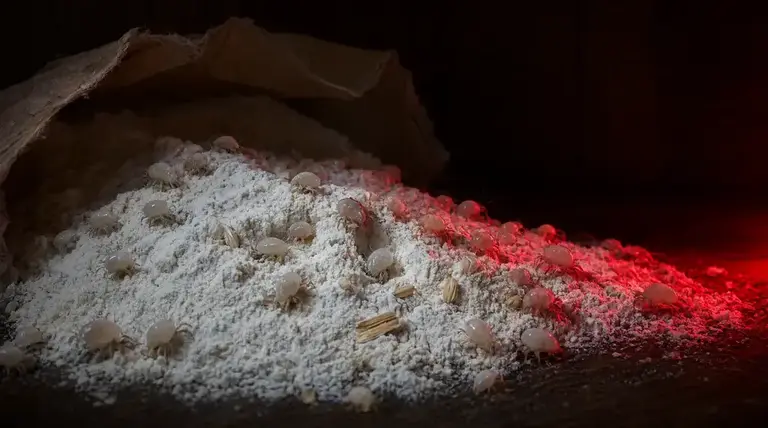
It is also worth knowing that pantry beetles rarely arrive alone. Kitchens with a beetle problem frequently also host other stored-product pests, from Indian meal moths to flour mites, the invisible pantry pest that thrives in the same warm, slightly damp conditions.
Identifying Common Pantry Beetles
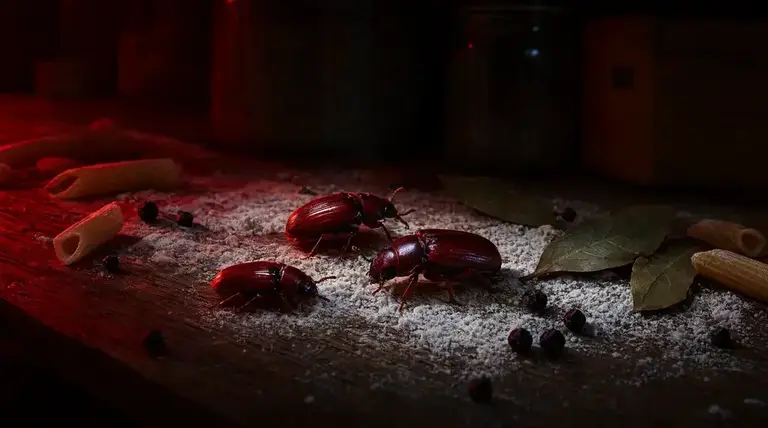
Pantry beetles are identified by their size, shape and preferred foods, and the four species below account for the vast majority of Australian infestations. They look similar at a glance, but small differences tell you what you are dealing with.
| Beetle | Size & look | Favourite foods |
|---|---|---|
| Red/confused flour beetle | 3–4 mm, flat reddish-brown | Flour, cereal, milled grain |
| Sawtoothed grain beetle | 2.5–3 mm, six saw-like teeth each side of thorax | Cereal, dried fruit, pasta |
| Drugstore beetle | 2–3.5 mm, oval, brownish | Spices, flour, even medicines |
| Cigarette beetle | 2–3 mm, humped, hairy | Spices, dried herbs, pet food |
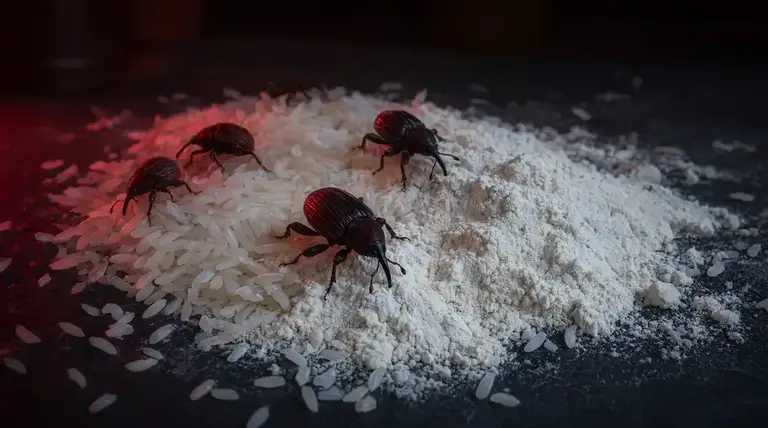
Unlike weevils in flour and rice, most pantry beetles lack a long snout and feed on milled or broken products rather than whole grains. That is a useful diagnostic clue: a bag of whole, intact rice may stay clean while the open flour beside it is overrun, because most pantry beetles cannot develop inside an undamaged grain.
Warning Signs of a Pantry Beetle Infestation
The clearest warning sign is live beetles in or around food storage, but several subtler clues usually appear first. Check your pantry against this list:
- Tiny beetles crawling in cupboards, on benchtops, or gathering at windows as they are drawn to light
- Fine, powdery residue or a stale, sharp odour in flour and cereal
- Small cream-coloured grubs (larvae) inside packets of dried goods
- Beetles inside unopened packaging — they chew through cardboard and paper with ease
- A pungent, acrid smell from an entire container of flour, caused by the defensive secretions of red flour beetles
- Beetles appearing in rooms away from the kitchen, which suggests a widespread or hidden source
Both larvae and adults feed, so a single overlooked packet sustains a breeding population. Spilled flour in the seam of a shelf, a forgotten packet of stale spice, or crumbs behind the toaster can each support beetles indefinitely — which is why a genuinely thorough clean-out matters more than any single product you can buy.
DIY vs Professional Pantry Beetle Control
Most light infestations respond well to a disciplined DIY approach built on disposal, cleaning and airtight storage; persistent or widespread infestations justify a licensed technician. Chemical sprays are rarely appropriate around food-preparation areas, so the DIY fix is sanitation and storage, while professional pest control adds source-finding expertise and APVMA-registered treatments applied safely where needed.
| Factor | DIY approach | Professional treatment |
|---|---|---|
| Best for | Single cupboard, recently spotted | Multiple cupboards, recurring infestations |
| Method | Discard, vacuum, hot soapy water, freeze salvageables, airtight containers | Inspection for hidden reservoirs, targeted APVMA-registered treatment |
| Typical cost (AUD) | $30–$80 (containers, cleaning supplies) | $180–$450 depending on scope |
| Timeframe | One thorough day, plus 2–4 weeks of monitoring | Single visit, with follow-up if needed |
| Risk of recurrence | Moderate if the source is missed | Lower — technicians locate hidden reservoirs |
If you go the DIY route, follow the proven sequence: find the source by inspecting every dry-goods packet including spices and pet food; discard all infested items in a sealed outdoor bin; vacuum shelves, cracks and corners, then wipe with hot soapy water; freeze salvageable goods at −18°C for four days to kill eggs and larvae; and store everything in airtight glass or hard-plastic containers. Any chemical treatment beyond that should be handled by a licensed technician using APVMA-registered products.
Pantry Beetle Treatment Costs in Australia (2025–26)
Across the Australian market, professional pantry beetle treatment generally runs between $180 and $450 AUD, depending on the size of the home and how far the infestation has spread. Industry rates vary between metro and regional areas, with providers in Sydney, Melbourne and Brisbane generally charging at the higher end.
| Service | Typical market rate (AUD) | What’s included / notes |
|---|---|---|
| Inspection and identification | $0–$120 | Often free with treatment; species ID and source-finding |
| Single pantry/kitchen treatment | $180–$280 | Targeted treatment of one affected area plus advice |
| Whole-home stored-product pest treatment | $280–$450 | Multiple rooms, subfloor or wall-void treatment, follow-up visit |
| Combined pantry pest service | $250–$400 | Beetles treated alongside moths or silverfish and other pantry pests |
These figures are typical industry ranges rather than fixed quotes — what any provider charges will depend on access, the number of affected areas, and whether a follow-up visit is required.
Aussie Pest Strike typically comes in well under these market rates, so it’s worth getting an exact figure for your situation — call us on [aps_phone] for a no-obligation quote.
Seasonal Activity of Pantry Beetles Across Australia
Pantry beetles are active year-round in heated Australian kitchens, but activity peaks sharply through the warmer months from November to March. Summer heat shortens the lifecycle to 6–8 weeks, so each generation multiplies the population faster than winter cleaning can keep up with.
Jan
Feb
Mar
Apr
May
Jun
Jul
Aug
Sep
Oct
Nov
Dec
Relative pantry beetle activity across a typical Australian year. Peak activity runs November–March when warm temperatures accelerate breeding; winter lows reflect slower lifecycles, though heated homes and Queensland’s milder climate keep populations ticking over year-round.
Nine times out of ten, when a customer tells me the beetles keep coming back, the pantry itself is spotless — the problem is a bag of birdseed in the garage or pet kibble spilled under the house. Find the reservoir and the problem is solved; treat the shelves alone and you will be chasing beetles forever. A proper inspection looks well beyond the kitchen.
Start with a full clean-out: discard anything suspect, vacuum and wash every shelf, freeze salvageable dry goods for four days, and decant everything into airtight containers. If beetles reappear within a month — or turn up in more than one room — book a licensed technician to hunt down the hidden source. Recurring infestations almost never resolve with cleaning alone.
Frequently Asked Questions
What are the most common pantry beetles found in Australian homes?
The four species that account for most Australian infestations are red/confused flour beetles (3–4 mm, flat and reddish-brown), sawtoothed grain beetles (2.5–3 mm with six saw-like teeth each side of the thorax), drugstore beetles (2–3.5 mm, oval and brownish) and cigarette beetles (2–3 mm, humped and hairy). Each favours slightly different foods, from flour and cereal to spices, dried herbs and pet food.
How do I tell pantry beetles apart from weevils?
Most pantry beetles lack the long snout that weevils have, and they feed on milled or broken products rather than whole grains. This gives you a useful diagnostic clue: a bag of whole, intact rice may stay clean while the open flour beside it is overrun, because most pantry beetles cannot develop inside an undamaged grain. If your beetles have no snout and are swarming milled goods, they are likely flour beetles or one of the other common stored-product species.
What warning signs suggest a pantry beetle infestation?
Look for tiny beetles crawling in cuprooms or gathering at windows, fine powdery residue in flour and cereal, small cream-coloured grubs inside packets, beetles inside unopened packaging (they chew through cardboard and paper), a pungent acrid smell from flour caused by red flour beetle secretions, and beetles appearing in rooms away from the kitchen, which suggests a widespread or hidden source.
Why do pantry beetle problems get worse so quickly in summer?
Australian summer heat accelerates their breeding cycle dramatically. During the warm December to February period, a flour beetle can complete its entire lifecycle in as little as 6–8 weeks, so each generation multiplies the population faster than winter cleaning can keep up with. Activity peaks from November to March, though heated kitchens and Queensland's milder climate keep populations ticking over year-round.
What DIY steps actually work against pantry beetles?
Follow this sequence: find the source by inspecting every dry-goods packet including spices and pet food; discard infested items in a sealed outdoor bin; vacuum shelves, cracks and corners, then wipe with hot soapy water; freeze salvageable goods at −18°C for four days to kill eggs and larvae; and store everything in airtight glass or hard-plastic containers. Chemical sprays are rarely appropriate around food-preparation areas, so sanitation and storage are the core fix.
Can pantry beetles damage anything besides stored food products?
DIY suits a single cupboard with a recently spotted problem. Book a licensed technician if beetles reappear within a month of a full clean-out, turn up in more than one room, or keep recurring despite thorough cleaning. Recurring infestations usually mean a hidden reservoir — behind an appliance, in a wall void, under a subfloor, or spilled pet food or birdseed elsewhere — which professionals locate using source-finding expertise and APVMA-registered treatments.
How long does it take to fully clear a pantry beetle infestation?
Nine times out of ten, the pantry itself is spotless but a hidden reservoir keeps re-seeding it — a bag of birdseed in the garage, pet kibble spilled under the house, crumbs behind an appliance, or spilled grain in a wall cavity or subfloor. Homes with subfloors are especially prone to this. Finding and removing that reservoir solves the problem; treating shelves alone means chasing beetles indefinitely.
Do pantry beetles come with other pests?
Yes — pantry beetles rarely arrive alone. Kitchens with a beetle problem frequently also host other stored-product pests, including Indian meal moths and flour mites, which thrive in the same warm, slightly damp conditions. In humid northern Queensland and coastal New South Wales, milled products absorb moisture and break down faster, making them even easier for all these pests to exploit, so check for moths and mites while inspecting.
What does an Aussie Pest Strike inspection for pantry beetles involve?
A proper inspection looks well beyond the kitchen. An Aussie Pest Strike technician will identify the beetle species, then hunt for the hidden reservoir that keeps re-seeding your pantry — checking behind appliances, in wall voids, under subfloors, and in forgotten food stores like garage birdseed or spilled pet kibble. Finding that source is what separates a lasting fix from endless shelf-scrubbing, and any treatment used will be APVMA-registered and applied safely around your home.
What should I do before contacting Aussie Pest Strike about pantry beetles?
Start with a full clean-out: discard anything suspect in a sealed outdoor bin, vacuum and wash every shelf with hot soapy water, freeze salvageable dry goods at −18°C for four days, and decant everything into airtight containers. Note where and when you see beetles, and whether they appear in more than one room. If beetles reappear within a month despite this, contact Aussie Pest Strike for a no-obligation quote tailored to your situation.
Sources & further reading
Found Something
Dangerous?
Don’t touch it. Don’t spray it. Keep kids and pets clear, take a photo from a safe distance, and call us — or book a free inspection and we’ll come to you.
02 7235 0050