Redbacks in theGarden: Safe BBQ andPlay Area Checks
Finding redbacks in the garden is common across Australia, especially around BBQs, outdoor furniture and children's play equipment. Redback spiders...
For most Australian households, redbacks in the garden are a fact of life, and the spots they love most — BBQs, outdoor settings and the kids’ play equipment — are exactly where your family spends its time. A quick, regular inspection routine is the single most effective habit for keeping the backyard safe, and it costs nothing but five minutes and a torch.
Put simply: checking your BBQ and play areas for redbacks means systematically inspecting dry, sheltered spots for messy webs, the spiders themselves and their cream-coloured egg sacs, then clearing and treating anything you find before someone gets bitten. This guide covers why redbacks thrive in Australian backyards, how to run a proper inspection, when DIY is enough and when to call in licensed pest control, what treatment typically costs, and how seasonal activity changes where you live.
- Redbacks favour dry, sheltered, undisturbed spots — under BBQ hoods, pot plants, wheelie bin lips and play equipment — and are most active from September to April.
- A five-minute torch-and-gloves inspection before BBQ season and weekly summer checks of play equipment dramatically cut bite risk.
- A single egg sac can release hundreds of spiderlings, so treat any sac found near play areas as urgent.
- DIY surface sprays work for one or two visible spiders; recurring infestations or harbourages near children need a licensed technician.
- Professional spider treatments typically cost $150-$450 AUD depending on property size and scope.
Why redbacks in the garden thrive in Australian backyards
Redbacks thrive across Australia because our climate and housing styles give them endless dry, sheltered harbourage close to people. The female redback (Latrodectus hasselti) — the spider responsible for serious bites — is glossy black with a distinctive red or orange stripe and builds a messy, tangled web close to the ground. Males are much smaller and rarely cause problems.
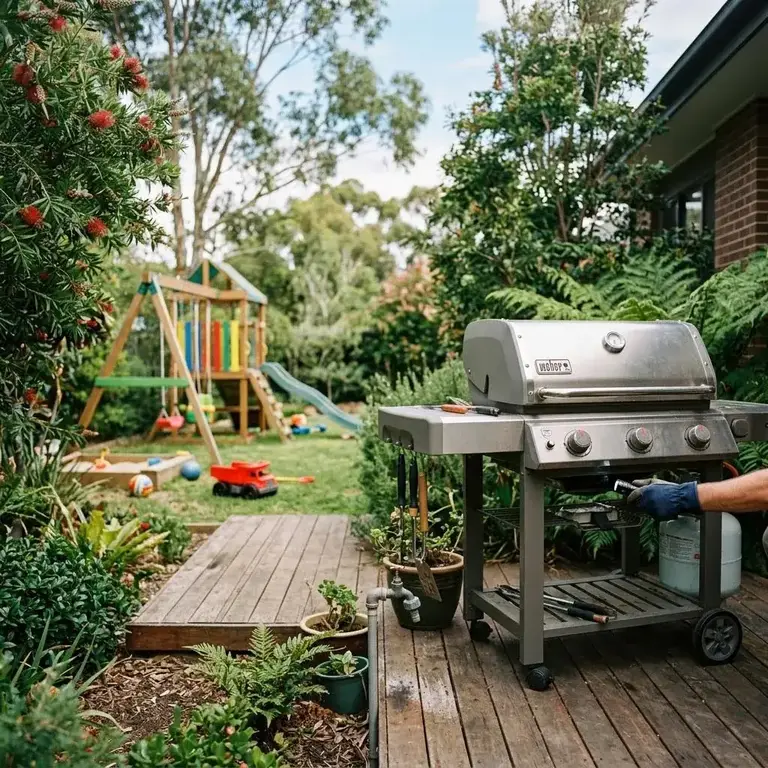
Australian backyards are tailor-made for them. The classic BBQ area offers warmth from cooking, darkness under the hood and around the gas bottle, and months of undisturbed shelter between uses. Add in stacked timber, retaining walls, meter boxes, garden sheds and the hollow legs of plastic outdoor furniture, and a suburban block can support dozens of spiders without anyone noticing.
Housing style matters too. Homes on concrete slabs tend to concentrate redback activity around the perimeter — weep holes in brick veneer, garden edging and stored items — while older homes with subfloors and raised Queenslanders offer cool, dark voids underneath where webs go unseen for years. Climate drives the season: in Victoria, New South Wales and South Australia activity peaks from spring through autumn, while in Queensland, the Northern Territory and northern Western Australia redbacks stay active all year. For a deeper dive into identifying the spider itself, see our guide on the Redback Spider: Identification, Bites and Safe Removal.
Warning Signs of Redbacks Around Your BBQ and Play Areas
The clearest warning signs are scruffy, tangled webs near ground level, the spiders themselves, and round cream-coloured egg sacs. Because redbacks hunt at night and hide by day, you often find the web before you find the spider — so learn to read the signs.
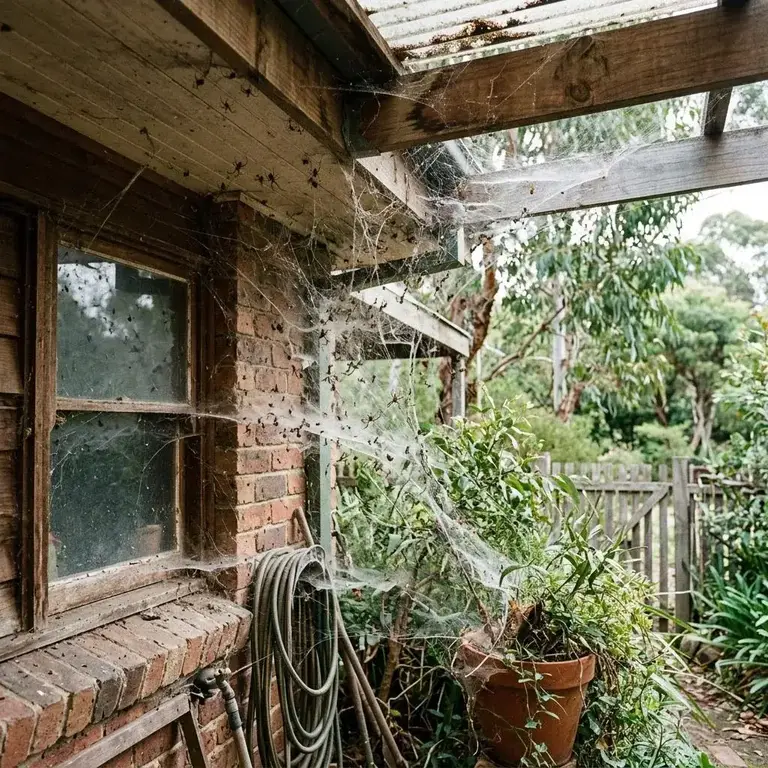
- Messy, irregular webs strung close to the ground under BBQ hoods, bench seats, table edges and side shelves — not the neat orb webs of garden spiders.
- Cream or off-white egg sacs, each about the size of a pea, hanging in or near the web — one sac can hold hundreds of spiderlings.
- A glossy black female with a red or orange stripe, usually tucked into the darkest corner of the harbourage during daylight.
- Webs in predictable hiding spots: around gas bottles and hose fittings, under pot plant bases, in retaining wall crevices, around the lips of wheelie bins and inside folded umbrellas.
- Webs on play equipment — swing frames, trampoline legs, cubby houses, sandpit edging, the undersides of slides and the hollow legs of plastic equipment.
- Recurring webs that reappear within a week or two of being brushed away, which signals an established population rather than a lone spider.
If you’re finding webs in several of these spots at once, it’s worth reading about broader Spider Control & Removal options rather than chasing individual spiders one by one.
DIY Checks and Treatment vs Professional Pest Control
DIY inspection and treatment works well for one or two visible spiders; professional pest control is the safer call for heavy, recurring infestations or any activity near children’s play areas. A registered surface spray applied directly to the web at night — when redbacks are active — will deal with an individual spider, provided you follow the label directions exactly and keep children and pets away until the area is dry. The limitation is that DIY almost always misses egg sacs and hidden harbourages you can’t see.
| Factor | DIY approach | Professional treatment |
|---|---|---|
| Best for | One or two visible spiders, light activity | Recurring infestations, multiple harbourages, play areas |
| Egg sacs and hidden webs | Often missed — spiderlings emerge weeks later | Systematic harbourage treatment, including voids and crevices |
| Chemical use | Registered aerosols/surface sprays per label directions | APVMA-registered products applied by licensed technicians |
| Typical cost | $15-$40 in products | $150-$450 depending on scope |
| Ongoing protection | Relies on your own inspection routine | Residual barrier treatment plus prevention advice |
It’s also worth knowing what you’re not dealing with. If you spot a large, fast spider inside the house it’s more likely a huntsman — see Huntsman Spiders: Dangerous or Harmless Housemates? — while in parts of New South Wales and southern Queensland, ground-dwelling spiders near garden beds warrant a look at our Funnel-Web Spider: Identification, Danger and Control guide. Identification matters because treatment and urgency differ.
What Does Redback Spider Treatment Cost in Australia?
Across the Australian market, professional redback treatment generally runs between $150 and $450 AUD in 2025-26, depending on property size, construction type and how widespread the infestation is. Industry-wide, a general spider treatment usually includes external harbourage treatment, web removal and a residual perimeter barrier. The figures below reflect what pest control companies across Australia typically charge — any provider’s final quote will depend on an inspection.
| Service | Typical market rate (AUD) | What’s included/notes |
|---|---|---|
| Targeted redback treatment (small yard/unit) | $150-$220 (typical industry rate) | Harbourage treatment around BBQ, bins, play equipment; web and egg sac removal |
| Full external spider treatment (standard house) | $220-$350 (typical industry rate) | Perimeter barrier, eaves, fences, sheds, garden beds; suited to brick veneer and slab homes |
| Large property, Queenslander or subfloor access | $300-$450+ (typical industry rate) | Includes under-house voids, extensive outbuildings or heavy infestations |
| Follow-up / seasonal re-treatment | $120-$200 (typical industry rate) | Maintains residual protection through peak season |
Worth knowing: Aussie Pest Strike typically comes in well under these market rates for the same thorough, licensed treatment. For an exact quote tailored to your property, give us a call on [aps_phone] — no obligation, just straight answers.
Seasonal Redback Activity Across Australia
Redback activity climbs sharply from early spring, peaks through summer and early autumn, then tapers off over winter in southern states. In Queensland, the NT and northern WA, expect meaningful activity in every month — the winter dip is modest. Night-time is when they hunt, so evening torch inspections are always the most effective.
Jan
Feb
Mar
Apr
May
Jun
Jul
Aug
Sep
Oct
Nov
Dec
Typical redback activity pattern for southern Australia, peaking December to February. Northern states see a flatter curve with year-round activity — plan inspections accordingly.
Nine times out of ten, the worst redback problems we find are in the places nobody looks — under the BBQ side shelf, inside the trampoline legs, behind the pot plants against the fence. Homeowners do a great job clearing the obvious webs, but one missed egg sac near the cubby house can undo all of it in a fortnight. A systematic harbourage treatment plus a five-minute weekly check is the combination that actually works.
Run a torch-and-gloves inspection of your BBQ area and play equipment before spring, then weekly through summer. Store gloves, shoes and garden tools off the ground in sealed containers, clear webs with a long-handled brush, and teach kids never to poke fingers into gaps. If you’re finding recurring webs, egg sacs, or any redback near where children play, book a licensed technician for a full harbourage treatment rather than relying on DIY sprays.
Frequently Asked Questions
Where are redbacks most likely to hide around my BBQ and play areas?
Redbacks favour dry, sheltered, undisturbed spots close to the ground. Around the BBQ, check under the hood, side shelves, bench seats and around the gas bottle and hose fittings. On play equipment, inspect swing frames, trampoline legs, cubby houses, sandpit edging, the undersides of slides and the hollow legs of plastic furniture. Other common harbourages include pot plant bases, wheelie bin lips, retaining wall crevices and folded umbrellas.
What warning signs tell me redbacks are living in my garden?
The clearest signs are scruffy, tangled webs strung near ground level — not neat orb webs — plus round cream or off-white egg sacs about pea-sized hanging in or near the web. You may spot a glossy black female with a red or orange stripe tucked into a dark corner during daylight. Webs that reappear within a week or two of being brushed away suggest an established population rather than a lone spider.
How often should I check my BBQ and play equipment for redbacks?
Run a torch-and-gloves inspection of your BBQ area and play equipment before spring, then weekly through summer when redbacks are most active. Because redbacks hunt at night and hide by day, evening torch inspections are the most effective. A five-minute routine before BBQ season, plus regular summer checks of play gear, dramatically cuts bite risk for very little effort.
Why is finding an egg sac near a play area so urgent?
A single redback egg sac can release hundreds of spiderlings, so one missed sac near a cubby house or trampoline can undo weeks of web clearing in a fortnight. Treat any sac found near areas where children play as urgent. DIY sprays often miss egg sacs and hidden harbourages, which is why recurring webs or any sac near play equipment is best handled by a licensed technician.
What should I do if I find a redback while preparing the BBQ or before kids use the play area?
DIY works well for one or two visible spiders: apply a registered surface spray directly to the web at night when redbacks are active, follow label directions exactly, and keep children and pets away until dry. Call a licensed technician if you have recurring infestations, multiple harbourages, or any redback activity near children's play areas, since professionals treat hidden voids and crevices systematically.
How does seasonal activity change where I live in Australia?
In Victoria, New South Wales and South Australia, redback activity climbs from early spring, peaks through summer and early autumn, then tapers over winter. In Queensland, the Northern Territory and northern Western Australia, redbacks stay meaningfully active all year with only a modest winter dip, so inspections should continue year-round. Night-time hunting means evening torch checks work best everywhere.
Does my housing style affect where redbacks gather?
Yes. Homes on concrete slabs tend to concentrate redback activity around the perimeter — weep holes in brick veneer, garden edging and stored items. Older homes with subfloors and raised Queenslanders offer cool, dark voids underneath where webs can go unseen for years. Stacked timber, meter boxes, garden sheds and hollow furniture legs add further harbourage on almost any suburban block.
What simple habits reduce redback risk around the backyard?
Store gloves, shoes and garden tools off the ground in sealed containers, clear webs with a long-handled brush, and teach kids never to poke fingers into gaps in play equipment. Combine these habits with a torch-and-gloves inspection of the BBQ area and play gear before spring, then weekly through summer. Clearing the obvious webs alone isn't enough — missed egg sacs quickly repopulate an area.
What information should I provide when booking help with redbacks in my garden?
When contacting Aussie Pest Strike about redbacks, describe where you've seen webs, spiders or egg sacs — such as under the BBQ hood, in trampoline legs or around pot plants — how long the problem has persisted, and whether webs keep returning after you brush them away. Mention if children use nearby play equipment, your property type (slab home or Queenslander), and any outbuildings or subfloor access, as this helps shape an accurate quote.
What's a practical next step after spotting recurring redback webs near my play area?
If webs keep returning within a week or two of being brushed away, or you've found an egg sac near children's play equipment, arrange a professional inspection rather than relying on repeated DIY spraying. Aussie Pest Strike offers licensed harbourage treatments covering BBQ areas, bins, sheds and play equipment. In the meantime, keep up weekly torch inspections at night and store gloves and shoes off the ground in sealed containers.
Sources & further reading
Found Something
Dangerous?
Don’t touch it. Don’t spray it. Keep kids and pets clear, take a photo from a safe distance, and call us — or book a free inspection and we’ll come to you.
02 7235 0050