St Andrew’sCross Spider: Identificationand Risk
The St Andrew's Cross spider (Argiope keyserlingi) is a common orb-weaving spider found across eastern and northern Australia, best known for the white...
Often searched online as st andrew s cross spider, Argiope keyserlingi is a common orb-weaver across eastern and northern Australia, instantly recognisable by the white X-shaped cross woven into the centre of its web. Seen resting head-down with legs held like a sideways letter t, it remains one of the country’s most distinctive — and least dangerous — garden spiders.
While a single St Andrew’s Cross spider poses little risk to people, large numbers around doorways, verandahs and play areas can be unsettling, and heavy orb-weaver activity often signals a broader insect problem worth addressing. This guide covers identification, seasonal behaviour, bite risk, and when DIY management is enough versus when professional pest control makes sense.
- The St Andrew’s Cross spider is a timid, non-aggressive orb-weaver whose bite is rare and mild — no antivenom is required.
- Females (10–16 mm) are the spiders you’ll notice; males are tiny at just 3–4 mm.
- The signature white silk cross (stabilimentum) in the web’s centre is the easiest identification marker.
- Numbers peak from mid-summer through autumn across most of Australia.
- Tolerance is usually best — but heavy activity, or the presence of redbacks or funnel-webs, warrants a licensed treatment.
Why st andrew s cross spider Matters in Australian Homes
The St Andrew’s Cross spider matters because it’s one of the most commonly encountered spiders in Australian backyards, and it’s frequently misidentified as something more dangerous. Knowing what it is — and what it isn’t — saves unnecessary panic and helps you focus on the spiders that genuinely threaten your family.
Our climate is ideal for orb-weavers. Warm, humid summers along the east coast — from Far North Queensland through New South Wales into Victoria — produce the flying insects these spiders feed on, and our outdoor-oriented housing gives them endless anchor points. Queenslanders on stumps, brick veneer homes with deep eaves, and properties with established gardens, lantana or tall grass all provide perfect web sites. Subfloor homes in particular tend to have mature vegetation close to walls, which puts webs right at window and doorway height.
It’s also worth remembering that a yard full of orb-weavers can mask a bigger issue. The same insect abundance that feeds harmless garden spiders also supports redbacks and other species of real concern. If you’re unsure what you’re dealing with, a professional Spider Control & Removal assessment will sort the harmless from the hazardous.
How to Identify a St Andrew’s Cross Spider
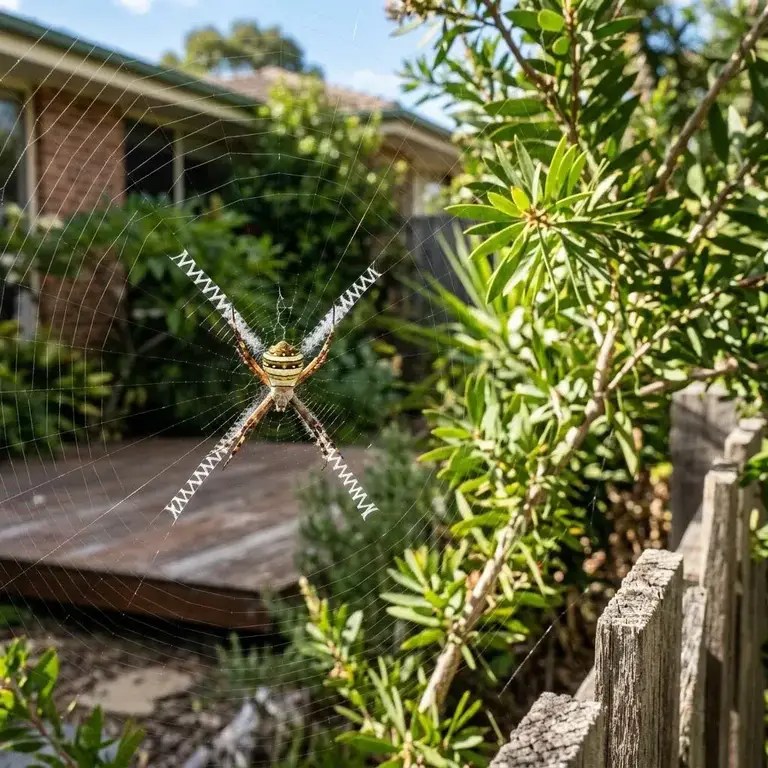
Identification comes down to three features: the female’s banded silver, cream, yellow and dark brown colouring; her habit of sitting head-down in the web’s centre with legs held in pairs to form an X; and the dense white zigzag of silk — the stabilimentum — woven into the middle of the orb web.
Adult females have a body length of 10 to 16 millimetres, while males are tiny by comparison, often only 3 to 4 millimetres. The web itself is a classic orb shape, strung between shrubs, fences and verandah posts, and rebuilt every few days. The stabilimentum may reflect ultraviolet light to attract insects, or warn birds away from flying through — either way, it’s the marker that separates this species from other garden spiders.
Related species include Argiope aetherea in Queensland and the Northern Territory. Garden orb-weavers (Eriophora) are bulkier and lack the silk cross, while redbacks have glossy black bodies and messy ground-level webs — a very different animal. If you suspect a redback instead, read our guide on the Redback Spider: Identification, Bites and Safe Removal.
Warning Signs: When St Andrew’s Cross Spiders Become a Nuisance
One or two webs in the garden is normal and even helpful; the warning signs below suggest numbers are building to the point where management — or a broader pest control inspection — is worth considering.
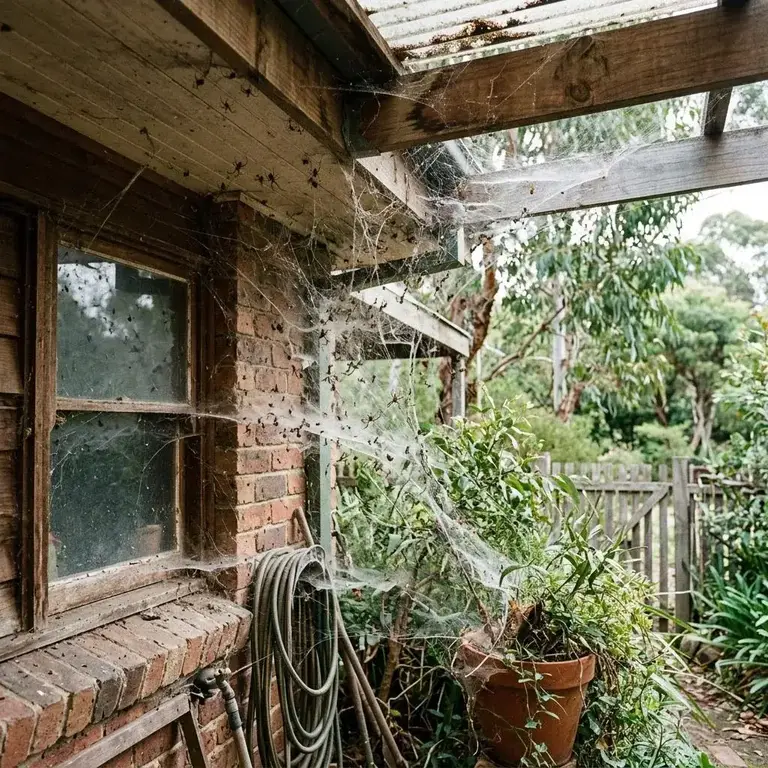
- Webs across doorways and paths – fresh orb webs appearing daily across walkways, gates or the washing line, forcing you to walk into silk every morning.
- Multiple large females – several banded females at full size (over 12 mm) stationed around verandahs, windows or outdoor entertaining areas at once.
- Egg sacs in autumn – papery brown sacs attached near webs or on foliage, each holding hundreds of spiderlings that will disperse in spring.
- Heavy insect activity – swarms of moths and flies around outdoor lights at night, which is what’s drawing the spiders in.
- Other spider species present – sightings of glossy black spiders at ground level or thick silk lines in damp, dark spots, which may indicate redbacks or funnel-webs rather than harmless orb-weavers.
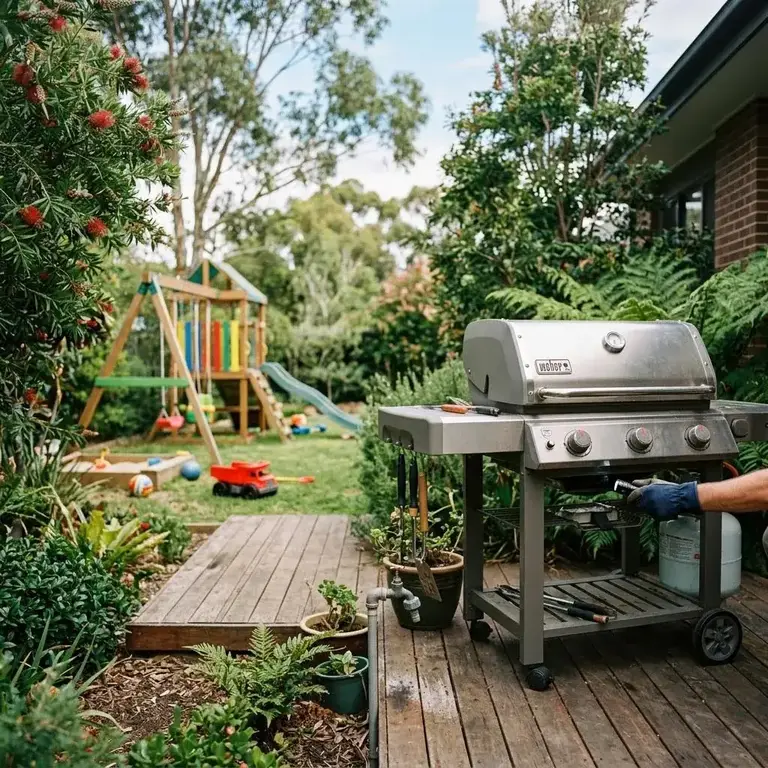
- Webs near children’s play areas – spiders stationed at head height around cubby houses, trampolines or sandpits.
DIY Management vs Professional Spider Control
Because the st andrew s cross spider is harmless and beneficial — a single web can trap dozens of flies, mosquitoes and moths each night — tolerance is often the best policy. DIY steps work well for light activity, but professional treatment is the safer call when numbers are heavy or genuinely dangerous species are also present.
| Approach | DIY | Professional |
|---|---|---|
| Best for | A few webs in problem spots | Heavy activity or mixed species |
| Methods | Broom down webs, trim shrubs and lantana, relocate spiders with a container and paper | Targeted APVMA-registered exterior treatment around eaves, fences and garden beds |
| Lighting/insect control | Warm-toned or sensor outdoor lights; maintain flyscreens and seal gaps | Treatment reduces spiders and their insect prey for months |
| Safety | Fine for confirmed orb-weavers; risky if species is unknown | Licensed technicians identify species and apply products correctly |
| Longevity | Weeks; webs often rebuilt nearby | Typically several months of residual protection |
Chemical treatments should always be carried out by licensed technicians working under state licensing schemes (such as NSW EPA pest management licences) using APVMA-registered products — no reputable operator will claim any treatment is 100% safe or guaranteed.
How Much Does Spider Control Cost in Australia?
Across the Australian market, professional spider treatment for a standard home typically sits between $150 and $450 AUD, depending on property size, construction type and the species involved. The figures below are typical 2025–26 industry rates charged by pest control operators around the country — not any one company’s price list.
| Service | Typical market rate (AUD) | What’s included/notes |
|---|---|---|
| General spider spray (standard home) | $150–$250 | Exterior perimeter, eaves, fences, garden beds; web removal |
| Large property / acreage | $250–$450 | Extended garden, sheds and outbuilding treatment |
| Internal + external treatment | $200–$350 | Adds skirtings, roof void and subfloor dusting where accessible |
| Redback/funnel-web targeted treatment | $180–$380 | Focused harborage treatment; may include follow-up visit |
| Annual pest control plan | $400–$700/yr | Scheduled treatments covering spiders and general pests |
In the wider market, Queenslander-style homes with open subfloors and properties backing onto bushland usually sit at the higher end of these ranges, as there are more harborage areas to treat. For dangerous species such as funnel-webs, see our Funnel-Web Spider: Identification, Danger and Control guide before attempting anything yourself.
Here’s the good news: Aussie Pest Strike typically comes in well under these general market rates, without cutting corners on treatment quality. For an exact quote tailored to your property, give us a call on [aps_phone] today.
Seasonal Activity: When St Andrew’s Cross Spiders Peak
St Andrew’s Cross spider activity peaks from mid-summer through autumn, roughly December to May, when females reach full size and their webs are largest and most obvious. Egg sacs appear in autumn, spiderlings disperse in spring, and numbers drop sharply over winter — especially in southern states where cold snaps kill off most adults.
Jan
Feb
Mar
Apr
May
Jun
Jul
Aug
Sep
Oct
Nov
Dec
Typical activity pattern: numbers build through late spring, peak from late summer into autumn when females are largest, then decline sharply through winter — particularly in Victoria and Tasmania. Northern populations may remain active longer into the cooler months.
Nine times out of ten, the big spider in the garden with the white cross is doing you a favour — it’s catching mozzies and moths all night. What we look for on an inspection isn’t the orb-weaver itself, but what’s living at ground level: redbacks in the retaining wall or funnel-webs in the mulch. That’s where a proper treatment earns its keep.
Leave lone St Andrew’s Cross spiders alone or relocate them — they’re harmless, timid and excellent natural pest controllers. Knock down webs only where they block doorways or play areas, trim vegetation back from the house, and switch to warm-toned sensor lighting. If activity is heavy or you’re also seeing redbacks or funnel-webs, book a licensed technician for a targeted exterior treatment rather than reaching for a can of surface spray.
Are St Andrew’s Cross Spiders Dangerous? Bite Risk Explained
In short, no — St Andrew’s Cross spiders are not considered dangerous to humans. They are timid spiders that would rather drop from the web and hide than bite, and bites are rare, usually only occurring when a spider is pressed or squeezed against skin.
Symptoms are mild: brief local pain, redness and minor swelling, similar to a bee sting, and no antivenom is needed. Apply a cold pack and seek medical advice if pain persists or symptoms seem unusual. Like almost all spiders, they are technically venomous — the venom simply isn’t medically significant for people. This puts them in a completely different risk category to species covered in our Huntsman Spiders: Dangerous or Harmless Housemates? article, and far below redbacks or funnel-webs.
Frequently Asked Questions
How do I identify a St Andrew's Cross spider?
Look for three features: the female's banded silver, cream, yellow and dark brown colouring; her habit of sitting head-down in the web's centre with legs held in pairs to form an X shape; and the dense white zigzag of silk, called a stabilimentum, woven into the middle of the orb web. Adult females measure 10 to 16 millimetres, while males are tiny at just 3 to 4 millimetres.
Is a St Andrew's Cross spider dangerous to people?
No. The St Andrew's Cross spider is a timid, non-aggressive orb-weaver whose bite is rare and mild, and no antivenom is required. A single spider poses little risk and is actually beneficial, trapping dozens of flies, mosquitoes and moths each night. Tolerance or simple relocation is usually the best response unless numbers become heavy around doorways, verandahs or play areas.
Why does the St Andrew's Cross spider weave a white cross into its web?
The white silk cross, known as a stabilimentum, may reflect ultraviolet light to attract insects, or it may warn birds away from flying through the web. Either way, it is the easiest identification marker, separating this species from other garden orb-weavers such as Eriophora species, which are bulkier and lack the silk cross entirely.
When are St Andrew's Cross spiders most active in Australia?
Activity peaks from mid-summer through autumn, roughly December to May, when females reach full size and their webs are largest and most obvious. Egg sacs appear in autumn, spiderlings disperse in spring, and numbers drop sharply over winter, especially in southern states like Victoria and Tasmania where cold snaps kill off most adults. Northern populations may remain active longer into cooler months.
Where do St Andrew's Cross spiders build their webs?
They string classic orb webs between shrubs, fences, verandah posts and other anchor points, rebuilding every few days. Queenslanders on stumps, brick veneer homes with deep eaves, subfloor homes with mature vegetation close to walls, and properties with established gardens, lantana or tall grass all provide ideal web sites, often right at window and doorway height.
When should I worry about St Andrew's Cross spiders rather than tolerate them?
Warning signs include fresh webs appearing daily across walkways, gates or washing lines; several large females over 12 millimetres stationed around entertaining areas; papery brown egg sacs near webs in autumn; heavy moth and fly activity drawing spiders in; webs at head height near children's play areas; or sightings of glossy black spiders at ground level that could indicate redbacks or funnel-webs instead.
Can I manage St Andrew's Cross spiders myself?
Yes, for light activity. Broom down webs, trim shrubs and lantana back from the house, relocate spiders using a container and paper, switch to warm-toned or sensor outdoor lights, maintain flyscreens and seal gaps. DIY suits confirmed orb-weavers only — if you cannot identify the species confidently, professional assessment is safer. Webs are often rebuilt nearby within weeks.
How can I tell a St Andrew's Cross spider apart from other orb-weavers in my garden?
Call a licensed technician when activity is heavy, when egg sacs suggest hundreds of spring spiderlings, or when redbacks or funnel-webs are also present. Professionals identify species correctly and apply APVMA-registered exterior treatments around eaves, fences and garden beds, typically providing several months of residual protection compared with weeks from DIY methods. No reputable operator claims any treatment is 100 per cent safe or guaranteed.
Is a property-specific inspection useful for St Andrew's Cross spider problems?
Yes. Because heavy orb-weaver activity often signals a broader insect problem, an inspection looks beyond the harmless St Andrew's Cross spiders themselves to what's living at ground level — redbacks in retaining walls or funnel-webs in mulch. Aussie Pest Strike can assess your vegetation, lighting, web sites and harborage areas, sort harmless species from hazardous ones, and recommend whether tolerance, DIY steps or treatment makes sense for your property.
What's the practical next step if I keep finding large orb-weavers around my home?
Start by confirming identification — the white silk cross marks a harmless St Andrew's Cross spider, while glossy black bodies with messy ground-level webs suggest redbacks. If activity is heavy or mixed species are present, contact Aussie Pest Strike for a quote tailored to your property and construction type. Meanwhile, knock down webs blocking doorways, trim vegetation back from walls and switch to warm-toned sensor lighting.
Sources & further reading
Found Something
Dangerous?
Don’t touch it. Don’t spray it. Keep kids and pets clear, take a photo from a safe distance, and call us — or book a free inspection and we’ll come to you.
02 7235 0050