Termite Damage RepairCosts in Australia:What to Budget
Termite damage repair in Australia typically costs between $1,500 and $10,000 for minor to moderate work, while severe structural repairs involving...
Termite damage repair in Australia typically costs between $1,500 and $10,000 for minor to moderate work, while severe structural repairs involving bearers, joists or roof timbers can exceed $30,000. Whether you’re budgeting for a small patch-up or a major rebuild, understanding the likely bill — and what drives it — helps you avoid nasty surprises. Termite damage repair costs depend on the species involved, how long the infestation went unnoticed, and whether damaged timber is load-bearing.
This guide breaks down realistic 2025–26 repair costs by severity, explains the factors that push bills higher, covers the repair-versus-prevention decision, and sets out what Australian homeowners should budget. One important note on insurance: standard Australian home policies almost never cover termite damage, so prevention is your only real financial protection.
- Minor cosmetic termite repairs typically run $1,500–$5,000; major structural rebuilds can exceed $30,000–$50,000 in severe cases.
- Always treat the active colony before repairing — treatment usually costs $2,000–$5,000 and takes several weeks.
- Australian home insurance almost universally excludes termite damage as gradual deterioration.
- A $300 annual inspection is the cheapest protection against a $20,000+ repair bill.
- Structural repairs must meet the National Construction Code, and replacement termite management must comply with AS 3660.
Why Termite Damage Hits Australian Homes So Hard
Australia’s warm, humid climate and timber-rich housing stock make termites one of the most destructive household pests in the country. From tropical Queensland to temperate Melbourne, subterranean termites are active somewhere almost every month of the year.
Coptotermes acinaciformis — Australia’s most damaging species — causes the majority of structural damage nationwide. In the Top End, Mastotermes darwiniensis can gut a structure within months, while Schedorhinotermes species often leave a thin veneer of sound timber that hides the true extent of damage until demolition begins.
Housing style matters too. Low-set slab homes rely on intact slab edges and clear weep holes for detection, while raised Queenslanders with subfloors give termites shaded, sheltered access — and make repairs more labour-intensive. Brick veneer homes are not immune: the timber frame behind the brickwork is exactly what termites are after. If you’re unsure what you’re looking at, our guide to the 10 warning signs of termites in Australian homes is a practical starting point.
Warning Signs You May Be Facing a Termite Repair Bill
The clearest sign of costly termite damage is timber that sounds hollow or crumbles under light pressure — but the earlier you catch the subtler clues, the smaller the repair bill. Check your home regularly for the following:
- Hollow-sounding timber — skirting boards, architraves and window frames that sound papery when tapped.
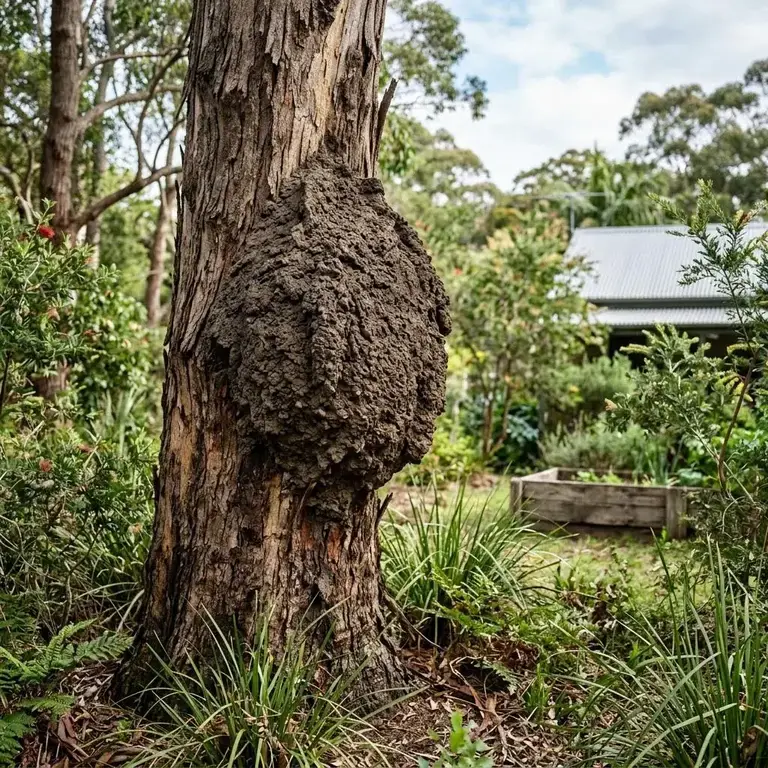
- Mud tubes and leads — pencil-width earthen tunnels on foundations, piers, walls or inside the subfloor.
- Blistering or rippled paint — termites working behind wall linings push paint outward.
- Tight doors and windows — frames warping as termites consume timber and introduce moisture.
- Discarded wings — piles near windowsills or lights after spring swarms of winged alates (typically October–December).
- Sagging floors or ceilings — a late-stage sign that bearers, joists or roof timbers are compromised.
- Frass and fine sawdust — small deposits beneath damaged areas.
DIY vs Professional Termite Repair and Pest Control
Cosmetic patching — repainting, replacing a length of skirting — can be a DIY job once a licensed pest manager confirms activity is eliminated. Anything involving structural timber, active termites or chemical treatment belongs with licensed professionals. Here’s how the two approaches compare:
| Factor | DIY approach | Professional approach |
|---|---|---|
| Detection | Visual checks only; hidden galleries easily missed | Licensed inspection to AS 4349.3 with moisture meters and detection tools |
| Treatment | Surface sprays disturb termites and scatter the colony | Chemical soil treatments or baiting programs applied by licensed technicians |
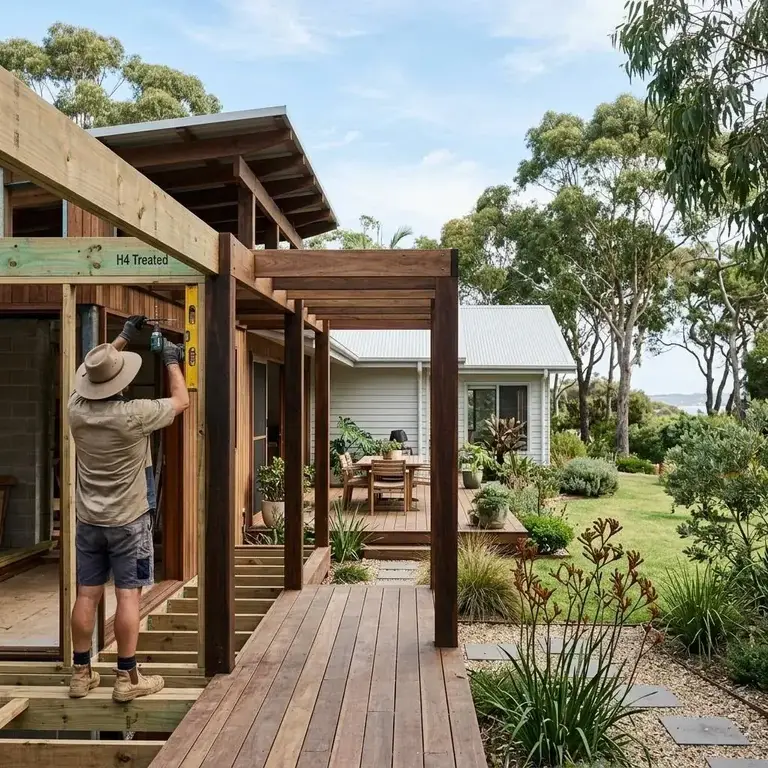
| Structural repair | Cosmetic fixes only; load-bearing work is unsafe and non-compliant | Licensed builder or carpenter; engineering assessment where needed |
| Compliance | No certification; may void future claims or sales | Meets National Construction Code and AS 3660; QLD building approvals handled |
| Long-term cost | Cheap now, expensive later if the colony survives | Higher upfront, but the problem is actually solved |
Termite Damage Repair Costs in Australia: What to Budget
Across the Australian market, homeowners typically pay between $3,000 and $10,000 for termite damage repair, with minor cosmetic fixes generally starting around $1,500 and major structural rebuilds commonly exceeding $30,000. Every job is different, so a licensed builder or carpenter should quote after a full assessment of the affected areas.
| Service | Typical market rate (AUD) | What’s included/notes |
|---|---|---|
| Annual timber pest inspection | $250–$400 | Inspection to AS 4349.3 with written report; every 6 months in high-risk QLD and coastal NSW areas |
| Active termite treatment | $2,000–$5,000 | Chemical soil treatment or monitored baiting program; several weeks before rebuilding can start |
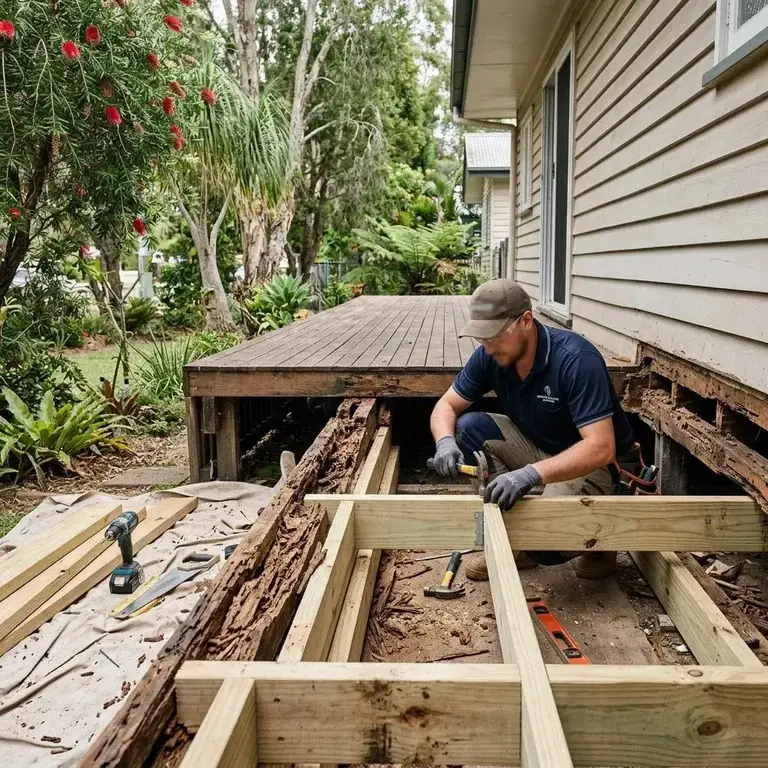
| Minor repairs | $1,500–$5,000 | Skirting boards, architraves, window frames, non-structural lining; common when caught early at an annual inspection |
| Moderate repairs | $5,000–$15,000 | Wall studs, sections of flooring, door frames, partial subfloor timbers; typical after a colony feeds for a season or two |
| Major structural work | $15,000–$50,000+ | Load-bearing walls, roof trusses, bearers and joists; engineering assessments; worst cases in QLD and northern NSW can exceed this range |
| Preventive barrier renewal | $2,000–$4,000 | Chemical barrier or baiting system installed or renewed after repairs; see Termite Treatment & Barrier Systems |
Several factors push these industry rates up or down. Species behaviour matters — Schedorhinotermes damage often looks minor until demolition reveals otherwise. Time undetected is the biggest driver: a single colony can consume several kilograms of timber each month, so damage found at a routine inspection is usually minor while damage found after years of neglect involves structural members. Access adds labour — subfloor repairs in low-clearance Queenslanders, or homes on reactive clay soils across western Sydney and Melbourne, cost more, and regional properties may attract travel charges for builders and engineers. Finally, compliance: structural repairs must meet the National Construction Code, replacement termite management must comply with AS 3660, and in Queensland altering structural timber can trigger building approval and inspection certification.
Keep in mind these figures reflect typical Australian market rates across the industry — Aussie Pest Strike typically comes in well under them. For an exact quote tailored to your property, call us on [aps_phone].
Seasonal Termite Activity in Australia
Termite activity peaks through the warmer, wetter months and eases in southern winters, though it never fully stops in the tropics. Spring swarms of winged alates around October to December are often the first visible sign of a mature nest nearby.
Jan
Feb
Mar
Apr
May
Jun
Jul
Aug
Sep
Oct
Nov
Dec
Typical relative termite activity across mainland Australia. Activity builds from spring, peaks in the warm, humid months (Oct–Mar) with alate swarms, and dips in southern winters — while remaining elevated year-round in QLD and the Top End.
Repair or Prevent: Where Your Money Goes Further
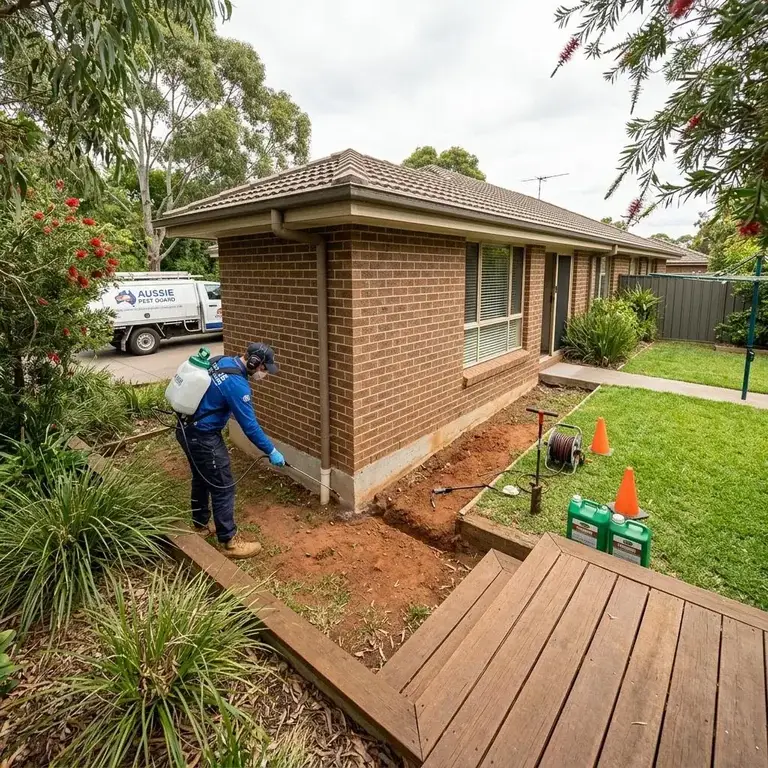
Repairing damage without eliminating the colony is money wasted — treat first, repair second, then invest in prevention. Before any builder starts, a licensed pest manager must treat the active infestation (typically $2,000–$5,000 for a chemical soil treatment or baiting program) and confirm the colony is gone.
Once activity is controlled, focus your budget on keeping termites out for good:
- Book professional Termite Inspections & Reports at least every 12 months — every six months in high-risk Queensland and coastal NSW areas.
- Install or renew a chemical barrier or monitored baiting system once repairs are complete; our explainer on what a termite barrier is and how it protects your home covers the options.
- Fix leaking taps, hot water overflows and poor subfloor drainage, because moisture attracts foraging termites.
- Keep mulch, firewood and garden beds well clear of external walls, weep holes and slab edges.
- Never store timber offcuts or cardboard against the house or under the subfloor.
And on insurance: almost universally, termite damage is not covered. Australian home and contents policies classify it as gradual deterioration or list it under insect exclusions, so read your Product Disclosure Statement but do not budget on a payout. A $300 annual inspection is far cheaper than a $20,000 repair bill — our article Termite Inspection: What It Includes and Why It Matters explains exactly what you get for that money.
Nine times out of ten, the big repair bills come from homes that skipped inspections for a few years. Catch activity early and you’re replacing skirting boards; miss it and you’re rebuilding bearers and roof trusses. Treat the colony first, repair second, then put a proper barrier in — that order saves homeowners thousands.
If you suspect termite damage, don’t call a builder first — call a licensed pest manager. Confirm and eliminate the active colony, get a written assessment of the damage extent, then obtain repair quotes from a licensed builder. Finish by installing or renewing a termite management system and locking in annual inspections. That sequence is the only way to make sure the money you spend on repairs isn’t feeding the same colony twice.
Frequently Asked Questions
How much does termite damage repair cost in Australia?
Repair costs depend on how far the infestation has spread. Minor cosmetic work, such as replacing skirting boards, architraves or window frames, sits at the low end of the budget. Moderate repairs involving wall studs, flooring sections or partial subfloor timbers cost noticeably more, while major structural work on load-bearing walls, roof trusses, bearers and joists can be the most expensive category, particularly in warmer regions where colonies spread quickly.
Does home insurance cover termite damage in Australia?
Almost universally, no. Australian home and contents policies generally classify termite damage as gradual deterioration or list it under insect exclusions, so claims are rarely successful. You should read your Product Disclosure Statement for the specifics of your policy, but you should not budget on receiving a payout. This makes prevention, particularly regular inspections, your main financial protection against repair bills.
Should I treat termites before or after repairing the damage?
Treat first, then repair. A licensed pest manager should eliminate the active colony before any builder starts work, and this process can take several weeks to complete properly. Repairing damaged timber while termites remain active means the colony will simply attack the new timber, wasting your entire repair budget. Once treatment is confirmed successful, repairs can proceed with confidence that the replacement timbers will stay protected.
What factors make termite damage repairs more expensive?
Several drivers push costs up: how long the infestation went undetected (a colony can consume several kilograms of timber monthly), whether load-bearing timbers are affected, and the species involved — Schedorhinotermes damage often looks minor until demolition reveals worse. Access matters too, as low-clearance subfloors in raised homes add labour, reactive clay soils complicate work, and regional properties may attract travel charges for builders and engineers.
Can I repair termite damage myself?
Cosmetic patching like repainting or replacing a length of skirting can be a DIY job once a licensed pest manager confirms activity is eliminated. Anything involving structural timber, active termites or chemical treatment should be left to licensed professionals. DIY structural work is unsafe, may not meet the National Construction Code, and can cause problems with future property sales or claims.
What compliance requirements apply to termite damage repairs in Australia?
Structural repairs must meet the National Construction Code, and any replacement termite management system must comply with AS 3660. Inspections should follow AS 4349.3 standards. In Queensland, altering structural timber can trigger building approval and inspection certification. Using licensed builders, carpenters and pest managers ensures the work meets these standards and is properly certified.
How often should I get a termite inspection to catch damage early?
Arrange a professional timber pest inspection at least once every 12 months, following the AS 4349.3 standard, and request a written report each time. In high-risk regions such as Queensland and coastal NSW, six-monthly inspections are generally recommended. Catching activity early usually means minor repairs, while infestations that go unnoticed for years often reach structural timbers and drive repair budgets up sharply.
Which termite species cause the most expensive damage in Australia?
Coptotermes acinaciformis is Australia's most damaging species and causes the majority of structural damage nationwide. In the Top End, Mastotermes darwiniensis can gut a structure within months. Schedorhinotermes species are particularly costly because they often leave a thin veneer of sound timber hiding the true extent of damage until demolition begins.
What should I discuss with an Aussie Pest Strike technician about termite damage repair?
A technician can walk you through the extent of activity found at your property, the treatment options needed before repairs begin, and realistic timeframes for confirming the colony is eliminated. They can also explain which timbers appear affected, what inspection frequency suits your risk level, and how a replacement barrier complying with AS 3660 fits into your repair plan so rebuilt areas stay protected.
How does Aussie Pest Strike assess the extent of termite damage before repairs begin?
Arrange a professional timber pest inspection rather than disturbing suspected areas yourself. Aussie Pest Strike can assess hollow-sounding timber, mud leads or blistering paint, confirm whether activity is current, and recommend treatment before any repairs proceed. Once the colony is controlled, you can obtain quotes from a licensed builder or carpenter for the affected timbers and plan ongoing prevention.
Sources & further reading
Found Something
Dangerous?
Don’t touch it. Don’t spray it. Keep kids and pets clear, take a photo from a safe distance, and call us — or book a free inspection and we’ll come to you.
02 7235 0050