What Does aTermite Nest LookLike? Identification Guide
What Does a Termite Nest Look Like? Identification Guide — a termite nest can look very different depending on the species: a hard mud mound rising from the...
A termite nest can look very different depending on the species: a hard mud mound rising from the soil, a dark lumpy mass clinging to a tree trunk, or hidden galleries packed with moist mud inside your walls. Put simply, a termite nest is a sealed, humid structure built from “carton” — a mixture of soil, chewed wood, saliva and faeces — that houses the queen, workers and soldiers of a colony, and spotting one (e arly) is the single best way to protect an Australian home from serious structural damage. In this guide, e very homeowner will learn exactly what to look for.
Australia has some of the most destructive termites on earth, and the worst offenders — like Coptotermes acinaciformis — nest underground or inside timber where you can’t see them. That means identification skills matter: the difference between a harmless garden mound and a colony quietly eating your floor joists can be tens of thousands of dollars. Below, we break down nest types, warning signs, DIY versus professional options, realistic costs and when termites are most active across the country.
- Termite nests are built from “carton” — soil, chewed wood, saliva and faeces — and range from underground nests to tree nests and towering mounds.
- The most destructive Australian species nest invisibly underground, so mud tubes and damaged timber are often your only clues.
- Never smash or spray a nest: disturbing it scatters the colony and makes professional treatment harder and dearer.
- A professional inspection typically costs $250–$450 AUD, while full treatment and barrier systems can run $2,000–$5,000+.
- Annual inspections to AS 4349.3 are the cheapest insurance against termite damage, which home insurance almost never covers.
Why Termite Nest Identification Matters in Australia
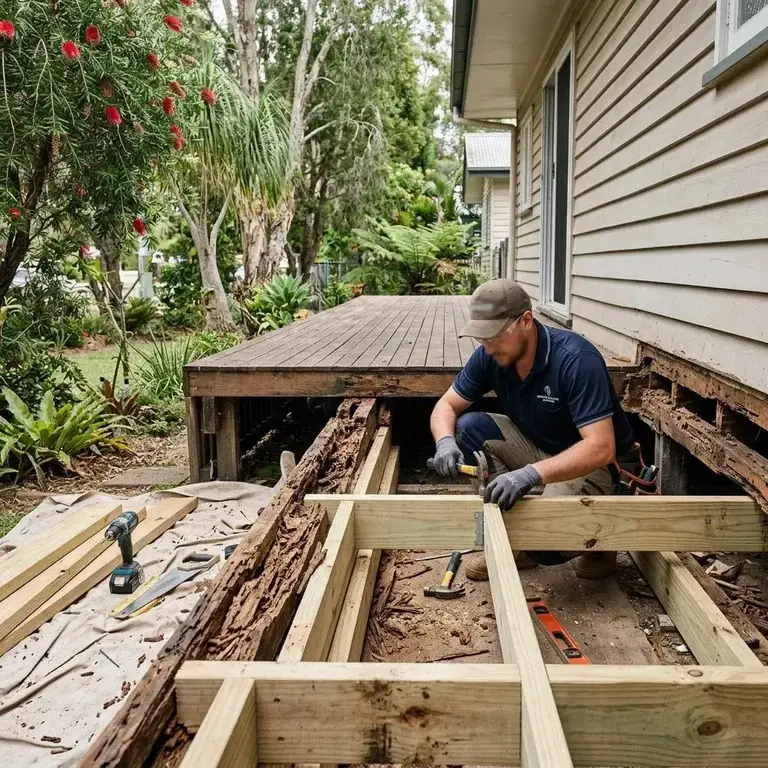
Termite nest identification matters because most of Australia sits in high-to-extreme termite pressure zones, and the damage bill runs into the hundreds of millions of dollars each year. Standard home insurance policies do not cover termite damage, so the financial risk sits entirely with the homeowner.
Climate drives everything. In Queensland, the Northern Territory and northern Western Australia, warm humid conditions keep colonies active all year, and species such as Nasutitermes triodiae build mounds up to four metres high. Further south — New South Wales, Victoria, South Australia — activity peaks through the warmer, wetter months, but subterranean colonies still work away quietly beneath the surface. Tasmania is the only state considered largely free of destructive termites.
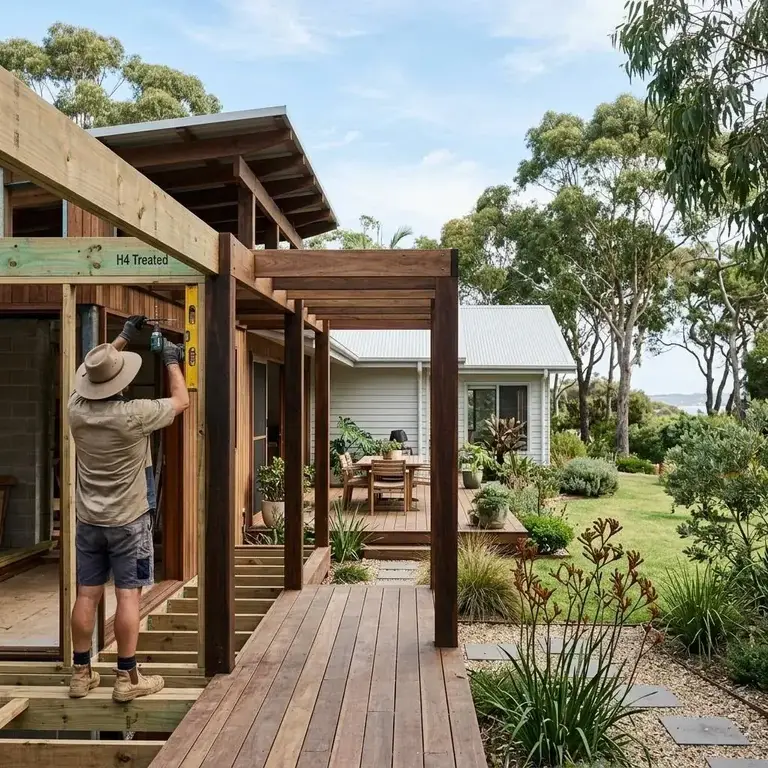
Housing style matters too. Queenslanders on stumps offer termites easy access via piers and subfloors; brick veneer homes on concrete slabs hide mud tubes in weep holes and slab edges; older weatherboard homes put softwood framing within easy reach of foraging workers. Under the National Construction Code, new homes in declared termite areas must include physical or chemical protection — but millions of older homes have none at all.
Types of Termite Nests Found in Australia
Australian termite nests fall into three main types: subterranean (underground), arboreal (in trees) and mound nests. Knowing which type you’re looking at tells you a lot about the level of risk to your home.
Subterranean nests
The country’s most destructive termite, Coptotermes acinaciformis, nests underground — in soil, beneath concrete slabs, inside tree stumps or within the root crown of eucalypts. Workers travel from the nest through pencil-width mud shelter tubes to reach timber in nearby homes. Because these nests are rarely visible, infestations often go unnoticed until damage is advanced, which is why regular Termite Inspections & Reports are so important.
Arboreal (tree) nests
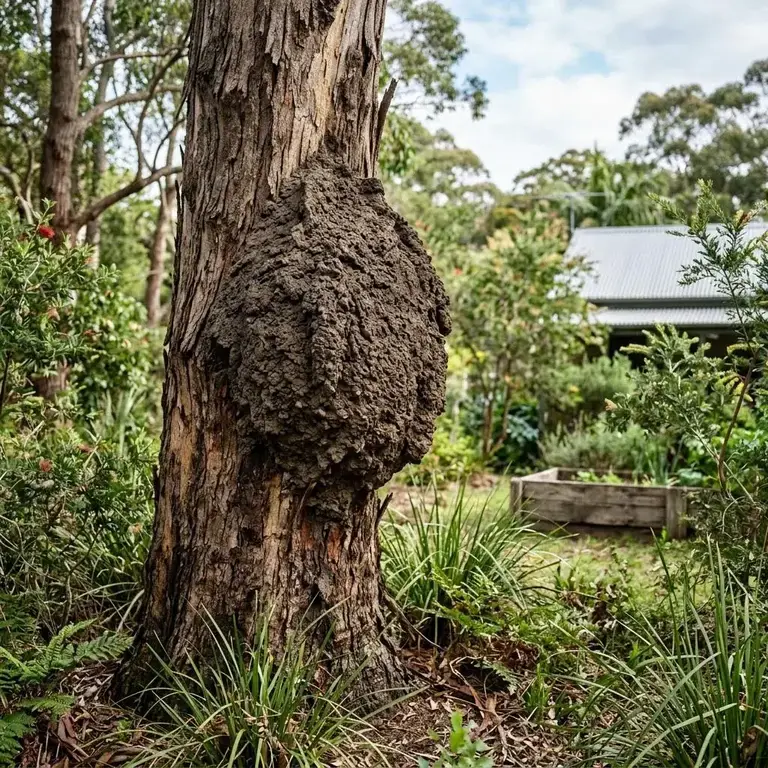
Species such as Nasutitermes walkeri build dark brown or grey, lumpy nests attached to tree trunks and branches, often two to five metres above the ground. They’re common on the bushland fringes of Sydney, Brisbane and other eastern suburbs. Even though the nest sits in a tree, foraging tunnels can still run underground to nearby houses, so a tree nest within 50 metres of your place is worth taking seriously.
Mound nests
In northern Australia, mound builders create the most spectacular nests. Nasutitermes triodiae mounds can reach four metres high across Queensland, the Northern Territory and northern Western Australia, while the magnetic termite (Amitermes meridionalis) builds flat, blade-like mounds aligned north to south to regulate temperature. Most mound builders prefer grass and rarely attack houses — but they signal strong termite pressure in the area, so don’t ignore them.
Warning Signs of a Termite Nest in or Around Your Home
Even when the nest itself is hidden, termites leave clear clues around a property. Check your home and garden every few months, especially after rain, and look for the following:
- Mud shelter tubes — pencil-width tunnels of dried mud running up foundations, piers, brickwork or internal walls.
- Hollow-sounding or papery timber when skirting boards, door frames or floorboards are tapped.
- Sagging floors, bubbling paint or doors and windows that suddenly stick for no obvious reason.
- Discarded wings near windowsills after humid spring or summer evenings, when flying termites (alates) swarm to start new colonies.
- Faint clicking or rustling sounds inside walls, made by soldier termites banging their heads to signal danger.
For a fuller rundown, see our guide to the 10 warning signs of termites in Australian homes. If you break open an active tube or nest you’ll see soft, pale workers and darker-headed soldiers defending the breach — proof the colony is alive and busy.
DIY vs Professional Termite Control: What’s the Difference?
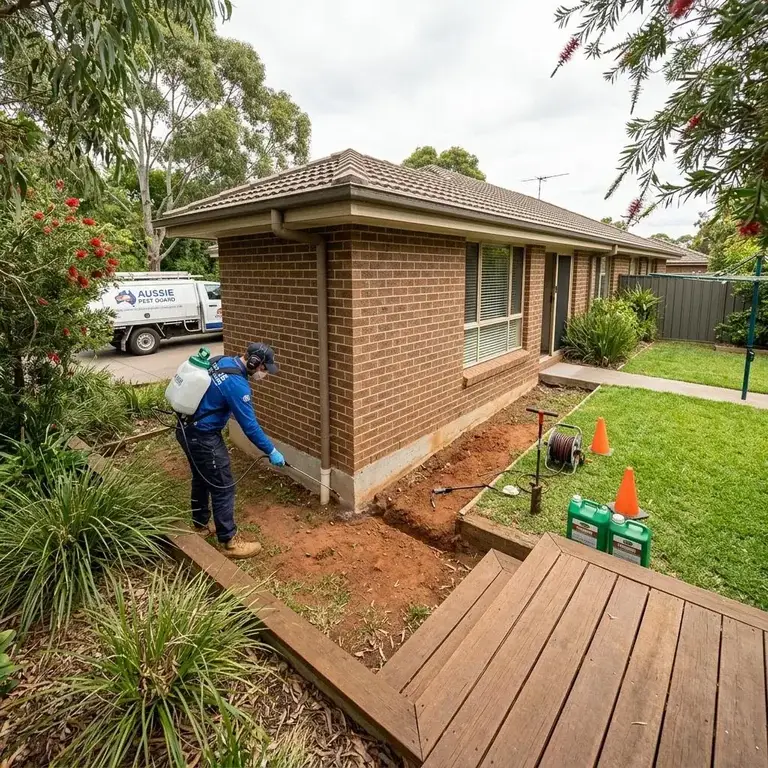
DIY termite control is limited to prevention and monitoring — removing stumps, fixing leaks and keeping timber off the ground — while actual nest elimination should always be left to a licensed pest manager. Disturbing a nest with a shovel, crowbar or supermarket spray usually scatters the colony, and surviving termites often reappear inside the house weeks later. Professionals identify the species, locate the nest and any satellite colonies, then use baits, dusts or non-repellent products that termites carry back to the queen, wiping out the whole colony.
| Factor | DIY approach | Professional pest control |
|---|---|---|
| Species identification | Guesswork from photos | Accurate ID to AS 4349.3 inspection standard |
| Nest elimination | Often scatters the colony | Baits, dusts and non-repellents carried back to the queen |
| Chemical use | Supermarket sprays only — limited effect | APVMA-registered products applied by licensed technicians |
| Compliance | No standard applies | Treatments to AS 3660; documented reports |
| Long-term protection | None | Barriers, reticulation and monitoring options |
For a deeper look at what’s involved, read Termite Inspection: What It Includes and Why It Matters and our explainer on What Is a Termite Barrier and How Does It Protect Your Home?
How Much Does Termite Inspection and Treatment Cost in Australia?
As a guide, the typical Australian market rate for a professional timber pest inspection sits around $250–$450 AUD in 2025–26, while the industry generally charges $2,000–$5,000+ for full colony treatment and barrier installation, depending on the home’s size and construction. Across the market, prices vary with slab versus subfloor access, perimeter length and the treatment method chosen.
| Service | Typical market rate (AUD) | What’s included/notes |
|---|---|---|
| Timber pest inspection (AS 4349.3) | $250–$450 | Full internal/external inspection, moisture readings, written report |
| Spot treatment / nest eradication | $300–$900 | Dusting or foaming active workings; follow-up visit |
| Termite baiting and monitoring system | $2,000–$3,500 | Stations around perimeter plus 12 months of monitoring |
| Chemical soil barrier (AS 3660) | $2,500–$5,000+ | Trenching/drilling and treating full perimeter; multi-year protection |
| Combined treatment + barrier package | $3,000–$6,000 | Colony elimination plus long-term perimeter defence |
These figures reflect what the Australian industry generally charges — not any single company’s pricing. Compared with repair bills that commonly run into five figures once structural timbers are compromised, professional Termite Treatment & Barrier Systems are money well spent.
It’s worth noting that Aussie Pest Strike typically comes in well under these market rates, so don’t assume you’ll pay top dollar for quality work. Call [aps_phone] today for an exact quote tailored to your property.
When Are Termites Most Active in Australia?
Termites are active year-round in the tropical north, while activity across southern states peaks from October through March when warmth and humidity trigger swarming and faster colony growth. Use the chart below as a general national guide to activity levels through the year.
Jan
Feb
Mar
Apr
May
Jun
Jul
Aug
Sep
Oct
Nov
Dec
Indicative national termite activity by month. Warm, humid months (October–March) bring peak foraging and alate swarms in the southern states; tropical regions stay highly active all year.
“Nine times out of ten, the nest a homeowner finds in the garden isn’t the one eating the house — it’s a satellite or a different colony entirely. That’s why we never just treat what we can see. We track the tubes, map the foraging lines and make sure the product gets back to the queen, otherwise you’re just rearranging the problem.”
If you’ve found a nest, mound or mud tubes: don’t touch them. Note the location, keep kids and pets away, and book a licensed timber pest inspection to AS 4349.3 as soon as possible. If activity is confirmed, insist on a treatment plan compliant with AS 3660 — baiting, dusting or a non-repellent barrier applied by a licensed technician — and schedule annual inspections afterwards. Prevention always beats the repair bill.
Frequently Asked Questions
What does a termite nest actually look like?
A termite nest can take several forms depending on the species: a hard mud mound rising from the soil, a dark brown or grey lumpy mass attached to a tree trunk, or hidden galleries packed with moist carton inside walls or underground. All nests are sealed, humid structures built from carton — a mix of soil, chewed wood, saliva and faeces — housing the queen, workers and soldiers of the colony.
What are the three main types of termite nests in Australia?
Australian termite nests fall into three main types. Subterranean nests sit underground, beneath slabs, in stumps or tree root crowns, and belong to species like Coptotermes acinaciformis. Arboreal nests are lumpy masses attached to tree trunks or branches, often two to five metres up, built by species such as Nasutitermes walkeri. Mound nests are towering soil structures built by species like Nasutitermes triodiae, mostly in northern Australia.
Which termite species poses the biggest threat to Australian homes?
Coptotermes acinaciformis is considered Australia's most destructive termite. It nests underground — in soil, beneath concrete slabs, inside tree stumps or within eucalypt root crowns — so the nest itself is rarely visible. Workers travel out through pencil-width mud shelter tubes to reach timber in nearby homes, meaning infestations often go unnoticed until damage is already advanced.
Are mound-building termites dangerous to houses?
Most mound builders prefer grass and rarely attack houses. Nasutitermes triodiae mounds can reach four metres high across Queensland, the Northern Territory and northern Western Australia, while magnetic termites build flat, blade-like mounds aligned north to south to regulate temperature. However, their presence signals strong termite pressure in the area, so they should not be ignored when assessing risk to your home.
What warning signs suggest a termite nest is nearby?
Look for pencil-width mud shelter tubes running up foundations, piers, brickwork or internal walls; hollow-sounding or papery timber when skirting boards or door frames are tapped; sagging floors, bubbling paint or doors that suddenly stick; discarded wings near windowsills after humid spring or summer swarms; and faint clicking or rustling inside walls made by soldier termites signalling danger.
Should I smash or spray a termite nest myself?
No. Disturbing a nest with a shovel, crowbar or supermarket spray usually scatters the colony, and surviving termites often reappear inside the house weeks later, making professional treatment harder and more expensive. Nest elimination should be left to a licensed pest manager who uses baits, dusts or non-repellent products that workers carry back to the queen, wiping out the whole colony.
How much does a professional termite inspection cost?
A professional timber pest inspection, carried out to the AS 4349.3 standard, is usually a mid-range cost that covers a full internal and external check of the property, moisture readings and a written report identifying any termite activity or risk factors. Pricing varies with the home's size, construction type and location, so it is best to request quotes from several licensed inspectors before booking.
Do termites build their nests at certain times of the year?
Termites are active year-round in the tropical north, where warm humid conditions keep colonies working continuously. Across southern states such as New South Wales, Victoria and South Australia, activity peaks from October through March, when warmth and humidity trigger swarming and faster colony growth. Tasmania is considered largely free of destructive termites.
How do termite nests differ from ant nests or other insect colonies?
Aussie Pest Strike technicians are trained to distinguish termite activity from similar-looking issues such as ant nests, wood rot or moisture damage. They identify the termite species present, locate any nest or satellite colonies, and check for mud shelter tubes, damaged timber and other telltale signs. An accurate identification matters because treatment approaches differ significantly between pests, and misdiagnosis can leave the real problem unresolved.
What should I do if I find something that looks like a termite nest on my property?
Leave it undisturbed and contact Aussie Pest Strike for a professional inspection. Avoid breaking open the structure, spraying it or removing nearby timber, as disturbance can scatter the colony and complicate treatment. A technician can confirm whether it is an active termite nest, assess how close it sits to your home, and recommend appropriate monitoring or treatment options based on what they find.
Sources & further reading
Found Something
Dangerous?
Don’t touch it. Don’t spray it. Keep kids and pets clear, take a photo from a safe distance, and call us — or book a free inspection and we’ll come to you.
02 7235 0050