Do Brick HomesGet Termites? TheHidden Risk Explained
Do Brick Homes Get Termites? The Hidden Risk Explained — yes, brick homes do get termites — and often. Bricks and mortar arent food for termites, but the...
Yes — brick homes do get termites, and far more often than most owners realise. While termites can’t eat clay bricks or mortar, the timber framing, roof trusses, skirting boards and floor joists inside almost every Australian brick house are exactly what they’re after. If you’ve searched “r” thinking a brick wall is a termite shield, the honest answer is that bricks only slow them down — they never stop them.
Put simply, the question “do brick homes get termites?” has one clean answer: a brick home gets termites whenever termites can find a gap — as narrow as 1.5 millimetres — to reach the timber inside. Weep holes, mortar cracks, slab edges and plumbing penetrations are all open invitations. That “r” rated sense of security many brick-home owners carry is exactly what lets an infestation run undetected for months.
- Brick homes are not termite-proof — most Australian brick houses are brick veneer over a structural timber frame.
- Termites enter through weep holes, mortar cracks, slab junctions and pipe penetrations as narrow as 1.5 mm.
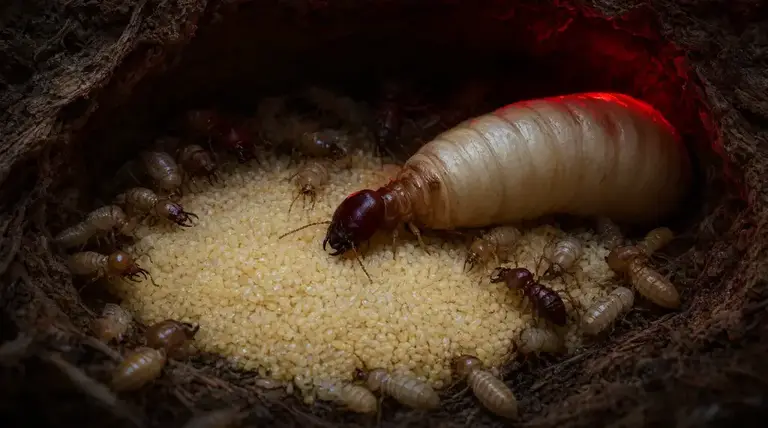
- Coptotermes acinaciformis is the most destructive species across mainland Australia; Mastotermes darwiniensis dominates the Top End.
- AS 3660.2 recommends professional inspections at least annually — every three to six months in high-risk regions.
- Standard home insurance doesn’t cover termite damage, so prevention and early detection are your only real protection.
Why Brick Homes Across Australia Face Real Termite Risk
Brick homes face essentially the same termite risk as weatherboard homes because Australia’s climate and construction styles favour subterranean termites almost everywhere. Warm, humid conditions suit termites perfectly, which is why risk peaks across Queensland, coastal New South Wales and the Top End — though Perth, Adelaide and Melbourne properties are far from immune.
The construction detail matters. Most Australian brick houses are brick veneer — a single skin of brickwork wrapped around a structural timber frame. Even double-brick homes rely on timber roof structures, floorboards, door frames and cabinetry. Older Queenslanders raised on stumps have exposed subfloors termites love; homes on concrete slabs have slab edges and penetrations that act as concealed highways. Activity spikes in the warmer months, and spring swarms of flying alates often signal a mature nest nearby.
There’s also a regulatory angle. Under the National Construction Code and Australian Standard AS 3660.1, most new homes must include a termite management system — but barriers have finite lifespans, can be bridged by renovations or landscaping, and never replace inspections. Understanding what a termite barrier is and how it protects your home is the first step to knowing its limits.
Warning Signs: The r Risk Hiding Behind Your Brickwork
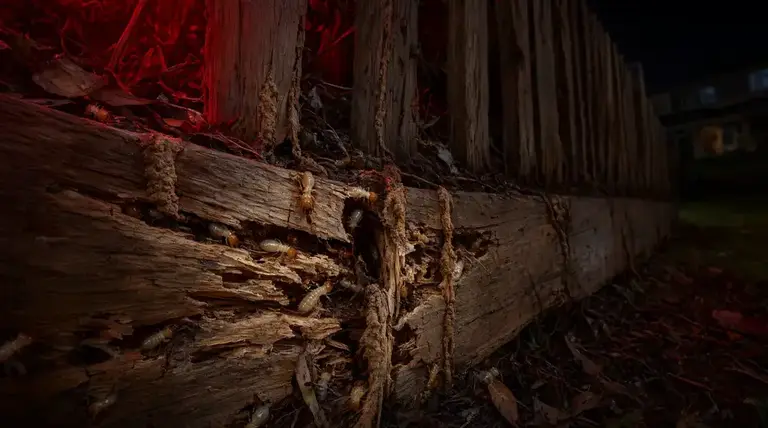
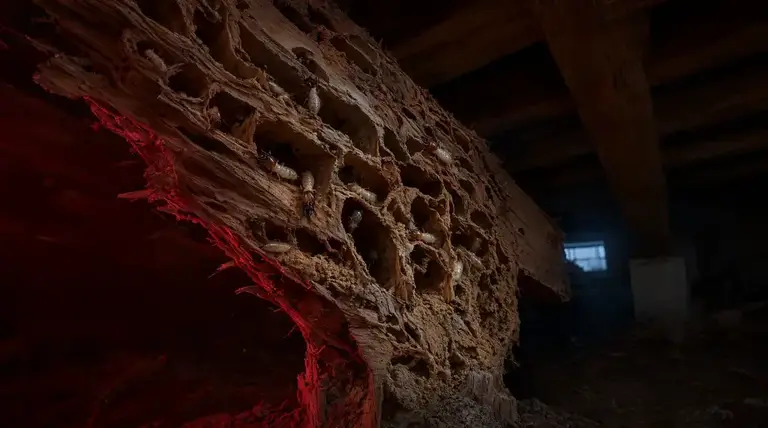
Termite damage in brick homes is almost always concealed, so you need to know the specific warning signs to check for. The “r” factor here is recognition — catch activity early and treatment is straightforward; miss it and repairs run into the tens of thousands. For a deeper rundown, see our guide to the 10 warning signs of termites in Australian homes.
- Mud leads or shelter tubes running up brickwork, piers or slab edges — the clearest sign of subterranean termites.
- Hollow-sounding timber when tapped, or skirting boards that crumble under light pressure.
- Sticking doors and windows as termite moisture warps frames and architraves.
- Discarded wings near windowsills after spring and summer alate swarms.
- Bubbling or rippled paint on internal walls over a timber frame.
If you spot any of these, don’t disturb the area. Breaking open a mud lead or spraying surface termites scatters the colony and makes professional pest control treatment significantly harder.
DIY Checks vs Professional Termite Inspections
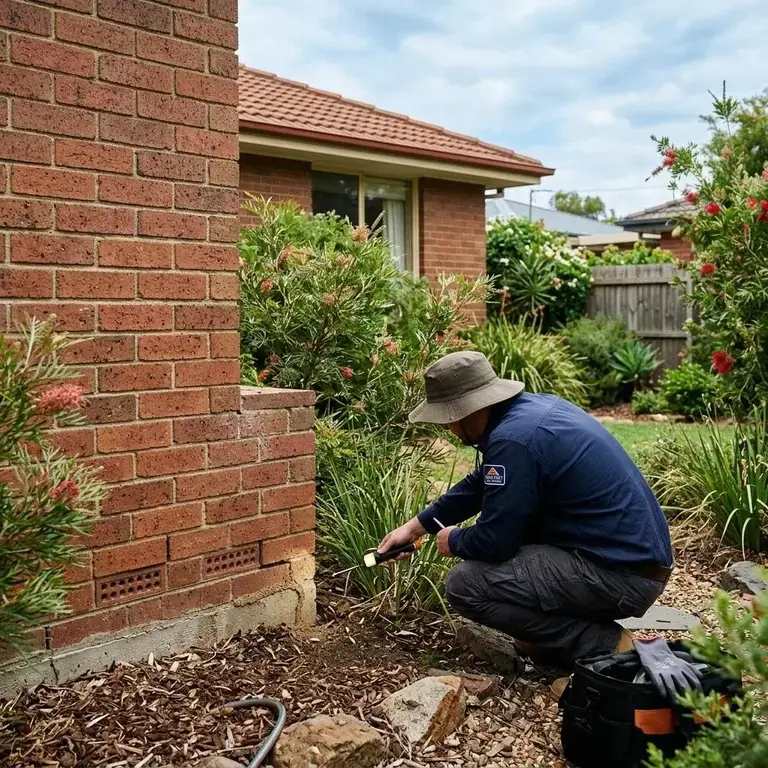
Homeowners can and should do regular visual checks — clearing weep holes, looking for mud leads, tapping skirting boards — but DIY checks cannot reliably detect hidden activity inside wall cavities and roof voids. A licensed technician uses moisture meters, thermal imaging and sounding tools to find what the eye can’t see, which is why understanding what a professional termite inspection includes matters so much.
| Factor | DIY checks | Professional inspection |
|---|---|---|
| Detection ability | Surface signs only; wall cavities missed | Thermal imaging, moisture meters, sounding tools find hidden activity |
| Species identification | Unreliable | Accurate ID drives correct treatment choice |
| Treatment options | Off-the-shelf sprays scatter colonies | Chemical barriers and baiting systems installed by licensed technicians |
| Compliance | No documentation | Written report consistent with AS 3660.2 — useful for insurance and resale |
| Best role | Ongoing prevention and early warning | Definitive detection and treatment |
The smart approach is both: keep up your own checks between visits and book professional termite inspections and reports at least annually.
Termite Inspection and Treatment Costs in Australia (2025–26)
Looking at the broader Australian market, the industry generally charges between $250 and $450 for a professional termite inspection in 2025–26, while full treatment systems typically run from around $1,500 for localised baiting up to $5,000 or more for a complete chemical barrier on a larger home. Market rates vary with house size, construction type (slab versus subfloor) and your state’s risk profile.
| Service | Typical market rate (AUD) | What’s included/notes |
|---|---|---|
| Termite inspection | $250–$450 | Full interior, exterior, roof void and subfloor check with written report |
| Combined pest and termite inspection | $300–$550 | Termites plus general pest control assessment; common for pre-purchase |
| Chemical soil barrier | $2,500–$5,000+ | Trench-and-treat around the perimeter; multi-year protection when maintained |
| Baiting and monitoring system | $1,500–$3,500 | Stations installed around the home with scheduled monitoring visits |
| Localised active treatment | $400–$1,200 | Direct treatment of a confirmed nest or active area |
These are typical industry-wide market rates across Australia, not fixed quotes from any one provider. Always use a licensed technician for any chemical treatment, and view our termite treatment and barrier systems for what’s involved in each option.
Here’s the good news: Aussie Pest Strike typically comes in well under these general market rates. For an exact quote tailored to your property, give us a call on [aps_phone] and we’ll sort you out.
Seasonal Termite Activity in Australia
Termite activity in Australia peaks from October through March, when heat and humidity drive foraging and alate swarms, and dips through the cooler southern winter. Northern regions stay high-risk almost year-round, while southern states see a clearer seasonal curve.
Jan
Feb
Mar
Apr
May
Jun
Jul
Aug
Sep
Oct
Nov
Dec
Indicative national pattern: activity climbs from September, peaks over the humid summer months when alate swarms occur, and eases through winter — though colonies keep feeding inside heated homes year-round, and northern Australia stays elevated in every season.
Some of the worst termite damage I’ve opened up has been in brick veneer homes where the owner assumed the brickwork was doing the protecting. Termites had come up through a weep hole, eaten half the wall frame, and the outside of the house looked perfect. Bricks hide termites better than they stop them.
Treat your brick home as termite-exposed, not termite-proof. Keep weep holes clear of soil, mulch and render; fix leaking taps and downpipes; store firewood away from walls; keep garden beds below the damp-proof course; and never attach timber fences or pergolas without an inspection zone. Then lock in a professional inspection at least every 12 months — every three to six months in high-risk coastal Queensland and Top End areas — backed by a maintained barrier or baiting system.
Frequently Asked Questions
Do brick homes get termites in Australia?
Yes. While termites cannot eat clay bricks or mortar, most Australian brick houses are brick veneer built around a structural timber frame, and even double-brick homes contain timber roof structures, floorboards and door frames. Termites only need a gap as narrow as 1.5 millimetres to reach that timber, so a brick home should be treated as termite-exposed rather than termite-proof.
How do termites get into a brick house?
Termites enter through weep holes, cracks in mortar, slab edges and plumbing penetrations — any opening as narrow as 1.5 millimetres gives them access to the timber inside. Once through, they travel concealed within wall cavities, which is why infestations in brick homes often run undetected for months while the exterior looks perfectly intact.
What are the warning signs of termites behind brickwork?
Look for mud leads or shelter tubes running up brickwork, piers or slab edges; hollow-sounding timber when tapped or skirting boards that crumble under light pressure; sticking doors and windows from moisture-warped frames; discarded wings near windowsills after spring and summer swarms; and bubbling or rippled paint on internal walls over a timber frame.
What should I do if I find termite activity in my brick home?
Do not disturb the area. Breaking open a mud lead or spraying surface termites scatters the colony and makes professional treatment significantly harder. Leave the evidence intact and contact a licensed technician who can identify the species and apply an appropriate treatment such as a chemical barrier or baiting system.
How often should a brick home be inspected for termites?
Australian Standard AS 3660.2 recommends professional inspections at least annually. In high-risk regions such as coastal Queensland and the Top End, inspections every three to six months are advised. Homeowners can supplement these with their own visual checks between visits, looking for mud leads and keeping weep holes clear.
Which termite species threaten Australian brick homes?
Coptotermes acinaciformis is the most destructive subterranean species across mainland Australia and is a major threat to brick veneer homes. In the Top End, Mastotermes darwiniensis dominates. Both species forage through soil and enter buildings via ground-level gaps, making slab edges and weep holes common entry points regardless of wall material.
Does a termite barrier make a brick home safe?
No. Under the National Construction Code and AS 3660.1, most new homes must include a termite management system, but barriers have finite lifespans and can be bridged by renovations, landscaping or soil movement. A barrier reduces risk but never replaces regular professional inspections, which remain essential for early detection.
How can I reduce termite risk around my brick home?
Keep weep holes clear of soil, mulch and render; fix leaking taps and downpipes; store firewood away from walls; keep garden beds below the damp-proof course; and avoid attaching timber fences or pergolas without maintaining an inspection zone. These steps remove the moisture and timber contact points termites use to reach your home.
Can Aussie Pest Strike help with termites in a brick home?
Yes. Aussie Pest Strike provides professional termite inspections and treatment for brick veneer and double-brick homes, using tools such as thermal imaging and moisture meters to detect hidden activity inside wall cavities and roof voids. Contact the team to discuss your property's construction type and arrange an inspection suited to your local risk level.
What is the next step after spotting possible termite signs?
Leave any mud leads or damaged timber undisturbed and book a professional inspection with Aussie Pest Strike. A licensed technician will check the interior, exterior, roof void and subfloor, identify any species present, and provide a written report consistent with AS 3660.2 so you can decide on treatment options with confidence.
Sources & further reading
Found Something
Dangerous?
Don’t touch it. Don’t spray it. Keep kids and pets clear, take a photo from a safe distance, and call us — or book a free inspection and we’ll come to you.
02 7235 0050