Dead Rat Smell: Howto Find Itand Remove It Fast
A dead rat smell is a strong, sickly-sweet odour caused by a decomposing rodent hidden somewhere in your home — usually a wall cavity, roof void or...
Few things clear a room faster than the smell of a dead rat. That thick, sickly-sweet odour drifting through your home means a rodent has died somewhere hidden — a wall cavity, roof void or subfloor — and the body is now decomposing. The good news: with a methodical approach, you can usually find it, remove it and have the smell gone within days rather than weeks.
A dead rat smell is a strong, sickly-sweet odour caused by a decomposing rodent concealed inside the structure of your home, and it is eliminated by locating and removing the carcass, disinfecting the area and ventilating the space. This guide walks you through exactly how to do that, what it costs if you need professional pest control help, and how to stop it happening again.
- A dead rat smell is strongest closest to the carcass and often intensifies in the afternoon as rooms warm up — use that to your advantage when tracking it down.
- Roof rats and Norway rats commonly die in roof voids, wall cavities and subfloors, often after a baiting program.
- Always wear gloves and a mask when handling a carcass — rats can carry leptospirosis and other infections.
- If the body can’t be reached, the odour typically peaks within days and fades over two to three weeks; enzyme treatments speed this up.
- Professional carcass location and removal in Australia typically costs $150–$400, and a full rodent control plan prevents repeat odours.
Why Dead Rat Smells Are So Common in Australian Homes
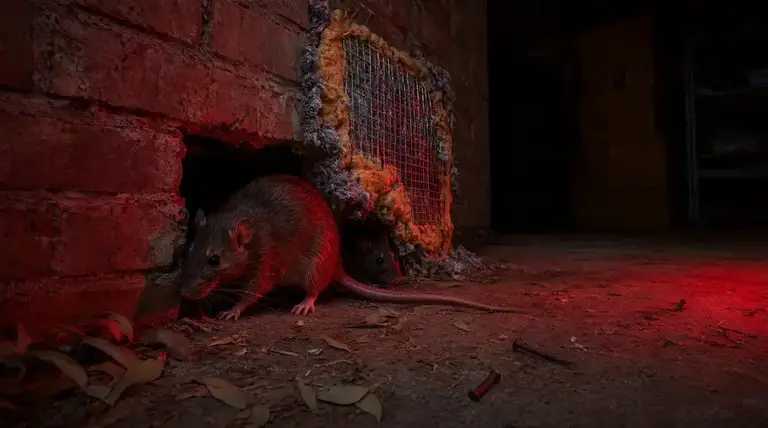
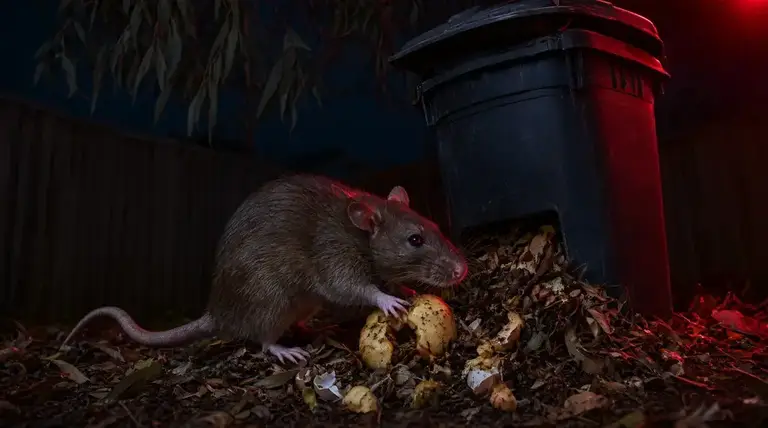
Dead rat smells are common in Australia because our two main pest species — the black or roof rat (Rattus rattus) and the brown or Norway rat (Rattus norvegicus) — actively move indoors during autumn and winter, nesting in exactly the spots you can’t see or reach. Our housing stock makes it worse: Queenslanders on stumps, older weatherboard homes with accessible subfloors, brick veneer walls with generous cavities, and insulated roof voids all provide warm, undisturbed nesting sites.
Climate plays a big role too. The heat and humidity of Queensland and northern New South Wales accelerate decomposition, so a carcass in a Brisbane roof void in January will smell stronger, sooner, than one in a Melbourne winter. Meanwhile, cooler southern states can drag the process out for weeks. The smell most often appears after a baiting program: a rat consumes rodenticide, retreats to a hidden harbourage and dies there. If you’ve recently had rats treated and now there’s an odour, the two are almost certainly connected — which is one more reason to understand roof rat behaviour in Australia before baiting.
Warning Signs: How to Find the Source of a Dead Rat Smell
Your nose is the best detection tool you own — the odour is always strongest nearest the carcass. Move slowly through the house in the early afternoon (when rooms are warmest and the smell peaks) and note where it intensifies. A smell that’s worst in one corner usually means the rat died inside that wall or the ceiling directly above. Then check these usual hiding spots:
- Roof voids and ceiling insulation — especially near the manhole and along the tops of walls where roof rats travel.
- Wall cavities — behind kitchens, laundries and bathrooms, wherever plumbing penetrates the building envelope.
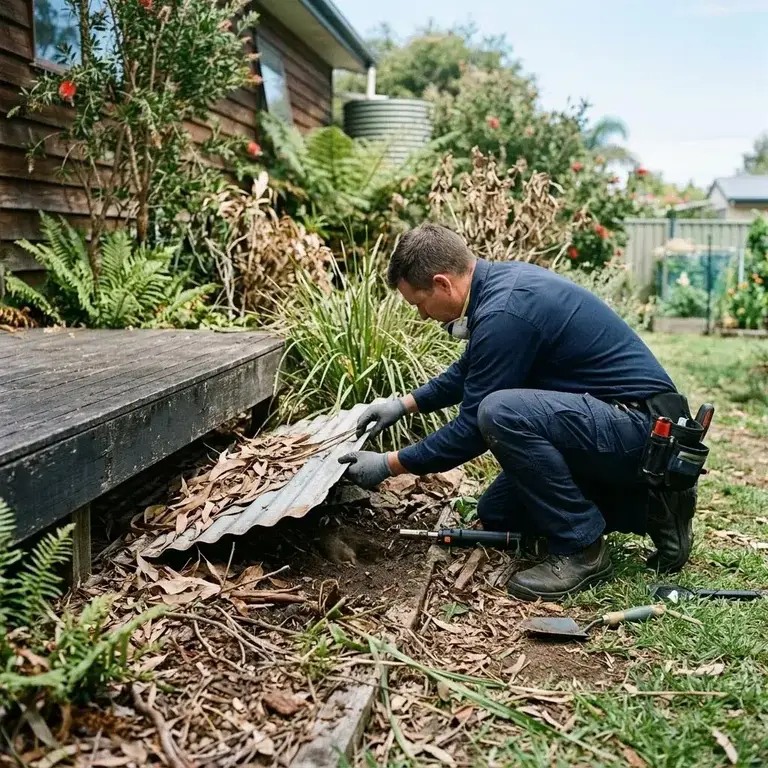
- Subfloors and behind kickboards — a classic spot in older weatherboard homes and Queenslanders with enclosed under-house areas.
- Behind large appliances — fridges, dishwashers and hot water systems generate warmth that attracts nesting rodents.
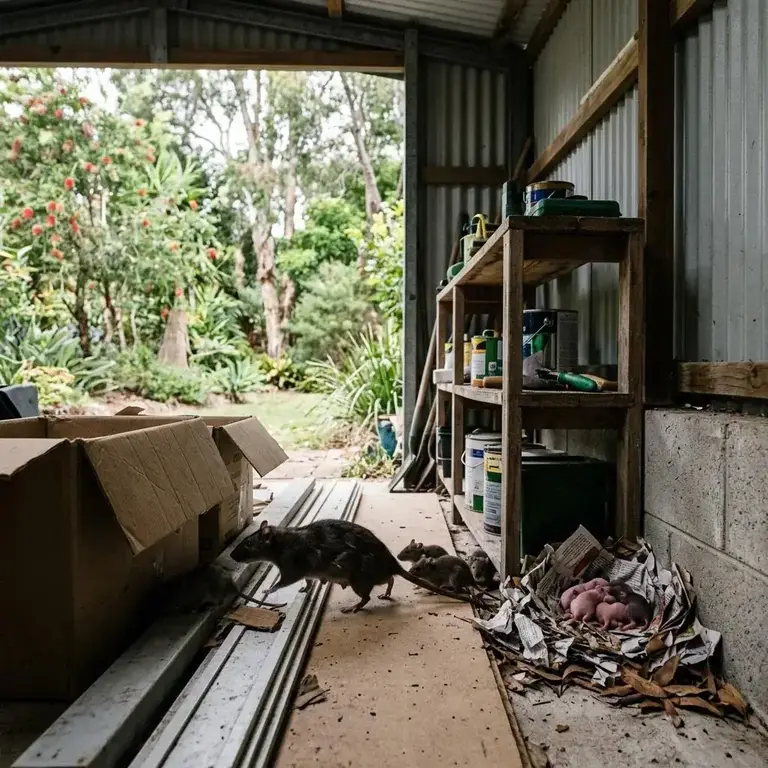
- Garage clutter and stored boxes — rarely moved furniture and cardboard are prime harbourage.
- Blowfly clusters — a sudden gathering of blowflies at a window or light fitting often points straight to the carcass.
If you’re also noticing droppings, gnaw marks or scratching noises alongside the smell, you may have live rats as well as a dead one. Run through the full signs of rats or mice in your home checklist to gauge how big the problem really is.
DIY vs Professional Dead Rat Removal
If the carcass is reachable, DIY removal is straightforward: wear disposable gloves and a mask, pick the rat up with a plastic bag turned inside out, seal and double-bag it, and place it in the general waste bin. Then spray the area with disinfectant or diluted bleach, let it dwell, wipe down, and deodorise with bicarb soda, activated charcoal or coffee grounds overnight while you ventilate the room. The moment the carcass is inside a wall cavity, under a sealed floor or buried in insulation you can’t access, professional help becomes the smarter option.
| Factor | DIY removal | Professional service |
|---|---|---|
| Accessible carcass (open roof void, behind fridge) | Usually fine with gloves, mask and disinfectant | Fast, hygienic, includes full clean-down |
| Carcass inside wall cavity or sealed subfloor | Risk of unnecessary holes and plaster damage | Inspection cameras pinpoint the spot, minimal cutting |
| Lingering odour treatment | Bicarb, charcoal, ventilation — slow but cheap | Enzyme-based odour treatments work considerably faster |
| Repeat odours after baiting | Cycle likely to continue | Full rodent control plan stops new rats dying indoors |
| Health risk | Manageable with PPE; never handle bare-handed | Technicians handle biohazard and contaminated materials |
Any rodenticide used in or around your home should always follow APVMA-approved label directions, and chemical treatments are best left to licensed technicians. For a deeper look at how the pros break the cycle, read how professionals actually eliminate rats.
What Does Dead Rat Removal Cost in Australia?
In 2025–26, the typical Australian market rate for straightforward carcass removal sits around $150–$400 depending on access, while cutting into a wall and patching it generally pushes industry prices higher. If the smell is part of a wider infestation, an ongoing rodent control program is the better-value spend. Here’s what the Australian market typically charges:
| Service | Typical market rate (AUD) | What’s included/notes |
|---|---|---|
| Carcass location and removal | $150–$400 | Camera inspection, removal, disinfect and deodorise |
| Wall cavity cut-out and patch | $300–$600 | Minimal-access opening, carcass removal, plaster repair |
| Odour treatment (enzyme-based) | $100–$250 | For unreachable carcasses; accelerates breakdown |
| Insulation/carpet replacement | $200–$800+ | When decomposition has contaminated materials |
| Rodent control program | $250–$600 | Baiting/trapping, monitoring and follow-up visits |
| Rodent proofing and exclusion | $400–$1,500+ | Sealing entry points so rats can’t get back in |
These figures reflect typical Australian market rates — what the industry generally charges across the country. Aussie Pest Strike typically comes in well under these market rates, so give us a call on [aps_phone] for an exact quote tailored to your situation.
Seasonal Activity: When Dead Rat Smells Peak in Australia
Dead rat call-outs in Australia peak from late autumn through winter, when rats move indoors to nest, with a secondary spike in early spring as baiting programs ramp up. Warmer northern regions see year-round activity, while southern states are more sharply seasonal.
Jan
Feb
Mar
Apr
May
Jun
Jul
Aug
Sep
Oct
Nov
Dec
Indicative pattern: indoor rodent deaths and associated odour call-outs climb from April as rats shelter indoors for winter, peaking June–July, then ease through spring and summer. Northern Australia experiences flatter, year-round activity.
Nine times out of ten, when a customer rings about a dead rat smell, it’s within a fortnight of a baiting job. The rat’s eaten the bait and died in the wall right where it was nesting. My advice is always the same: don’t just remove the carcass — proof the entry points, or you’ll be chasing the next smell in a month.
Remove any reachable carcass immediately with gloves and a mask, disinfect and ventilate. If the smell persists beyond a few days, is coming from inside a wall, or keeps recurring after baiting, book a professional rodent control and removal service — and follow it up with rodent proofing and exclusion so rats can’t re-enter and die in your walls again. Removal without exclusion is a short-term fix.
Frequently Asked Questions
What does a dead rat smell like and why is it so strong?
A dead rat smell is a thick, sickly-sweet odour caused by a rodent decomposing somewhere hidden in your home, such as a wall cavity, roof void or subfloor. It is strongest closest to the carcass and often intensifies in the afternoon as rooms warm up. Heat and humidity accelerate decomposition, so the smell can be stronger and arrive sooner in warmer regions than in cooler southern states.
How do I find where a dead rat smell is coming from?
Use your nose as the detection tool: move slowly through the house in the early afternoon when rooms are warmest and note where the odour intensifies. A smell worst in one corner usually means the rat died inside that wall or the ceiling above it. Check roof voids near the manhole, wall cavities behind kitchens and bathrooms, subfloors, behind large appliances, garage clutter, and clusters of blowflies at windows or light fittings.
Why do dead rats often appear after a baiting program?
When a rat consumes rodenticide, it typically retreats to a hidden harbourage — often inside a wall cavity, roof void or subfloor — and dies there. That is why an odour appearing shortly after rats have been treated is almost certainly connected to the baiting. Nine times out of ten, a dead rat smell call-out happens within a fortnight of a baiting job, with the carcass right where the rat was nesting.
Can I remove a dead rat myself, and how do I do it safely?
If the carcass is reachable, DIY removal is straightforward. Wear disposable gloves and a mask, pick the rat up with a plastic bag turned inside out, then seal and double-bag it before placing it in the general waste bin. Spray the area with disinfectant or diluted bleach, let it dwell, wipe down, and deodorise overnight with bicarb soda, activated charcoal or coffee grounds while ventilating the room. Never handle a carcass bare-handed.
What health risks are involved with handling a dead rat?
Rats can carry leptospirosis and other infections, so always wear gloves and a mask when handling a carcass or contaminated materials. Avoid touching the body with bare hands, double-bag it securely, and disinfect the area afterwards. If the carcass is buried in insulation or contaminated carpet, professional technicians are equipped to handle biohazard and contaminated materials safely rather than risking exposure yourself.
How long does a dead rat smell last if I cannot reach the carcass?
If the body cannot be reached, the odour typically peaks within days and fades over two to three weeks as decomposition completes. Enzyme-based odour treatments speed this up considerably compared with passive methods like bicarb soda, charcoal and ventilation alone. In cooler southern states the process can drag out for weeks, while heat and humidity in northern regions make the smell stronger but shorten the timeline.
When should I call a professional instead of removing the carcass myself?
Call a professional the moment the carcass is inside a wall cavity, under a sealed floor or buried in insulation you cannot access. DIY attempts risk unnecessary holes and plaster damage, whereas technicians use inspection cameras to pinpoint the spot with minimal cutting. Professional help also suits lingering odours needing enzyme treatment, recurring smells after baiting, and situations involving live rats alongside the dead one.
How do I stop dead rats ending up in my walls again?
Removal without exclusion is only a short-term fix. After clearing the carcass, follow up with rodent proofing and exclusion work that seals entry points so rats cannot re-enter and die indoors again. Pair this with a full rodent control program covering baiting, trapping, monitoring and follow-up visits. Any rodenticide used should follow APVMA-approved label directions, and chemical treatments are best left to licensed technicians.
How can Aussie Pest Strike help me deal with a dead rat smell?
Aussie Pest Strike can locate and remove unreachable carcasses using inspection cameras, disinfect and deodorise the affected area, and apply enzyme-based odour treatments when the body cannot be accessed. If the smell keeps recurring after baiting, they can put together a full rodent control plan plus proofing and exclusion work so new rats cannot enter your walls and die there again. Contact them for a quote tailored to your situation.
What should my next step be once the dead rat has been removed?
Once the carcass is gone and the area disinfected and ventilated, the practical next step is preventing a repeat. Aussie Pest Strike can inspect your home for the entry points roof rats and Norway rats use, then carry out proofing and exclusion work to seal them. This matters most after a baiting program, since rats dying indoors usually means they were nesting nearby. Removing the smell without closing off access leaves you chasing the next one within weeks.
Sources & further reading
Found Something
Dangerous?
Don’t touch it. Don’t spray it. Keep kids and pets clear, take a photo from a safe distance, and call us — or book a free inspection and we’ll come to you.
02 7235 0050