Renovating? The PestRisks Hidingin Your Walls
Renovating? The Pest Risks Hiding in Your Walls — renovating disturbs the hidden world inside your walls, and pest risks are among the most common and...
Planning a renovation in Australia? Before you pick up the sledgehammer, understand this: renovating disturbs the hidden world inside your walls, and the pest risks hiding in your walls are among the most common and costly surprises Australian homeowners uncover. Termites, cockroaches, rodents and ants frequently nest undetected in wall cavities, subfloors and roof voids — and demolition day is when they make themselves known.
In short, the pest risk of renovating is this: opening up walls, floors and ceilings exposes established pest harbourages, scatters live infestations deeper into the structure, and can breach existing termite barriers — all of which adds cost and delay if you haven’t inspected first. A little preparation before work starts can save you thousands in unexpected repairs and keep your project on schedule.
- Wall cavities, subfloors and roof voids are prime pest harbourages — renovating exposes and disturbs them.
- Subterranean termites (especially Coptotermes species) are the number one risk in Australian renovations.
- Renovation work can breach existing termite barriers and void warranties — always reassess protection afterwards.
- A pre-renovation timber pest inspection typically costs $250-$450, far less than repairing hidden damage mid-build.
- New slabs and extensions generally must meet termite risk management requirements under the NCC and AS 3660.1.
Why the Pest Risks Hiding in Your Walls Matter in Australian Homes
Australian housing and climate create near-perfect conditions for concealed pest activity. Wall cavities, subfloors and ceiling voids are dark, warm and rarely disturbed — exactly the conditions pests love — and our warm, humid northern zones and temperate southern regions both support year-round pest pressure.
Older Australian homes are particularly vulnerable. Weatherboard and brick-veneer houses built before the 1990s often have gaps around pipes, vents and stumps that allow easy entry, and many have never had a modern termite management system installed. Elevated Queenslanders with open subfloors give termites and rodents direct soil-to-timber access, while homes on concrete slabs aren’t immune — termites routinely bridge slab edges through weep holes, cracks and concealed entry points behind landscaping. When you strip plasterboard, lift flooring or open up a bathroom, you break into these harbourages. Activity that has been quietly ticking along for years suddenly becomes visible, and the disturbance itself can scatter pests deeper into the structure or into neighbouring rooms.
The Most Common Pests Found During Renovations
The pests most often uncovered mid-renovation are termites, cockroaches, ants, rodents and possums. Each behaves differently once disturbed, so knowing what you’re dealing with shapes your response.
Termites (White Ants)
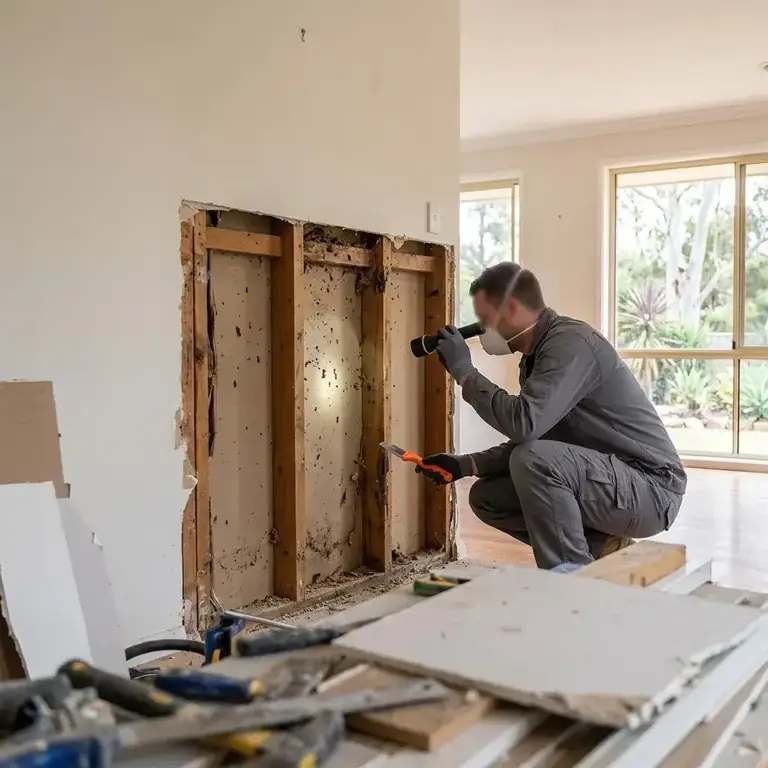
Subterranean termites, especially Coptotermes species, are the number one concern. They enter through soil contact and eat timber framing from the inside out, so damage is often only discovered when a wall is opened. Industry estimates consistently rank termite damage to Australian homes above fire, flood and storm damage combined — which is why pest control planning belongs in every renovation budget.
Cockroaches and Ants
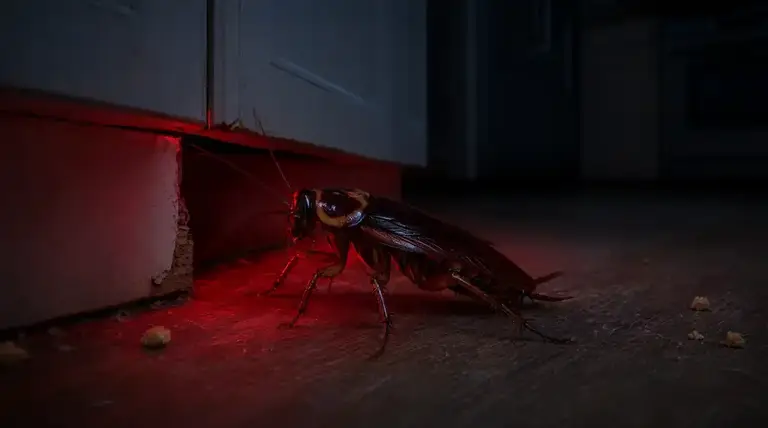
German and Australian cockroaches thrive behind kitchen cabinetry and in wall voids near plumbing. Coastal brown ants and black house ants nest in wall cavities and under paths, and quickly colonise freshly disturbed ground around extensions.
Rodents and Possums
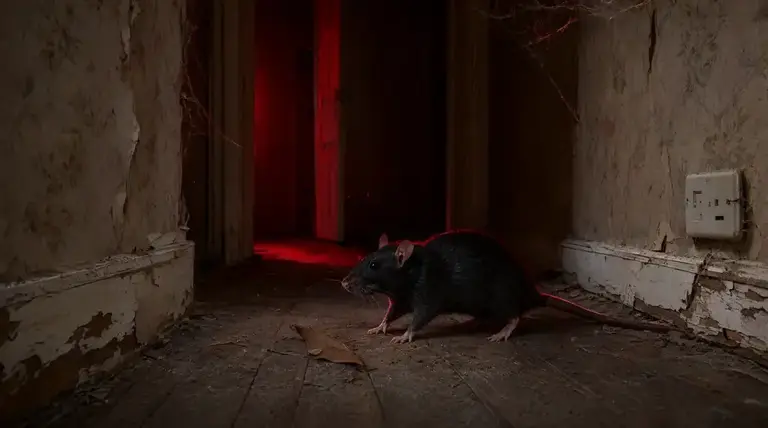
Rats and mice nest in insulation and chew electrical wiring, which is a genuine fire hazard. Brushtail possums, protected under state wildlife laws, commonly shelter in roof voids and must be removed humanely by a licensed handler — not simply blocked out.
Warning Signs to Check Before You Demolish
Before the sledgehammer comes out, walk through the work area and check for these tell-tale signs. Any one of them justifies pausing the job and booking a professional inspection.
- Mud tubes or leads on stumps, piers or brickwork — a classic sign of termite entry.
- Timber that sounds hollow when tapped, or sagging floors and door frames.
- Droppings, grease marks or gnawed wiring in roof and subfloor spaces.
- Fine frass (insect droppings that look like sawdust) near skirting boards.
- Musty odours or scratching sounds inside walls, especially at night.
- Live insects swarming around window frames or light fittings in spring and summer — often termite alates.
Building Rules and Regulations to Keep in Mind
Most renovation work in Australia must comply with termite risk management requirements under the National Construction Code and Australian Standard AS 3660.1. In Queensland and New South Wales, building certifiers commonly require a physical or chemical termite barrier for any new slab or extension footprint.
There’s a trap many owners miss: if your renovation disturbs an existing barrier or treated zone, it may void your termite warranty. Chemical treatments must be applied by a licensed pest management technician, with licensing handled at state level — for example by the EPA in New South Wales and the Department of Health in Victoria. If you’re renovating an investment property, it pays to understand landlord pest control obligations in Australia before works begin, and tenants dealing with pests discovered mid-lease should review their pest control rights as a tenant.
DIY vs Professional Pest Control During a Renovation
Basic hygiene and exclusion work — sealing gaps, storing timber off the ground, removing food scraps — is sensible DIY. But termite detection, barrier installation and chemical treatment are jobs for licensed technicians: the products are APVMA-regulated, the equipment is specialist, and a wrong call can void warranties or leave active termites undetected inside your new walls.
| Task | DIY | Professional |
|---|---|---|
| Gap sealing, site hygiene, materials storage | Suitable and encouraged | Not usually required |
| Termite detection in walls and subfloors | Limited to visible signs only | Moisture meters, thermal imaging, licensed inspection |
| Chemical barriers and treatments | Not recommended — APVMA-regulated products | Licensed technician required, warranty-backed |
| Possum removal | Not permitted — protected species | Licensed wildlife handler only |
| Rodent and cockroach treatment | Traps and baits for minor activity | Baiting programs for established infestations |
What Pest Control During a Renovation Costs (AUD, 2025-26)
Across the Australian market, you’re generally looking at anywhere from a few hundred dollars for an inspection through to several thousand for a full barrier installation, depending on home size and construction type. The figures below reflect typical industry rates charged around the country — use them as a benchmark when comparing quotes.
| Service | Typical market rate (AUD) | What’s included/notes |
|---|---|---|
| Pre-renovation timber pest inspection | $250-$450 | Subfloor, roof void and wall cavity check; written report for your builder |
| Chemical termite barrier (perimeter) | $1,500-$4,000 | Trench and treat around slab/stumps; price varies with perimeter length |
| Pre-construction barrier for new slab/extension | $800-$2,500 | Physical or chemical system to NCC/AS 3660.1; certification for your certifier |
| General pest treatment (cockroaches, ants, spiders) | $180-$350 | Internal and external spray; ideal just before wall linings go on |
| Rodent baiting program | $200-$400 | Stations placed in roof/subfloor, follow-up visit included |
| Possum removal and proofing | $250-$600 | Humane removal by licensed handler plus entry-point sealing |
These are the going rates across the broader Australian pest control industry — but here’s the good news: Aussie Pest Strike typically comes in well under these market rates while still delivering the same certified, fully licensed work. For an exact quote tailored to your renovation, give us a call on [aps_phone] and we’ll sort you out.
Seasonal Pest Activity: When to Schedule Your Renovation Works
Pest pressure in Australia peaks through the warmer months. Termite swarming, ant colonisation and cockroach breeding all surge from spring through late summer, while rodents push indoors as autumn cools — so the timing of your demolition and slab pours genuinely matters.
Jan
Feb
Mar
Apr
May
Jun
Jul
Aug
Sep
Oct
Nov
Dec
Indicative combined pest pressure across most of Australia: termite swarming and ant/cockroach activity peak November-February, while rodent activity rises through autumn as temperatures fall. Tropical northern regions see elevated activity year-round.
How to Protect Your Renovation from Pests
The smartest step is a professional timber pest inspection before work starts. A licensed inspector uses moisture meters and thermal imaging to detect activity you cannot see, giving you a clear picture of what is hiding in the structure before budgets are locked in.
During the build, seal gaps around new pipework, keep timber off the ground, remove food scraps daily, and store materials away from the house. Once work is finished, consider a fresh termite treatment or barrier top-up — especially if you have added a slab, deck or landscaping against external walls. And if the renovation precedes a move, our moving house pest checklist will help you avoid carrying pest problems into your next property.
“The worst conversations I have are with owners who’ve just lined their new extension, and we open a wall next door and find live termites. A $300 inspection before demolition would have caught it for a fraction of the repair bill. Check first, build second — every time.”
Book a licensed timber pest inspection before any demolition, treat or repair anything found, and have a technician reassess your termite protection once works are complete — particularly after new slabs, decks or landscaping. It’s the cheapest insurance your renovation will ever carry.
Renovating? The Pest Risks Hiding in Your Walls: Frequently Asked Questions
What are the biggest pest risks when renovating an older home?
Termites top the list, followed by rodents nesting in insulation and cockroaches behind old cabinetry. Homes built before modern barrier requirements often have concealed damage. A pre-renovation inspection identifies active infestations and past damage so you can budget for repairs rather than discovering them mid-demolition.
Should I get a pest inspection before renovating?
Yes. A pre-renovation timber pest inspection typically costs $250-$450 — far less than repairing hidden termite damage found halfway through a build. Inspectors check subfloors, roof voids and wall cavities, and their report helps your builder plan around problem areas while keeping any existing termite warranty valid.
Can renovation work make a termite problem worse?
It can. Disturbing soil, breaking slabs or removing garden beds can breach an existing chemical barrier, opening new entry points. Vibrations and exposed timber also attract foraging termites, particularly during spring swarming season. Always have a licensed technician reassess protection once major works are complete.
Don’t let hidden pests derail your renovation. Aussie Pest Strike’s licensed technicians will assess your property before work begins, identify anything lurking in the walls, subfloor or roof void, and make sure your termite protection is intact when the dust settles. Contact Aussie Pest Strike today on [aps_phone] to book your free inspection and renovate with confidence.
Sources & further reading
Found Something
Dangerous?
Don’t touch it. Don’t spray it. Keep kids and pets clear, take a photo from a safe distance, and call us — or book a free inspection and we’ll come to you.
02 7235 0050