Ringtail vs Brushtail:Which Possum Isin Your Roof?
When it comes to ringtail vs brushtail possums in your roof, the fastest way to tell them apart is size and sound: brushtails are cat-sized and thump...
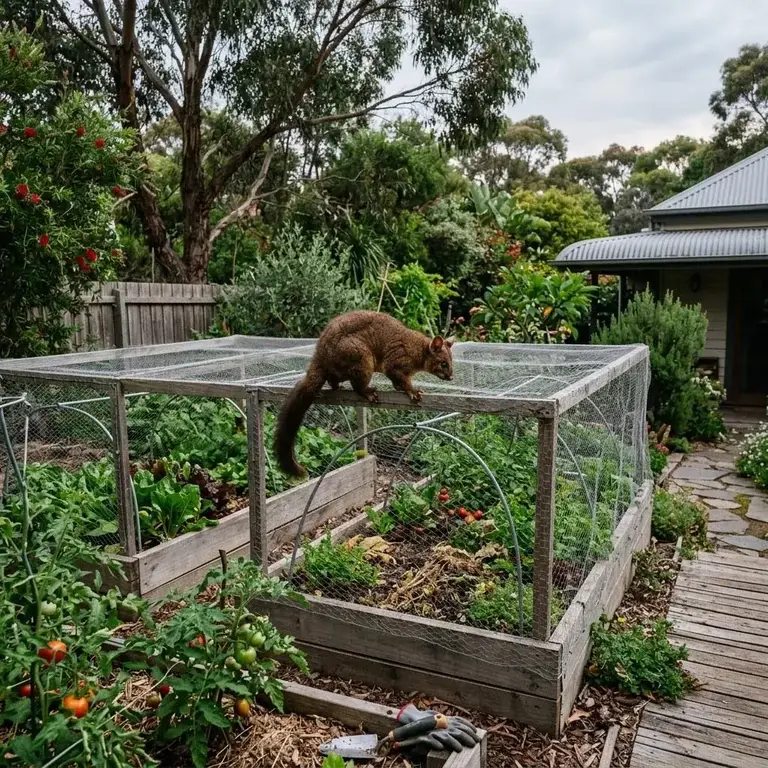
If you lie awake at night wondering “what’s thumping around in my ceiling?”, you’re not alone — possums are one of the most common pest-control call-outs across Australia, and the ringtail vs brushtail question is usually the first thing to sort out. A ringtail possum is a small, light-footed, tree-dwelling marsupial with a curled white-tipped tail, while a brushtail is a larger, cat-sized possum with a bushy dark tail — and knowing which one is overhead changes how it can legally and humanely be removed.
Both species are protected native wildlife, so this isn’t a case of grabbing a trap and hoping for the best. This guide walks you through the key differences, the warning signs, what removal costs in 2025-26, and when to call a licensed technician.
- Brushtails are cat-sized (2–4.5 kg) and thump loudly; ringtails weigh under a kilogram and scurry lightly with a curled, white-tipped tail.
- All possums are protected in Australia — you cannot harm, poison or relocate them off your property.
- Identification matters because ringtails travel as families and may carry joeys between April and November.
- Humane eviction plus full roof proofing typically costs $250–$900 AUD depending on access and entry points.
- A free professional inspection is the fastest, safest way to confirm the species and fix the problem for good.
Why the Ringtail vs Brushtail Question Matters Across Australia
Knowing which possum you have determines the legal removal method, the timing and the cost. Brushtails are the dominant roof invader in Sydney, Melbourne, Brisbane and Perth, while ringtails are far more common along the eastern states and Tasmania, particularly in cooler months.
Australian housing gives both species plenty of opportunity. Older Queenslanders with open eaves, brick-veneer homes with lifted ridge capping, and slab-on-ground builds with tiled roofs all develop entry gaps over time. Add a warm, dry ceiling void and you’ve built the perfect den. In the cooler southern states, roof activity spikes in autumn and winter as possums seek shelter, while in subtropical Queensland activity stays steadier year-round.
Getting the identification right isn’t just trivia — it shapes everything that follows. Our guide to what Australian law says you can do about a possum in the roof explains why the species and breeding status matter before any eviction begins.
Ringtail vs Brushtail: How Do I Tell Which Possum Is in My Roof?
The fastest way to tell ringtail and brushtail possums apart is by size, tail shape and the sound they make overhead. You rarely see the animal itself, so most identification comes from the evidence it leaves behind.
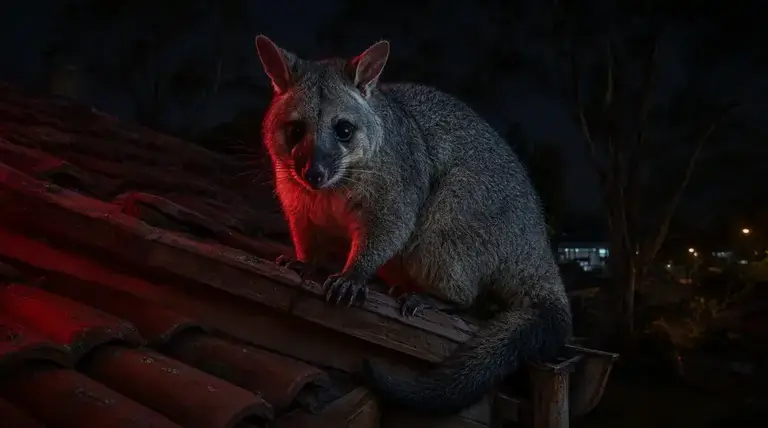
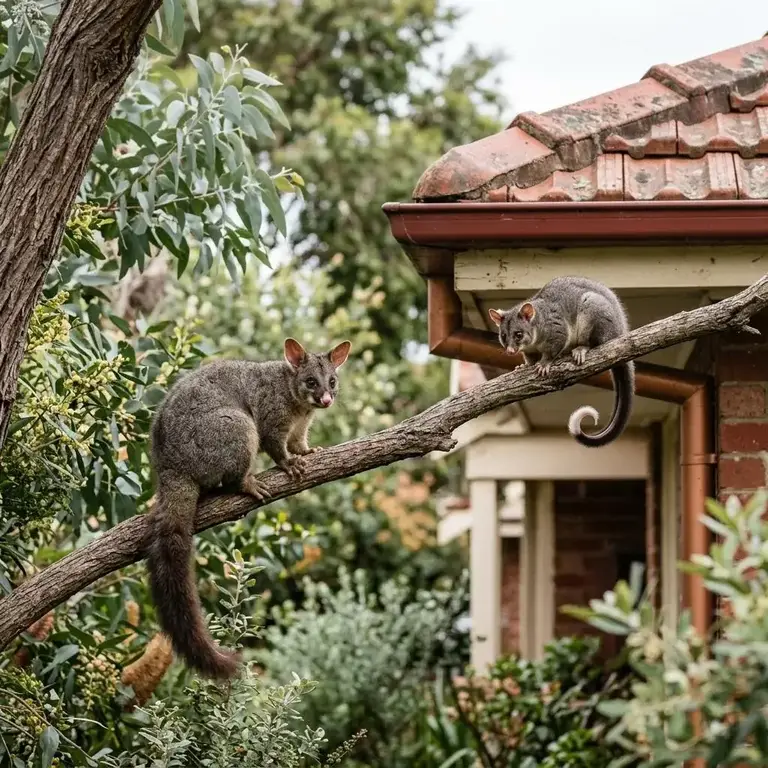
The common brushtail (Trichosurus vulpecula) weighs 2 to 4.5 kilograms — roughly a small cat — with grey fur, pointed ears and a bushy, black-tipped tail. Brushtails are bold, solitary and adaptable, which makes them the number one ceiling squatter in Australia’s major cities. The common ringtail (Pseudocheirus peregrinus) weighs under a kilogram, with rounded ears and a slender tail that curls into a ring and ends in a white tip. Ringtails normally build leaf nests called dreys in dense shrubs, but they readily move into roof voids and wall cavities — and they nest socially, often as a family.
Use this checklist of warning signs to narrow it down:
- Noise: brushtails sound like heavy footsteps thumping overhead; ringtails produce lighter, faster scurrying and soft chattering.
- Droppings: brushtail pellets are around 2 centimetres, like a jelly bean; ringtail droppings are smaller and clustered near the nest.
- Entry points: brushtails force open loose tiles and ridge capping; ringtails squeeze through gaps as small as a golf ball.
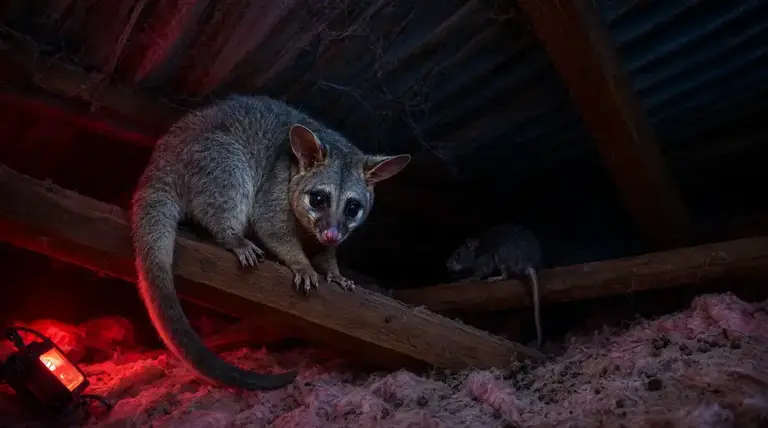
- Nesting: leaves and bark dragged into one corner suggest a ringtail drey; brushtails nest on bare insulation.
- Smell: brushtails leave a strong ammonia odour and brown urine stains on plaster; ringtail odour is noticeably milder.
For a deeper dive, see our full guide to the signs of a possum infestation in your roof.
DIY Identification vs Professional Possum Removal
You can absolutely identify the species yourself — a torch on the roofline at dusk, within an hour of sunset, tells you most of what you need. What you can’t legally do yourself is trap, relocate or exclude the animal without following strict wildlife rules, which is where licensed pest control comes in.
| Task | DIY | Professional |
|---|---|---|
| Species identification | Possible with a torch at dusk; size, tail and movement are easy to compare | Confirmed on inspection, including joey checks and entry-point audit |
| Trapping & eviction | Illegal without a licence in every state; heavy fines apply | Licensed, humane eviction with one-way doors or approved traps |
| Roof proofing | Risky — sealing with the possum (or joeys) inside is cruel and unlawful | Every entry point sealed after confirmed eviction, plus possum box option |
| Long-term outcome | Possum usually returns within nights | Permanent exclusion with warranty on workmanship |
Never block holes during the day — the animal is almost certainly still inside. And never attempt chemical deterrents without advice from a licensed technician; no off-the-shelf product is a magic fix, and some are unlawful to use around protected wildlife.
Possum Removal Costs in Australia (2025-26)
Across the Australian market, homeowners are generally quoted between $250 and $900 AUD for a complete, legal possum removal and roof-proofing job. These are typical industry rates — what most licensed operators around the country charge — and they vary with roof access, the number of entry points, the species involved and whether a possum box is installed.
| Service | Typical market rate (AUD) | What’s included/notes |
|---|---|---|
| Inspection & species ID | $0–$150 | Industry-wide, some operators waive this fee; includes roof and ceiling void check |
| Humane eviction (one-way door) | $250–$450 | Standard market rate for solitary brushtails; device fitted over main entry point |
| Trapping & on-site release | $300–$550 | Typical rate for licensed trapping; possum released on the same property at dusk |
| Full roof proofing | $400–$900 | Market rate for sealing all entry points, ridge capping, eaves and flashing repairs |
| Possum box installation | $120–$250 | Gives the evicted possum an alternative home in a nearby tree |
Family groups of ringtails can push typical industry pricing towards the upper end because every animal must be accounted for. Our page on Possum Removal & Roof Proofing outlines exactly what’s covered, and the step-by-step legal process is explained in Possum Removal in Australia: The Legal Process Explained.
One thing worth knowing: while the figures above reflect what the Australian industry generally charges, Aussie Pest Strike typically comes in well under these market rates. For an exact, no-obligation quote tailored to your property, give us a call on [aps_phone].
Seasonal Possum Activity Across the Year
Possum roof activity peaks from late summer through winter, with autumn the busiest season of all. Brushtails breed mainly in autumn, so inspections in March and April should always check for pouch young, while ringtail females may carry joeys anywhere from April to November.
Jan
Feb
Mar
Apr
May
Jun
Jul
Aug
Sep
Oct
Nov
Dec
Indicative roof-possum activity across Australia: call-outs climb through autumn as brushtails breed and both species seek warm ceiling voids, peaking in May-July before easing through spring and summer.
Nine times out of ten, the heavy thump at 2am is a brushtail, and the quick pitter-patter is a ringtail family. The mistake people make is sealing the hole before we’ve confirmed every animal — including joeys — is out. Identify first, evict humanely, then proof the whole roofline, not just the obvious gap.
Watch the roofline at dusk to confirm the species, then book a licensed inspection before touching any entry points. The reliable fix is humane eviction, a possum box in a nearby tree and full proofing of every gap — done properly, the possum keeps a home in your garden and you get your ceiling back for good.
Frequently Asked Questions
How can I tell whether the possum in my roof is a ringtail or a brushtail?
The quickest clues are size, tail shape and noise. A brushtail weighs 2 to 4.5 kilograms, roughly cat-sized, with grey fur, pointed ears and a bushy black-tipped tail, and it thumps heavily overhead. A ringtail weighs under a kilogram, has rounded ears and a slender tail that curls into a ring with a white tip, and moves with lighter, faster scurrying plus soft chattering.
What do possum droppings and smells reveal about which species is present?
Droppings are a reliable identifier. Brushtail pellets are around two centimetres long, similar to a jelly bean, while ringtail droppings are smaller and clustered near the nest. Smell also differs: brushtails leave a strong ammonia odour and brown urine stains on plaster, whereas ringtail odour is noticeably milder. Leaves and bark dragged into one corner suggest a ringtail drey, while brushtails nest on bare insulation.
Why does identifying the species matter before removing a possum?
Identification shapes the legal removal method, timing and cost. Both species are protected native wildlife, so you cannot harm, poison or relocate them off your property. Brushtails breed mainly in autumn, so inspections should check for pouch young, and ringtail females may carry joeys between April and November. Family groups of ringtails must all be accounted for before any entry points are sealed.
Can I legally trap or relocate a possum myself?
No. Trapping, relocating or excluding a possum without following strict wildlife rules is illegal without a licence in every state, and heavy fines apply. You also cannot harm, poison or move a possum off your property because they are protected native wildlife. Licensed technicians use humane methods such as one-way doors or approved traps, then seal every entry point once the animal is confirmed out.
Do ringtail and brushtail possums make different noises in the roof at night?
Possum removal costs vary widely depending on the job's complexity. Factors that influence pricing include how easily your roof can be accessed, the number of entry points needing sealing, whether one-way doors or traps are used, and if extras like possum box installation are included. Simple evictions generally cost less than full roof proofing, and ringtail jobs can differ from brushtail work. Request itemised quotes from several providers so you can compare what each service actually covers before committing.
When is possum activity in roofs highest through the year?
Roof activity peaks from late summer through winter, with autumn the busiest season overall. Call-outs climb as brushtails breed and both species seek warm ceiling voids, peaking around May to July before easing through spring and summer. In cooler southern states activity spikes in autumn and winter, while subtropical Queensland sees steadier year-round activity.
How do I identify a possum myself at dusk?
Watch the roofline with a torch within an hour of sunset. Size, tail shape and movement are usually easy to compare: a heavy thumping animal is likely a brushtail, while quick pitter-patter suggests a ringtail family. What you cannot do yourself is trap, relocate or exclude the animal — that requires a licence. Never block holes during the day, as the possum is almost certainly still inside.
What is the recommended process for getting rid of a roof possum permanently?
The reliable sequence is to confirm the species first by watching the roofline at dusk, then book a licensed inspection before touching any entry points. Next comes humane eviction using one-way doors or approved traps, followed by sealing every gap along the whole roofline, not just the obvious hole. Installing a possum box in a nearby tree gives the evicted animal an alternative home so it stays out of your ceiling.
How does Aussie Pest Strike confirm which possum species is living in my roof before treatment?
An on-site assessment is most useful when you have heard noises overhead but cannot confidently tell a brushtail from a ringtail, or when you suspect joeys may be present during breeding season. A technician can confirm the species, audit every entry point and check for young before any eviction begins, which prevents the cruel and unlawful mistake of sealing a hole with animals still inside.
What practical next step should I take after spotting possum signs in my roof?
Once you have noticed droppings, urine stains, dragged leaves or night-time noise, avoid sealing any gaps yourself and contact Aussie Pest Strike for a no-obligation quote tailored to your property. The technician will verify which species is present, plan a humane eviction timed around breeding status, and arrange full proofing of ridge capping, eaves and flashing so the possum does not simply return within nights.
Sources & further reading
Found Something
Dangerous?
Don’t touch it. Don’t spray it. Keep kids and pets clear, take a photo from a safe distance, and call us — or book a free inspection and we’ll come to you.
02 7235 0050