Possums in theGarden: ProtectingVegies and Fruit
Possums in the garden are a common headache for Australian home growers, with brushtails and ringtails stripping vegies, fruit and flowers overnight....
Possums in the garden are one o f the most common headaches for Australian home growers, with brushtails and ringtails stripping vegies, fruit and flowers overnight. Because possums are protected native wildlife, the answer is deterrence, not harm: wildlife-safe netting, tree collars, motion-activated lights and tidy garden habits will keep your patch productive without breaking the law.
Put simply, protecting your garden from possums means combining physical barriers with smart garden hygiene so the animals lose interest and move on. This guide covers why possums target your patch, how to spot the damage early, what lawful DIY options cost, and when it makes sense to bring in a licensed pest control professional.
- Possums are protected native wildlife in every state and territory — you cannot harm, poison or relocate them yourself.
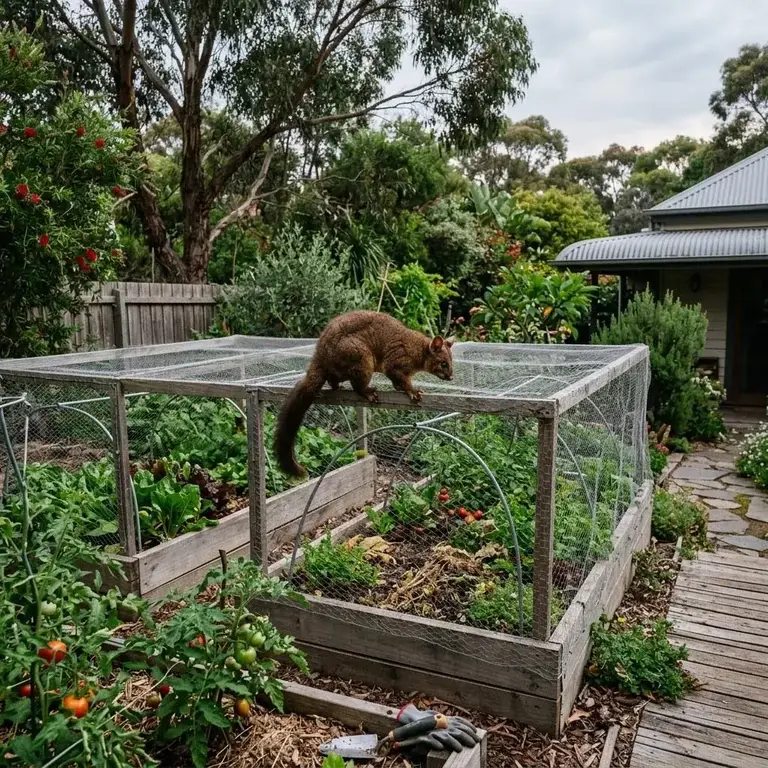
- Exclusion beats removal: taut wildlife-safe netting (5mm mesh or less), trunk collars of at least 60cm and two-metre pruning gaps are the most reliable defences.
- Damage peaks in late summer and autumn when backyard fruit ripens and young possums leave the pouch.
- DIY deterrents typically cost $30–$300, while professional possum proofing generally runs $250–$900+ depending on the property.
- If possums are in your roof or keep defeating your deterrents, a licensed technician can install one-way doors and barriers legally.
Why possums in the garden target Australian garden beds
A well-tended vegie patch is an all-you-can-eat buffet for a possum, and Australia’s mild climate means gardens stay productive — and attractive — almost year-round. These nocturnal marsupials are opportunistic feeders with a taste for soft new growth, ripening stone fruit, citrus, grapes, tomatoes, brassicas and even herbs like parsley.
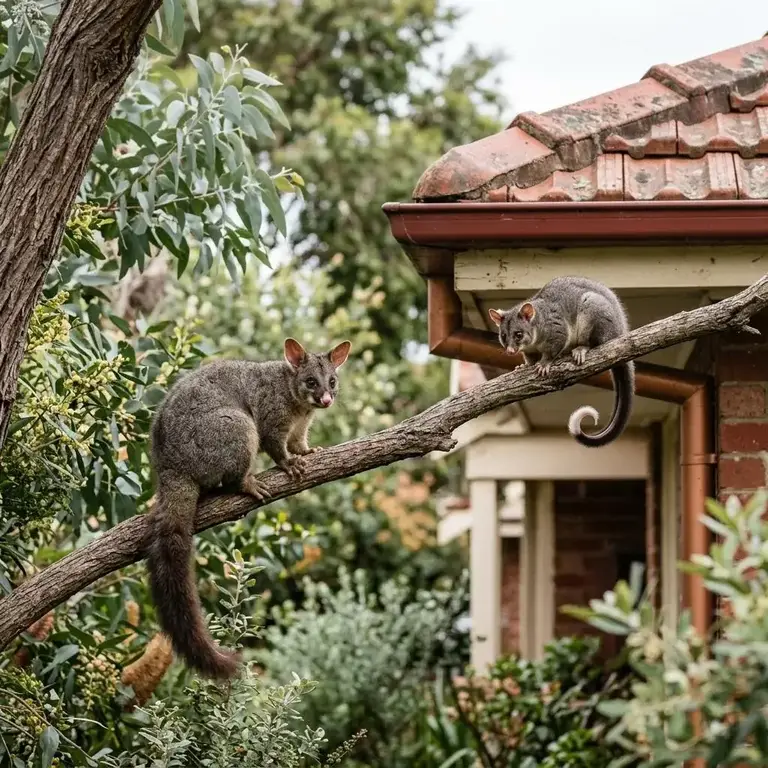
Possums are also creatures of habit. Once one finds a reliable feed, it will return night after night along the same fence lines and branches. Housing style plays a part too: Queenslanders on stumps, brick-veneer homes with low rooflines and older houses with overhanging trees all give possums easy aerial access between roof, fence and garden. Pressure is often worst in late summer and autumn, when backyard fruit ripens and young possums leave the pouch.
Two species do most of the damage. The common brushtail (Trichosurus vulpecula) is roughly cat-sized, found across every mainland state and Tasmania, bold enough to den in roof cavities and climb almost anything. The common ringtail (Pseudocheirus peregrinus) is smaller and more agile, common along the east coast, favouring leaves, blossoms and soft fruit, and often building a leafy nest — a drey — in dense shrubs close to gardens.
Warning Signs of Possum Damage in the Garden
Possum damage is easy to recognise once you know the pattern: leaves clipped cleanly, half-eaten fruit dropped on the ground and seedlings that vanish between dusk and dawn. Check your patch each morning for these telltale signs:
- Cleanly clipped leaves and shoots — possums snip soft new growth neatly, unlike the ragged tearing left by caterpillars or birds.
- Half-eaten or dropped fruit — single bites taken from tomatoes, citrus or stone fruit, often with the rest discarded under the tree.
- Vanishing seedlings — young plants that disappear entirely overnight, root and all.
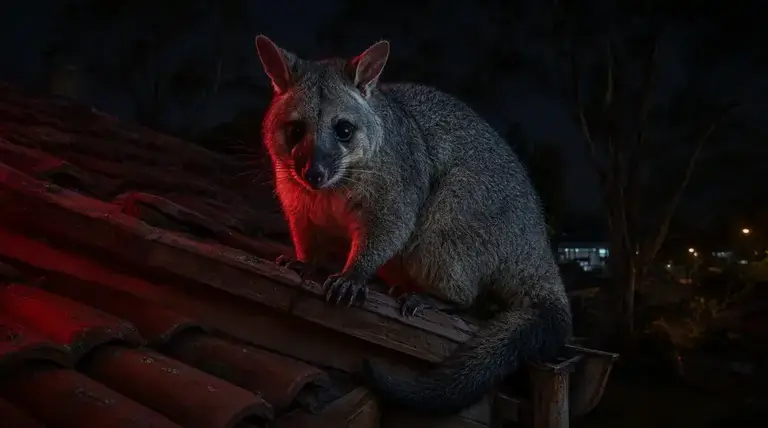
- Nocturnal noise and droppings — thumping on fences or the roof after dark, plus small dark droppings along fence lines and under feeding trees.
- Regular travel routes — worn paths along fences, pergolas and overhanging branches leading to the roofline, which can also point to a den inside the house.
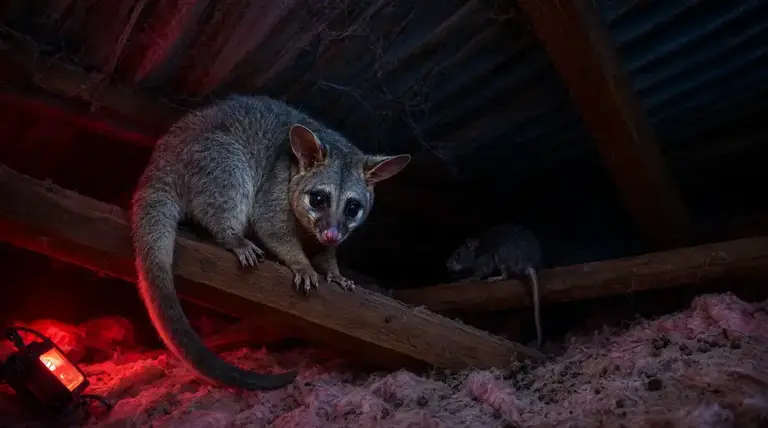
If the signs extend to your ceiling cavity — scratching, thumping or a strong urine smell indoors — read our guide to Signs of a Possum Infestation in Your Roof before the problem escalates.
DIY Deterrence vs Professional Possum Control
For most garden-only problems, DIY exclusion works well and is the lawful first step; call a professional when possums are in the roof, damaging established trees, or repeatedly defeating your barriers. Remember that every state protects possums — under the National Parks and Wildlife Act 1974 (NSW), the Wildlife Act 1975 (Victoria) and the Nature Conservation Act 1992 (Queensland) — so trapping and relocation are licensed activities. Victoria has also banned household fruit-tree netting with holes larger than 5 millimetres because coarse mesh entangles wildlife.
| Factor | DIY Approach | Professional Service |
|---|---|---|
| Best for | Garden-only damage; vegie beds and small fruit trees | Roof dens, large trees, persistent or repeat problems |
| Typical methods | Netting, trunk collars, pruning, motion-activated lights, scent sprays | Entry-point identification, one-way doors, possum-proof barriers, compliant trapping |
| Legal risk | Low if limited to deterrence; trapping without a licence is illegal | Fully compliant with state wildlife rules |
| Typical cost | $30–$300 in materials | $250–$900+ depending on access and proofing |
| Effectiveness | Good when barriers are taut and maintained | High, with entry points sealed and follow-up checks |
Scent deterrents such as garlic or chilli sprays and quassia chips can help, but they need reapplying after rain and work best alongside barriers rather than on their own. If you suspect a possum has moved indoors, our article Possum in the Roof? What Australian Law Says You Can Do explains your obligations before you act.
Possum Control Costs in Australia (2025–26)
Across the Australian pest control industry, garden deterrence is generally affordable, while professional possum proofing sits at a modest market rate that prevents far costlier damage to fruit trees, ceilings and wiring. The figures below reflect typical market rates charged by providers around the country for 2025–26; final pricing in the wider market depends on property size, access and your state’s licensing requirements.
| Service | Typical market rate (AUD) | What’s included/notes |
|---|---|---|
| DIY netting, collars and lights | $30–$300 | Wildlife-safe netting (5mm or less), 60cm+ trunk collars, motion-activated lights or sprinklers |
| Professional inspection | $0–$150 | Site assessment, species identification, entry-point report; often free with a booking |
| Garden and tree proofing | $250–$600 | Professional-grade netting, frames and collars on established trees |
| Roof possum removal and proofing | $400–$900+ | One-way doors, sealing of entry points, compliant trapping where required |
| Nest box supply and installation | $80–$250 | Gives evicted possums a legal alternative home in a quiet tree |
These are the going rates you’ll see quoted across the industry — and they’re a useful benchmark when comparing providers. The good news: Aussie Pest Strike typically comes in well under these market rates, without cutting corners on compliance or workmanship. For an exact quote tailored to your property, call us on [aps_phone] and we’ll sort it out.
Seasonal Possum Activity Across the Year
Garden damage peaks from late summer through autumn, when backyard fruit ripens and young possums disperse, and lifts again in spring with the second breeding season. Winter tends to be quieter as food is scarce and animals stay close to their dens.
Jan
Feb
Mar
Apr
May
Jun
Jul
Aug
Sep
Oct
Nov
Dec
Indicative garden-damage pressure: activity climbs from January as stone fruit and citrus ripen, peaks in March–April when young possums leave the pouch, dips through the cooler months and rebuilds with spring blossoms and new growth.
Time your defences accordingly: net fruit trees before fruit starts to colour, not after the first bite, and be extra cautious about trapping during autumn and spring, when dependent young may be present. For a full breakdown of what licensed operators must do, see Possum Removal in Australia: The Legal Process Explained.
Most garden jobs we attend could have been solved early with taut, fine-mesh netting and a decent trunk collar. The mistake people make is draping loose netting over a tree — it catches the possum, injures wildlife and still loses the fruit. Do the barriers properly, and you rarely need us.
Start with physical barriers: secure wildlife-safe netting over beds and trees, fit 60cm collars to trunks and prune a two-metre gap between trees, fences and the roofline. Pick ripe fruit promptly, rake windfalls and seal compost. If possums persist, or you hear activity in the roof, book our Possum Removal & Roof Proofing service — a licensed technician will proof the property legally and humanely.
Frequently Asked Questions
Why do possums keep targeting my vegie patch and fruit trees?
Possums are opportunistic nocturnal feeders drawn to soft new growth, ripening stone fruit, citrus, grapes, tomatoes, brassicas and herbs like parsley. Australia's mild climate keeps gardens productive almost year-round, and possums are creatures of habit — once one finds a reliable feed it returns night after night along the same fence lines and branches. Overhanging trees and easy access between roof, fence and garden make some properties especially attractive.
How can I tell if the damage in my garden is from a possum?
Possum damage has a distinctive pattern: leaves and shoots clipped cleanly rather than torn raggedly like caterpillar or bird damage, single bites taken from tomatoes, citrus or stone fruit with the rest discarded under the tree, seedlings that vanish entirely overnight, thumping on fences or the roof after dark, small dark droppings along fence lines, and worn travel routes along fences, pergolas and overhanging branches leading to the roofline.
Can I trap or relocate a possum that is eating my garden?
No. Possums are protected native wildlife in every state and territory, so you cannot harm, poison or relocate them yourself. Trapping and relocation are licensed activities under legislation such as the National Parks and Wildlife Act 1974 (NSW), the Wildlife Act 1975 (Victoria) and the Nature Conservation Act 1992 (Queensland). For garden problems, lawful deterrence through exclusion and habitat changes is the correct approach.
What netting is legal for protecting fruit trees from possums?
Use taut wildlife-safe netting with a mesh size of 5 millimetres or less. Victoria has banned household fruit-tree netting with holes larger than 5 millimetres because coarse mesh entangles wildlife. Avoid simply draping loose netting over a tree — it can catch and injure possums while still failing to protect your fruit. Secure the netting properly so animals cannot reach through or become trapped.
How do trunk collars and pruning help stop possums reaching my trees?
Fit collars of at least 60 centimetres around tree trunks to stop possums climbing from the ground, and prune to create a two-metre gap between trees, fences and the roofline so possums cannot jump across. These physical barriers are among the most reliable defences because they remove the aerial highways possums use to travel between their den and your garden each night.
Do scent deterrents like garlic or chilli sprays work on possums?
Scent deterrents such as garlic or chilli sprays and quassia chips can help discourage possums, but they need reapplying after rain and work best alongside physical barriers rather than on their own. For most garden-only problems, combining scent sprays with secure wildlife-safe netting, trunk collars and motion-activated lights gives better results than relying on any single deterrent.
When is possum damage to gardens worst during the year?
Garden damage peaks from late summer through autumn, when backyard fruit ripens and young possums leave the pouch, with pressure often highest around March and April. Activity lifts again in spring with the second breeding season, blossoms and new growth, while winter tends to be quieter as food is scarce and animals stay close to their dens. Net fruit trees before fruit starts to colour, not after the first bite.
When should I call a professional instead of handling possums myself?
Call a licensed professional when possums are in your roof, damaging established trees, or repeatedly defeating your barriers. Professionals identify entry points, install one-way doors and possum-proof barriers, and carry out compliant trapping where required, all within state wildlife rules. If you hear scratching or thumping in the ceiling or notice a strong urine smell indoors, have the problem assessed before it escalates.
How can Aussie Pest Strike help me plan next steps for possums in my garden?
Aussie Pest Strike can assess which defences suit your situation, whether that means guidance on taut wildlife-safe netting, trunk collars and pruning gaps for garden-only damage, or professional proofing if possums are entering your roof. A licensed technician can identify entry points, explain what is lawful in your state, and recommend practical steps so your vegies and fruit stay protected without harming protected wildlife.
What should I do first if I suspect possums are also living in my roof?
Start by confirming the signs: scratching or thumping after dark, droppings along fence lines, worn travel routes leading to the roofline, or a strong urine smell indoors. Then contact Aussie Pest Strike — a licensed technician can inspect the roof cavity, identify entry points, and legally install one-way doors and barriers so the possum leaves safely. Avoid sealing gaps yourself while a possum may still be inside.
Sources & further reading
Found Something
Dangerous?
Don’t touch it. Don’t spray it. Keep kids and pets clear, take a photo from a safe distance, and call us — or book a free inspection and we’ll come to you.
02 7235 0050