Possum Removal inAustralia: TheLegal Process Explained
Legal possum removal in Australia means humane exclusion under wildlife law, not extermination. Learn the process and the 50m rule — get a free quote.
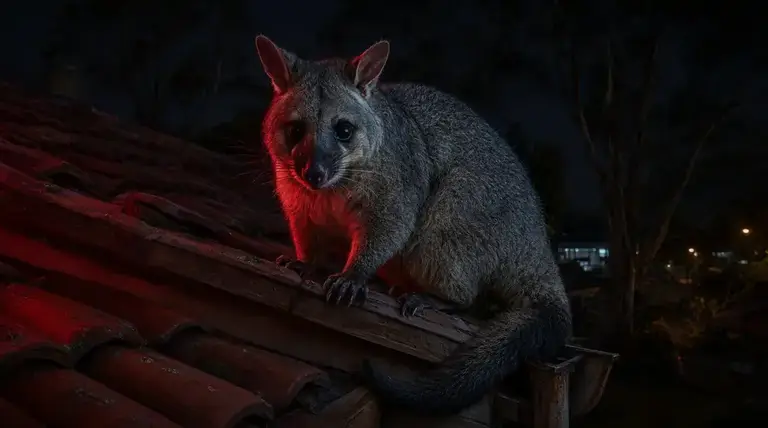
A possum in the roof void is one of the most common — and most misunderstood — pest problems facing Australian homeowners. Unlike rats or mice, possums are protected native wildlife, which means possum removal in Australia is a strictly legal process built around humane exclusion, not extermination or long-distance relocation, and getting it wrong can cost you thousands in fines. This guide explains the compliant process from start to finish, so Australia-wide homeowners know exactly what to expect.
Possum removal is the licensed process of evicting possums from a building using one-way exclusion devices, then permanently sealing entry points and, where trapping occurs under permit, releasing the animal within 50 metres of the capture site. It is not a typical pest control job. There are no poisons, no lethal traps and no dumping the animal in distant bushland. Understanding the rules protects both the possum and your back pocket.
- Possums are protected under state wildlife laws, so removal must be humane and exclusion-based.
- Where trapping is used under permit, release is generally required within 50 metres of the capture point.
- Removal is paused if dependent joeys are present, so timing matters as much as technique.
- Penalties for harming or illegally relocating possums run into thousands of dollars per animal.
- Typical professional exclusion work costs roughly $250–$900 AUD depending on access and proofing scope.
Why Possums Are Protected Across Australia
Every mainland state and territory protects possums under wildlife legislation, which means harming, killing or keeping one is illegal and unauthorised relocation attracts serious fines. Relevant laws include the NSW Biodiversity Conservation Act 2016, the Victorian Wildlife Act 1975 and the Queensland Nature Conservation Act 1992. Legal possum removal therefore focuses on getting the animal out and keeping it out, not on destroying it.
Australian housing makes the problem common. Older Queenslanders with open eaves, brick-veneer homes with tiled roofs and even modern slab-on-ground builds all offer warm, dry roof cavities that brushtail and ringtail possums find irresistible. Our mild winters and long breeding seasons mean roof voids across most of the country stay attractive to possums for much of the year, which is why this is one of the most frequent call-outs any pest control business receives.
Because possums are fiercely territorial, the law is designed around their biology: relocate one far away and it will usually be attacked by resident possums, starve, or die from stress within days. The 50-metre release rule exists precisely because long-distance dumping is effectively a death sentence. For a deeper look at the statutes, read Possum in the Roof? What Australian Law Says You Can Do.
Warning Signs You Have a Possum Problem
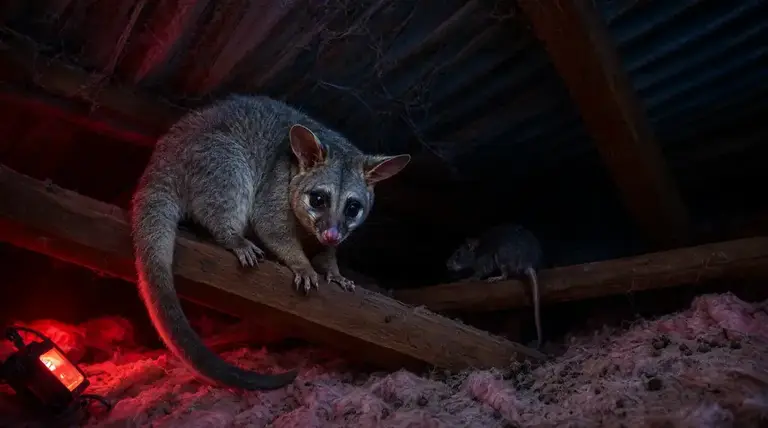
The clearest sign is heavy, deliberate thumping in the ceiling or walls at night, quite different from the light scurrying of rats or mice. Before engaging a removalist, confirm you are dealing with a possum so the work targets the right entry points. Our guide to the Signs of a Possum Infestation in Your Roof covers this in detail, but the checklist below covers the essentials.
- Loud nocturnal noise. Thumps, scratches and hissing shortly after dusk and again before dawn.
- Droppings. Dark, pellet-shaped droppings larger than rat droppings, often near entry points or in the ceiling space.
- Strong urine odour. A persistent ammonia smell, sometimes with brown staining on plaster ceilings.
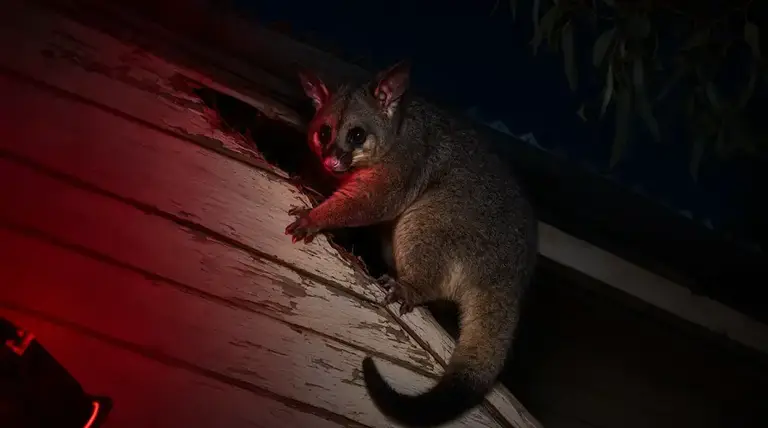
- Visible entry points. Broken tiles, lifted ridge capping, chewed eaves or gaps around guttering, often with fur or smudge marks.
- Garden evidence. Partially eaten fruit, damaged vegetable patches and possums spotted on the roofline at night.
- Daytime sightings. A possum nesting in the garage, shed or wall cavity during daylight hours.
DIY vs Professional Possum Removal
DIY possum removal is legal only within tight limits: you can proof gaps and encourage a possum to leave, but trapping generally requires a licence, and relocation beyond the legal distance is an offence. In New South Wales a licence is typically required even to trap on your own property, and in Victoria a captured possum must usually be released on the same premises the night it is caught. A licensed operator removes that legal risk entirely.
| Factor | DIY | Licensed professional |
|---|---|---|
| Legality of trapping | Restricted; licence often required | Fully licensed and permitted |
| Identifying entry points | Easy to miss secondary gaps | Full inspection of roof and subfloor |
| Joey timing | Risk of orphaning dependent young | Checked and removal timed correctly |
| Proofing quality | Often temporary materials | Permanent, possum-grade sealing |
| Legal protection | Fines possible if rules are breached | Documented, compliant work |
Because the rules are strict and joey timing matters, most owners use a licensed operator rather than risk a penalty. Penalties for harming protected wildlife run into the thousands of dollars per animal across most states, and insurers may decline a claim for ceiling damage if the possum was dealt with unlawfully. Against that backdrop, a compliant exclusion is cheap insurance.
The Step-by-Step Legal Possum Removal Process
A compliant possum removal follows a predictable sequence that any homeowner can recognise and verify. If an operator skips any of these steps, ask why.
- Inspection. A technician confirms the species and locates every entry point, plus any nesting young.
- Timing check. Removal is delayed if a female is carrying dependent joeys, so the litter is not orphaned in the cavity.
- One-way exclusion. A one-way door lets the possum leave to feed at night but blocks re-entry.
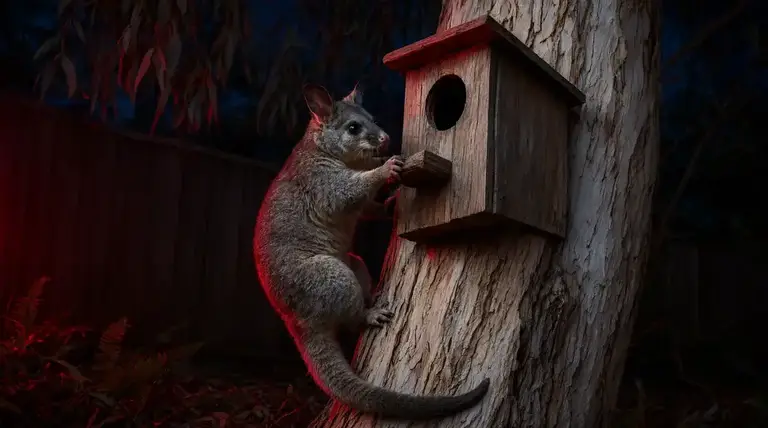
- Nest box provision. In many states an external nest box must be fixed nearby so the displaced possum has shelter.
- Sealing. Once the roof is vacated, all gaps are permanently sealed to prevent return.
Where trapping is used under permit, most states require release within 50 metres of the capture point — usually the same night. A licensed operator also documents the work, which is useful evidence that you met your obligations if a neighbour or council ever queries the removal. Keep this paperwork with your property records, especially if you plan to sell, because a documented, compliant exclusion reassures buyers that the roof void was dealt with lawfully and professionally. For the proofing stage itself, see our Possum-Proofing Your Roof: Entry Points and Exclusion guide.
Possum Removal Costs in Australia (2025–26)
Across the Australian market, most homeowners are quoted between $250 and $900 AUD for compliant possum removal, depending on roof access, the number of entry points and how much proofing is needed. Complex multi-gable roofs or homes requiring several nest boxes typically sit at the top of that range. Compared with the cost of ceiling repairs, insulation replacement or a wildlife fine, professional pest control is the economical option.
| Service | Typical market rate (AUD) | What’s included/notes |
|---|---|---|
| Roof inspection and report | $0–$150 | Species ID, entry-point mapping; often free with booked work |
| One-way door exclusion | $250–$450 | Device fitted, monitored until the possum vacates |
| Trapping under permit | $200–$400 | Licensed trap, same-night release within 50 metres |
| Entry-point sealing/proofing | $300–$700 | Sheet metal, mesh and flashing over all gaps |
| Nest box supply and install | $80–$180 | Fixed to a nearby tree or structure as required |
| Full removal + proofing package | $500–$900 | Inspection, exclusion, sealing and documentation |
These figures are typical Australian industry ranges — what the market generally charges — not fixed quotes from any one provider. Roof pitch, storeys and regional travel all affect pricing. Our Possum Removal & Roof Proofing service page outlines what a compliant package covers.
Aussie Pest Strike typically comes in well under these market rates while still delivering fully licensed, compliant work. For an exact quote tailored to your roof and situation, give us a call on [aps_phone] today.
Seasonal Possum Activity in Australia
Possum activity in roof voids peaks in autumn and early winter, when cooler nights drive animals toward warm ceiling insulation and the main brushtail breeding season puts more possums on the move. Activity dips over summer, though a second, smaller breeding pulse in spring keeps many roofs occupied year-round.
Jan
Feb
Mar
Apr
May
Jun
Jul
Aug
Sep
Oct
Nov
Dec
Indicative roof-void activity across southern Australia: possums seek warmth from April through August, coinciding with the autumn breeding season, while activity eases over the hotter summer months. Northern regions see flatter, year-round activity.
Nine times out of ten, the homeowner has already tried blocking the hole with whatever was in the shed — and the possum has simply found the second entry point they never knew existed. A proper inspection finds every gap before we fit the one-way door, which is the only way the job stays done. Do it legally and do it once.
Confirm the animal is a possum, then engage a licensed operator to inspect, exclude with a one-way door and permanently seal every entry point. Never attempt long-distance relocation or use poisons — both are illegal and both fail. Book before autumn peaks so the work is done before breeding season complicates the timing.
Frequently Asked Questions
Why are possums protected under Australian law?
Possums are native wildlife, and every mainland state and territory protects them under legislation such as the NSW Biodiversity Conservation Act 2016, the Victorian Wildlife Act 1975 and the Queensland Nature Conservation Act 1992. Harming, killing or keeping a possum is illegal, and unauthorised relocation attracts serious fines. Because they are fiercely territorial, moving one far away usually leads to it being attacked by resident possums or dying from stress, which is why removal must be humane and exclusion-based.
What is the 50-metre release rule for possums?
Where trapping is used under permit, most states require that a captured possum be released within 50 metres of the capture point, usually on the same night. The rule exists because possums are strongly territorial: relocating one to distant bushland effectively condemns it to be attacked by resident possums, starve, or die from stress within days. Long-distance dumping is therefore both illegal and inhumane.
How do I know if I have a possum in my roof rather than rats?
The clearest sign is heavy, deliberate thumping in the ceiling or walls at night, quite different from the light scurrying of rodents. Other indicators include dark pellet-shaped droppings larger than rat droppings near entry points, a persistent ammonia-like urine odour sometimes with brown staining on plaster ceilings, visible gaps such as broken tiles or chewed eaves with fur or smudge marks, and possums seen on the roofline after dusk.
Can I remove a possum from my roof myself?
DIY possum removal is legal only within tight limits. You can proof gaps and encourage a possum to leave, but trapping generally requires a licence — in New South Wales a licence is typically required even to trap on your own property, and in Victoria a captured possum must usually be released on the same premises the night it is caught. Relocation beyond the legal distance is an offence, so DIY attempts carry real fine risk.
What happens if there are joeys in the roof when removal starts?
Removal is paused if a female is carrying dependent joeys, because evicting her would orphan the young inside the cavity. A technician checks for nesting young during the inspection stage and times the exclusion work correctly. This is one reason joey timing matters as much as technique, and why many owners prefer a licensed operator who can identify dependent young rather than risk orphaning them through a rushed DIY attempt.
What does the legal possum removal process involve step by step?
A compliant job follows a predictable sequence: inspection to confirm the species and locate every entry point plus any nesting young; a timing check to delay removal if dependent joeys are present; fitting a one-way door that lets the possum leave at night but blocks re-entry; installing an external nest box where required by state rules; and permanently sealing all gaps once the roof is vacated. Where trapping occurs under permit, release is within 50 metres of the capture site.
Do I need to provide a nest box when removing a possum?
Yes, in many states providing a nest box is a required part of the removal process. Once a possum is released from your roof void, it must have alternative shelter nearby, so an external nest box is typically fixed to a tree or structure on the property. This gives the displaced animal somewhere to live and helps prevent it from re-entering your roof. Requirements vary by state, so check the conditions attached to your permit or consult your local wildlife authority before arranging removal.
Why should I keep documentation of my possum removal work?
A licensed operator documents the work, which serves as useful evidence that you met your legal obligations if a neighbour or council ever queries the removal. Keep this paperwork with your property records, especially if you plan to sell, because a documented, compliant exclusion reassures buyers that the roof void was dealt with lawfully and professionally. Insurers may also decline claims for ceiling damage if a possum was dealt with unlawfully.
How will Aussie Pest Strike confirm whether the noise in my ceiling is actually a possum?
Aussie Pest Strike technicians start with an inspection that confirms the species before any work begins. They look for the heavy nocturnal thumping pattern typical of possums, check for large pellet-shaped droppings and urine staining around entry points, and map visible gaps such as broken tiles, lifted ridge capping or chewed eaves. This species identification matters because the entry points targeted for a possum differ from those for rodents, ensuring the right problem is treated.
What is the next step after Aussie Pest Strike inspects my roof for possums?
Once the inspection confirms a possum and maps every entry point, the next step is timing the removal correctly — checking whether dependent joeys are present before proceeding. If the timing is right, a one-way exclusion door is fitted so the possum can leave to feed but cannot re-enter, followed by permanent sealing of all gaps and nest box installation where required. Contacting Aussie Pest Strike for a quote tailored to your roof is a practical first move.
Sources & further reading
Found Something
Dangerous?
Don’t touch it. Don’t spray it. Keep kids and pets clear, take a photo from a safe distance, and call us — or book a free inspection and we’ll come to you.
02 7235 0050