Possum Lawsin Australia:State-by-State Guide
Possum laws in Australia protect possums as native wildlife in every state and territory, so you generally cannot harm them and can only trap and release...
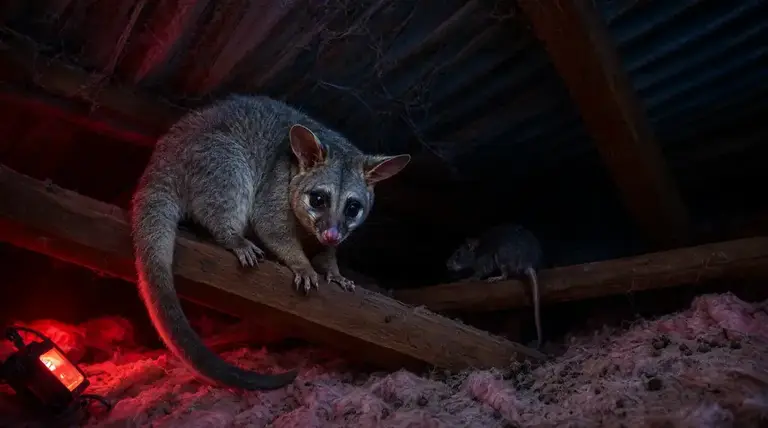
Possum laws in Australia protect every possum as native wildlife, and the rules o what you can legally do about one in your roof vary from state to state. Across the country, you cannot harm, kill or keep a possum without authority, and trapping is tightly controlled — most states only permit release within 25 to 50 metres of the capture site, and usually only after the roof has been sealed.
Put simply: possum laws in Australia are the state and territory wildlife rules that make possums protected native animals, meaning homeowners may exclude and deter them humanely but may not harm them or relocate them beyond a short legal distance. This guide breaks down the rules state by state, explains what you can and cannot do, and sets out realistic costs for getting the job done legally and properly.
- Possums are protected native wildlife in every Australian state and territory — harming or killing one is an offence with significant penalties.
- Trapped possums generally must be released within 25–50 metres of capture, often within 24 hours, and only after entry points are sealed.
- Exclusion (roof proofing after the possum leaves at night) is the safest legal option everywhere in Australia.
- Sealing a roof with a possum still inside — especially a mother with a joey — is an offence.
- Licensed professional possum removal typically costs $250–$700 AUD depending on the work required.
Why Possum Laws Matter for Australian Homeowners
Possum laws matter because the common brushtail and common ringtail possum are protected under wildlife legislation in every state and territory, so even a genuinely frustrating roof infestation must be handled within strict legal limits. Ignoring those limits can expose you to fines running into the tens of thousands of dollars.
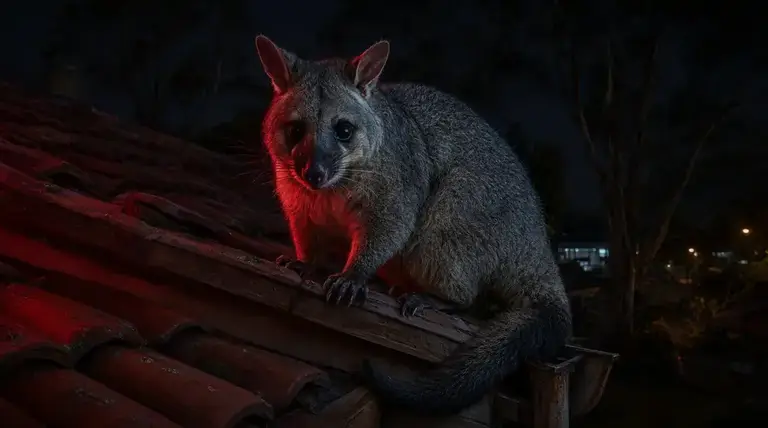
Australian housing makes possum conflict almost inevitable. Older Queenslanders on stumps, brick veneer homes with tiled roofs, and subfloor houses with ageing eaves all offer warm, dry cavities — exactly what a possum wants in a country where natural tree hollows are scarce. In cooler southern states, roof voids are prime winter shelter; in subtropical Queensland and northern NSW, possums den in roofs year-round. Our climate means there is rarely a “quiet season” where the problem resolves itself.
Because possums are territorial, the animal in your roof will keep returning to the same entry point night after night. Understanding what Australian law says about a possum in the roof before you act saves you money, stress and potential prosecution.
Warning Signs You Have a Possum Problem
The clearest signs of a possum in your roof are heavy thumping or scratching noises at dusk and dawn, since possums are nocturnal and noticeably louder than rats or mice. If you notice two or more of the signs below, it is time to investigate further.
- Loud footsteps at night — heavy thumping, scrambling or dragging sounds in the ceiling shortly after dark and before sunrise.
- Droppings in the roof void — dark, cylindrical pellets around 15–25 mm long, larger than rodent droppings.
- Strong urine odour and ceiling stains — possum urine soaks insulation and can leave brown stains on plasterboard.
- Visible entry points — dislodged tiles, damaged eave lining, bent guttering or gaps around corrugated iron.
- Damage to gardens and fruit trees — stripped foliage, half-eaten fruit and scratch marks on tree trunks near the roofline.
- Pets reacting at night — dogs barking at the ceiling or cats staring at the same spot repeatedly.
For a fuller checklist, see our guide to the signs of a possum infestation in your roof. Correct identification matters because the legal pathway for possums is completely different from the pest control approach used for rats or mice.
DIY vs Professional Possum Removal
You can legally do some things yourself — trimming branches, removing attractants and sealing entry points once the roof is confirmed empty — but trapping and relocation rules are strict enough that most homeowners are better served by a licensed operator. A professional understands your state’s permit requirements, confirms the void is empty (including checking for joeys), and proofs the roof so the problem does not recur.
| Factor | DIY approach | Licensed professional |
|---|---|---|
| Legal compliance | Easy to breach release-distance or permit rules unknowingly | Operator licensed under state wildlife laws |
| Confirming roof is empty | Difficult; risk of sealing in a mother and joey | Inspection, one-way doors and joey checks |
| Roof proofing quality | Patchy; possums exploit missed gaps | Full entry-point audit and durable sealing |
| Safety | Ladder and roof work carries fall risk | Trained, insured technicians |
| Typical cost | $0–$150 in materials, but repeat failures common | $250–$700 depending on scope |
If you want the full picture of permits, traps and release rules, our article on possum removal in Australia and the legal process explained covers each stage in detail.
State-by-State Snapshot of Possum Laws
Every jurisdiction protects possums, but the release distance and permit requirements differ. Always confirm current requirements with your state wildlife authority, as permit systems are updated periodically.
| State / Territory | Key rule for homeowners |
|---|---|
| NSW | Protected under the Biodiversity Conservation Act; trapped possums must be released on the same property within 24 hours. |
| VIC | Protected under the Wildlife Act; brushtails may be trapped and released within 50 m, ringtails must generally be left alone. |
| QLD | Protected under the Nature Conservation Act; release within 25 m of the capture site, usually within 24 hours. |
| WA | Protected under the Biodiversity Conservation Act; a licence is typically required to relocate. |
| SA | Protected under the National Parks and Wildlife Act; a permit is required to trap and release. |
| TAS / ACT / NT | Protected under respective wildlife laws; humane exclusion preferred, permits govern any relocation. |
The consistent theme everywhere is: exclude humanely, do not harm, and if you trap, release nearby — because possums released far from home rarely survive. Relocating a possum kilometres away is both illegal and effectively a death sentence, as resident possums drive the intruder out and it cannot find shelter.
Possum Removal Costs in Australia (2025–26)
Across the Australian market, professional possum removal generally costs between $250 and $700 AUD, depending on whether the job involves a simple inspection and one-way door or a full removal and roof-proofing package. Industry rates vary with roof access, home size and the number of entry points, so treat the figures below as typical market ranges rather than fixed quotes.
| Service | Typical cost (AUD) | What’s included / notes |
|---|---|---|
| Roof inspection and report | $120–$250 | Species identification, entry-point audit, quote for works; many providers credit it against removal |
| One-way door installation | $200–$350 | Possum exits at night and cannot re-enter; door removed later |
| Legal trap and release | $250–$450 | Permitted cage trap, release within legal distance, joey check |
| Full roof proofing | $400–$700+ | Sealing all entry points, mesh and flashing; larger or two-storey homes sit at the top of the range |
Bundled Possum Removal & Roof Proofing packages usually represent the best value on the market, because proofing without removal — or removal without proofing — solves only half the problem.
It’s worth noting that Aussie Pest Strike typically comes in well under these general market rates, so the ranges above are a conservative benchmark rather than what you should expect to pay. For an exact quote tailored to your property, give our team a call on [aps_phone].
Seasonal Possum Activity in Australia
Possum activity in roofs peaks in autumn and winter (roughly March to August), when cooler nights drive possums toward warm roof cavities and the autumn breeding season increases movement. Activity continues through spring as joeys grow, and dips slightly in midsummer in hotter regions.
Jan
Feb
Mar
Apr
May
Jun
Jul
Aug
Sep
Oct
Nov
Dec
Typical possum activity pattern in Australian homes: complaints climb through autumn, peak in late autumn and winter, then ease through late spring and summer. Breeding seasons in autumn (and a second, smaller spring pulse in some regions) mean joeys are a real risk from March onwards.
Nine times out of ten, the homeowner who tried to save money by dumping a possum at the local park ends up with a new possum in the roof within a fortnight — and a legal headache on top. Do it once, do it legally: confirm the void is empty, check for joeys, then proof every entry point. That is the only fix that lasts.
Never trap or seal first and ask questions later. Book a licensed inspection, confirm whether a possum — or a mother with a joey — is inside, then use a one-way door or legal trap-and-release followed by complete roof proofing. If you find an injured possum or an orphaned joey, contact a licensed wildlife rescue group such as WIRES (NSW) or your state equivalent rather than attempting care yourself.
Possum Laws: Frequently Asked Questions
Is it illegal to kill a possum in Australia?
Yes. Possums are protected native wildlife in every state and territory, so harming or killing one is an offence that can attract substantial fines — in NSW, offences under the Biodiversity Conservation Act 2016 can run into the tens of thousands of dollars for individuals, with comparable penalties in Victoria and Queensland.
How far can I legally relocate a possum?
Only a short distance — typically within 25 to 50 metres of the capture site, depending on your state. NSW requires release on the same property within 24 hours, Queensland within 25 metres and Victoria within 50 metres. Possums released further away are driven out by resident possums and almost always die.
Do I need a permit to trap a possum on my property?
In several states, yes. South Australia requires a permit to trap and release, and Western Australia typically requires a licence to relocate. Other states allow trapping under strict conditions. Always check with your state wildlife authority before setting any trap, or engage a licensed pest control operator.
Possum laws exist to protect native wildlife, but they do not leave you stuck with a noisy, destructive tenant in your roof. Aussie Pest Strike provides pest control that works within your state’s wildlife legislation to remove possums humanely and proof your home so they cannot return. Call Aussie Pest Strike on [aps_phone] to book a free inspection today and get a clear, legal plan — and an upfront quote — for your property.
Sources & further reading
Found Something
Dangerous?
Don’t touch it. Don’t spray it. Keep kids and pets clear, take a photo from a safe distance, and call us — or book a free inspection and we’ll come to you.
02 7235 0050