Possum in the Roof?What Australian LawSays You Can Do
Possum in the — Possum roof australian — Possum in roof — if a possum is living in your roof, Australian law makes clear what you can and cannot do: possums...
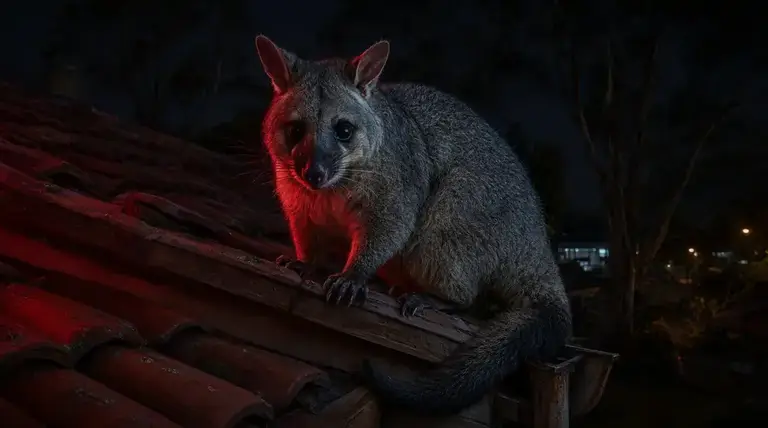
Hearing thumps, scratches or heavy footsteps overhead at night? If you have a possum in roof cavities anywhere in Australia, the law is very clear about what you can and can’t do. Possums are protected native wildlife — you must never harm or kill them, and in most states a trapped possum can only be released within about 50 metres of where it was caught.
The lawful, lasting solution is humane exclusion: getting the possum out, sealing every entry point, and giving it a legal alternative home. This guide explains how the rules work across Australia, what Possum Removal & Roof Proofing typically costs, and why licensed pest control is almost always the smartest route.
- Possums are protected native wildlife in every Australian state and territory — harming, killing or improperly relocating them is an offence with significant fines.
- Where trapping is permitted, release is usually restricted to within about 50 metres of the capture site, on the same property, typically within 24 hours and at dusk.
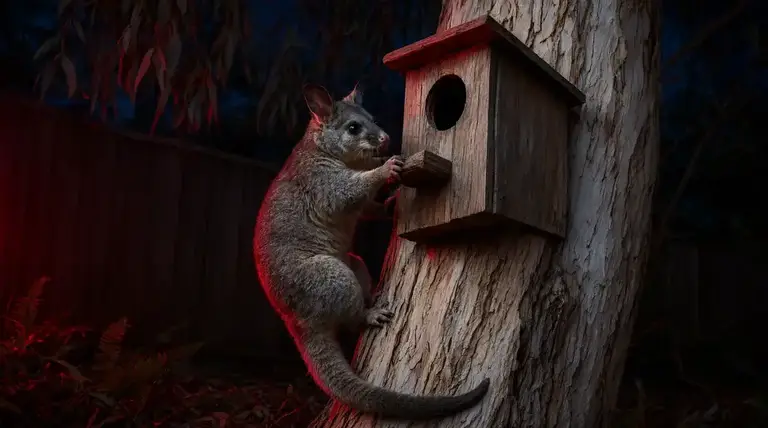
- Humane exclusion — one-way doors, nest boxes and sealing entry points — is the only approach that is both legal and permanently effective.
- Professional possum removal and roof proofing typically costs between $350 and $1,500 AUD depending on access, entry points and proofing scope.
- Possum activity in roofs peaks in autumn and winter as animals seek warm, dry shelter.
Why a Possum in Roof Cavities Is Such a Common Australian Problem
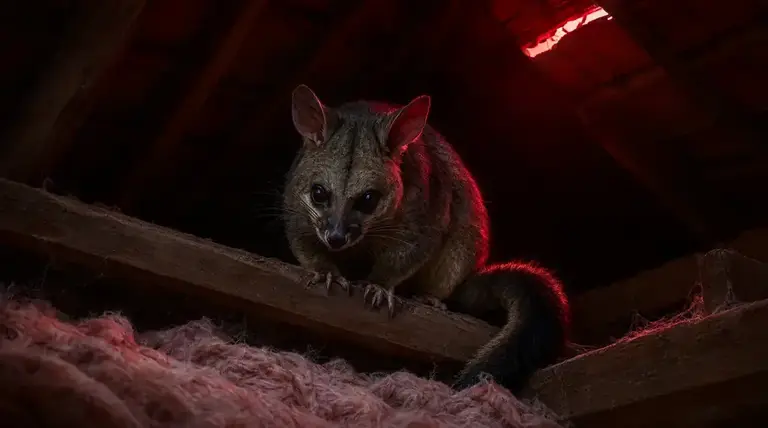
A possum in roof spaces is one of the most frequent wildlife call-outs in Australian pest control because our suburbs sit right on top of possum habitat. Brushtail and ringtail possums have adapted brilliantly to urban life, and a roof void is essentially a perfect tree hollow: dark, dry, warm and safe from predators.
Housing style plays a big part. Older Queenslanders on stumps have gaps around verandah roofs and cladding joints that possums exploit easily. Brick veneer homes across Sydney, Melbourne and Adelaide often have broken tiles, uncapped chimneys, weep holes and gaps under eaves or behind fascia boards. Even modern slab homes aren’t immune — a possum only needs a hole the size of a tennis ball to squeeze through. In southern states, cool winters drive possums indoors from around April onwards, while in subtropical Queensland and northern NSW, roof voids offer relief from summer storms and heat. Overhanging branches act as highways straight onto your roofline, which is why properties near mature gum trees are hit hardest.
Warning Signs You Have a Possum in the Roof
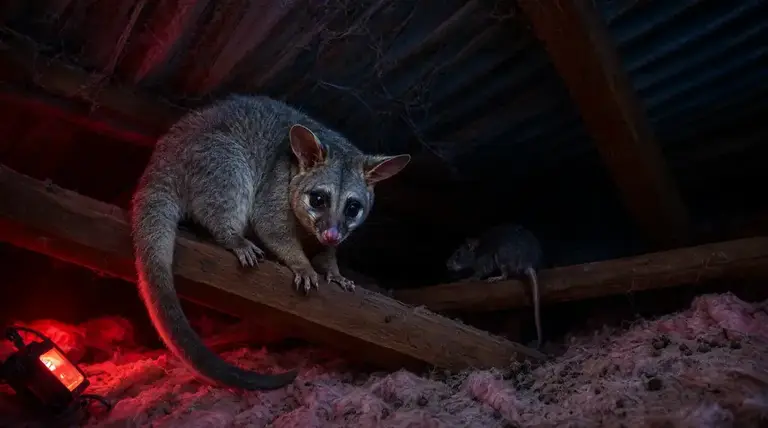
The clearest sign of a possum in roof cavities is heavy, slow thumping at night — quite different from the light scurrying of rats or mice. If you’re unsure what you’re hearing, our guide to the Signs of a Possum Infestation in Your Roof breaks it down in detail. Check for:
- Loud thumping and scratching at dusk and dawn – possums leave to feed after dark and return before sunrise, so noise follows a predictable schedule.
- Droppings in the ceiling space or around entry points – possum scats are larger than rodent droppings, roughly olive-sized and dark brown.
- A strong ammonia-like urine smell – especially near light fittings or manholes, where urine can soak through plasterboard.
- Stains on ceilings or walls – brownish patches caused by urine pooling above the plaster.
- Visible entry damage – dislodged tiles, bent fascia, chewed sarking or fur caught on rough edges at gaps.
- Sightings on the roofline at night – a possum travelling the same fence or branch to your roof every evening is a near-certain sign.
- Agitated pets – dogs barking at the ceiling or cats fixated on one spot often detect possums before you do.
DIY vs Professional Possum Removal
Legally, your DIY options are narrow. You can trim branches, install a nest box and seal entry points once you’ve confirmed the roof is empty — but trapping, handling and relocating possums is restricted and, in several states, requires a licence. A licensed pest control operator can lawfully trap if needed, install one-way doors correctly, and guarantee the roof is properly proofed so the possum can’t simply return. For a full breakdown of the rules, see Possum Removal in Australia: The Legal Process Explained.
| Factor | DIY approach | Licensed professional |
|---|---|---|
| Legality | Exclusion only; trapping often requires a permit, release limited to ~50 m | Fully licensed and compliant with state wildlife law |
| Finding entry points | Easy to miss secondary or hidden gaps | Systematic roof and subfloor inspection |
| Risk of trapping possum inside | High — sealing an occupied roof is cruel and unlawful | Low — one-way doors and confirmation checks |
| Long-term result | Often temporary; possums return if proofing is incomplete | Permanent exclusion with proofing warranty options |
| Safety | Roof work at height carries real injury risk | Trained, insured technicians with proper access gear |
How Much Does Possum Removal Cost in Australia?
In 2025–26, professional possum removal and exclusion across the Australian market generally costs between $350 and $1,500 AUD, depending on roof access, the number of entry points and how much proofing is required. Across the industry, simple single-entry exclusions sit at the lower end of the market, while complex tile roofs or full perimeter proofing command higher rates. Prices vary between metro and regional areas, so treat these as typical industry-wide market ranges rather than any one provider’s pricing.
| Service | Typical market rate (AUD) | What’s included/notes |
|---|---|---|
| Roof inspection & quote | $0–$150 (typical market rate) | Many providers across the industry offer this free; identifies species and entry points |
| One-way door installation | $250–$450 (typical market rate) | Lets the possum exit but not re-enter; industry standard includes a follow-up check |
| Nest box supply & installation | $150–$350 (typical market rate) | Legal alternative shelter installed in a nearby tree |
| Entry-point sealing & proofing | $300–$900 (typical market rate) | Mesh, flashing, tile repair; scales with the number of gaps |
| Full exclusion package | $600–$1,500 (typical market rate) | Inspection, removal, proofing and warranty on workmanship |
Here’s the good news: Aussie Pest Strike typically comes in well under these general market rates, without cutting corners on workmanship or compliance. Every roof is different, so the only way to know your exact cost is a proper inspection — call us on [aps_phone] today for a fast, no-obligation quote tailored to your property.
Seasonal Possum Activity in Australian Roofs
Possum activity in roof voids peaks through autumn and winter, when possums seek warm, dry shelter and breeding season drives males to secure territory. Activity is lower in late spring and early summer, though in subtropical regions roof invasions can occur year-round, particularly during heavy summer storms.
Jan
Feb
Mar
Apr
May
Jun
Jul
Aug
Sep
Oct
Nov
Dec
Typical possum-in-roof activity pattern across southern Australia: activity climbs from March, peaks June–July as possums shelter from the cold, and eases through spring. Northern regions see flatter, year-round activity.
What You Must Never Do
Australian wildlife law draws hard lines around possum control, and crossing them can mean serious fines — or a dead possum decaying in your ceiling. The legal approach is always humane exclusion, never harm. Specifically, never:
- Poison, harm or kill a possum — a serious offence under state wildlife legislation such as the NSW Biodiversity Conservation Act 2016 and Victoria’s Wildlife Act 1975.
- Relocate a possum beyond the legal release distance — usually about 50 metres on the same property. Distant relocation typically kills the animal, as displaced possums rarely survive in unfamiliar, occupied territory.
- Block the entry while the possum is still inside — trapping it in the roof is cruel, unlawful and leaves you with a far worse problem.
- Ignore the issue — droppings and urine stain and weaken ceilings, create odours and can pose health risks over time.
The 50-metre rule exists for good biological reasons: brushtail and ringtail possums are intensely territorial, and an animal dumped in a strange patch of bush has no known food trees or shelter. Exclusion works with this biology — seal the roof, provide a nest box nearby, and the possum stays alive on its own turf while your ceiling stays possum-free. Our article on Possum-Proofing Your Roof: Entry Points and Exclusion walks through the proofing process step by step.
Nine times out of ten, the possum isn’t the hard part — it’s finding every gap it’s using. We seal a roof properly, fit a one-way door, and pop a nest box in the nearest tree. The possum keeps its territory, the family gets their sleep back, and nobody breaks the law.
Don’t trap, don’t relocate and don’t seal the roof until it’s confirmed empty. Book a licensed pest control inspection, have a one-way door and nest box installed, and get every entry point professionally proofed. It’s the only approach that’s fully legal, humane and permanent.
Frequently Asked Questions
Are possums protected in Australia?
Yes. Possums are protected native wildlife in every Australian state and territory, so harming, killing or improperly relocating them is an offence that can attract significant fines. State legislation such as the NSW Biodiversity Conservation Act 2016 and Victoria's Wildlife Act 1975 draws hard lines around possum control. The only lawful approach is humane exclusion — getting the possum out, sealing entry points and providing a legal alternative shelter.
How far can I legally relocate a trapped possum?
In most states, a trapped possum can only be released within about 50 metres of where it was caught, on the same property, typically within 24 hours and at dusk. The restriction exists for good biological reasons: brushtail and ringtail possums are intensely territorial, and an animal dumped in unfamiliar bush has no known food trees or shelter, so distant relocation usually kills it.
What are the signs of a possum in my roof?
The clearest sign is heavy, slow thumping at night, quite different from light rodent scurrying. Also check for droppings roughly olive-sized and dark brown, a strong ammonia-like urine smell near light fittings, brownish stains on ceilings, visible entry damage such as dislodged tiles or fur caught at gaps, sightings along the roofline after dark, and pets fixating on one spot in the ceiling.
Can I trap a possum myself?
DIY options are narrow. You may trim branches, install a nest box and seal entry points once the roof is confirmed empty, but trapping, handling and relocating possums is restricted and in several states requires a licence. Sealing a roof while a possum is still inside is cruel and unlawful. A licensed pest control operator can lawfully trap if needed and install one-way doors correctly.
How much does possum removal cost in Australia?
Possum removal costs vary widely because every roof and infestation is different. Factors that shape the final price include how easily the roof cavity can be accessed, the number of entry points that need sealing, the roofing material involved, and whether repairs or proofing work is needed afterwards. A straightforward single-entry exclusion typically costs less than a complex job on a tiled roof requiring multiple entry points to be closed. Most pest controllers provide quotes after an inspection, so obtaining several written quotes helps you compare what each service includes.
Why do possums get into roofs?
A roof void is essentially a perfect tree hollow: dark, dry, warm and safe from predators. Brushtail and ringtail possums have adapted well to urban life, and older Queenslanders on stumps, brick veneer homes with broken tiles, uncapped chimneys and gaps under eaves all offer easy access. A possum only needs a hole the size of a tennis ball, and overhanging branches act as highways onto your roofline.
When is possum activity in roofs highest?
Possum activity in roof voids peaks through autumn and winter as animals seek warm, dry shelter and breeding season drives males to secure territory. In southern states, cool winters drive possums indoors from around April onwards, with activity peaking June to July and easing through spring. In subtropical regions such as Queensland and northern NSW, roof invasions can occur year-round, particularly during heavy summer storms.
What should I never do about a possum in my roof?
Never poison, harm or kill a possum; never relocate one beyond the legal release distance of about 50 metres; never block the entry while the possum is still inside, which traps it cruelly and unlawfully; and don't ignore the issue, because droppings and urine stain and weaken ceilings and create odours. The legal approach is always humane exclusion using one-way doors, proofing and a nearby nest box.
How can Aussie Pest Strike help me deal with a possum in my roof?
Aussie Pest Strike can inspect your roof to confirm the species and locate every entry point, then install a one-way door so the possum exits without re-entering, fit a nest box in a nearby tree as legal alternative shelter, and seal gaps with mesh, flashing or tile repair. This humane exclusion approach keeps the possum alive on its own territory while restoring your ceiling to possum-free condition.
What is the first step if I think I have a possum overhead?
Start by confirming what you're hearing: heavy thumping at dusk and dawn suggests a possum rather than rodents. Then arrange a professional inspection before doing anything else, because sealing an occupied roof is unlawful and trapping rules vary by state. Aussie Pest Strike can assess your roof, identify entry points and recommend a compliant exclusion plan tailored to your property, so you avoid fines and unnecessary harm to the animal.
Sources & further reading
Found Something
Dangerous?
Don’t touch it. Don’t spray it. Keep kids and pets clear, take a photo from a safe distance, and call us — or book a free inspection and we’ll come to you.
02 7235 0050