Signs of aPossum Infestationin Your Roof
Signs of a — Signs possum infestation — Possum in roof signs — the clearest possum signs are heavy thumping across the ceiling after dusk, deep scratching...
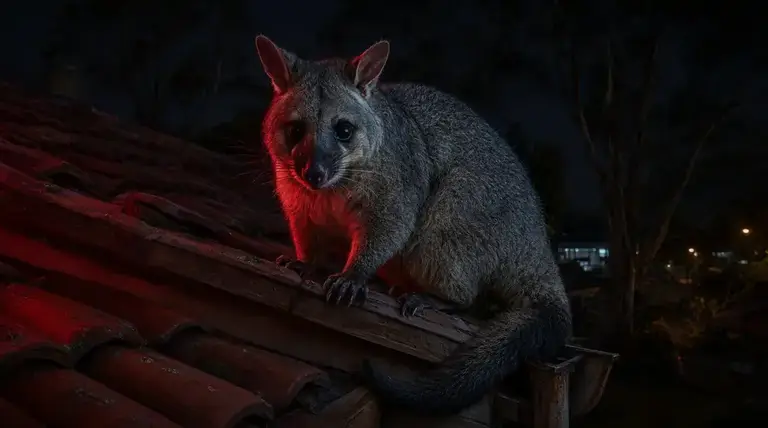
If you’re hearing heavy thumping overhead at night, you’re probably searching for possum signs — and you’re right to act fast. Across Australia, from Brisbane Queenslanders to Melbourne brick veneers, the clearest possum signs are deliberate thumps across the ceiling after dusk, deep scratching in wall cavities, and a sharp ammonia smell from urine soaking into ceiling insulation.
Possum signs are the audible, visual and olfactory evidence — night-time thumping, droppings, entry damage and ammonia odour — that confirm a brushtail or ringtail possum is living in your roof void. If the activity happens at night rather than during the day, you almost certainly have a possum, not rats. This guide walks you through every sign to check, when to call a professional, what it costs, and the legal realities every Australian homeowner needs to know before doing anything.
- Heavy, deliberate thumping after dusk — not light scratching — is the single most reliable possum sign.
- Droppings 1–2 cm long, brown ceiling stains and a pungent ammonia smell confirm a possum, not rodents.
- Entry gaps of 8–10 cm, greasy rub marks and branches within 2–3 metres of the roofline are classic access points.
- Possums are protected wildlife — removal must be done legally by a licensed operator using exclusion methods.
- Acting before spring breeding avoids weeks of delay and keeps repair bills down.
Why Possum Signs Matter for Australian Homeowners
Possums thrive in Australian suburbs because our housing and climate suit them perfectly. Understanding why they’re in your roof helps you read the signs correctly and respond before serious damage accumulates.
Australia’s two main urban offenders — the common brushtail (Trichosurus vulpecula, roughly cat-sized at 1.2–4.5 kg) and the smaller common ringtail (Pseudocheirus peregrinus, 700 g–1.1 kg) — have adapted brilliantly to city life as natural tree hollows have disappeared. A roof void is the perfect substitute: dark, dry, warm and safe from predators. Older Queenslanders with high-pitched roofs and generous eave gaps are prime targets, but brick veneer homes with tiled roofs and raised subfloor weatherboard houses are just as vulnerable where tiles shift or fascia boards rot.
Our climate adds pressure. Cool southern winters push possums indoors from April onwards seeking warm harbourage, while in the subtropics they’re active nearly year-round. Left alone, a resident possum soaks insulation with urine, stains plasterboard, fouls roof-fed water tanks and can displace batts around wiring — a genuine fire risk. That’s why recognising possum signs early, and organising licensed pest control promptly, is far cheaper than the repairs that follow a year-long infestation.
Possum Signs: The Warning Checklist
The most reliable possum signs are heavy night-time noise, 1–2 cm droppings, ammonia odour, entry-point damage and flattened insulation runways. Work through this checklist — three or more ticks almost certainly means a possum is in residence.
- Heavy, deliberate thumps and slow galloping across the ceiling from about 30 minutes after sunset — a brushtail’s weight makes a sound no rat or mouse can produce.
- Hissing, coughing or guttural screeching at night — unmistakably territorial possum calling, especially during breeding season.
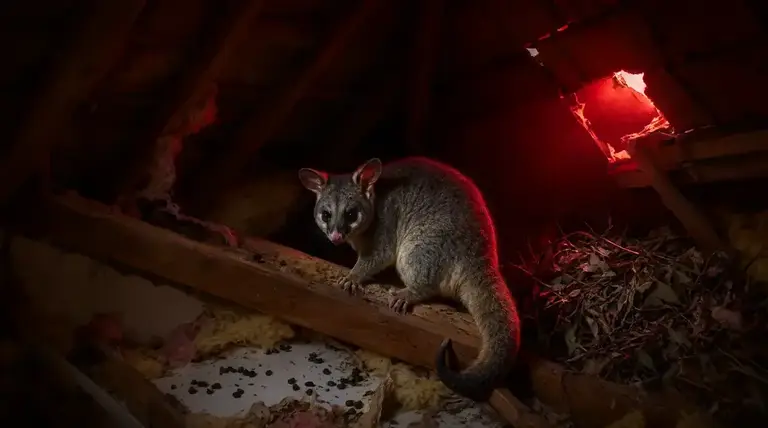
- Cylindrical droppings 1–2 cm long, often clustered near entry beams — rodent droppings are only 3–6 mm grains by comparison.
- Brown ceiling stains and a pungent ammonia smell that worsens on hot days as urine-saturated insulation heats up.
- Disturbed roof tiles, torn fascia gaps and bent gutter guard, plus greasy rub marks around 8–10 cm eave gaps where possums squeeze through.
- Overhanging branches within a 2–3 metre leap of the roofline — the most common access route onto your roof.
- Flattened “runways” pressed through insulation batts, visible from the manhole, plus tufts of coarse grey-brown fur snagged on rafters and nail heads — these trails point straight to the active entry point.
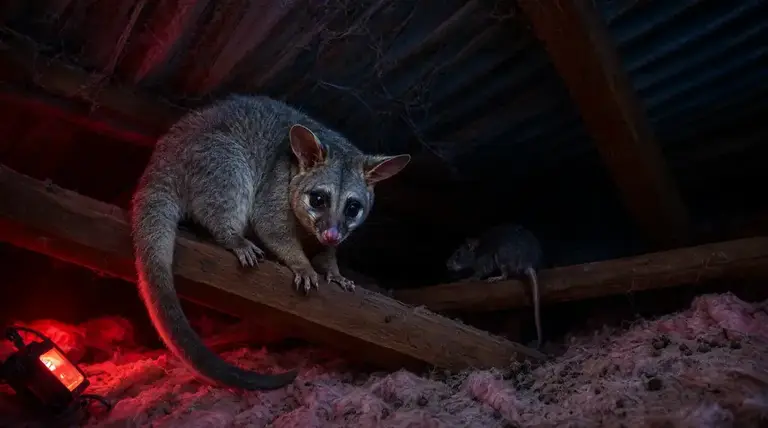
One timing clue settles most arguments: possums are strictly nocturnal, so activity runs dusk to dawn. Fast, continuous scurrying and gnawing at all hours is more likely rodents — our guide to roof rats in Australia covers the lighter, constant noise pattern in detail.
DIY Checks vs Professional Possum Removal
You can safely confirm possum signs yourself from the ground and manhole, but actual removal is a licensed job because possums are protected under state wildlife legislation. Trapping and relocating a possum yourself is illegal, and DIY exclusion done at the wrong time can trap a joey inside. Our guide Possum in the Roof? What Australian Law Says You Can Do explains the rules state by state.
| Task | DIY | Licensed professional |
|---|---|---|
| Identifying signs (noise, droppings, stains) | Yes — safe ground and manhole checks | Yes — full roof-void inspection |
| Trimming overhanging branches | Yes — removes access routes | Often included in proofing quote |
| Trapping or relocating a possum | No — illegal without a licence | Yes — compliant legal process |
| One-way doors and roof proofing | Not recommended — risk of trapping young | Yes — timed exclusion with re-entry checks |
Possum Removal and Proofing Costs in Australia (2025–26)
Across the Australian market, professional possum removal generally runs between $250 and $900 AUD depending on access, entry points and whether young are present. Full roof proofing is an added cost at most providers but prevents repeat infestations — far cheaper than repairing urine-damaged ceilings. Here’s what the industry typically charges:
| Service | Typical market rate (AUD) | What’s included/notes |
|---|---|---|
| Roof inspection and assessment | $0–$150 | Confirms species, entry points, presence of joeys; often free with booking |
| One-way door installation and removal | $250–$450 | Exclusion door fitted, possum exits, re-entry monitored over several nights |
| Full Possum Removal & Roof Proofing | $450–$900 | Removal plus sealing of all entry points, branch trimming advice, follow-up visit |
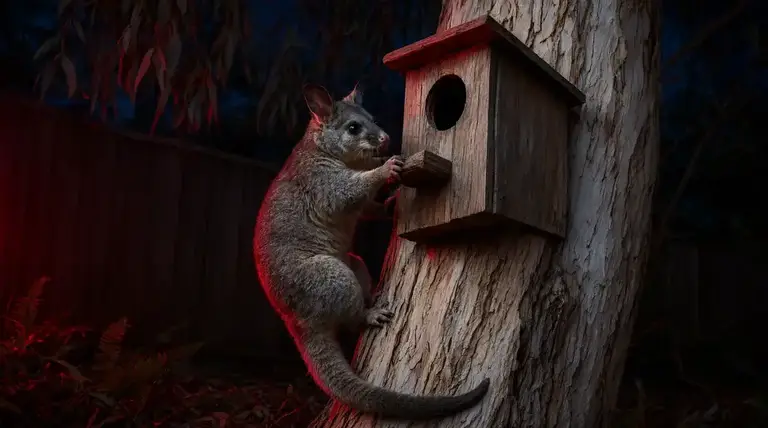
| Possum box supply and installation | $150–$350 | Alternative nest box in a nearby tree — often legally required with eviction |
| Insulation/ceiling remediation | $300–$1,500+ | Removing soiled batts, deodorising, plasterboard repair — varies with damage |
These are typical market rates — what Australian providers generally charge — and they vary by roof pitch, access difficulty and city. Any chemical deodorising treatments should be applied by licensed pest control technicians in line with APVMA-registered product labels.
It’s worth noting that Aussie Pest Strike typically comes in well under these market rates for the same scope of work. For an exact quote tailored to your property, give us a call on [aps_phone] today.
Seasonal Possum Activity in Australia
Possum signs peak in autumn and winter (April–August) as animals push indoors for warmth, with a second spike in spring when mobile joeys double the noise. Use this month-by-month guide to know when your roof is most at risk.
Jan
Feb
Mar
Apr
May
Jun
Jul
Aug
Sep
Oct
Nov
Dec
Typical roof-possum activity across Australia. Activity climbs from April as possums seek winter warmth, peaks through June–July, then rises again in September–October when females carry joeys (pouch life runs roughly 16–18 weeks) and young become mobile in the void — which is when ceiling noise suddenly seems to double.
Nine times out of ten, the homeowner already knows it’s a possum — they just need someone to confirm it legally and get it out properly. The biggest mistake we see is people sealing the hole themselves and trapping a joey inside, which turns a one-visit job into a messy, expensive one. Check the signs, call early, and let the exclusion door do the work.
If you’ve ticked two or more possum signs from the checklist, book a professional inspection now — ideally before spring, when joeys force a delay of several weeks before removal can legally proceed. A licensed technician will confirm the species, fit a one-way exclusion door, and seal every entry point so the possum can’t return. Read up on the legal possum removal process and our guide to possum-proofing your roof’s entry points so you know exactly what a compliant job looks like.
Possum Signs: Frequently Asked Questions
What are the main possum signs versus rats in my roof?
Possums make heavy, slow thumping at dusk, while rats make light, fast scratching at any hour of the day or night. Possum droppings are cylindrical 1–2 cm pellets versus tiny 3–6 mm rodent grains, and possums produce a strong ammonia smell compared to a rodent’s fainter musky odour.
Are possums in the roof dangerous?
Possums rarely bite people, so the direct health risk is low. The real dangers are structural: urine damages plasterboard, insulation and wiring, droppings can foul roof-fed water tanks, and displaced insulation around cables creates a potential fire hazard. Early removal prevents the costly repairs.
Can I remove a possum from my roof myself?
No — possums are protected wildlife under state legislation, so DIY trapping and relocating is illegal. Removal must follow the legal process, typically a licensed operator fitting a one-way exclusion door and proofing entry points. You can, however, trim overhanging branches and monitor the signs yourself.
Hearing night-time thumping overhead or spotted droppings in the ceiling? Don’t wait for the damage to pile up. Aussie Pest Strike offers a free on-site roof inspection anywhere we service, confirming possum signs and planning compliant, humane exclusion as part of our licensed pest control services — one of the many household pest threats we handle Australia-wide. Call Aussie Pest Strike on [aps_phone] to book your free inspection today and get your roof — and your sleep — back.
Sources & further reading
Found Something
Dangerous?
Don’t touch it. Don’t spray it. Keep kids and pets clear, take a photo from a safe distance, and call us — or book a free inspection and we’ll come to you.
02 7235 0050