The Flea Lifecycle:Why TreatmentsFail Without It
The flea lifecycle is the single biggest reason flea treatments fail: only about 5% of a flea population are the adults you see on pets, while the other 95%...
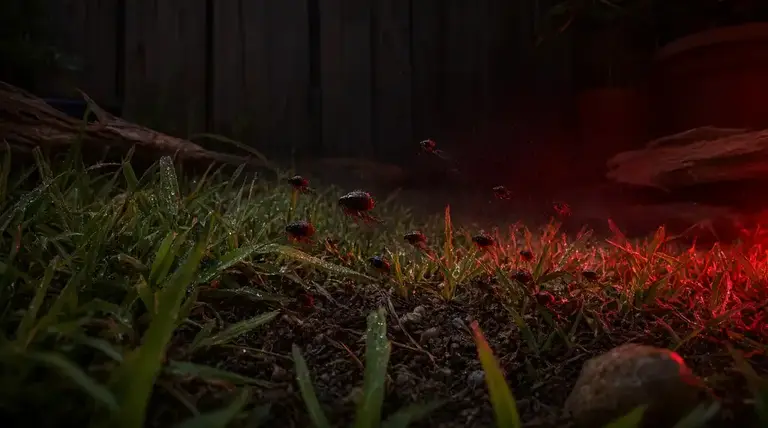
The flea lifecycle is the single biggest reason flea treatments fail: only about 5% of a flea population are the adults you actually see on pets, while the other 95% are eggs, larvae and pupae hidden in carpets, bedding and floor cracks. A one-off spray kills adults but leaves protected pupae that hatch days later — so understanding the four stages, from egg to biting adult, is the key to genuinely breaking an infestation in any Australian home.
Put simply, the flea lifecycle is the four-stage development process — egg, larva, pupa and adult — that the cat flea (Ctenocephalides felis) passes through between generations, and it is the stage-by-stage timing of this cycle that determines whether a treatment succeeds or fails. If your pest control plan only targets the adults on the day, the remaining 95% of the population simply carries on without missing a beat.
- Only around 5% of a flea population are visible adults; eggs, larvae and pupae make up the other 95% hiding in carpet, bedding and floor gaps.
- The pupal cocoon resists insecticide, so pupae survive a single treatment and hatch over the following one to three weeks.
- In warm, humid Australian summer conditions, the full egg-to-adult cycle can compress into as little as two to three weeks.
- Breaking the cycle requires a combined approach: daily vacuuming, hot-washing bedding, vet-recommended pet treatment and an insect growth regulator (IGR).
- Professional flea treatments in Australia typically cost $180–$450 depending on home size, with follow-up often built in.
Why the Flea Lifecycle Matters So Much in Australian Homes
Australian conditions are close to perfect for fleas: development is fastest at around 21–29°C with humidity above 50%, which describes a typical summer across most of the country. From late spring through the Christmas holidays, flea complaints spike nationwide — and in heated homes, fleas can keep breeding year-round.
Housing style plays a real role too. Homes on a concrete slab tend to confine fleas to carpets and soft furnishings, while older weatherboard and Queenslander-style homes on stumps give fleas and their hosts — rodents, possums, stray cats — access to shaded, humid subfloor space where larvae thrive. Brick veneer homes with wall cavities and suspended timber floors sit somewhere in between. Understanding where the immature stages live in your particular construction is half the battle, which is why our guide to where fleas actually hide in your home is worth reading before you treat.
It is also worth knowing that you do not need a dog or cat to have a problem. Fleas arrive on previous occupants’ pets, wildlife in the roof or subfloor, or even on your clothing — our article on how infestations happen without pets explains the common pathways.
The Four Stages of the Flea Lifecycle
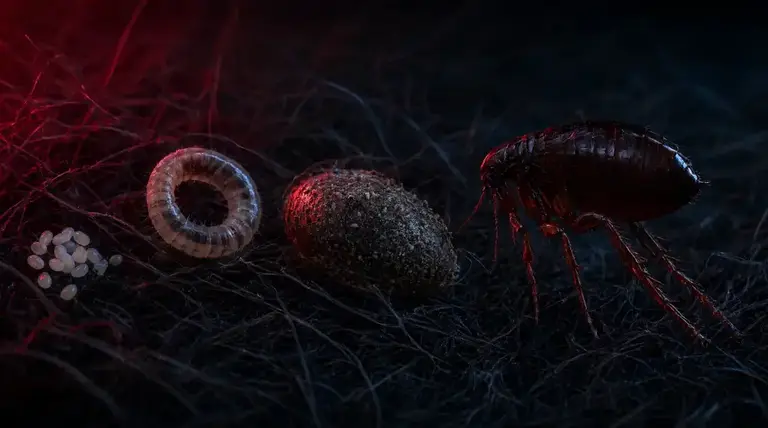
The cat flea passes through complete metamorphosis — egg, larva, pupa and adult — and each stage behaves differently, hides differently and responds differently to treatment. Warm, humid conditions can compress the whole cycle into as little as two to three weeks.
- Egg — a female lays up to 40–50 eggs a day; they are not sticky, so they roll off the pet into carpet, bedding and floor cracks wherever the animal rests.
- Larva — tiny worm-like larvae feed on “flea dirt” (adult droppings) and organic debris, avoiding light by burrowing deep into carpet fibres and under skirting.
- Pupa — the larva spins a sticky, protected cocoon camouflaged with dust and debris; this stage resists insecticide and can lie dormant for weeks to months.
- Adult — triggered by warmth, vibration and CO₂, the adult emerges hungry and jumps onto a passing host within hours, starting the cycle again.
The population breakdown below is why a treatment that only kills adults is doomed from the start:
| Stage | Share of population | Vulnerable to spray? |
|---|---|---|
| Eggs | ~50% | Partly |
| Larvae | ~35% | Yes |
| Pupae | ~10% | No — protected cocoon |
| Adults | ~5% | Yes |
Warning Signs of an Active Flea Infestation
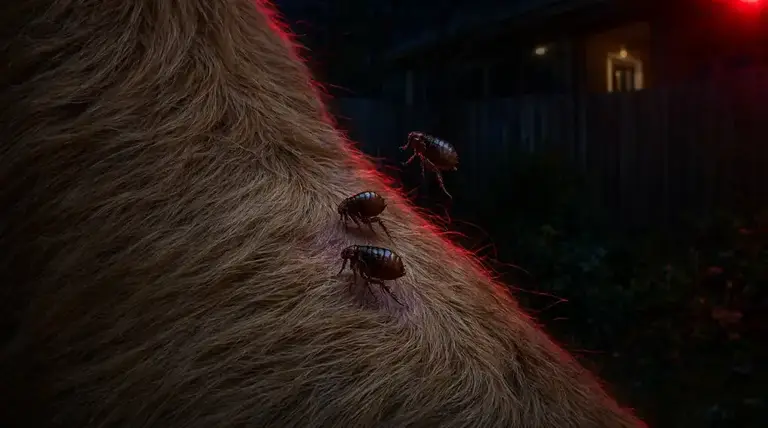
The clearest sign of fleas is repeated bites around ankles and lower legs combined with pets scratching more than usual — but by the time you see adults, the immature stages are already well established. Check for these indicators:
- Ankle and lower-leg bites — small, itchy red spots, often in clusters of two or three, appearing after time spent on carpeted floors.
- Flea dirt on pets or bedding — black specks that turn reddish-brown on damp tissue (digested blood), found at the base of pet fur or in sleeping areas.
- Pets scratching, biting or over-grooming — especially around the tail base, belly and neck.
- Visible jumping insects — tiny dark fleas seen against socks, light carpet or pet bedding, particularly after the house has been empty.
- A surge of activity after holidays or moving in — vibration and CO₂ trigger dormant pupae to hatch all at once, which is common in vacant rentals and holiday homes.
- Fleas persisting weeks after a treatment — almost always hatching pupae, not treatment failure.
DIY vs Professional Flea Treatment
DIY flea control can work for a light, early problem if you attack every stage — vacuuming daily, washing bedding hot, treating the pet and using a product with an insect growth regulator — but heavy or recurring infestations usually need a licensed technician with professional-grade IGRs and residual products applied to subfloors, carpets and harbourage areas. Supermarket “flea bombs” are the most common DIY failure: they knock down adults in the air but barely penetrate carpet pile where larvae and pupae live.
| Factor | DIY approach | Professional treatment |
|---|---|---|
| Stages targeted | Mostly adults; IGR products limited | Adults, eggs and larvae via residual + IGR |
| Coverage | Often misses subfloor, edges and furniture | Whole-of-home, including subfloor and yard |
| Typical cost | $40–$120 in products, often repeated | $180–$450 once-off with plan |
| Time to control | 4–8 weeks, variable | 2–4 weeks with follow-up |
| Best for | Early, light activity with diligent effort | Established, recurring or end-of-lease cases |
Renters should note that fleas are a frequent end-of-lease issue in Australia, especially where pets have lived at the property. Our guide to end-of-lease flea treatment for renters covers what is typically required before handover.
Flea Treatment Costs in Australia (2025–26)
Across the Australian market, professional flea treatment generally runs between $180 and $450 for a standard home, with larger properties, subfloor access or combined internal/external treatment sitting at the higher end of the industry range. Rates vary by state, property size and infestation severity, but the typical figures the industry charges look like this:
| Service | Typical market rate (AUD) | What’s included/notes |
|---|---|---|
| Standard internal flea treatment (unit/small home) | $180–$260 is the going market rate | Residual spray plus IGR to carpets, skirtings and soft-furnishing areas |
| Internal + external treatment (house with yard) | Industry typically charges $280–$450 | Adds yard, subfloor and kennel/shaded-area treatment |
| End-of-lease flea treatment | $150–$280 is standard across the market | Treatment with receipt/certificate for property managers |
| Follow-up visit (if required) | Most operators charge $90–$180 | Timed 2–3 weeks later to catch hatching pupae |
A reputable operator will explain that a second wave of adult fleas in weeks two to three is expected behaviour, not failure — and will build the follow-up into the plan. For a full breakdown, see our Flea Treatment & Control service page.
Worth knowing: Aussie Pest Strike typically comes in well under these market rates, without cutting corners on products or follow-up. For an exact quote tailored to your property, give us a call on [aps_phone] today.
Seasonal Flea Activity in Australia
Flea activity in Australia peaks from late spring through summer and early autumn, when temperature and humidity accelerate the lifecycle, and drops through winter — though heated indoor environments mean fleas can breed year-round. A winter lull usually means slowed pupae waiting for warmth, not a solved problem.
Jan
Feb
Mar
Apr
May
Jun
Jul
Aug
Sep
Oct
Nov
Dec
Indicative national pattern: flea development accelerates from October, peaks across the summer holidays (Dec–Feb) when heat and humidity compress the lifecycle, then slows through the cooler months — with indoor infestations persisting year-round in heated homes.
This seasonality matters for treatment planning. Eggs laid in January can be biting adults within a fortnight, so a single visit rarely coincides with every stage. Planning repeat action over three to four weeks matches the cycle and prevents the classic “it came back” outcome.
“The most common call we get is ‘the treatment didn’t work’ — and nine times out of ten it’s just pupae hatching on schedule, exactly as the lifecycle predicts. Once people understand that the cocoon stage can’t be sprayed away, they stop chasing one-hit fixes and start winning with timing, vacuuming and an IGR.”
Treat the pet with a vet-recommended product, vacuum daily for two weeks, hot-wash bedding weekly and use an IGR-based environmental treatment — and expect a one-to-three-week lag while pupae hatch. For established or recurring infestations, book a licensed technician for a lifecycle-targeting treatment with a planned follow-up rather than repeating DIY sprays.
Frequently Asked Questions
Why do flea treatments fail if they kill the adults?
Only about 5% of a flea population are the visible adults on your pet; the other 95% are eggs, larvae and pupae hidden in carpets, bedding and floor cracks. A one-off spray kills adults but cannot penetrate the pupal cocoon, so protected pupae hatch over the following one to three weeks. This makes it look like the treatment failed, when in fact the lifecycle simply continued on schedule.
What are the four stages of the flea lifecycle?
The cat flea passes through complete metamorphosis: egg, larva, pupa and adult. A female lays up to 40–50 non-sticky eggs a day that roll off the pet into carpet and bedding. Worm-like larvae feed on flea dirt while burrowing deep into fibres, then spin a sticky, debris-camouflaged cocoon. Adults emerge when triggered by warmth, vibration and CO₂, jumping onto a passing host within hours.
How long does the flea lifecycle take in Australian conditions?
In warm, humid conditions — around 21–29°C with humidity above 50%, typical of an Australian summer — the full egg-to-adult cycle can compress into as little as two to three weeks. Development accelerates from October and peaks across the summer holidays, then slows through winter. In heated homes, fleas can keep breeding year-round, so a winter lull usually means slowed pupae rather than a solved problem.
Which stages of the flea lifecycle does insecticide spray actually reach?
Sprays reliably kill adults and work partly on eggs, and larvae are vulnerable to residual products. Pupae are the exception: their sticky, dust-covered cocoons resist insecticide, so roughly 10% of the population survives any single treatment and hatches over the following one to three weeks. This is why effective control pairs spraying with an insect growth regulator (IGR) plus repeat action timed across three to four weeks.
What is an insect growth regulator and why does it matter for fleas?
An insect growth regulator (IGR) disrupts flea development so eggs and larvae cannot mature into biting adults. Because sprays alone cannot penetrate the pupal cocoon, an IGR targets the immature 95% of the population that a knockdown spray misses. Professional treatments combine residual spray with an IGR applied to carpets, skirtings and soft-furnishing areas, and diligent DIY products should also include one.
How do I break the flea lifecycle at home?
Breaking the cycle requires attacking every stage together: vacuum daily to remove eggs and larvae from carpet pile, hot-wash pet and human bedding, treat the pet with a vet-recommended product, and use an insect growth regulator to stop immatures maturing. Supermarket flea bombs are a common failure because they knock down airborne adults but barely penetrate carpet where larvae and pupae live. Expect follow-up action over several weeks.
Why do fleas suddenly appear after holidays or moving into a vacant home?
Dormant pupae wait inside their protective cocoons until triggered by warmth, vibration and CO₂. An empty house or holiday home has little activity, so pupae lie dormant for weeks to months. When people return or move in, footsteps and breath trigger a mass hatch of hungry adults within hours. This surge is expected behaviour predicted by the lifecycle, not evidence that a previous treatment failed.
How do I know if I have an active flea infestation?
Key signs include small, itchy red bites around ankles and lower legs, often in clusters of two or three after time on carpeted floors; black flea dirt specks on pets or bedding that turn reddish-brown on damp tissue; increased scratching around the tail base, belly and neck; tiny dark jumping insects against socks or light carpet; and fleas persisting weeks after treatment, which indicates hatching pupae.
How does understanding the flea lifecycle help explain why fleas reappear in treated areas?
Yes. Aussie Pest Strike treats established and recurring flea problems, including end-of-lease cases where pets have lived at the property, and tailors plans to your home's construction — such as subfloor access in stumped homes or carpets in slab homes. A reputable operator will explain that a second wave of adult fleas in weeks two to three is normal hatching pupae, not failure. Contact them to discuss your situation and confirm what's involved.
What should I do next if fleas keep coming back after treatment?
If adult fleas reappear two to three weeks after a spray, it is almost always dormant pupae hatching on schedule rather than treatment failure. Keep vacuuming daily, continue hot-washing bedding and maintain vet-recommended pet treatment during this window. If the problem is heavy, recurring or tied to an end-of-lease handover, Aussie Pest Strike can assess which lifecycle stages remain in your carpets, subfloor or yard and plan appropriately timed follow-up.
Sources & further reading
Found Something
Dangerous?
Don’t touch it. Don’t spray it. Keep kids and pets clear, take a photo from a safe distance, and call us — or book a free inspection and we’ll come to you.
02 7235 0050