Preparing forCockroach Treatment:Room-by-Room Checklist
Preparing for Cockroach Treatment — proper preparation is the single biggest factor in a successful cockroach treatment. This room-by-room checklist shows...
Preparing for a cockroach treatment properly is the single biggest factor in whether the job works first time — skimp on prep and even the best products fall short. If there’s one thing every Australian homeowner should know, it’s that a licensed technician can only place gel baits, dusts and residual sprays where they can physically reach, so a cluttered kitchen wastes your money. This room-by-room checklist walks you through kitchens, bathrooms, laundries, bedrooms, living areas and garages, so every crack and void where cockroaches hide and breed is open and ready when your pest control technician arrives.
Put simply, preparing for cockroach treatment means clearing, cleaning and exposing the harbourage areas — under sinks, behind appliances, inside cupboards and along wall edges — before the technician treats them. Do it well and you protect food, crockery and pets, help products work faster, and often reduce the need for follow-up visits. Do it poorly and you risk paying for a second round.
- Preparation determines success: technicians must be able to reach voids behind fridges, under sinks and inside cupboards to place baits and dusts effectively.
- The kitchen is ground zero for German cockroaches — empty the sink and stove cupboards, pull out appliances and seal all food.
- Skip supermarket bombs and surface sprays for two weeks before treatment; they repel roaches deeper and contaminate professional bait.
- Vacate for the period your technician nominates (usually 2-4 hours), cover fish tanks, and avoid mopping skirting boards for at least a week afterwards.
- Budget roughly $180-$550 AUD for most residential cockroach treatments in 2025-26, depending on species, severity and follow-up needs.
Why Preparing for Cockroach Treatment Matters in Australian Homes
Australian conditions are close to ideal for cockroaches: long warm seasons, high humidity in the north and along the east coast, and housing styles full of hidden voids. Cockroaches shelter in tight, undisturbed gaps — behind fridges, inside dishwasher cavities, under sinks and along wall cracks — so if benches are cluttered or cupboards are full, the treatment simply cannot reach where it counts.
Housing type changes the risk profile. Homes on concrete slabs tend to see German cockroaches concentrated in kitchens and bathrooms, while older homes on stumps with subfloors — classic Queenslanders and many weatherboard and brick veneer houses — give the larger American, Australian and smoky brown species a direct route in from gardens, drains and mulch beds. In humid areas like South East Queensland and coastal New South Wales, breeding pressure peaks from October through April, so populations rebound quickly if preparation or treatment is half-done.
The species matters too. Our German cockroach guide explains why Blattella germanica breeds so fast indoors, while our American cockroach identification and control guide covers the big peridomestic species that invade from subfloors and drains. Knowing which one you have shapes how you prepare.
Warning Signs You Need to Prepare for a Treatment
If you’re seeing any of the following, a professional treatment — and proper preparation — should be on your to-do list this week. For a deeper rundown, read our article on the 7 signs of a cockroach infestation you shouldn’t ignore.
- Live roaches at night: switching the kitchen light on after dark and seeing roaches scatter is a sure sign of an established harbourage.
- Droppings and smear marks: small black specks like ground pepper in cupboard corners, along hinges and behind appliances.
- Egg cases (oothecae): brown, pill-shaped casings tucked into cracks, drawer runners and cardboard packaging.
- Musty odour: a lingering oily smell in the kitchen or pantry, strongest with heavy German cockroach activity.
- Daytime sightings: roaches active in daylight usually means the harbourage is overcrowded and the infestation is advanced.
- Shed skins: papery cast skins near warm appliances such as fridges, microwaves and dishwashers.
Kitchen Preparation Checklist
The kitchen is ground zero for German cockroaches, so allow the most time here — a thorough kitchen prep usually takes an hour or two on its own.
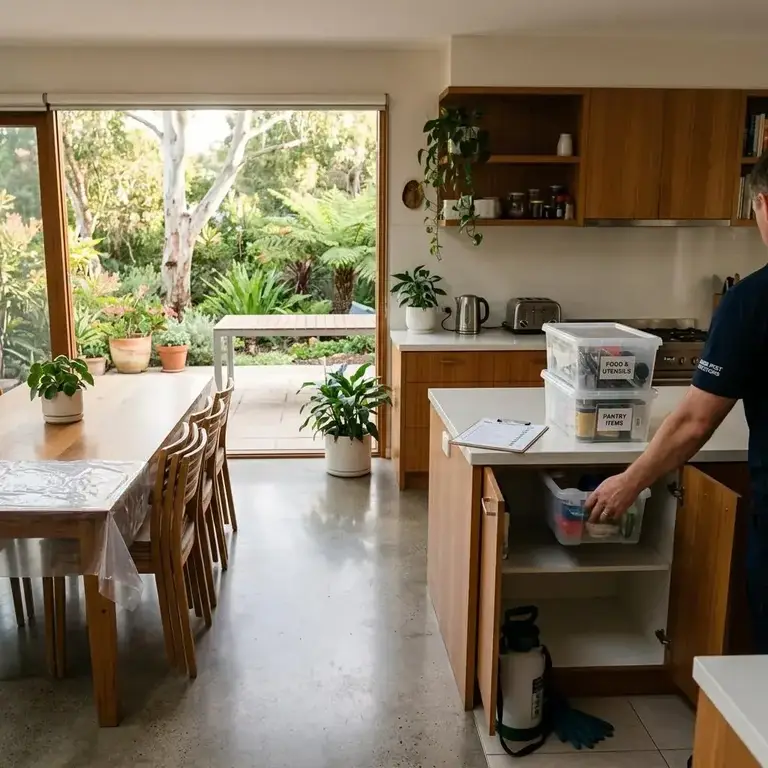
- Under-sink and stove cupboards: empty cupboards and drawers under the sink and beside the stove, wipe the shelves and leave the doors open.
- Appliances: pull the fridge, dishwasher and microwave out from the wall so the technician can treat behind and underneath them.
- Food storage: store food, fruit bowls, pet food and open packets in sealed containers or in the fridge.
- Benchtops: clear benchtops completely and pack away toasters, kettles and utensils, or cover them with clean sheets.
- Hygiene: empty bins, mop floors the night before, and fix leaking taps or traps that provide moisture.
One critical rule: avoid supermarket bombs and surface sprays in the two weeks before your appointment. These products contaminate gel bait, repel roaches deeper into wall voids and make the professional treatment less effective.
Bathroom, Laundry and Bedroom Preparation
Cockroaches are drawn to moisture, so wet areas need just as much attention as the kitchen. Clear out vanity cupboards, remove items from around the base of the toilet and run the exhaust fan to dry the room out.
Report any dripping taps or slow drains to your technician — a reliable water source will keep a population alive even after baiting. In bedrooms and wardrobes, vacuum along skirting boards, move furniture about 30 centimetres out from the walls and keep floors clear so residual spray can be applied neatly along edges and into wardrobe corners. German cockroaches spread from kitchens into adjoining rooms as numbers grow, so don’t assume bedrooms are exempt.
Living Areas, Garage and Outdoor Areas
Move lounges and entertainment units away from walls and vacuum crumbs from under cushions. Bag up clutter — especially stacked cardboard, because cockroaches feed on the glue and hide between the layers.
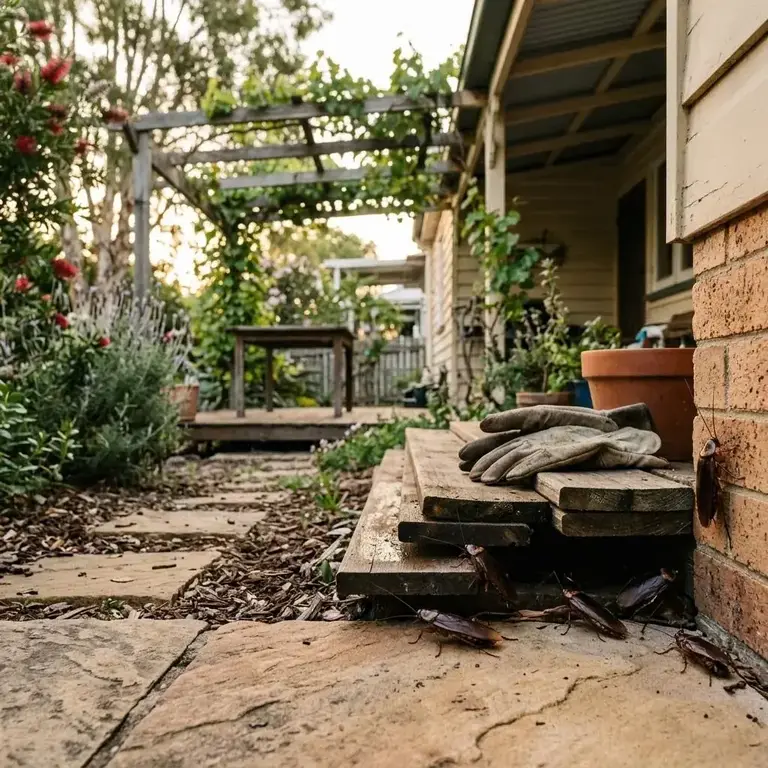
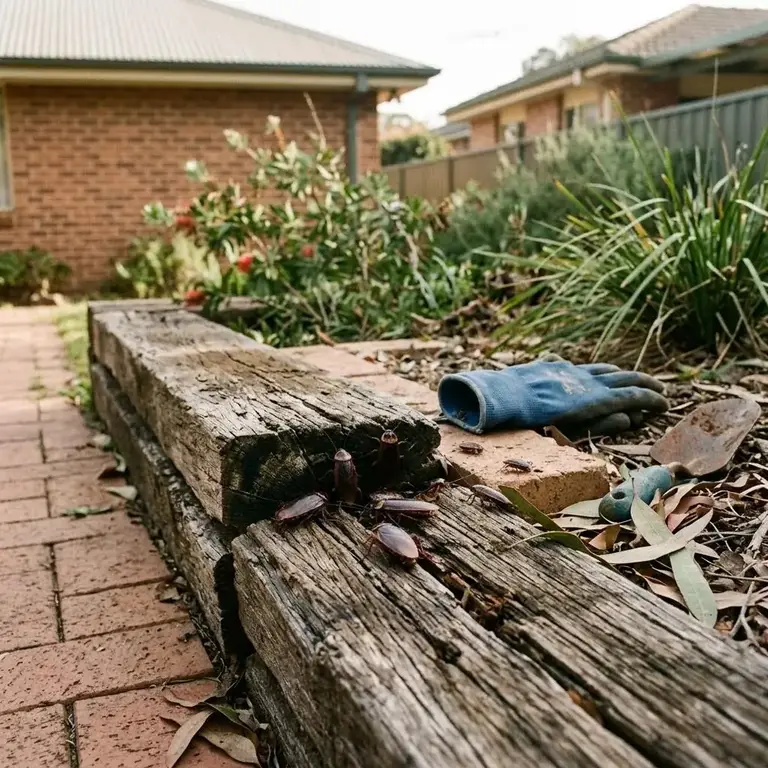
In the garage, declutter boxes along the walls. Outside, pull mulch and leaf litter back from weep holes, vents and door thresholds, as American and smoky brown cockroaches often enter from subfloors, gardens and drains. If your home sits on stumps, tell your technician so the subfloor can be inspected and treated where accessible.
DIY vs Professional Cockroach Treatment
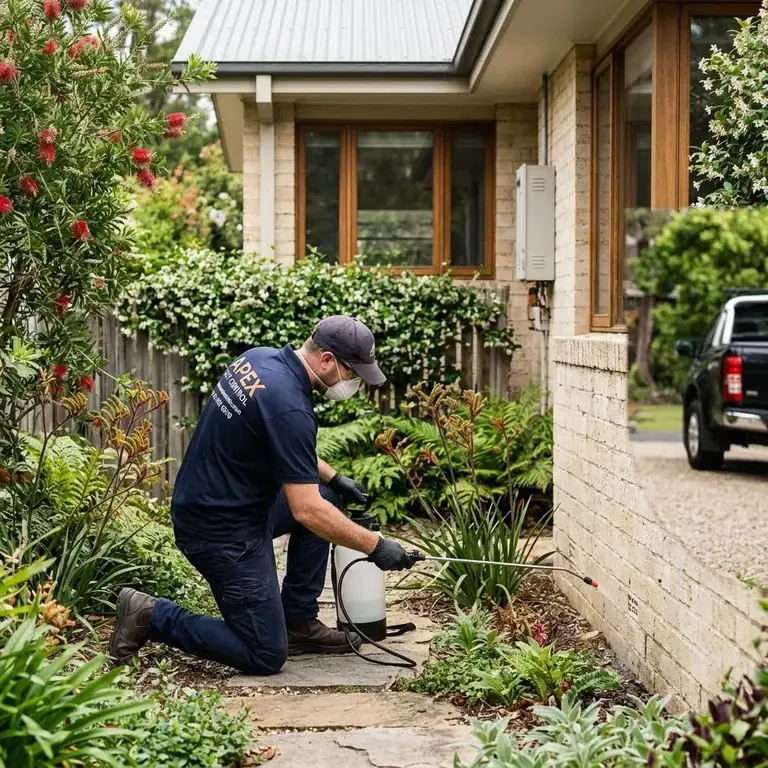
Supermarket sprays and bombs can knock down the odd roach, but they rarely touch the harbourage where breeding happens — and they can actively undermine a professional treatment. Licensed technicians use APVMA-registered gel baits, insect growth regulators and residual dusts placed precisely into cracks and voids, which is why professional cockroach control and treatment delivers lasting results where DIY usually fails.
| Factor | DIY products | Professional treatment |
|---|---|---|
| Reaches harbourages | Rarely — surface-only contact | Yes — baits and dusts placed in cracks and voids |
| Effect on infestation | Temporary knockdown; can scatter roaches deeper | Colony-level reduction via bait transfer |
| Species identification | Guesswork | Confirmed at inspection; plan tailored to species |
| Products used | Retail sprays and bombs | APVMA-registered gels, IGRs and dusts at label rates |
| Typical outcome | Recurring activity within weeks | Clear reduction over 2-3 weeks, follow-up if needed |
How Much Does Cockroach Treatment Cost in Australia?
Across the Australian pest control industry in 2025-26, typical market rates for residential cockroach treatment fall between about $180 and $550 AUD, depending on the species, the size of the home and how severe the infestation is. As a general industry benchmark, German cockroach jobs in kitchens sit at the higher end of the market because they often need a follow-up visit.
The table below shows what the Australian market generally charges for common cockroach services. These are typical industry rates, not a quote:
| Service | Typical market rate (AUD) | What’s included/notes |
|---|---|---|
| General cockroach spray (unit/small home) | $180-$280 | Internal residual spray and baiting; suits light activity from larger species |
| Standard house treatment (3-4 bedroom) | $250-$400 | Internal and external treatment including garage and entry points |
| German cockroach program | $350-$550 | Gel baiting, IGR and dusting with a follow-up visit typically included |
| Subfloor or severe infestation add-on | $100-$200 extra | Subfloor dusting or treatment of voids and drainage areas |
Keep in mind these figures reflect what the industry generally charges, and prices vary between operators, regions and property types. The good news is Aussie Pest Strike typically comes in well under these market rates while still delivering a thorough, professional treatment. For an exact quote tailored to your home and situation, give us a call on [aps_phone].
Seasonal Cockroach Activity in Australia
Cockroach activity climbs sharply through spring and peaks across the humid summer months, then eases through winter in the southern states. In tropical and subtropical regions the pressure stays high almost year-round, which is why preparation and timing matter so much.
Jan
Feb
Mar
Apr
May
Jun
Jul
Aug
Sep
Oct
Nov
Dec
Typical activity pattern: pressure builds from October, peaks between December and March, and drops through the cooler southern winter — though indoor German cockroach populations keep breeding year-round in heated kitchens.
Nine times out of ten, the difference between a treatment that clears a place in one visit and one that drags on is the prep. If I can get to the back of the fridge cavity and the sink cupboard is empty, the bait does its job. If I can’t, we’re just treating around the edges of the problem.
Work through this checklist the day before your booking, starting in the kitchen and finishing outside. Book a licensed technician who uses APVMA-registered products, plan to vacate for the nominated two to four hours, and don’t mop against skirting boards for at least a week afterwards. If you’re seeing daytime roaches or droppings in more than one room, skip the DIY products entirely — that pattern points to an established infestation that needs a proper baiting program.
On the Day and After the Service
Plan to vacate for the period your technician nominates — usually two to four hours for spray applications. Cover fish tanks and switch off air pumps, and keep children and pets away until treated surfaces are dry.
Afterwards, avoid mopping hard against skirting boards for at least a week so the residual barrier keeps working, and vacuum up dead roaches rather than sweeping them into corners. Expect a brief spike in visible activity over the first few days as baits take effect — that’s normal, not a failure. Any reputable pest control operator will use APVMA-registered products and hold a pest management licence for your state, such as those issued under New South Wales EPA or Queensland Health requirements.
Frequently Asked Questions
Why does preparation matter so much before a cockroach treatment?
A licensed technician can only place gel baits, dusts and residual sprays where they can physically reach. If benches are cluttered or cupboards are full, the products cannot reach the cracks and voids where cockroaches hide and breed, such as behind fridges, under sinks and inside cupboards. Good preparation helps products work faster, protects food, crockery and pets, and often reduces the need for follow-up visits.
What should I do to prepare my kitchen for cockroach treatment?
The kitchen is ground zero for German cockroaches, so allow an hour or two here. Empty the cupboards and drawers under the sink and beside the stove, wipe shelves and leave doors open. Pull the fridge, dishwasher and microwave out from the wall, store all food, pet food and open packets in sealed containers or the fridge, clear benchtops completely, empty bins, mop floors the night before, and fix leaking taps or traps.
Should I use supermarket sprays or bombs before a professional cockroach treatment?
No. Avoid supermarket bombs and surface sprays for at least two weeks before your appointment. These products contaminate professional gel bait, repel cockroaches deeper into wall voids, and make the licensed treatment less effective. They may knock down the odd roach but rarely touch the harbourage where breeding happens, so they can actively undermine the results of your professional treatment.
How do I prepare bathrooms, laundries and bedrooms for treatment?
Cockroaches are drawn to moisture, so clear out vanity cupboards, remove items from around the base of the toilet, and run the exhaust fan to dry wet areas out. Report dripping taps or slow drains to your technician, since a reliable water source keeps populations alive even after baiting. In bedrooms, vacuum along skirting boards, move furniture about 30 centimetres from walls, and keep floors clear so spray reaches edges and wardrobe corners.
What needs doing in living areas, garages and outdoor spaces?
Move lounges and entertainment units away from walls and vacuum crumbs from under cushions. Bag up clutter, especially stacked cardboard, because cockroaches feed on the glue and hide between layers. Declutter boxes along garage walls. Outside, pull mulch and leaf litter back from weep holes, vents and door thresholds, as American and smoky brown cockroaches often enter from subfloors, gardens and drains. Tell your technician if your home sits on stumps.
Which warning signs mean I should book a cockroach treatment soon?
Key signs include live roaches scattering when you switch on the kitchen light at night, small black droppings like ground pepper in cupboard corners and behind appliances, brown pill-shaped egg cases (oothecae) tucked into cracks and drawer runners, a lingering musty oily odour in the kitchen or pantry, roaches active in daylight, and papery shed skins near warm appliances like fridges, microwaves and dishwashers.
Do I need to leave the house during cockroach treatment?
Yes, vacate for the period your technician nominates, which is usually around 2 to 4 hours. Before you go, cover fish tanks and make sure food is sealed away. Afterwards, avoid mopping skirting boards for at least a week so the residual product along wall edges stays effective. Your technician will confirm the exact re-entry time and any other precautions for your home.
Does housing type affect how I should prepare for cockroach treatment?
Yes. Homes on concrete slabs tend to see German cockroaches concentrated in kitchens and bathrooms, so focus prep there. Older homes on stumps with subfloors, such as Queenslanders and many weatherboard and brick veneer houses, give larger American, Australian and smoky brown species a direct route in from gardens, drains and mulch beds, so outdoor preparation and telling your technician about the subfloor matter most.
What should I discuss with an Aussie Pest Strike technician when preparing for cockroach treatment?
When you speak with Aussie Pest Strike, mention which species signs you have noticed, such as droppings, egg cases or daytime sightings, whether your home is on a slab or stumps with a subfloor, and any leaking taps or slow drains that provide moisture. Also ask how long you need to vacate, what prep they want completed in each room, and whether a follow-up visit is likely based on the species and severity.
What is a practical next step after reading this checklist?
Work through the room-by-room checklist, starting with the kitchen, then contact Aussie Pest Strike to arrange an inspection and quote tailored to your home. Let them know about any cardboard clutter, mulch against weep holes, or subfloor access issues so the technician arrives prepared. Book your appointment far enough ahead to finish cleaning, stop using supermarket sprays for two weeks, and complete the prep properly.
Sources & further reading
Found Something
Dangerous?
Don’t touch it. Don’t spray it. Keep kids and pets clear, take a photo from a safe distance, and call us — or book a free inspection and we’ll come to you.
02 7235 0050