7 Signs ofa Cockroach InfestationYou Shouldn’t Ignore
7 signs of — Cockroach infestation — the clearest cockroach signs are droppings that look like ground black pepper or coffee grounds, a musty oily smell,...
Cockroach signs such as pepper-like droppings, a musty oily smell and roaches scattering when the lights come on are the earliest warnings that a colony is already established somewhere in your home. For Australian households — whether you’re in a Queenslander in Brisbane, a brick veneer in Melbourne or a slab home in Perth — learning to read these cockroach signs early is the difference between a cheap fix and a months-long battle.
In simple terms, cockroach signs are the physical evidence cockroaches leave behind: droppings, egg cases, shed skins, smear marks, odours and live or dead sightings that reveal where they hide and how large the population has grown. Cockroaches are nocturnal and secretive, so by the time you see them in daylight the population is usually well advanced. The two main culprits in Australian homes are the 12–15 mm German cockroach (Blattella germanica), which breeds indoors year-round in kitchens, and the 35–40 mm American and Australian cockroaches that push inside from drains and gardens during our humid December–February summer. Acting on the first sign — and getting a licensed pest control assessment — beats waiting every time.
- The clearest cockroach signs are pepper-like droppings, a musty oily odour, egg cases and live roaches scattering at night.
- Daytime sightings usually mean the harbourage is overcrowded — treat it as an established infestation, not a one-off.
- Check where warmth, moisture and food overlap first: behind the fridge, under the sink, appliance motors and kitchen kickboards.
- Cockroaches carry bacteria such as Salmonella and their droppings can trigger childhood asthma — act fast if kids are in the home.
- Professional treatment in Australia typically costs $180–$450 for a standard home and targets the source, not just the symptoms.
Why Cockroach Signs Matter So Much in Australian Homes
Because cockroaches breed exponentially in warm, humid conditions, Australian homes give them everything they need for most of the year — so a single missed sign can become a full infestation within weeks. Our climate is the core problem: northern states sit at near-ideal breeding temperatures of 28–32°C for months on end, and even southern capitals see strong summer surges.
Housing style plays a big part too. Queenslanders on stumps have open subfloor voids where American cockroaches harbour before climbing inside. Older homes with timber floors and wall cavities give roaches endless cracks to retreat into, while modern slab-on-ground brick veneer homes funnel them in through weep holes, floor wastes and gaps around plumbing penetrations. A single mated German female can trigger a population of several thousand within a year under ideal 30°C conditions, which is why recognising cockroach signs early — and understanding why cockroaches keep coming back when only the visible ones are sprayed — saves you serious money.
The 7 Warning Signs of Cockroaches, Ranked by Severity
The more of these boxes you tick, the more established the colony. Work through this checklist in order — the top items are early warnings, the bottom ones indicate a mature infestation.
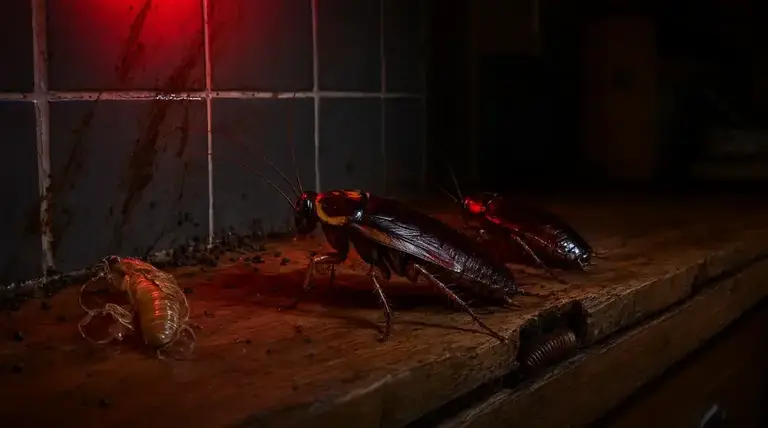
- Droppings. German cockroach droppings resemble specks of ground black pepper or coffee grounds; larger species leave cylindrical, ridged pellets around 2 mm long. Check on top of cupboards, behind the fridge and along skirting boards.
- A musty, oily odour. Roaches release aggregation pheromones that build into a lingering, unpleasant smell. A strong odour signals a heavy population.
- Smear marks. In humid areas roaches leave dark, irregular smears where they repeatedly run along walls, benchtops and pipes.
- Egg cases (oothecae). Brown, 5–8 mm purse-shaped capsules tucked into cracks and crevices. A single German ootheca holds up to 40 eggs.
- Shed skins. Nymphs moult several times as they grow; translucent skins near harbourage points confirm active breeding on site.
- Live sightings by day. Cockroaches are nocturnal, so daytime activity usually means the harbourage is overcrowded and roaches are being pushed out.
- Damaged goods. Chewed food packaging, book bindings and even glue seals show roaches are feeding throughout the home, not just the kitchen.
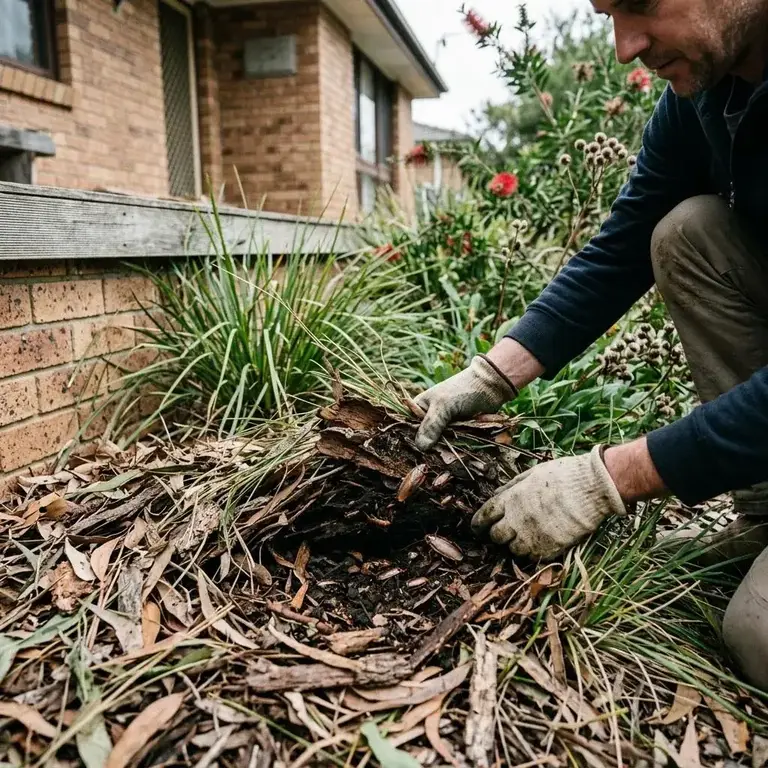
Where you find the evidence matters as much as what you find. A tight cluster of droppings, shed skins and egg cases in one cupboard points to a nearby harbourage you can treat directly; scattered droppings across several rooms suggest a mature, spreading population. Pull out the fridge and dishwasher, check appliance motor compartments, inspect under the sink and lift the kickboards beneath kitchen cabinets — German cockroaches favour spaces within a metre of food and water, while larger species congregate around floor wastes, grease traps and subfloor voids. Photograph where you find droppings before you clean: it helps a technician place bait exactly where roaches travel. For a deeper dive into the worst offender, see German Cockroach Infestations: Why They’re So Hard to Kill, or our American Cockroaches in Australia: ID and Control Guide for the big drain-dwellers.
DIY vs Professional Pest Control for Cockroaches
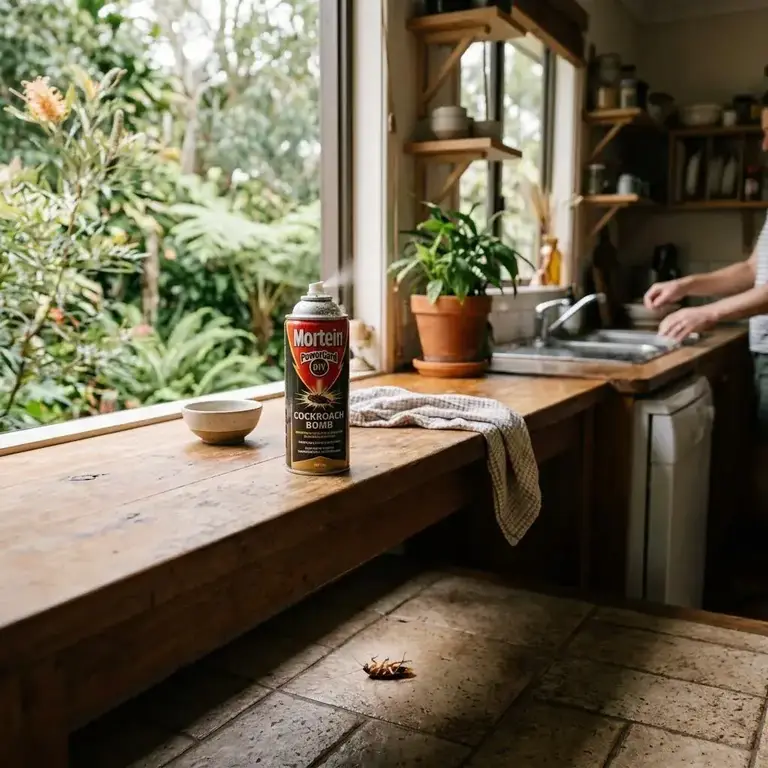
Light, localised activity can sometimes be managed with quality gel baits and strict hygiene, but recurring or heavy infestations almost always need professional pest control because cockroaches resist many retail sprays and hide where aerosols can’t reach. Here’s an honest comparison:
| Factor | DIY approach | Professional treatment |
|---|---|---|
| Best for | Isolated sightings, very early activity | Established, recurring or German cockroach infestations |
| Products used | Supermarket sprays and baits — lower-strength, often repellent | Professional-grade gel baits, non-repellent residuals and insect growth regulators, applied by licensed technicians |
| Targets the nest | Rarely — kills visible roaches only | Yes — harbourages identified and treated directly |
| Typical cost | $30–$80 in products, often repeatedly | $180–$450 for a standard home (see pricing below) |
| Warranty | None | Service warranty typically included |
A note on safety: any chemical treatment in Australia should be applied in line with APVMA-registered label directions, which is why we recommend licensed technicians for anything beyond basic hygiene and baits. No treatment can honestly be called “100% safe” or “guaranteed”, but professional application keeps risk to people, pets and the environment to a minimum. There’s also a health angle — cockroaches carry bacteria such as Salmonella on their bodies, and their droppings and shed skins are a recognised trigger for childhood asthma, so households with kids or respiratory issues should treat cockroach signs as urgent, not cosmetic.
How Much Does Cockroach Treatment Cost in Australia?
For a standard Australian home, the typical market rate for professional cockroach treatment sits between $180 and $450 in 2025-26, with severe German cockroach infestations and follow-up programs generally quoted higher across the industry. Prices vary with home size, species and severity, but these are the typical rates Australian pest control companies charge:
| Service | Typical market rate (AUD) | What’s included / notes |
|---|---|---|
| Inspection and assessment | $0–$120 | Harbourage identification, species confirmation, treatment plan |
| Standard internal/external treatment | $180–$320 | Gel baiting, residual spray, dusting of voids for average 3-bed home |
| German cockroach program | $300–$550 | Initial treatment plus one or two follow-ups, insect growth regulator, kitchen-focused |
| Large home / severe infestation | $400–$700+ | Subfloor or roof void work, multiple visits, larger floor area |
| Commercial kitchen (monthly program) | $120–$300 per visit | Ongoing monitoring, bait rotation, compliance reporting |
Compare those industry rates with the DIY treadmill: $30–$80 on sprays and baits, repeated every few months while the nest keeps breeding behind the wall. In most established cases, one properly targeted Cockroach Control & Treatment service works out cheaper than a year of retail products.
Here’s the good news: Aussie Pest Strike typically comes in well under these typical Australian market rates, without cutting corners on products or follow-up. For an exact quote tailored to your home and infestation, call us on [aps_phone] today.
Seasonal Cockroach Activity in Australia
Cockroach activity peaks across Australia from late spring through the humid summer months of December to February, then tapers off in the cooler southern winters — though German cockroaches keep breeding indoors year-round regardless of season. The chart below shows typical relative activity across the year:
Jan
Feb
Mar
Apr
May
Jun
Jul
Aug
Sep
Oct
Nov
Dec
Typical activity pattern: outdoor species (American, Australian cockroaches) surge in the hot, humid Dec–Feb period and drop sharply through winter, while German cockroaches maintain steady indoor activity all year in heated kitchens.
The practical takeaway: late winter and early spring are the smart times to book pest control. Treating before the population explodes in summer means smaller colonies, faster results and often a cheaper job. If you’re seeing cockroach signs in July, don’t wait for the warm weather — that’s the colony telling you it’s already comfortable indoors.
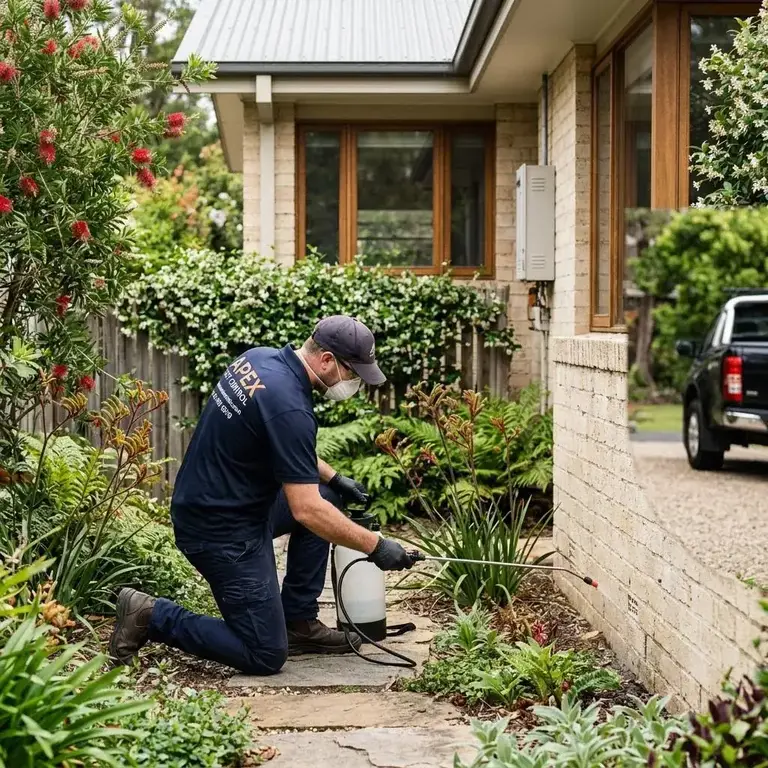
Most infestations we get called to could have been a one-visit job if the owner had rung us at the first lot of droppings behind the fridge. In Sydney and Brisbane homes we usually trace heavy activity back to the warm, humid cavity behind the dishwasher or under the sink, where a leaking trap supplies all the water roaches need. Photograph what you find before you clean it up — it tells us exactly where to place the bait.
If you’ve ticked two or more of the seven warning signs — or seen a cockroach during the day — skip the supermarket sprays and book a professional inspection. Photograph the evidence, clean up food sources and fix leaking taps, then let a licensed technician treat the harbourages directly. Early action is faster, cheaper and far more effective.
Frequently Asked Questions
What are the earliest signs of a cockroach infestation?
The earliest warning signs include pepper-like or coffee-ground droppings, a lingering musty oily odour, brown purse-shaped egg cases (oothecae), and live roaches scattering when you turn the lights on at night. Cockroaches are nocturnal and secretive, so spotting any of these clues usually means a colony is already established somewhere in your home rather than just passing through.
What do cockroach droppings look like?
German cockroach droppings resemble specks of ground black pepper or coffee grounds, while larger species such as American and Australian cockroaches leave cylindrical, ridged pellets around 2 mm long. Check on top of cupboards, behind the fridge and along skirting boards. Photograph where you find droppings before cleaning, as this helps a technician place bait exactly where roaches travel.
Why does seeing a cockroach during the day matter?
Cockroaches are nocturnal, so daytime sightings usually mean the harbourage is overcrowded and roaches are being pushed out. Treat it as an established infestation rather than a one-off sighting. The more warning signs you can tick off — droppings, odour, egg cases, shed skins — the more mature the colony is likely to be.
Where should I check for cockroach harbourages in my home?
Start where warmth, moisture and food overlap: pull out the fridge and dishwasher, check appliance motor compartments, inspect under the sink and lift the kickboards beneath kitchen cabinets. German cockroaches favour spaces within a metre of food and water, while larger species congregate around floor wastes, grease traps and subfloor voids.
Which cockroach species infest Australian homes?
The two main culprits are the 12–15 mm German cockroach, which breeds indoors year-round in kitchens, and the larger 35–40 mm American and Australian cockroaches that push inside from drains and gardens during the humid December–February summer. Queenslanders on stumps offer open subfloor voids for outdoor species, while slab homes funnel roaches in through weep holes and plumbing gaps.
Can I get rid of cockroaches myself with supermarket products?
Light, localised activity can sometimes be managed with quality gel baits and strict hygiene. However, recurring or heavy infestations almost always need professional treatment because cockroaches resist many retail sprays, which are often repellent and only kill visible roaches without reaching the nest. Professional technicians use non-repellent residuals, gel baits and insect growth regulators applied directly to harbourages.
Are cockroaches a health risk in the home?
Yes. Cockroaches carry bacteria such as Salmonella on their bodies, and their droppings and shed skins are a recognised trigger for childhood asthma. Households with kids or respiratory issues should treat cockroach signs as urgent rather than cosmetic, and act quickly once evidence appears rather than waiting to see whether the problem resolves itself.
How quickly can a small cockroach problem turn into a full infestation?
Outdoor species like American and Australian cockroaches surge during the hot, humid December–February period and drop sharply through southern winters. German cockroaches, however, keep breeding indoors year-round regardless of season. Late winter and early spring are smart times to book treatment, before summer populations build up.
What happens during an Aussie Pest Strike inspection for cockroaches?
An inspection focuses on identifying harbourages and confirming the species involved. A technician will check the high-risk zones described in this article — behind the fridge, under the sink, appliance motor compartments, kickboards, floor wastes and subfloor areas — looking for droppings, egg cases, shed skins and smear marks. The findings shape a targeted treatment plan aimed at the source of the colony, not just the visible roaches.
How should I prepare before contacting Aussie Pest Strike about cockroaches?
Before calling, work through the seven-sign checklist and note which ones apply to your home. Photograph droppings, egg cases or smear marks where you find them before cleaning, since these records help a technician place bait exactly where roaches travel. Mention any daytime sightings and whether children are in the home, then request an assessment tailored to your property and the severity of activity.
Sources & further reading
Found Something
Dangerous?
Don’t touch it. Don’t spray it. Keep kids and pets clear, take a photo from a safe distance, and call us — or book a free inspection and we’ll come to you.
02 7235 0050