Scorpions in Australia:ID, Stingsand Home Control
There are more than 100 native species of scorpions in Australia, found in every state and territory — and none of them is deadly. Most stings cause...
Scorpions are a fact of life across much of Australia, and while no local species is deadly, a sting in the laundry or a scorpion in the kids’ bedroom is something most households would rather avoid. If you’ve searched “c” for scorpion advice and come up short, this guide covers identification, sting first aid and practical home control from coast to coast.
Put simply: scorpions in Australia are nocturnal, eight-legged arachnids with pincers and a stinger-tipped tail, and of the 100-plus native species, none is considered life-threatening to humans. Below, we explain how to tell the common species apart, what to do if someone is stung, and how to keep them out of your home — whether you live in a brick veneer in Melbourne, a Queenslander in Brisbane or a slab home in Perth.
- Australia has more than 100 native scorpion species, and none is deadly — most stings feel like a bee sting and settle within hours.
- The marbled scorpion is the species most often seen in suburban homes and sheds along the east coast.
- Scorpions glow blue-green under UV light, making a cheap torch your best detection tool after dark.
- Prevention means clearing harbourage, sealing entry points and cutting off the insects they hunt.
- Persistent activity warrants a licensed pest control technician using APVMA-registered products.
Why scorpions in australia Matter in Australian Homes
Scorpions matter because they live in every state and territory, thrive in the Australian climate and regularly cross paths with people indoors. Warm conditions, abundant insect prey and typical Aussie housing features — subfloor voids, weep holes in brickwork, timber stacks and leafy garden beds — give them everything they need to shelter close to the house.
Housing style plays a big part. Older Queenslanders on stumps offer cool, shaded voids underneath; brick veneer homes have weep holes that act as open doorways; and slab-on-ground builds still develop cracks around plumbing penetrations over time. In the southern states, scorpion activity peaks from about October to April, while across the tropical north they remain active all year. Extreme weather — heatwaves, heavy rain or sudden cold snaps — pushes them indoors, which is why sightings often spike after a storm. Most encounters are harmless, but for households with toddlers, elderly relatives or curious pets, reducing the chance of a sting is sensible home maintenance, not paranoia.
Warning Signs of Scorpion Activity Around Your Home
Scorpions are secretive nocturnal hunters, so the clearest warning sign is spotting one — alive and moving, or glowing under a UV torch at night. Because they hide by day under bark, rocks, logs and leaf litter, you’ll rarely see them in daylight unless something disturbs their shelter.
Work through this checklist after dark and around the yard:
- Night-time sightings: scorpions on walls, paths or bathroom floors after sunset, especially in warmer months.
- Blue-green glow under UV: their exoskeleton fluoresces under ultraviolet light — sweep a UV torch along fences, timber piles and garden edges.
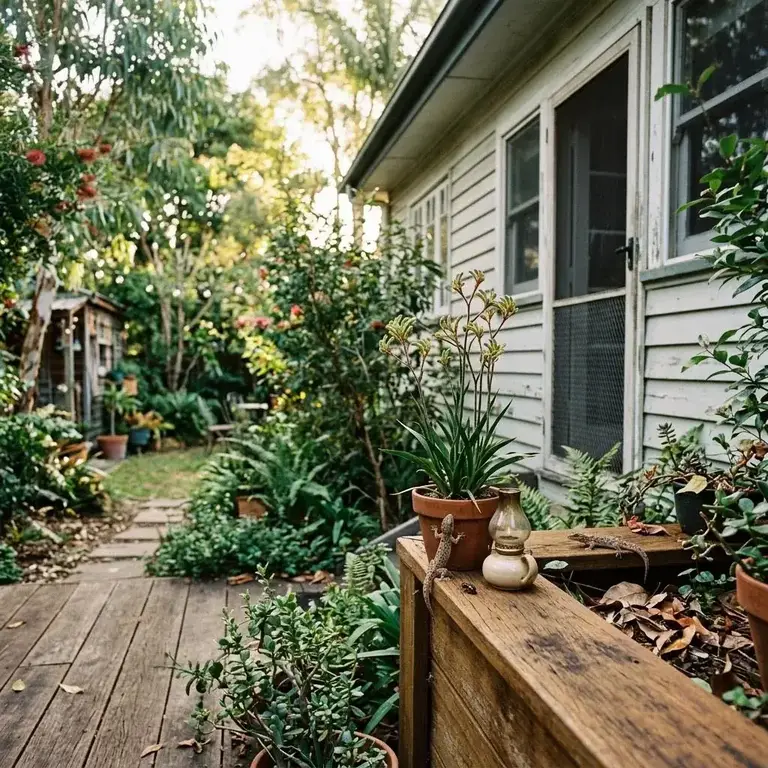
- Harbourage near the house: stacked firewood, bricks, pavers, dense leaf litter and loose bark within a metre or two of external walls.
- Heavy insect activity: crickets, cockroaches and spiders around outdoor lights attract hunting scorpions.
- Entry-point gaps: missing door seals, torn flyscreens, unsealed weep holes and cracks around pipes.
- Shed and garage encounters: scorpions tucked into shoes, gloves, folded tarps or boxes stored on the floor.
Identifying Common Australian Scorpion Species
Australian scorpions range from about two to more than ten centimetres long, and all share the classic build: eight legs, a pair of pincers and a segmented tail tipped with a stinger. Three groups account for most household encounters.
Marbled scorpion (Lychas variatus) — slender, mottled brown and three to five centimetres long, widespread through Queensland, New South Wales and Victoria. It shelters under loose bark and is the species most often seen in suburban homes and sheds.
Forest scorpion (Cercophonius squama) — small and dark, common across Victoria, South Australia, Tasmania and south-west Western Australia. It lives in leaf litter and firewood stacks and often wanders indoors during cooler weather.
Desert burrowing scorpions (Urodacus species) — the larger inland species of WA, the NT, SA and western Queensland. The Flinders Ranges scorpion (Urodacus elongatus) can reach ten centimetres and digs spiral burrows up to a metre deep.
Are Scorpion Stings Dangerous? First Aid Basics
No Australian scorpion is considered life-threatening, and no deaths have been recorded here. A sting typically feels like a bee or wasp sting — sharp pain, redness and swelling, sometimes with numbness that fades within hours. Young children, older people and anyone prone to allergic reactions should be watched closely.
For first aid, wash the site with soap and water, then apply a cold pack wrapped in a cloth for fifteen to twenty minutes. Simple pain relief such as paracetamol usually helps. Never cut or suck the wound. Call the Poisons Information Centre on 13 11 26 for advice, or triple zero (000) if you notice breathing difficulty, facial swelling or any sign of anaphylaxis.
DIY Scorpion Control vs Professional Treatment
Most households can handle occasional scorpions with good hygiene, exclusion work and a UV torch — but repeated sightings, a heavy insect problem or scorpions turning up indoors week after week call for a licensed technician with APVMA-registered residual products. Here’s how the two approaches compare.
| Factor | DIY approach | Professional treatment |
|---|---|---|
| Best for | Occasional sightings, prevention | Persistent activity, indoor incursions |
| Typical methods | Clearing debris, sealing gaps, UV torch patrols, reducing outdoor lighting | Inspection plus APVMA-registered residual insecticide to perimeter, entry points and harbourage |
| Cost (AUD) | $20-$80 for torches, seals and weather strips | Roughly $180-$450 depending on property size |
| Effectiveness | Good for prevention; limited against established populations | Stronger knockdown of prey insects and harbourage areas |
| Safety | Low risk if label directions are followed | Licensed, state-accredited technicians apply chemicals to label rates |
Always check that any technician holds a current state pest management licence, and ask how treatments will be managed around your household — our guide on whether pest control is safe for pets and children explains what to expect before, during and after a visit.
How Much Does Scorpion Pest Control Cost in Australia?
As a general guide for 2025-26, typical Australian market rates for a general pest treatment that covers scorpions sit between $180 and $450 for a standard home, with larger properties or heavy infestations attracting higher rates. What the industry generally charges varies by state, property size and whether scorpions are bundled into a broader general pest service.
| Service | Typical market rate (AUD) | What’s included/notes |
|---|---|---|
| General pest spray (scorpions included) | $180-$350 | Internal and external residual treatment, entry points, webs removed |
| Targeted scorpion treatment | $250-$450 | Perimeter barrier, harbourage treatment, subfloor or roof void where accessible |
| Large or rural property | $400-$700+ | Extended perimeter, sheds, woodpiles and outbuildings |
| Annual maintenance plan | $300-$600 per year | Scheduled visits to keep barriers active through peak season |
For a full breakdown of what drives industry pricing, see How Much Does Pest Control Cost in Australia? Timing matters too — our article on how often you should book pest control in Australia helps you plan treatments around seasonal peaks.
One thing worth knowing: Aussie Pest Strike typically comes in well under these typical market rates, without cutting corners on the treatment itself. For an exact quote tailored to your property, give us a call on [aps_phone] — we’ll sort you out.
Seasonal Scorpion Activity Across Australia
Scorpion activity peaks through the warmer months — roughly October to April in the southern states — and stays relatively high year-round across the tropical north. Sightings indoors often spike during extreme heat, heavy rain or sudden cold snaps when scorpions go looking for shelter.
Jan
Feb
Mar
Apr
May
Jun
Jul
Aug
Sep
Oct
Nov
Dec
Typical southern-state pattern: activity builds from September, peaks December to February and drops away through winter. Northern Australia sees more even, year-round activity.
Nine times out of ten, the scorpions we find inside have followed their food. Get the crickets and cockroaches under control, seal the gaps under doors and weep holes, and the scorpions usually stop showing up. A UV torch walk around the yard on a warm night tells you more in ten minutes than a week of guessing.
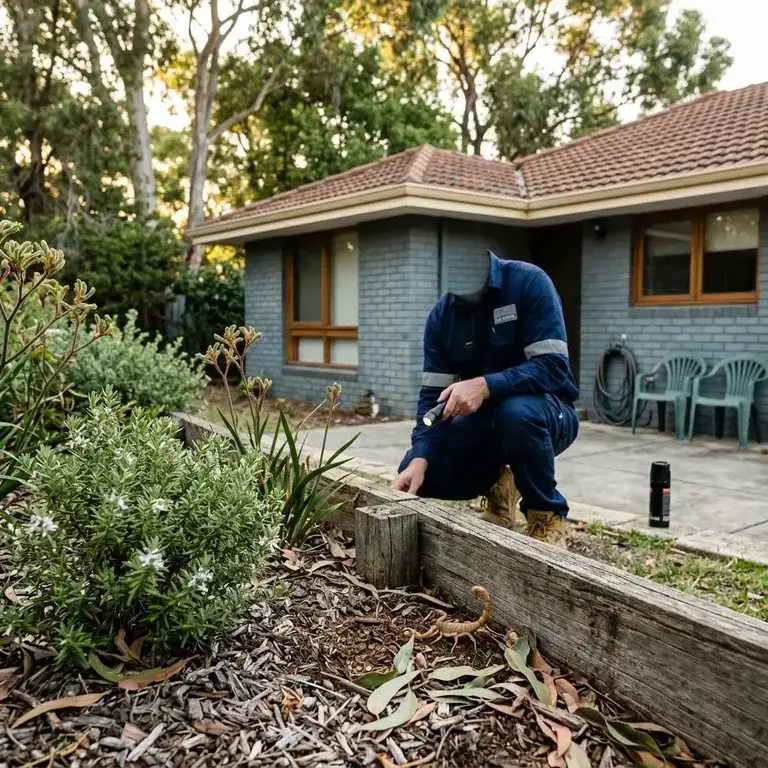
Start with prevention: clear debris and timber away from the house, fit door seals, repair flyscreens and switch outdoor lights to yellow globes. Shake out shoes and gloves left outside, and patrol with a UV torch after dark. If you’re still seeing scorpions indoors after a few weeks — or anyone in the house has been stung — book a licensed technician for a targeted residual treatment rather than reaching for a supermarket spray.
Frequently Asked Questions
Are scorpions in Australia deadly?
No. Australia has more than 100 native scorpion species and none is considered life-threatening to humans, with no recorded deaths. Most stings feel like a bee or wasp sting, causing sharp pain, redness and swelling that usually settles within hours. Young children, older people and anyone prone to allergic reactions should still be watched closely after a sting.
What should I do if someone is stung by a scorpion?
Wash the site with soap and water, then apply a cold pack wrapped in a cloth for fifteen to twenty minutes. Simple pain relief such as paracetamol usually helps. Never cut or suck the wound. Call the Poisons Information Centre on 13 11 26 for advice, or triple zero (000) if there is breathing difficulty, facial swelling or any sign of anaphylaxis.
How can I find scorpions around my home at night?
Scorpions glow blue-green under ultraviolet light because their exoskeleton fluoresces, so a cheap UV torch is the best detection tool. After dark, sweep the torch along fences, timber piles, garden edges and paths. You may also spot live scorpions moving on walls or bathroom floors in warmer months, especially after storms or extreme weather.
Which scorpion species am I most likely to see in my house?
The marbled scorpion (Lychas variatus) is the species most often seen in suburban homes and sheds along the east coast. It is slender, mottled brown and three to five centimetres long, sheltering under loose bark. The forest scorpion also wanders indoors during cooler weather, while larger desert burrowing scorpions stay mostly inland.
Why do scorpions come inside Australian homes?
Scorpions follow their prey indoors. Crickets, cockroaches and spiders attracted to outdoor lights draw hunting scorpions toward the house, where subfloor voids, weep holes in brickwork, gaps around plumbing penetrations and unsealed doors offer shelter. Extreme weather such as heatwaves, heavy rain or cold snaps pushes them inside, so sightings often spike after a storm.
How do I keep scorpions out of my home?
Start with prevention: clear stacked firewood, bricks, pavers, leaf litter and loose bark away from external walls, fit door seals, repair torn flyscreens, seal cracks around pipes and weep holes, and switch outdoor lights to yellow globes to reduce insect prey. Reducing crickets and cockroaches removes the food source that draws scorpions indoors.
When are scorpions most active in Australia?
In the southern states, activity builds from September, peaks from December to February and drops away through winter, with an overall peak from about October to April. Across tropical northern Australia, scorpions remain active all year. Indoor sightings often increase during extreme heat, heavy rain or sudden cold snaps when they seek shelter.
When should I call a professional for scorpion control?
Occasional sightings can be handled with exclusion work, hygiene and UV torch patrols, but repeated indoor sightings week after week, a heavy insect problem or an established population warrant a licensed pest control technician. Professionals use APVMA-registered residual products applied to perimeters, entry points and harbourage areas, delivering stronger knockdown than DIY methods alone.
What signs of scorpion activity should I look for around my property?
If you are seeing scorpions repeatedly indoors or noticing heavy cricket and cockroach activity around your lights, Aussie Pest Strike can arrange an inspection of entry points, harbourage areas and prey populations, then recommend whether prevention alone will do or a residual treatment is warranted. They can tailor advice to your housing style, whether it is a Queenslander, brick veneer or slab build.
Should I do a UV torch survey before booking a scorpion treatment?
Yes — a UV torch walk around your yard on a warm night is a practical first step. Sweep the light along fences, timber piles, garden edges and shed floors, noting any blue-green glows and where you see them. Recording these hotspots gives you clear evidence to share with Aussie Pest Strike, helping target inspection and treatment where scorpions are actually active.
Sources & further reading
Found Something
Dangerous?
Don’t touch it. Don’t spray it. Keep kids and pets clear, take a photo from a safe distance, and call us — or book a free inspection and we’ll come to you.
02 7235 0050