Carpet Beetles inAustralia: ID,Damage and Removal
Carpet beetles are small fabric pests found across Australia whose larvae feed on wool, silk, leather and other natural fibres, leaving irregular holes in...
Carpet beetles are small fabric pests found across Australia whose larvae feed on wool, silk, leather and other natural fibres, leaving irregular holes in carpets, clothing and upholstery. Australia-wide, they are among the most destructive household pests precisely because the damage happens quietly, in dark corners, under furniture and inside wardrobes, long before most homeowners notice anything is wrong.
The good news is that a carpet beetle infestation is very treatable once you know what you’re dealing with. Correct identification, thorough cleaning and targeted treatment will remove an infestation and protect your home — and this guide walks you through exactly how to do that, from spotting the early warning signs to knowing when to call in a licensed technician.
- Carpet beetles don’t bite, but their larvae (“woolly bears”) chew through wool carpets, clothing, silk and leather, often causing hundreds of dollars in damage before they’re detected.
- The most common Australian species are the variegated, black, furniture and native Australian carpet beetle — adults feed on pollen outdoors, larvae do the damage indoors.
- Regular vacuuming, sealed storage of natural fibres and steam cleaning will resolve a minor problem; severe or recurring infestations need professional treatment with APVMA-registered products.
- Professional carpet beetle treatment typically costs between $180 and $450 AUD, depending on home size and infestation severity.
- Adult beetles are most active from October to March, so spring is the best time to inspect wardrobes, carpet edges and roof voids.
Why Carpet Beetles Are a Problem in Australian Homes
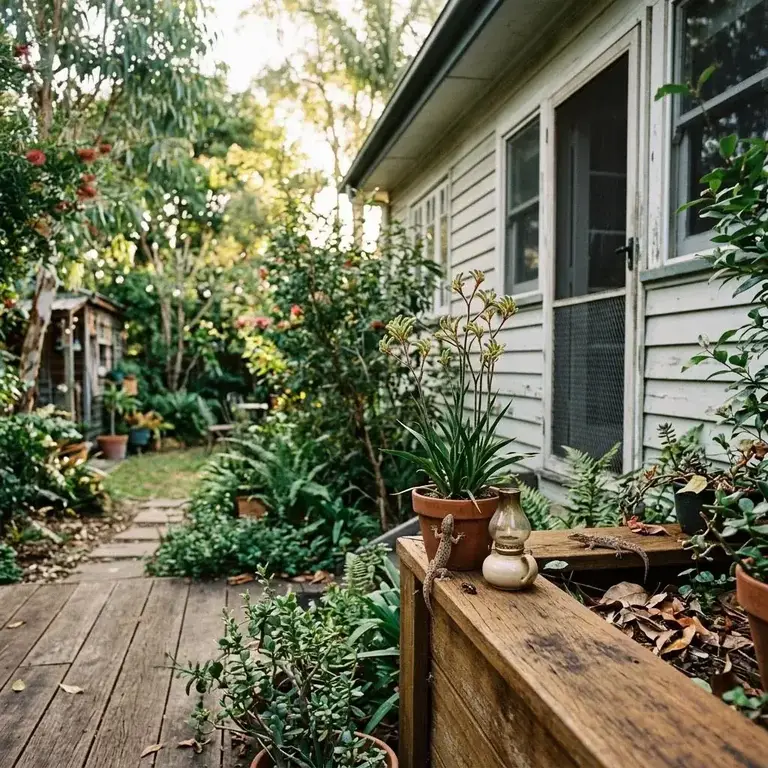
Carpet beetles thrive in Australian conditions because our climate lets them breed almost year-round, with peak activity through the warmer months from October to March, particularly in New South Wales, Victoria and Queensland. Adults fly in through open doors and windows in spring — a common habit in a country where we leave everything open to catch a breeze — and lay their eggs in lint, pet hair and dust that builds up in quiet corners.
Australian housing stock makes the problem worse. Wool carpets and older wool-felt underlays are still common in established suburbs, and they’re a banquet for larvae. Queenslanders and older weatherboard homes on stumps have subfloor voids where dust, pet hair and dead insects accumulate undisturbed. Brick veneer and slab homes aren’t immune either — wall cavities can harbour dead insects, and roof voids often contain old bird or rodent nests, both classic carpet beetle breeding sites. Even synthetic carpets can be attacked if they’re soiled with food, sweat or pet hair, because the larvae are after the organic contamination, not the fibre itself. Heated homes through a southern winter simply extend their breeding season further.
What Are Carpet Beetles and How Do You Identify Them?
Carpet beetles are common household pests belonging to the family Dermestidae, and in Australia the most frequently encountered species are the variegated carpet beetle (Anthrenus verbasci), the black carpet beetle (Attagenus unicolor), the furniture carpet beetle (Anthrenus flavipes) and the native Australian carpet beetle (Anthrenocerus australis). Knowing which life stage you’re looking at matters, because the adults and larvae behave completely differently.
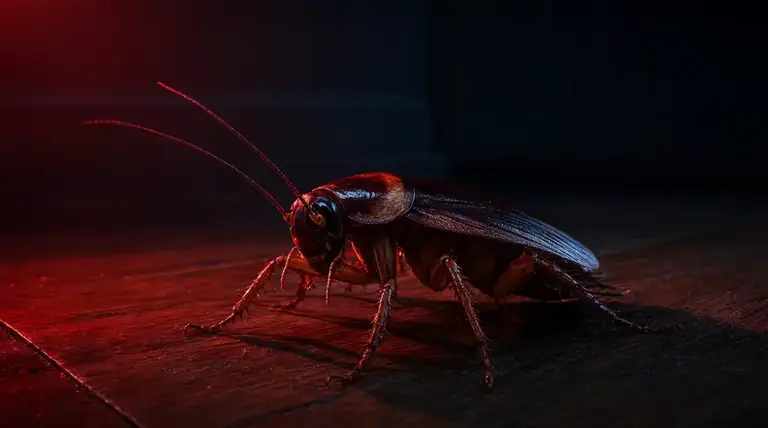
Adult beetles are small, rounded insects roughly 2 to 4 millimetres long. Variegated and furniture carpet beetles have a mottled pattern of white, brown and yellow scales, while black carpet beetles are a uniform dark brown to black. Adults feed harmlessly on pollen and nectar outdoors, and you’ll often spot them on windowsills in spring and early summer as they head towards the light and outside to feed on flowers.
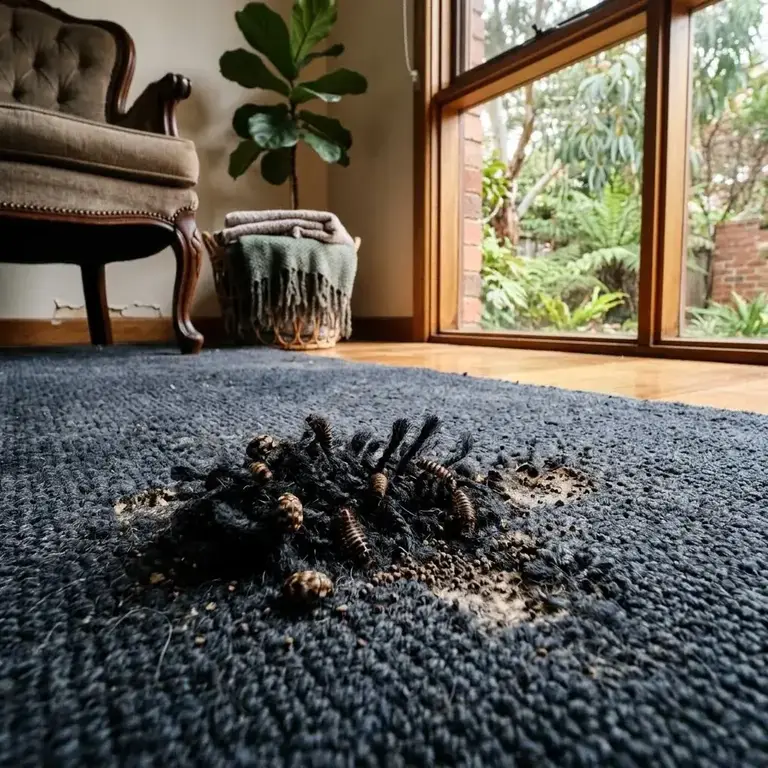
Larvae do the real damage. They’re 4 to 5 millimetres long, carrot-shaped and covered in bristly hairs, which earns them the nickname “woolly bears”. They’re usually brown or tan with darker bands and hide in dark, undisturbed areas: under furniture, along skirting boards, inside wardrobes and in the folds of stored blankets.
Warning Signs of Carpet Beetle Damage
Carpet beetle damage is often mistaken for clothes moth damage, but there are clear differences — beetle larvae graze on the surface and leave bare patches or scattered holes, with no webbing. Check for these signs during your next clean:
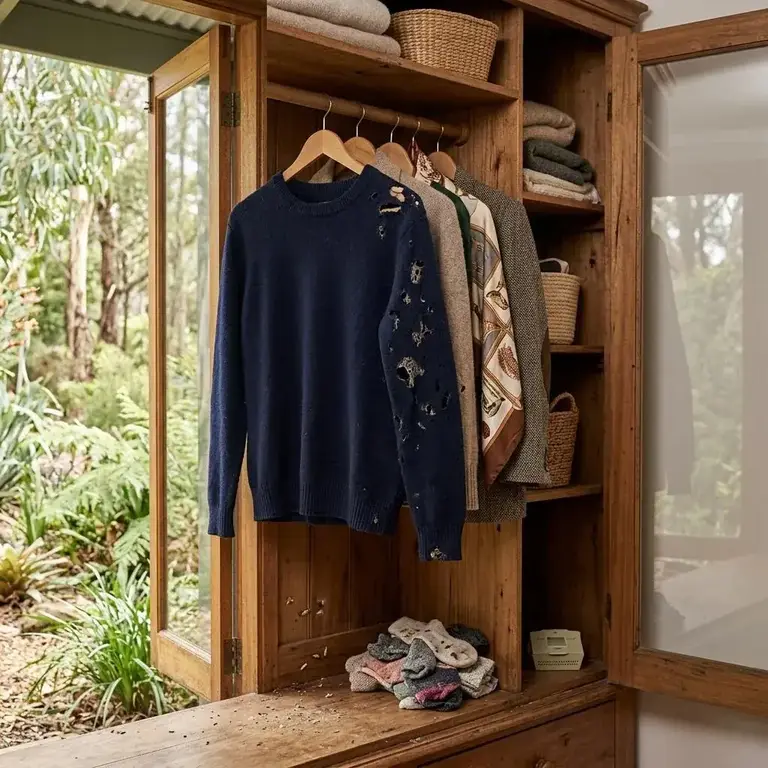
- Irregular holes or threadbare patches in wool carpets, rugs and underfelt, especially along edges and under furniture where vacuuming rarely reaches.
- Damage to stored natural fibres — woollen clothing, blankets, felt hats and silk items tucked away in wardrobes or drawers.
- Shed larval skins, which look like small, bristly, brown casings, near skirting boards, in drawers or along carpet edges.
- Tiny faecal pellets, about the size of a grain of salt, near damaged fabric or in wardrobe corners.
- Adult beetles on windowsills or around light fittings in spring — a reliable sign that a breeding population is established somewhere inside.
- Unexplained itchy rash on skin that’s been in contact with infested fabric, caused by larval hairs and sometimes mistaken for bed bug bites.
DIY vs Professional Carpet Beetle Treatment
A light infestation caught early can often be handled with thorough DIY cleaning, but a severe or recurring problem almost always needs professional pest control. The deciding factor is whether you’ve found and treated every harbourage — miss the nest in the roof void or the lint under the wardrobe, and the infestation rebuilds within weeks. Here’s how the two approaches compare:
| Factor | DIY approach | Professional treatment |
|---|---|---|
| Best for | Early, localised infestations in accessible areas | Severe, widespread or recurring infestations |
| Methods | Vacuuming, washing or dry-cleaning, steam cleaning, sealed storage | APVMA-registered residual insecticides, insect growth regulators, harbourage inspection |
| Hidden sources | Roof voids, wall cavities and subfloors often missed | Full inspection including roof voids, subfloors and wall cavities |
| Typical cost (AUD) | $50–$150 in cleaning and storage supplies | $180–$450 depending on home size and severity |
| Chemical safety | Supermarket sprays often underdosed or misapplied | Applied by a licensed pest management technician under state regulation |
If you do go the DIY route first: vacuum thoroughly and often, paying attention to edges, under furniture and inside wardrobes, then dispose of the vacuum bag immediately. Wash or dry-clean infested clothing and store natural-fibre items in sealed containers. Steam cleaning carpets kills eggs and larvae. Seal gaps around windows and remove old bird or rodent nests from roof spaces, as these are common breeding sources.
How Much Does Carpet Beetle Treatment Cost in Australia?
Across the Australian pest control industry, professional carpet beetle treatment typically costs between $180 and $450 AUD in 2025-26, depending on the size of your home, the number of rooms affected and whether follow-up visits or growth regulator treatments are needed. These figures reflect general market rates for fabric-pest and crawling-insect treatments nationwide. For a broader breakdown of what drives pricing, see our guide on how much pest control costs in Australia.
| Service | Typical market rate (AUD) | What’s included/notes |
|---|---|---|
| Inspection and identification | Free–$120 | Industry rates vary; confirms species and locates harbourages |
| Standard treatment (unit/small home) | $180–$280 | Residual treatment to carpet edges, cracks, wardrobes and skirting areas |
| Standard treatment (3–4 bedroom home) | $260–$450 | Includes roof void and subfloor treatment where accessible |
| Severe infestation with IGR and follow-up | $400–$600 | Insect growth regulator to break the breeding cycle, plus a follow-up visit |
One-off treatments solve most infestations, but homes with ongoing risk factors — wool carpets, pets, nearby bushland — benefit from a regular service schedule. Our article on how often you should book pest control in Australia explains sensible intervals for different property types.
It’s worth noting that Aussie Pest Strike typically comes in well under these general market rates, so the figures above are a conservative guide rather than what you’ll actually pay. For an exact quote tailored to your property, give us a call on [aps_phone].
When Are Carpet Beetles Most Active in Australia?
Carpet beetles are present year-round inside heated homes, but adult beetle activity peaks sharply in spring and early summer — roughly October through February — when they emerge, gather on windowsills and fly outside to feed on flowers. Larvae keep feeding through winter in warm interiors, which is why damage often goes unnoticed until spring reveals the adults.
Jan
Feb
Mar
Apr
May
Jun
Jul
Aug
Sep
Oct
Nov
Dec
Indicative adult carpet beetle activity across Australia. Activity peaks from October to February as adults emerge and seek flowers, while larvae continue feeding indoors at low levels through the cooler months.
Nine times out of ten, the infestation the customer can see isn’t the one doing the damage — it’s the larvae under the edge of the carpet or in the roof void dust. Treat the visible beetles and you’re wasting your money; find every harbourage and treat those, and the problem’s gone for good.
Start with a deep vacuum of carpet edges, wardrobes and under furniture, wash or dry-clean affected items, and store natural fibres sealed. If damage keeps appearing, beetles are showing up in multiple rooms, or your home has a roof void or subfloor you can’t inspect yourself, book a professional treatment — licensed technicians apply APVMA-registered residual insecticides and insect growth regulators to the harbourages DIY can’t reach. Insecticide use in Australia is regulated at state level, so chemical treatments should always be carried out by a licensed pest management technician.
Frequently Asked Questions
What do carpet beetles look like in Australia?
Adult carpet beetles are small, rounded insects about 2 to 4 millimetres long. Variegated and furniture carpet beetles have a mottled pattern of white, brown and yellow scales, while black carpet beetles are a uniform dark brown to black. The larvae, nicknamed woolly bears, are 4 to 5 millimetres long, carrot-shaped and covered in bristly hairs, usually brown or tan with darker bands.
Which carpet beetle species are most common in Australia?
The most frequently encountered Australian species are the variegated carpet beetle (Anthrenus verbasci), the black carpet beetle (Attagenus unicolor), the furniture carpet beetle (Anthrenus flavipes) and the native Australian carpet beetle (Anthrenocerus australis). All belong to the family Dermestidae. Adults feed harmlessly on pollen outdoors, while the larvae cause damage indoors by feeding on natural fibres such as wool, silk and leather.
What are the warning signs of a carpet beetle infestation?
Look for irregular holes or threadbare patches in wool carpets, rugs and underfelt, especially along edges and under furniture. Other signs include damage to stored woollen clothing, blankets, felt hats and silk; shed larval skins that look like small bristly brown casings; tiny faecal pellets about the size of a grain of salt; adult beetles on windowsills in spring; and unexplained itchy skin rashes from contact with infested fabric.
Do carpet beetles bite people?
Carpet beetles don't bite, but their larvae can still affect your health. The bristly hairs on larvae may cause an unexplained itchy rash on skin that has been in contact with infested fabric, which is sometimes mistaken for bed bug bites. The main problem they cause is property damage, as larvae chew through wool carpets, clothing, silk and leather, often causing hundreds of dollars in damage before detection.
How can I tell carpet beetle damage apart from clothes moth damage?
Carpet beetle damage is often mistaken for clothes moth damage, but there are clear differences. Beetle larvae graze on the surface of fabrics, leaving bare patches or scattered holes, and they produce no webbing. Clothes moths, by contrast, leave webbing or silken cases. Checking for shed larval skins and tiny salt-sized faecal pellets near damaged fabric will also help confirm carpet beetles rather than moths.
When are carpet beetles most active in Australia?
Adult beetle activity peaks sharply from October to February, when adults emerge, gather on windowsills and fly outside to feed on flowers. Larvae keep feeding through winter inside heated homes, which is why damage often goes unnoticed until spring reveals the adults. Spring is therefore the best time to inspect wardrobes, carpet edges and roof voids for signs of an established breeding population.
How do I get rid of carpet beetles myself?
For a light, early infestation, vacuum thoroughly and often, paying attention to edges, under furniture and inside wardrobes, then dispose of the vacuum bag immediately. Wash or dry-clean infested clothing and store natural-fibre items in sealed containers. Steam cleaning carpets kills eggs and larvae. Also seal gaps around windows and remove old bird or rodent nests from roof spaces, which are common breeding sources.
Why do carpet beetles keep coming back after DIY treatment?
The deciding factor is whether every harbourage has been found and treated. Miss the nest in the roof void, wall cavity, subfloor or the lint under a wardrobe, and the infestation rebuilds within weeks. Severe or recurring problems almost always need professional treatment using APVMA-registered residual insecticides and insect growth regulators, applied by a licensed technician who inspects all the hidden areas DIY methods rarely reach.
How can Aussie Pest Strike help me plan next steps for a suspected carpet beetle problem?
If you've spotted larval skins, fabric damage or adult beetles on windowsills, Aussie Pest Strike can arrange an inspection to confirm the species and locate harbourages such as roof voids, subfloors and wardrobe lint. From there, a licensed technician can explain whether thorough cleaning will suffice or whether APVMA-registered residual treatments and insect growth regulators are needed to break the breeding cycle, along with sensible follow-up timing.
Should I book a professional inspection before spring if I have wool carpets?
Homes with wool carpets, pets or nearby bushland face ongoing carpet beetle risk, and spring marks the start of peak adult activity from October onwards. Booking an inspection with Aussie Pest Strike before then gives you time to address breeding sources like old bird or rodent nests in roof voids, seal entry points and set up sealed storage for natural fibres, so you're ahead of the season rather than reacting to fresh damage.
Sources & further reading
Found Something
Dangerous?
Don’t touch it. Don’t spray it. Keep kids and pets clear, take a photo from a safe distance, and call us — or book a free inspection and we’ll come to you.
02 7235 0050